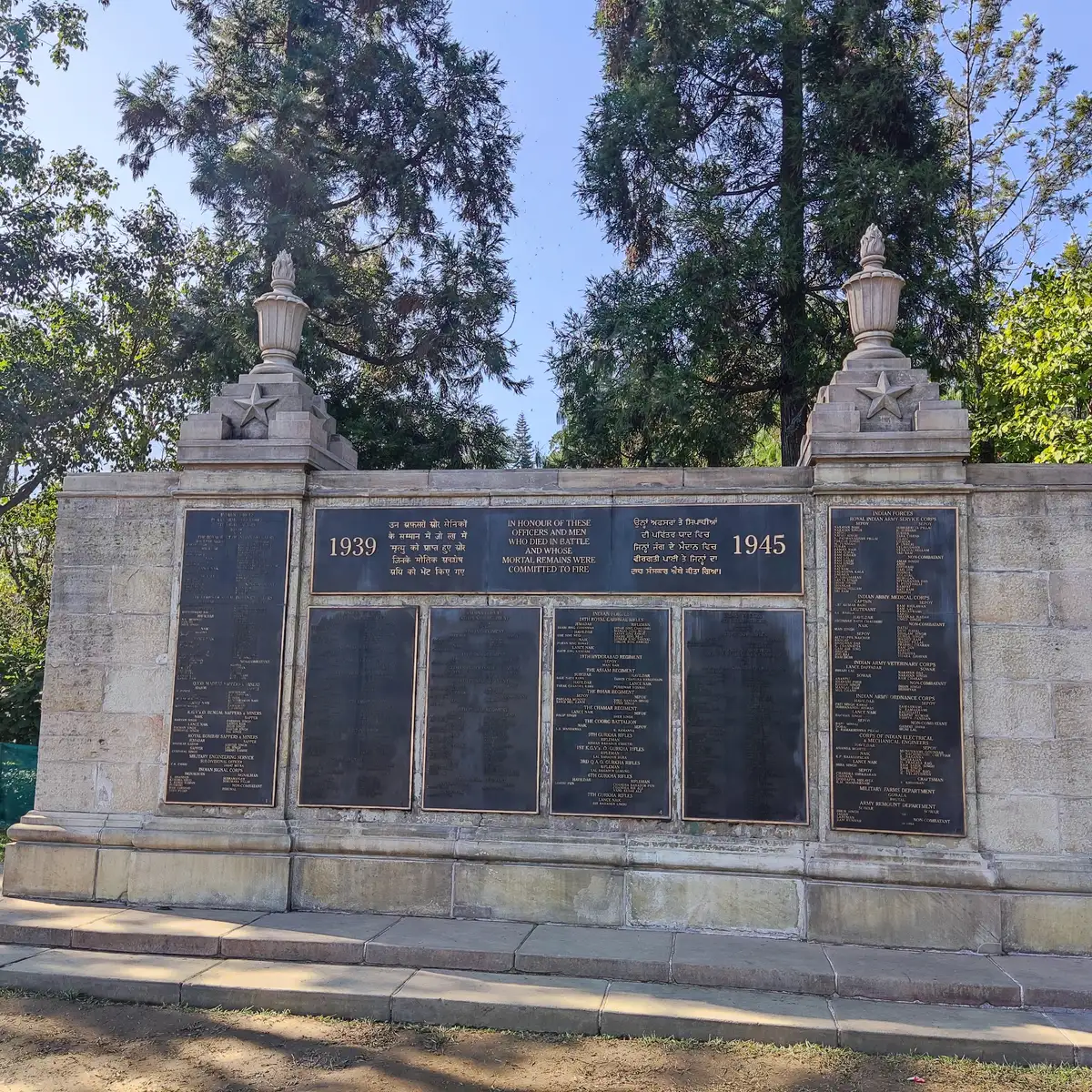
Kohima, at about 1,450 metres, is the capital of Nagaland and the home of the Angami Naga. In April to June 1944, the Battle of Kohima halted the Japanese advance into India, with some of the fiercest fighting taking place around the Deputy Commissioner's bungalow and its tennis court. Today the city is a mix of hillside neighbourhoods, churches and markets.
The things to do in Kohima include the War Cemetery, the State Museum, Kisama Heritage Village (the venue of the Hornbill Festival), the green village of Khonoma and treks to the Dzukou Valley and Japfu Peak. Naga food, with its smoked meats, fermented soybean and fiery chillies, is a highlight.
Two days covers the city; four days allows Dzukou and Khonoma. Indian nationals need an Inner Line Permit, available online.
For how to get there, when to go and where to stay, see our Kohima travel guide.
Quick answer: best things to do in Kohima
- Visit the Kohima War Cemetery
- Attend the Hornbill Festival at Kisama (1–10 December)
- See the Nagaland State Museum
- Visit the Cathedral of Reconciliation
- Walk through the local market
- Visit Khonoma, Asia's first green village
- Trek to Dzukou Valley
- Climb Japfu Peak
- Eat smoked pork with bamboo shoot
Comparing hill stations? See our guide to hill stations in Northeast India.
Interested in the history? See our guide to the Hornbill Festival.
History and museums
Visit the Kohima War Cemetery
The War Cemetery, on the slopes of Garrison Hill, holds the graves of over a thousand Commonwealth soldiers. The tennis court lines where the fighting was fiercest are marked in white. The Kohima Epitaph, 'When you go home, tell them of us and say, for your tomorrow, we gave our today', is inscribed on the memorial to the 2nd Division.
- Time needed
- 1 hour
- Good for
- History lovers
See the Nagaland State Museum
The State Museum has displays on the Naga tribes, with costumes, weapons, jewellery, a ceremonial drum and model villages. It is a good way to understand the diversity of Nagaland's communities.
- Time needed
- 1–1.5 hours
Visit the Cathedral of Reconciliation
The Mary Help of Christians Cathedral on Aradura Hill, built with help from Japanese donors as a symbol of reconciliation after the war, has a large carved wooden crucifix and a distinctive façade inspired by Naga houses.
Walk through the local market
Kohima's local market sells fresh vegetables, chillies, bamboo shoots and more unusual items such as silkworms, snails and river fish, reflecting Naga food traditions.
- Best time
- Morning
The Hornbill Festival
Attend the Hornbill Festival
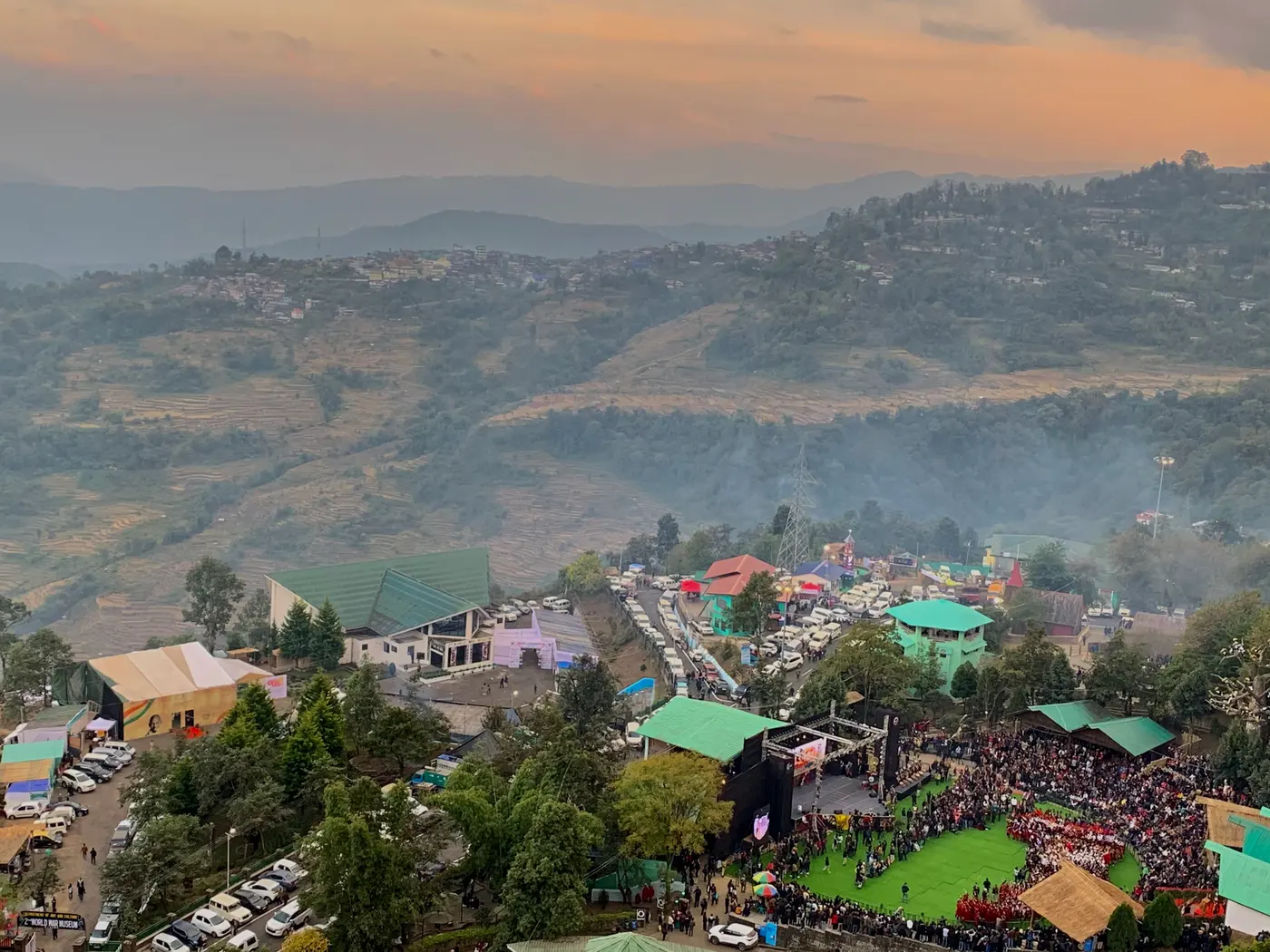
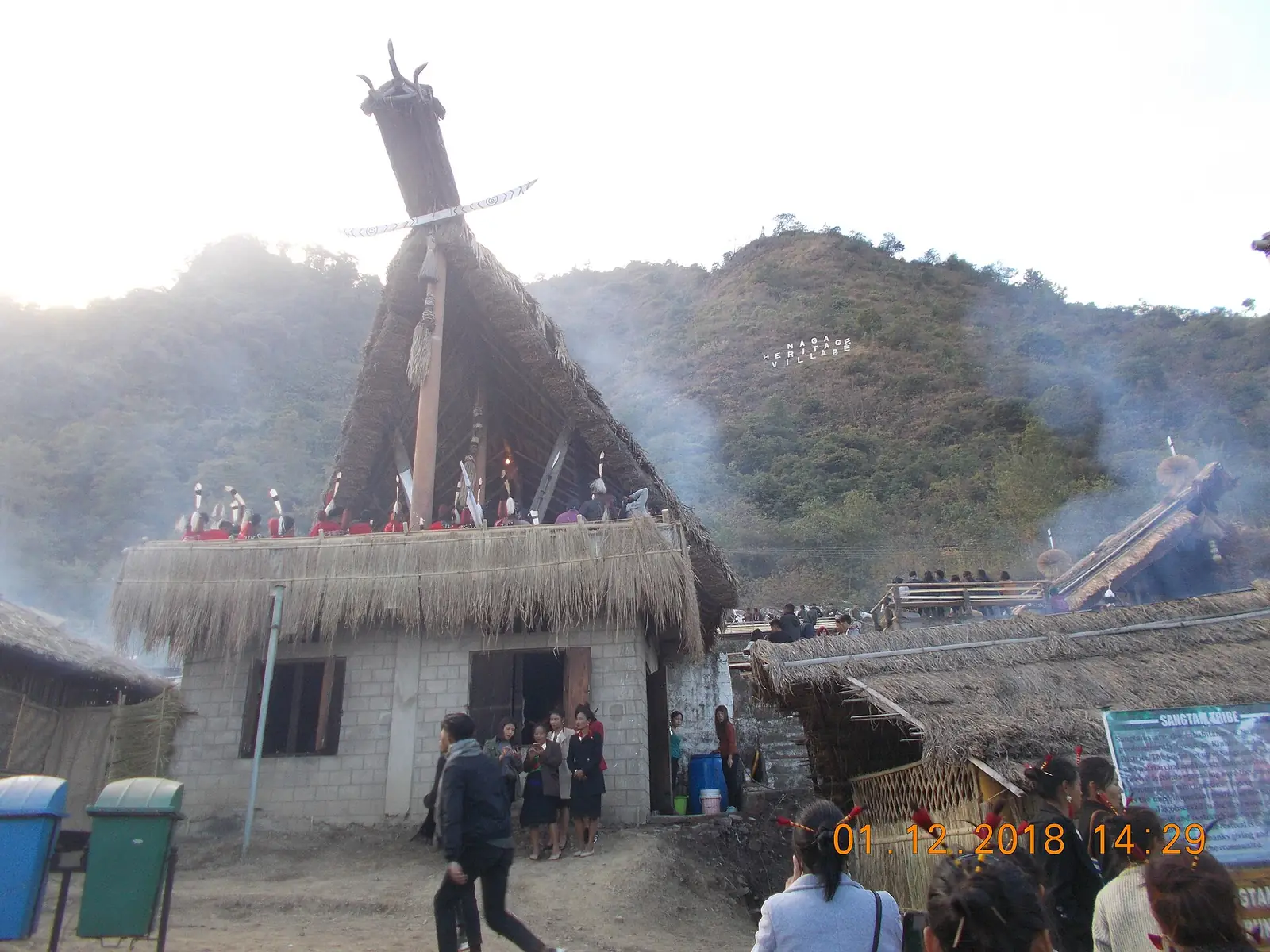
The Hornbill Festival, held every year from 1 to 10 December at Kisama Heritage Village about 12 km from Kohima, brings together all the major Naga tribes. Each has a morung (traditional house) at the venue, and there are dances, songs, games, crafts, food stalls and a rock concert in the evenings.
Accommodation in Kohima fills up months in advance; many visitors stay in homestays or camps.
- Best time
- 1–10 December
- Good to know
- Book stays very early
See Kisama at other times
Outside the festival, Kisama Heritage Village is quiet, but the morungs and the World War II museum on site can still be visited.
Villages and treks
Visit Khonoma
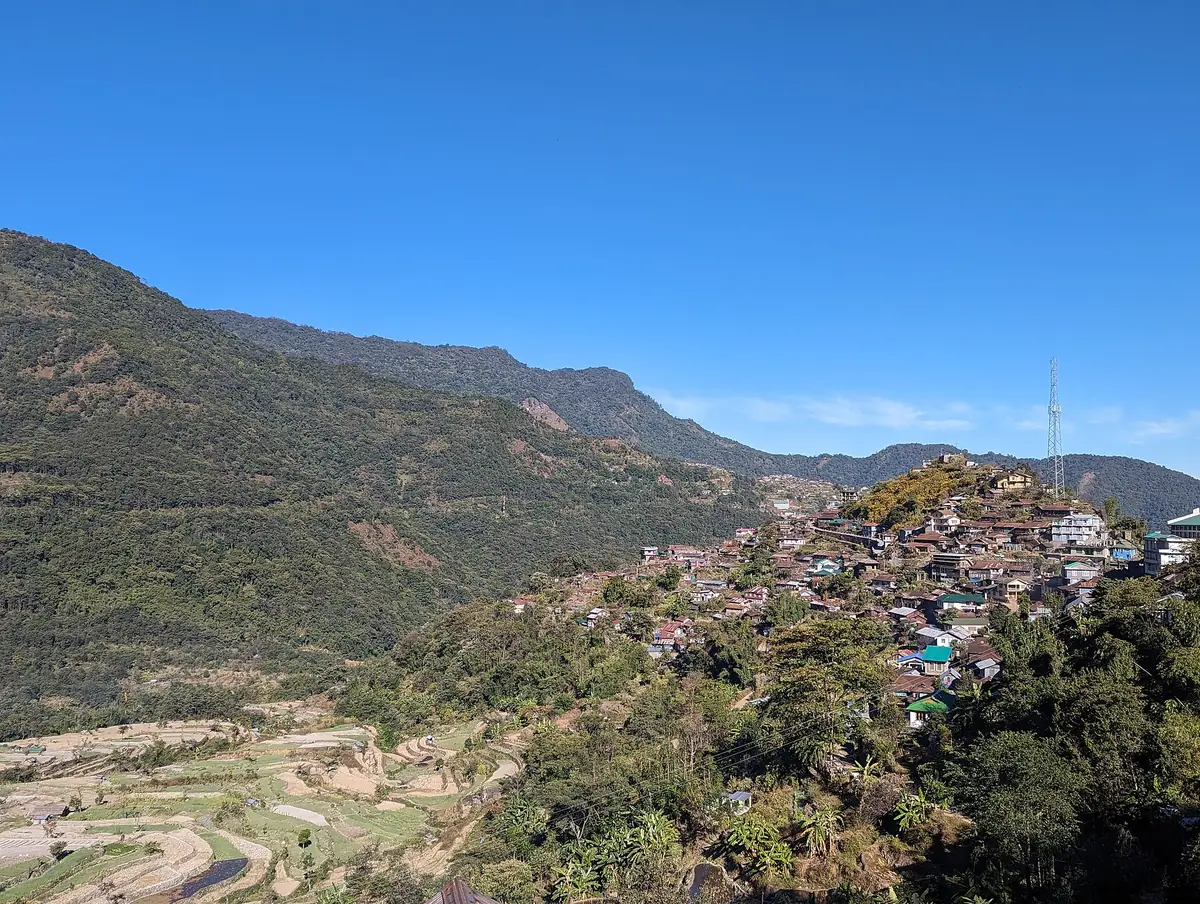
Khonoma, about 20 km from Kohima, is an Angami village known for its terraced fields, stone gateways and history of resistance to the British in the 19th century. In the 1990s, the villagers banned hunting and logging and set up a conservation sanctuary; it is often described as Asia's first green village. Homestays and guided walks are available.
- Time needed
- Half a day or overnight
Trek to Dzukou Valley
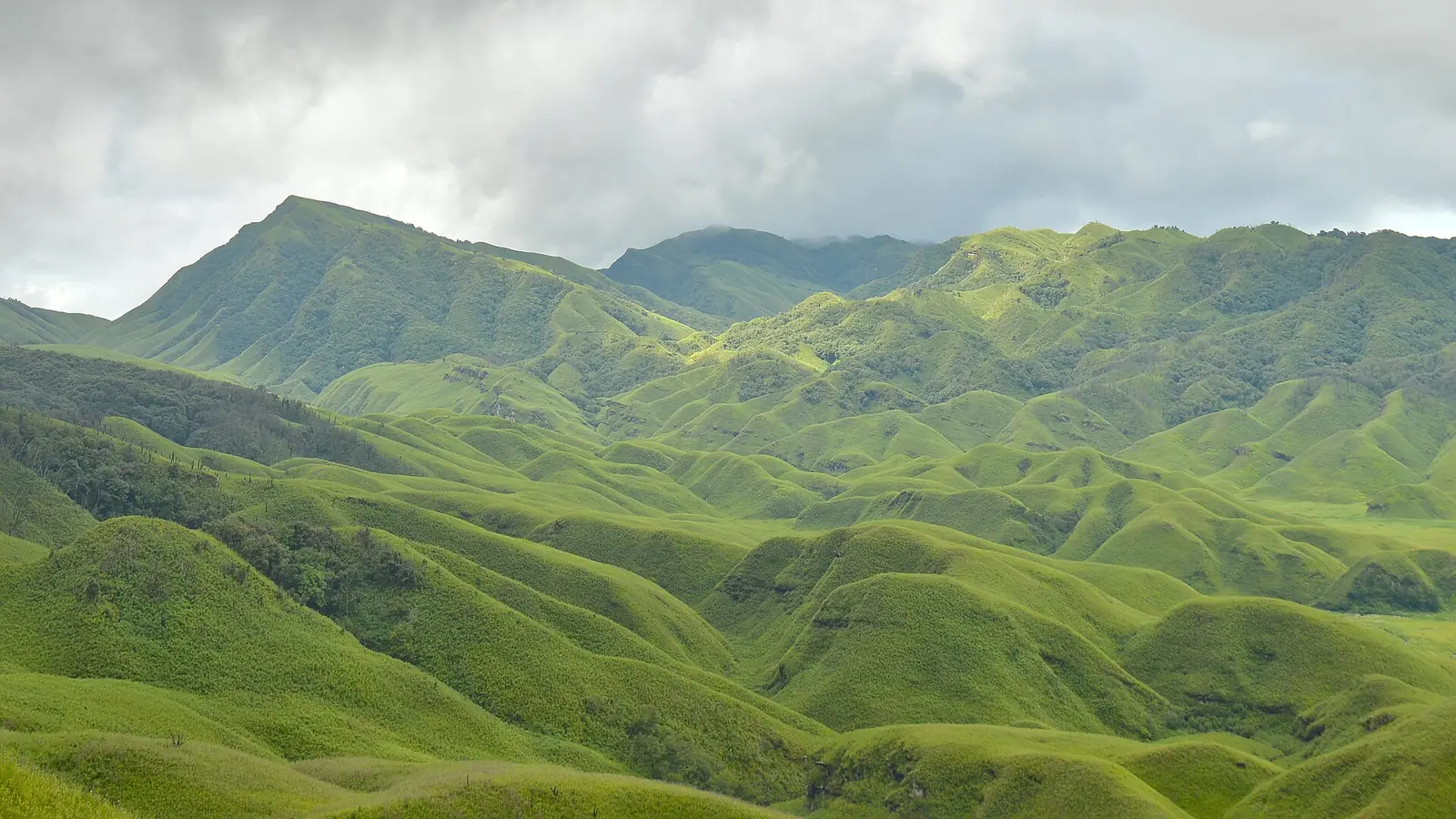
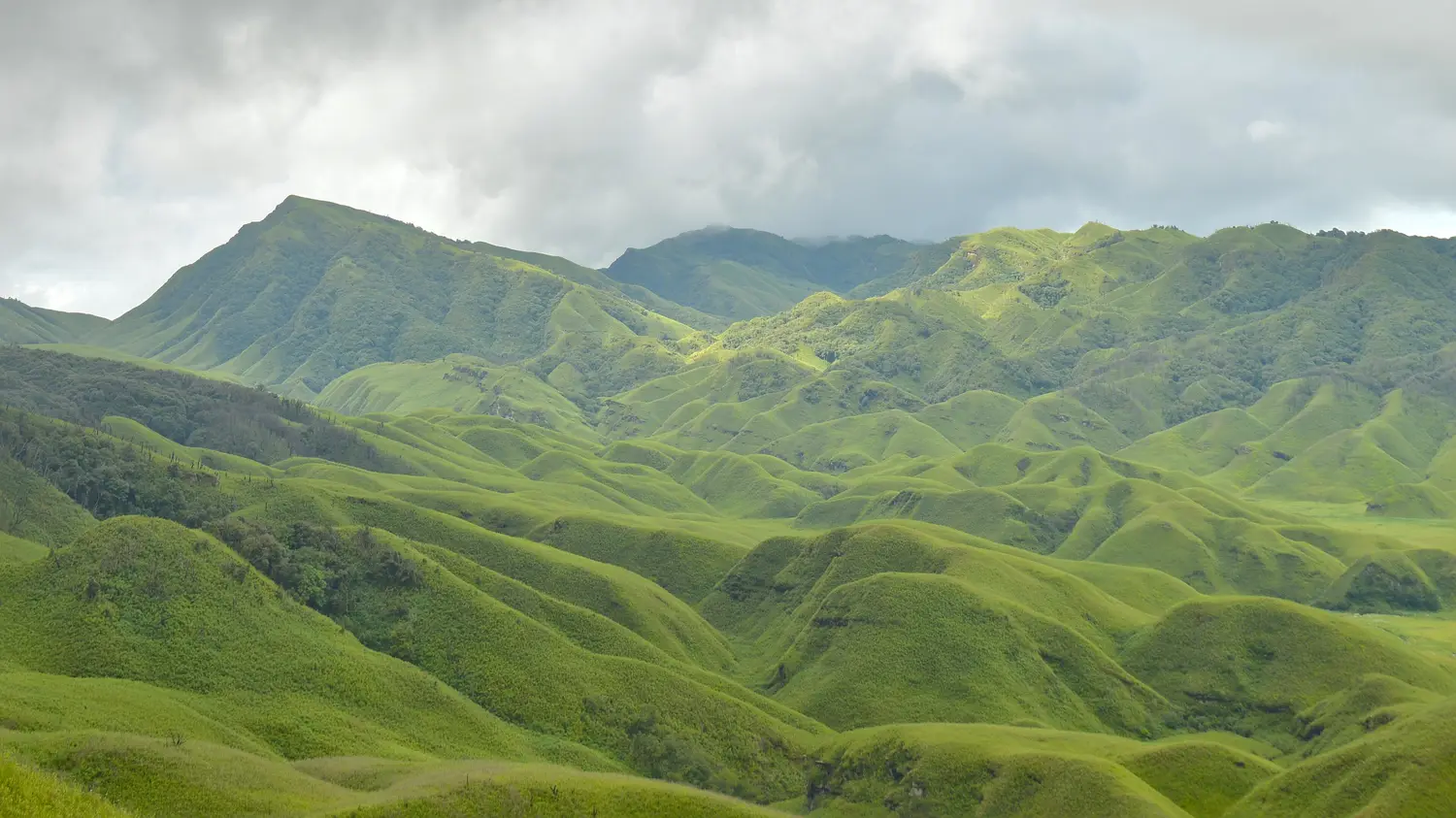
Dzukou Valley, on the Nagaland–Manipur border at about 2,400 metres, is a valley of rolling green hills covered in dwarf bamboo, with streams and seasonal flowers, including the endemic Dzukou lily in summer. Treks start from Viswema or Zakhama, a steep climb of three to five hours. Overnight stays are in a basic rest house or tents.
- Time needed
- 1–2 days
- Best time
- June to September for flowers; October to March for clear days
Climb Japfu Peak
Japfu Peak, at about 3,000 metres, is the second-highest mountain in Nagaland. A day hike from Kigwema village climbs through forest to the top, with sunrise views over the hills on clear days. The area also has what is often cited as the tallest rhododendron tree in the world.
- Good for
- Active travellers
See Tuophema village
Tuophema, about 40 km from Kohima, has a community-run tourist village with traditional huts, a small museum and cultural programmes, and gives a sense of Angami village life.
Naga food
Eat smoked pork and axone
Naga cuisine is built around smoked meats, bamboo shoot, axone (fermented soybean) and raja mircha, one of the world's hottest chillies. Try smoked pork with bamboo shoot, galho (a rice and vegetable porridge) and local rice beer. Restaurants in Kohima also serve milder options.
- Good for
- Food lovers
Things to do in Kohima by type of traveller
Festival travellers: Stay for at least three days of Hornbill and add a day at Khonoma.
Trekkers: Dzukou Valley overnight and Japfu Peak for sunrise.
History lovers: The War Cemetery, the Kisama WWII museum and Khonoma's resistance history.
What to do in Kohima with one day
Start at the War Cemetery, then visit the State Museum and the local market. After lunch, drive to Khonoma for a guided village walk, and return to Kohima for Naga food in the evening.
Practical tips for Kohima
- Dimapur, about 75 km away, has the nearest airport and railway station.
- Apply for the Nagaland ILP online before travel.
- Sundays are quiet; many shops and restaurants close as most of the population attends church.
- Ask before photographing people, especially in villages.
Plan the rest of your Kohima trip
Kohima things to do: FAQs
What are the best things to do in Kohima?
Visit the War Cemetery and State Museum, attend the Hornbill Festival, visit the Cathedral and local market, see Khonoma, and trek to Dzukou Valley or Japfu Peak.
When is the Hornbill Festival?
Every year from 1 to 10 December at Kisama Heritage Village near Kohima.
Do I need a permit for Kohima?
Yes. Indian nationals need an Inner Line Permit for Nagaland.
How hard is the Dzukou Valley trek?
It is a moderate trek with a steep initial climb of about three to five hours from Viswema or Zakhama.
Things to do near Kohima
- Khonoma: the green village, 20 km away
- Dzukou Valley: the valley trek
- Things to do in Imphal: Manipur's capital to the south
- Mokokchung: the Ao Naga heartland
Published by the Kudozz Club editorial team · Last updated · How we research our guides
Want us to plan this trip for you?
Tell Kudozz Club where you want to go and what kind of trip you’re looking for. We’ll build a Kohima and Nagaland itinerary around your dates and budget.
Continue Exploring
View all guides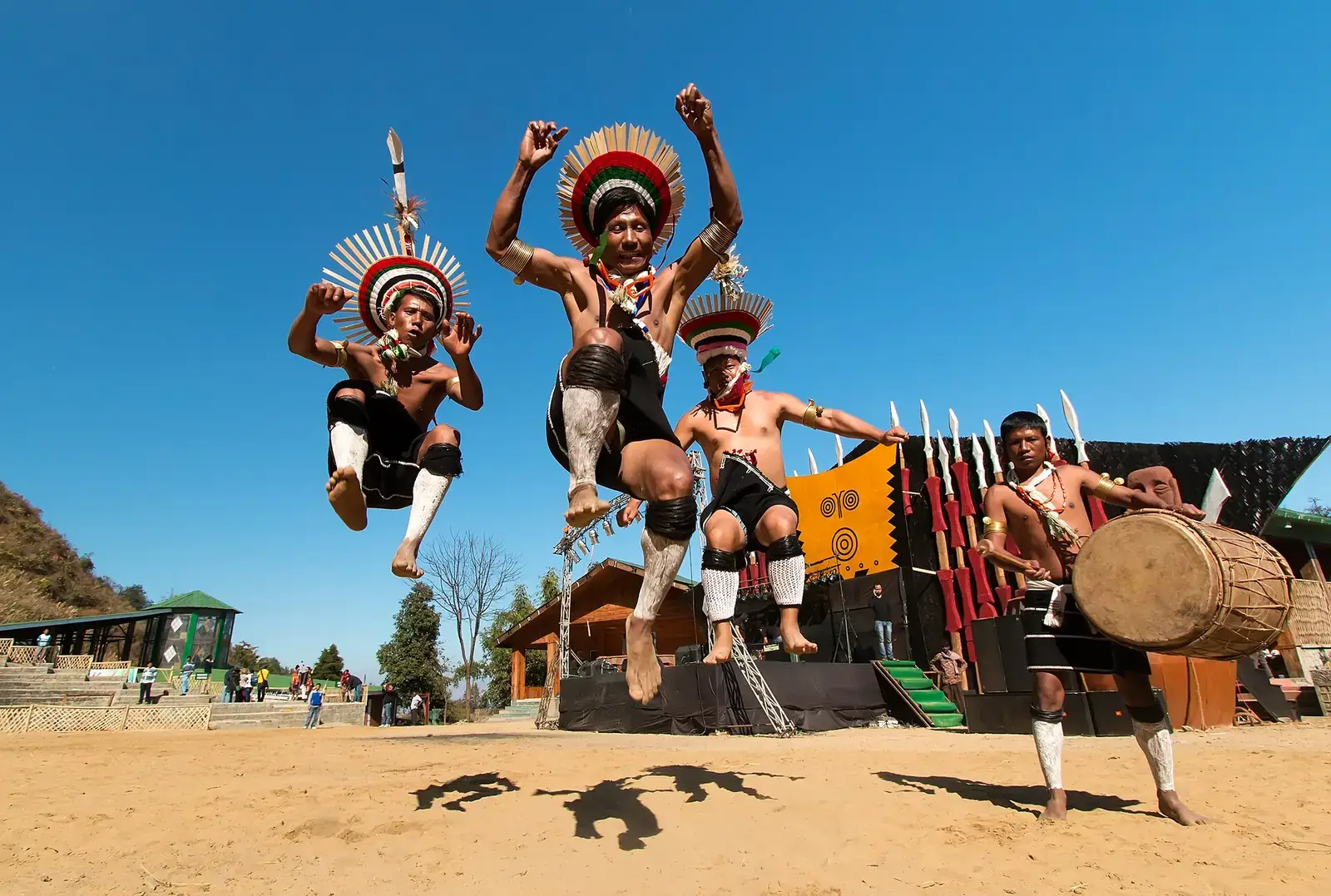 Heritage & Culture
Hornbill Festival, Nagaland: Dates, Kisama and How to Visit
A planning guide to the Hornbill Festival in Nagaland, held every year from 1 to 10 December at the Naga Heritage Village, Kisama, near Kohima: what you will see, the Inner Line Permit and registration rules, how to get there from Dimapur, where to stay, what to wear in December, and how to visit Naga villages respectfully.
 Off-beat
Nagaland Travel Guide: Hornbill Festival, Kohima & Dzukou Valley
A festival where sixteen tribes gather in their warrior best, a war cemetery from a WWII turning point, and a valley called the Switzerland of the East — the complete guide to Nagaland.
 Heritage
Kisama Guide: Hornbill Festival Heritage Village
A purpose-built village where every one of Nagaland's tribes gathers each December — one of Northeast India's most significant cultural events.
 Destination Guide
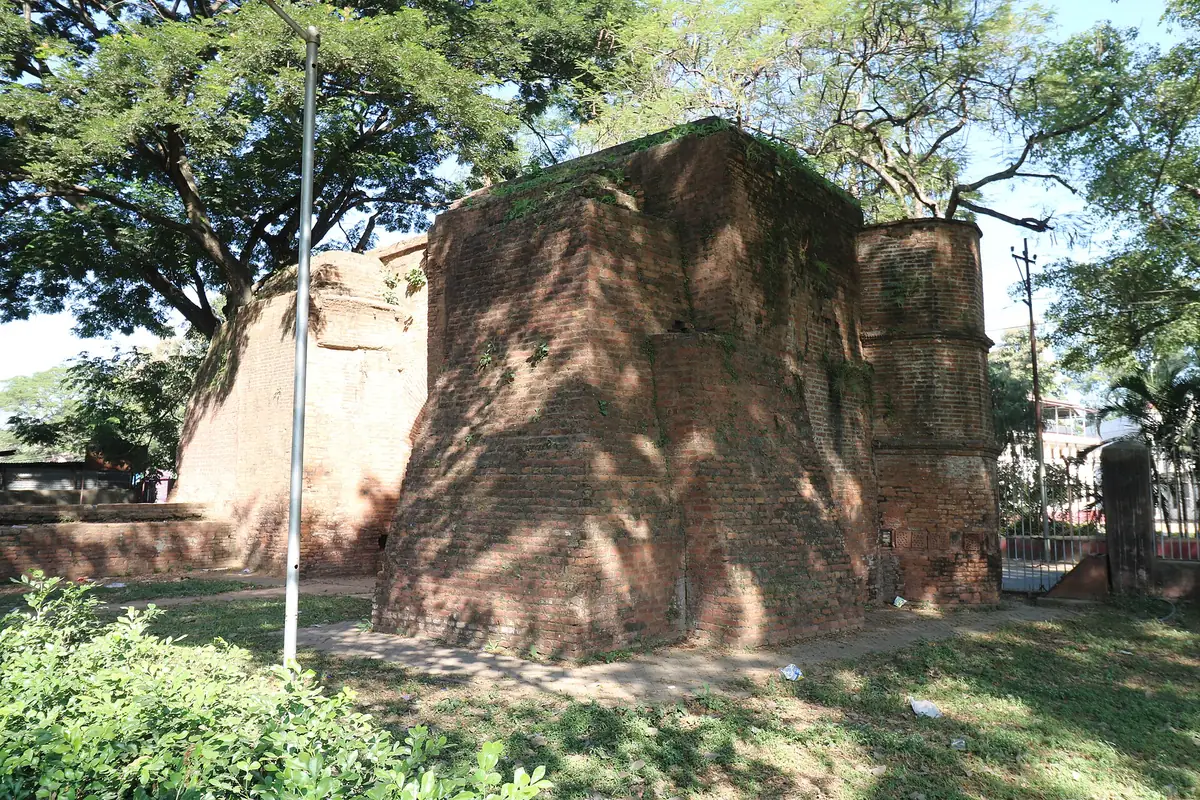
Dimapur Travel Guide: Gateway to Nagaland
Nagaland's only airport and rail hub, sitting in the plains rather than the hills — and home to an ancient ruin with stone monoliths unlike anything else in the region.