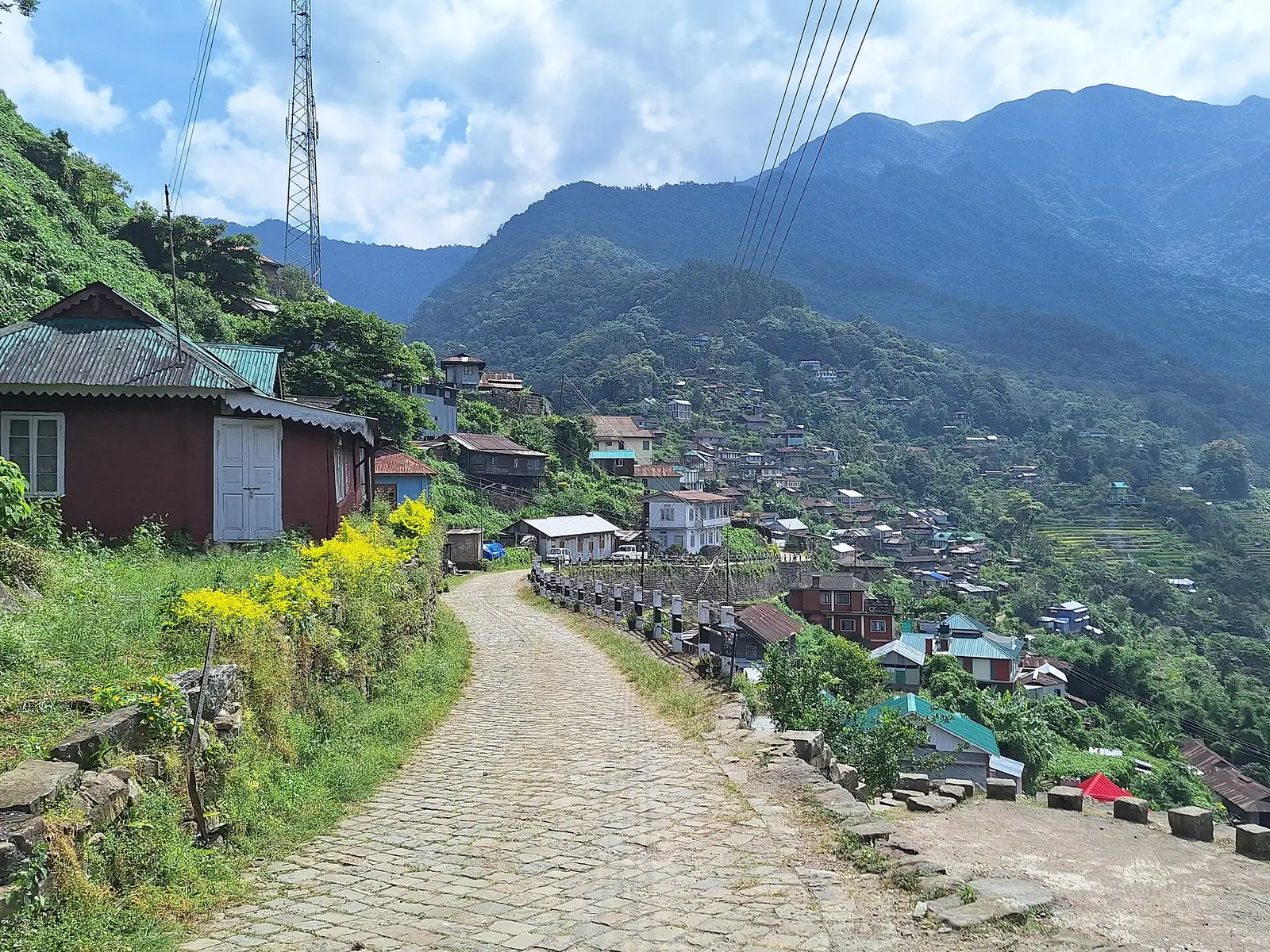
A Village of Two Legacies
Khonoma is an Angami Naga village roughly 20 km from Kohima, and it carries two very different but equally significant legacies. In the 19th century it was the site of fierce, prolonged resistance against British colonial forces — the Battle of Khonoma — a defining episode in the history of Naga resistance to outside rule.
More recently, Khonoma has become nationally recognised as one of India's first "green villages," for a genuinely inspiring, community-led conservation model. The village established the Khonoma Nature Conservation and Tragopan Sanctuary entirely on its own initiative, after residents voluntarily banned hunting across designated forest tracts to protect the endangered Blyth's tragopan pheasant — a conservation effort driven by the community itself, not imposed from outside.
The village also practices alder-tree terrace farming, a traditional agroforestry technique where alder trees are grown alongside crops on the hillside terraces to naturally enrich the soil — another distinctive, forward-thinking local practice that predates most modern sustainable-agriculture language by generations.
🌿 Khonoma at a Glance
Love the outdoors? See our guide to village tourism in India.
Interested in the history? See our guide to responsible tribal tourism.
Best Time to Visit Khonoma
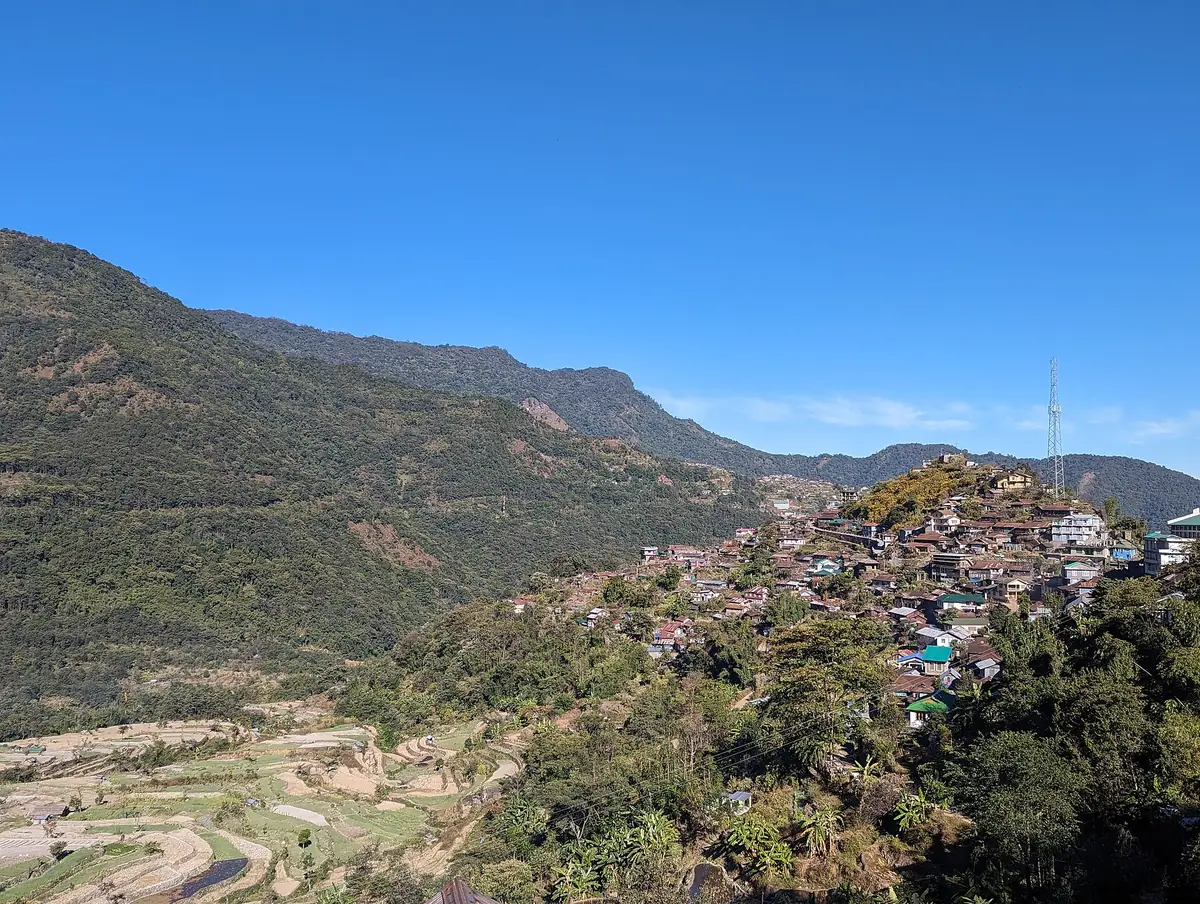
Khonoma's climate follows the wider Nagaland pattern — dry, clear months are far more pleasant than the wet monsoon for both village walks and sanctuary visits.
Clear post-monsoon skies, comfortable temperatures, and good visibility for spotting the tragopan in the sanctuary.
Genuinely cold mornings and evenings given the altitude — pack warm layers, but daytime walking conditions stay pleasant.
Warming temperatures and the terraces turning green again ahead of the growing season.
Heavy rain makes the sanctuary trails muddy and difficult, and reduces the chance of good wildlife sightings.
Our pick: October to November — clear skies, comfortable temperatures, and the best realistic chance of a tragopan sighting in the sanctuary.
How to Reach Khonoma
- From Kohima: Roughly 20 km by road, a short and easy drive of well under an hour — making Khonoma one of the most accessible offbeat additions to a Kohima-based itinerary.
- From Dimapur: Roughly 90 km, best combined with a Kohima stopover given the road route.
- Local transport: A hired taxi from Kohima is the simplest option — public transport directly to the village is limited.
Battle History & the Tragopan Sanctuary
The Battle of Khonoma
In the 19th century, Khonoma was the site of fierce, prolonged Angami Naga resistance against British colonial expansion into the Naga Hills — a conflict remembered locally as the Battle of Khonoma. It remains a defining point of pride and identity for the village, and older residents and guides can offer rich context on the fortified village layout that made the resistance possible.
Khonoma Nature Conservation and Tragopan Sanctuary
Established by the villagers themselves rather than imposed by any outside authority, the sanctuary protects the endangered Blyth's tragopan pheasant across designated forest tracts where the community voluntarily banned hunting. It's a genuinely rare example of grassroots conservation succeeding on its own terms, and guided walks with a local escort offer the best realistic chance of spotting the tragopan and other forest birdlife.
Alder-Tree Terrace Farming
Khonoma's terraced hillsides showcase a traditional agroforestry technique where alder trees are grown alongside crops, naturally enriching the soil across seasons — a sustainable farming practice that long predates the modern vocabulary around it, and a fascinating thing to see up close on a village walk.
Where to Stay at Khonoma
Community-run homestays are a genuine highlight here, reflecting the same conservation-minded ethos that built the Tragopan Sanctuary — staying overnight is a meaningful way to support that model directly.
- → Basic community homestays
- → Shared village guesthouses
- → Simple family-run rooms
- → Better-appointed homestays
- → Rooms with home-cooked meals included
- → Guided-walk package stays
- → Stay in Kohima and day-trip in
- → No dedicated luxury stays in the village
- → Premium hotels available in Kohima instead
Suggested Visit Plan
Village & History
- ✓Drive from Kohima, check into a homestay
- ✓Walk the old fortified village and Battle of Khonoma sites
- ✓Evening meal with your homestay family
Tragopan Sanctuary
- ✓Early-morning guided walk in the sanctuary
- ✓See the alder-tree terrace farming up close
- ✓Return to Kohima by afternoon
* Khonoma is easily paired with the wider Kohima itinerary and the Hornbill Festival calendar if timing allows.
Where to Eat at Khonoma
- Homestay meals: The primary way to eat here — home-cooked Angami Naga food, often featuring local greens, smoked meats, and rice grown on the village's own terraces.
- Village produce: Given the alder-terrace farming tradition, meals often showcase genuinely local, seasonal ingredients.
- Kohima options: For a wider range of restaurants, Kohima (a short drive away) has far more variety.
Budget Breakdown
| Expense | Budget | Mid-Range | Luxury |
|---|---|---|---|
| Homestay/night (with meals) | ₹700 | ₹1,800 | n/a |
| Guided sanctuary walk | ₹300 | ₹600 | ₹1,000 |
| Local transport from Kohima | ₹500 | ₹1,000 | ₹2,000 |
| Food (if outside homestay) | ₹200 | ₹400 | ₹800 |
* Figures are per person, per day. Homestay rates typically include meals.
Essential Tips for Visiting Khonoma
- Book a homestay, not just a day trip: An overnight stay is a meaningful way to support the village's conservation model directly.
- Go early for the sanctuary walk: Dawn offers the best realistic chance of spotting the Blyth's tragopan.
- Hire a local guide: Both the Battle of Khonoma history and the sanctuary's ecology come alive far more with someone who grew up here.
- Approach the history with respect: This is a village that fought for its autonomy — treat its history and its present-day conservation work with genuine appreciation.
✅ Do
- →Book a community homestay for the full experience
- →Take a guided walk in the Tragopan Sanctuary
- →Ask about the Battle of Khonoma history
- →Support the village's conservation model by staying overnight
- →Carry cash — card payments are unreliable here
- →Dress warmly for cool mornings and evenings
❌ Don't
- →Expect a guaranteed tragopan sighting
- →Rush through as a quick day trip if you can avoid it
- →Wander sanctuary trails without a guide
- →Expect ATMs or extensive card payment options
- →Treat the conservation work as a curiosity rather than an achievement
- →Skip warm layers even outside deep winter
Frequently Asked Questions
What makes Khonoma a "green village"?
Khonoma is nationally recognised for its community-led conservation model — most notably the Khonoma Nature Conservation and Tragopan Sanctuary, which villagers established themselves after voluntarily banning hunting across designated forest tracts to protect the endangered Blyth's tragopan pheasant.
Can you actually see the Blyth's tragopan?
Sightings are possible but not guaranteed — the tragopan is a shy forest pheasant. Guided walks in the sanctuary with a local escort give you the best realistic chance, especially early in the morning.
How far is Khonoma from Kohima?
Roughly 20 km, a short and easy drive of well under an hour, making Khonoma one of the most accessible offbeat additions to a Kohima-based Nagaland trip.
Is a homestay available in Khonoma?
Yes — community-run homestays are one of the village's genuine highlights, and staying overnight is a meaningful way to support the same conservation ethos that built the Tragopan Sanctuary.
What is the historical significance of Khonoma?
Khonoma was the site of fierce, prolonged Angami Naga resistance against British colonial forces in the 19th century, known as the Battle of Khonoma — a defining episode in the region's history of resistance.
Published by the Kudozz Club editorial team · Last updated · How we research our guides
Want us to plan this trip for you?
Tell Kudozz Club where you want to go and what kind of trip you’re looking for. We’ll build a Khonoma and Nagaland itinerary around your dates and budget.
Continue Exploring
View all guides Off-beat
Mon Travel Guide: Konyak Naga Heritage
The last generation of tattooed Konyak warriors, traditional longhouse villages, and one of the most remote, rewarding districts in Northeast India.
 Off-beat
Benreu Village Guide: Zeliang Naga Heritage
A Zeliang Naga village in Peren district where community-run homestays offer a genuine, unhurried window into traditional village life — the complete Benreu guide.
 Off-beat
Nagaland Travel Guide: Hornbill Festival, Kohima & Dzukou Valley
A festival where sixteen tribes gather in their warrior best, a war cemetery from a WWII turning point, and a valley called the Switzerland of the East — the complete guide to Nagaland.
 Off-beat
Phek Travel Guide: Terraced Fields & Tips
Striking hillside rice terraces, Chakhesang Naga villages, and a genuinely offbeat corner of Nagaland — the complete Phek guide.