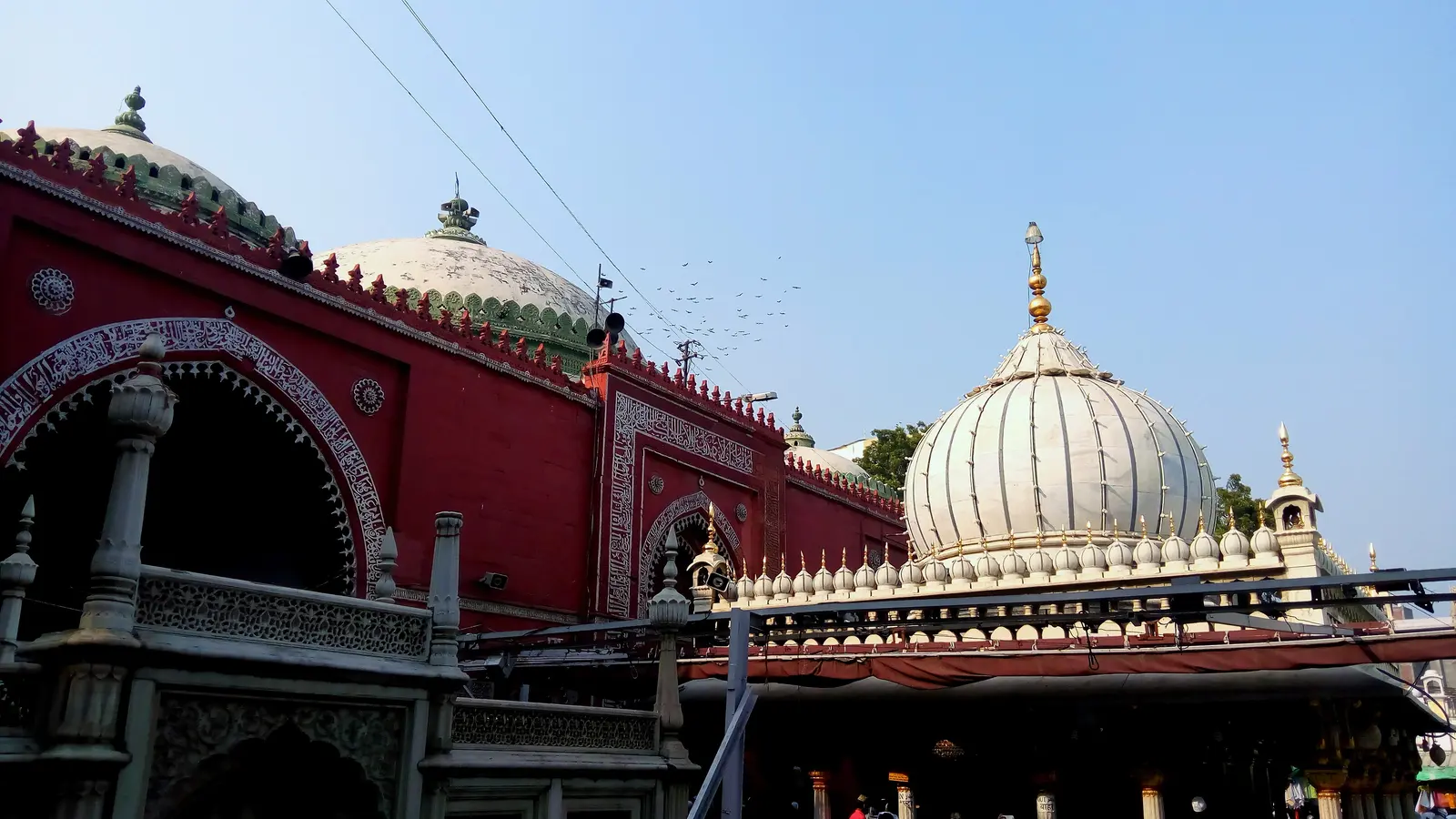
A Living Sufi Shrine at the Heart of Delhi
Nizamuddin is unlike almost anywhere else in Delhi. At its centre sits Hazrat Nizamuddin Dargah, the shrine of the 14th-century Sufi saint Nizamuddin Auliya — a place of worship that has been continuously active, without interruption, for close to 700 years. Wrapped tightly around it is Nizamuddin Basti, a dense, living neighbourhood of narrow lanes, kebab shops, and generations of families whose lives have been tied to the shrine for centuries. This isn't a monument you visit to admire from a respectful distance; it's a place where devotion is still actively happening, every single day.
That alone would make Nizamuddin worth the trip, but the neighbourhood also happens to sit beside Humayun's Tomb, one of the finest Mughal monuments in India and a UNESCO World Heritage Site, with the beautifully restored Sunder Nursery gardens connecting the two. Few pockets of Delhi pack this much genuine history, living culture, and architecture into a space you can comfortably cover on foot.
This guide covers the dargah and its etiquette, the famous Thursday night qawwali, Humayun's Tomb next door, the graves of Amir Khusrau and the poet Ghalib within the basti, Sunder Nursery, the heritage walk through the basti's lanes, and where to eat — everything you need to visit Nizamuddin thoughtfully and respectfully.
🕌 Nizamuddin at a Glance
Interested in the history? See our guide to visiting Humayun's Tomb.
Planning a pilgrimage? See our guide to Sufi shrines in India.
Best Time to Visit Nizamuddin
The dargah itself is open year-round with no real "off season" — devotion doesn't pause for weather — but Delhi's climate still shapes how comfortable a visit will be, especially since much of your time here is spent walking narrow, uncovered lanes and courtyards.
Cool, dry days make the basti's narrow lanes and standing through evening qawwali genuinely comfortable — the busiest season, but manageably so.
Daytime heat in the basti's tight, shade-poor lanes is intense. An early morning or after-dark visit becomes almost essential.
Heavy rain can flood the basti's narrow, unpaved side-lanes. The dargah courtyard and main paths remain accessible, but footwear choices matter.
The Urs (death anniversary) of Nizamuddin Auliya, observed in the Islamic calendar month of Rabi al-Akhir, and Ramzan evenings both draw enormous crowds — moving but far busier than a normal visit.
Our pick: a cool-season Thursday evening, October to March. Arrive an hour or so before sunset to explore the basti and dargah in daylight, then stay for qawwali as evening settles in.
How to Reach Nizamuddin
Nizamuddin sits in South Delhi, just off Mathura Road, and is easy to reach from almost anywhere in the city.
- By Metro: Hazrat Nizamuddin isn't directly on a metro line, but Jangpura (Violet Line) and JLN Stadium (Violet Line) are both a short auto-rickshaw ride away. Nizamuddin metro connections are gradually expanding, so double-check the closest operating station before you set out.
- By Train: Hazrat Nizamuddin Railway Station, one of Delhi's major terminals connecting to much of the country, is within easy walking distance of the dargah — genuinely convenient if you're arriving or departing by rail.
- By Auto-rickshaw or app cab: The simplest option from anywhere else in the city — ask to be dropped at the "Nizamuddin Dargah" entrance lane off Lodhi Road or Mathura Road, since vehicles can't go all the way in.
Hazrat Nizamuddin Dargah
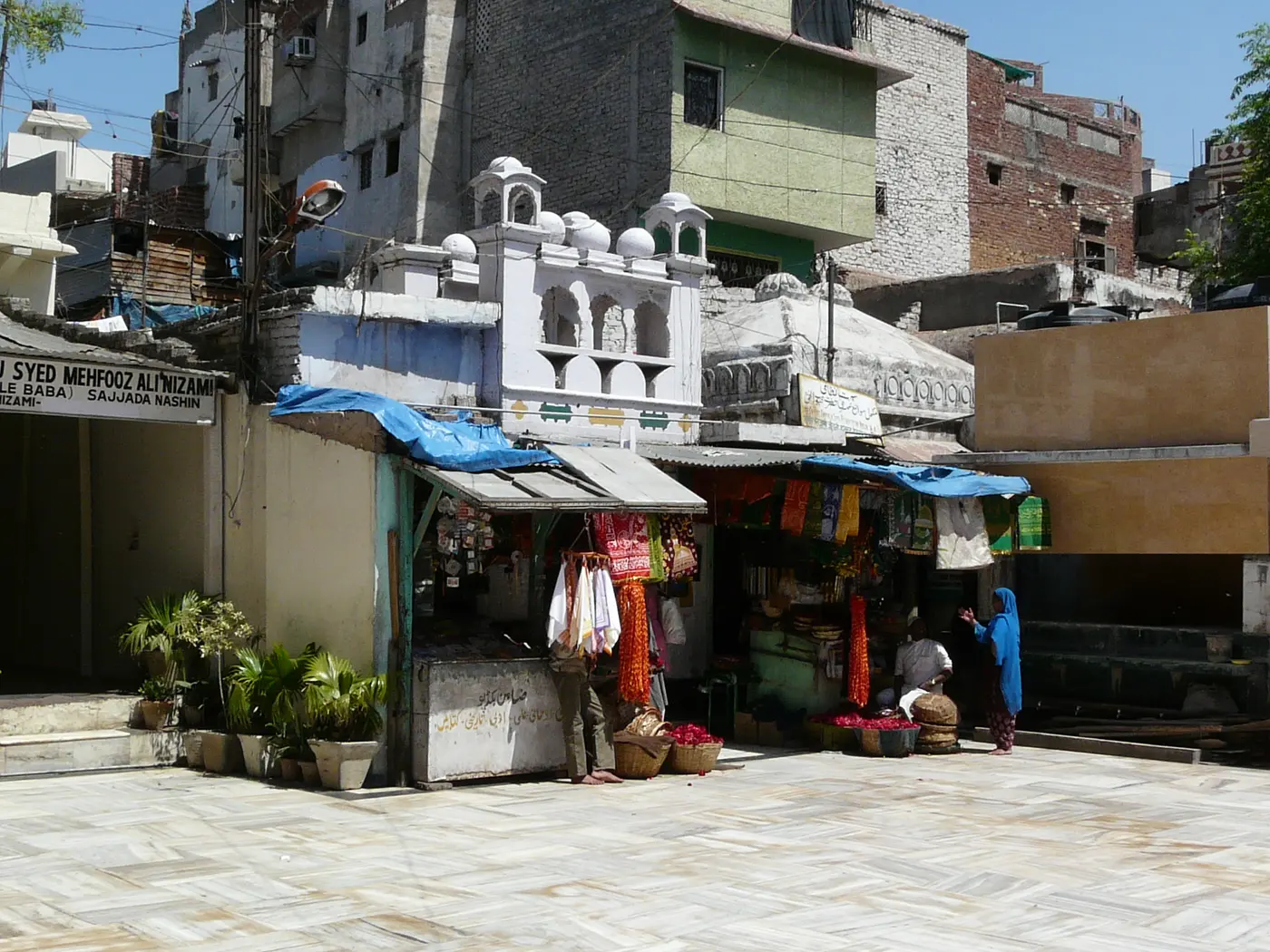
Nizamuddin Auliya (1238–1325) was one of the most important saints of the Chishti order of Sufism in South Asia — a disciple of Baba Farid and, in turn, spiritual teacher to Amir Khusrau, the poet, musician, and scholar often credited with shaping qawwali into the form still sung today. Nizamuddin Auliya preached a message of love, humility, and service that drew followers across religious lines even in his own lifetime — a legacy that still visibly shapes how the shrine functions.
The dargah that stands today has been rebuilt and expanded many times since the saint's death in 1325, with much of the current marble structure, including its distinctive dome, dating to renovations carried out across the Mughal period. The complex also holds the tombs of several other historically significant figures, including the poet Amir Khusrau and Jahanara Begum, the eldest daughter of Mughal emperor Shah Jahan, both buried close to their spiritual guide by choice.
Walking in from the main lane, you pass through a sequence of narrow, covered passages lined with flower and chadar sellers before the space opens into the marble courtyard around the saint's grave. It's usually crowded, always atmospheric, and — unlike many historical monuments — genuinely functioning as a place of active worship rather than a preserved relic.
Dress Code & Etiquette for All Visitors
- Dress modestly: Shoulders and knees covered for everyone; women should carry or borrow a headscarf, available cheaply from stalls near the entrance.
- Remove shoes before entering: Guarded shoe-storage stalls line the approach lane for a small fee — carrying socks is a good idea for the stone floors.
- Visitors of all faiths are welcome: The dargah's courtyard is open to everyone; only the innermost sanctum around the grave has more specific, sometimes gender-based, access norms — follow the lead of those managing the space if unsure.
- Photography: Generally tolerated in the outer courtyard, but avoid photographing people praying up close without asking, and expect restrictions closer to the inner sanctum.
- Donations are voluntary: You may be offered flowers, a chadar, or a guided walk-through for a fee — none of this is compulsory, and a polite "no thank you" is entirely acceptable.
The Thursday Evening Qawwali
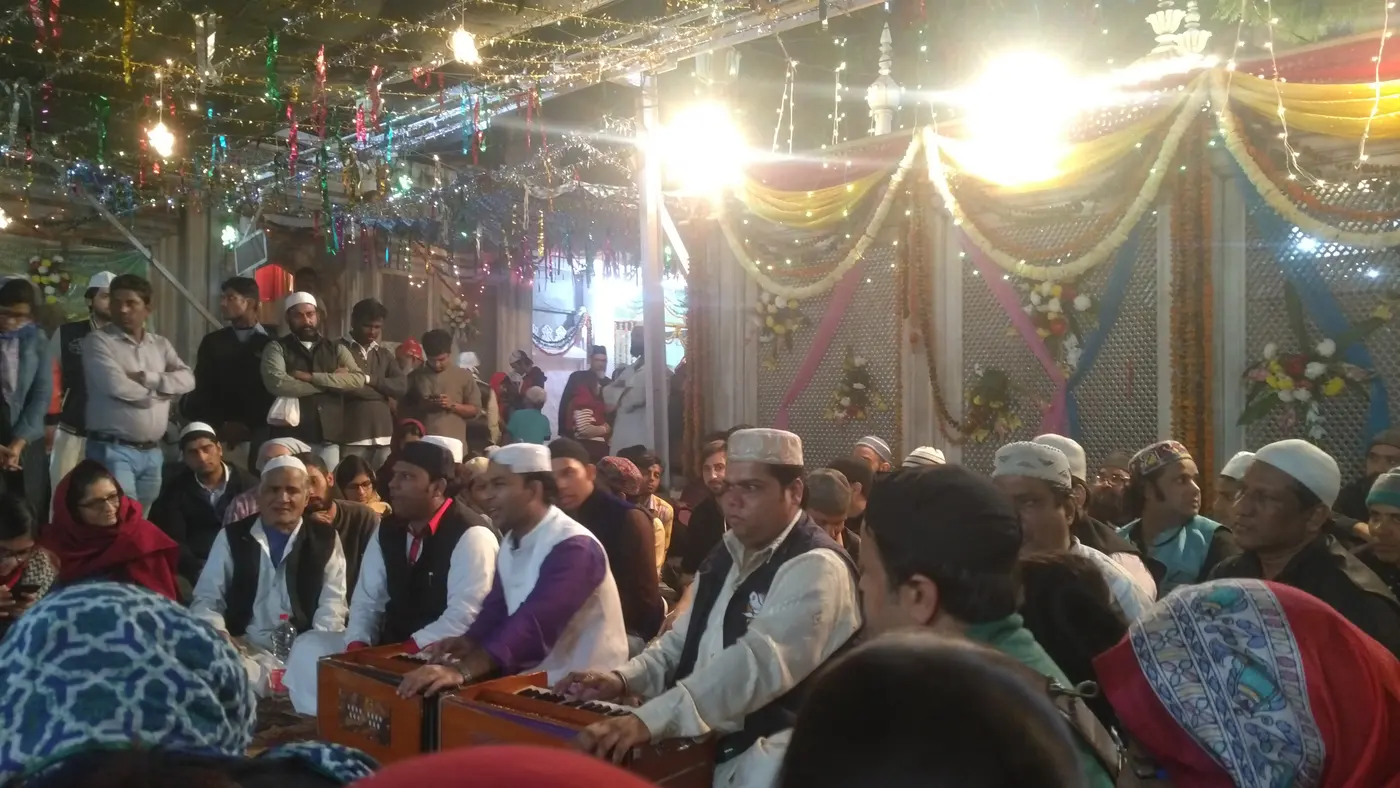
For many visitors, this is the reason to come. Every Thursday evening after sunset, qawwals — many from hereditary singing families whose lineage traces back through generations of performers in the tradition Amir Khusrau helped establish — gather in the dargah courtyard to sing. The sessions are devotional first and performance second: verses in Persian, Urdu, and Braj Bhasha praising the saint and the divine, built around rhythmic clapping, harmonium, and tabla, rising and falling in intensity as the evening goes on.
Thursday is chosen deliberately — it's considered the eve of Jumu'ah (Friday), an auspicious time at Sufi shrines across South Asia — and the ritual has continued at Nizamuddin in some form for centuries. Shorter or smaller sessions occasionally happen on other evenings, but Thursday night is the one to plan around.
What to Expect
- Arrive early: The courtyard fills up quickly as sunset approaches; arriving 30–45 minutes ahead secures a decent spot to sit or stand.
- It runs long: Sessions often continue for hours after dark — you're free to stay as long or as briefly as you like.
- Seating is on the floor: Men and women are typically seated in separate sections of the courtyard; look for where others are settling and follow suit.
- It's free, but tipping happens: It's customary for listeners to place small denomination notes near the qawwals as the performance builds — entirely optional, and a much smaller gesture than a formal donation.
Respectful Listening Etiquette
- Keep phone use minimal and quiet: A few photos or a short video clip is fine, but this is a devotional gathering, not a concert — avoid filming extensively or with flash.
- Don't walk in front of seated listeners: The courtyard gets tightly packed; move around the edges rather than cutting through.
- Follow the room's energy: Clapping along or swaying gently is welcomed as the music builds; loud talking or moving through the crowd during a particularly devotional passage is not.
- Dress and behave as you would inside the dargah itself: The qawwali happens within the shrine complex, so the same modesty and respect apply throughout the evening.
Humayun's Tomb
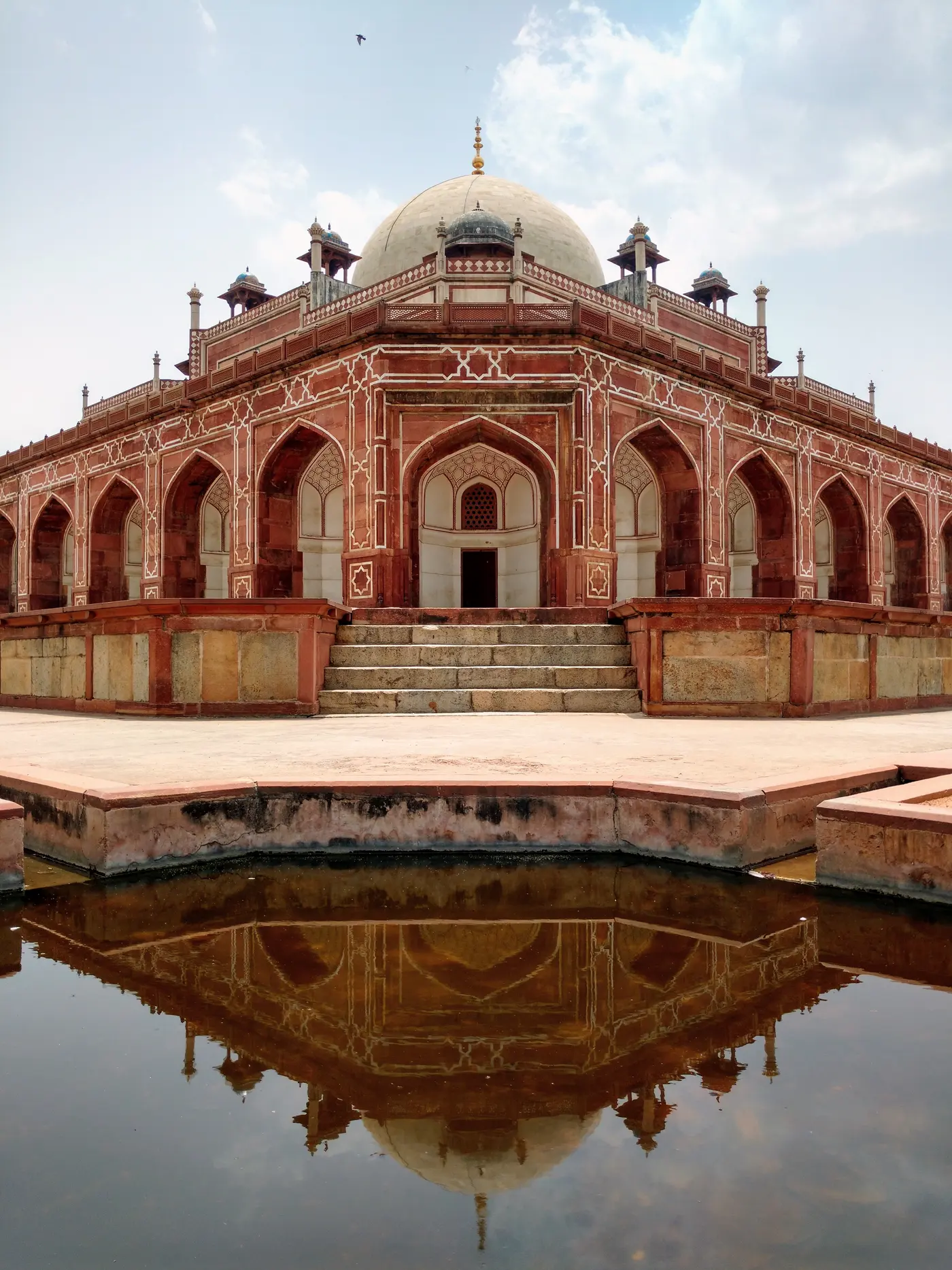
A short walk from the dargah, across Mathura Road, stands Humayun's Tomb — the resting place of the second Mughal emperor, Humayun, and one of the most significant monuments in Mughal architectural history. Commissioned by his widow, Empress Bega Begum, and built between roughly 1565 and 1572, it was the first monumental garden-tomb constructed in India, arranged within a formal charbagh (four-part Persian garden) and set on a raised platform with a striking double dome in red sandstone and white marble.
Its influence runs directly through to the Taj Mahal, built roughly seven decades later — the same charbagh layout, the same use of a raised plinth and symmetrical garden geometry, refined into the more famous, all-white monument at Agra. Historians and architects widely consider Humayun's Tomb the direct architectural precursor to the Taj, which makes visiting the two back to back a genuinely interesting way to trace that evolution.
It was declared a UNESCO World Heritage Site in 1993 and has been extensively restored over the past two decades, including the surrounding gardens and several smaller tombs within its grounds. Humayun's Tomb genuinely deserves its own unhurried visit — budget at least an hour, more if you enjoy Mughal architecture and garden design, and treat this section as an overview rather than a full guide to the complex.
Ghalib's Tomb & Other Basti Graves
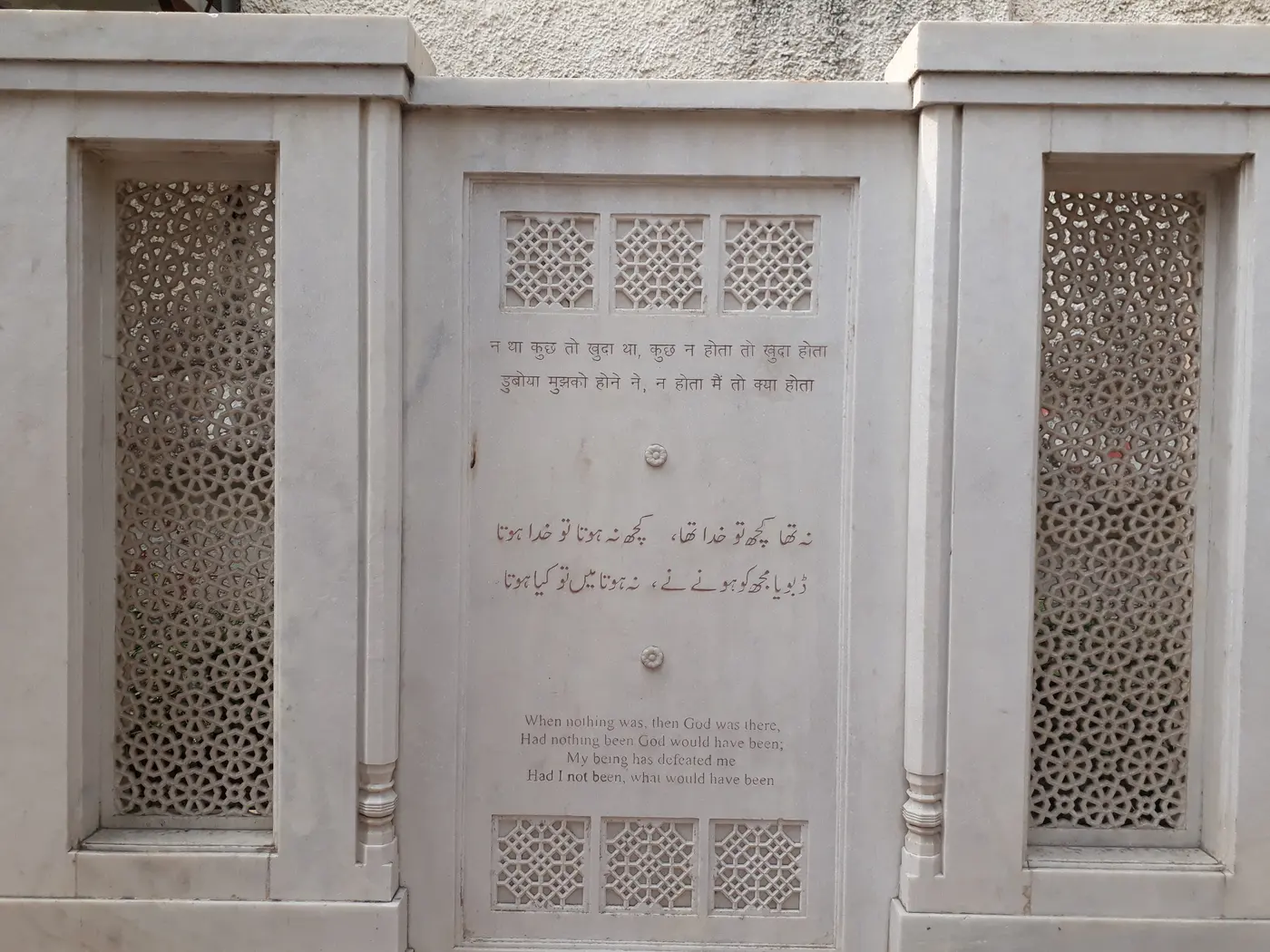
Tucked within the lanes of Nizamuddin Basti, a short walk from the dargah, is the tomb of Mirza Ghalib — widely regarded as one of the greatest Urdu and Persian poets to have written in India, and a towering figure in South Asian literary history. Ghalib lived much of his later life in Delhi during the final years of the Mughal era and was buried here, in the same basti his poetry still echoes through, when he died in 1869.
The tomb itself is a modest, marble-latticed enclosure — quieter and far less crowded than the dargah, and a good stop for anyone with an interest in Urdu poetry or Delhi's literary history. Within the basti's tightly packed lanes are also several other historic graves and small shrines, including that of Amir Khusrau, buried within the dargah complex itself close to his spiritual teacher — a resting place he is said to have specifically wished for.
Sunder Nursery
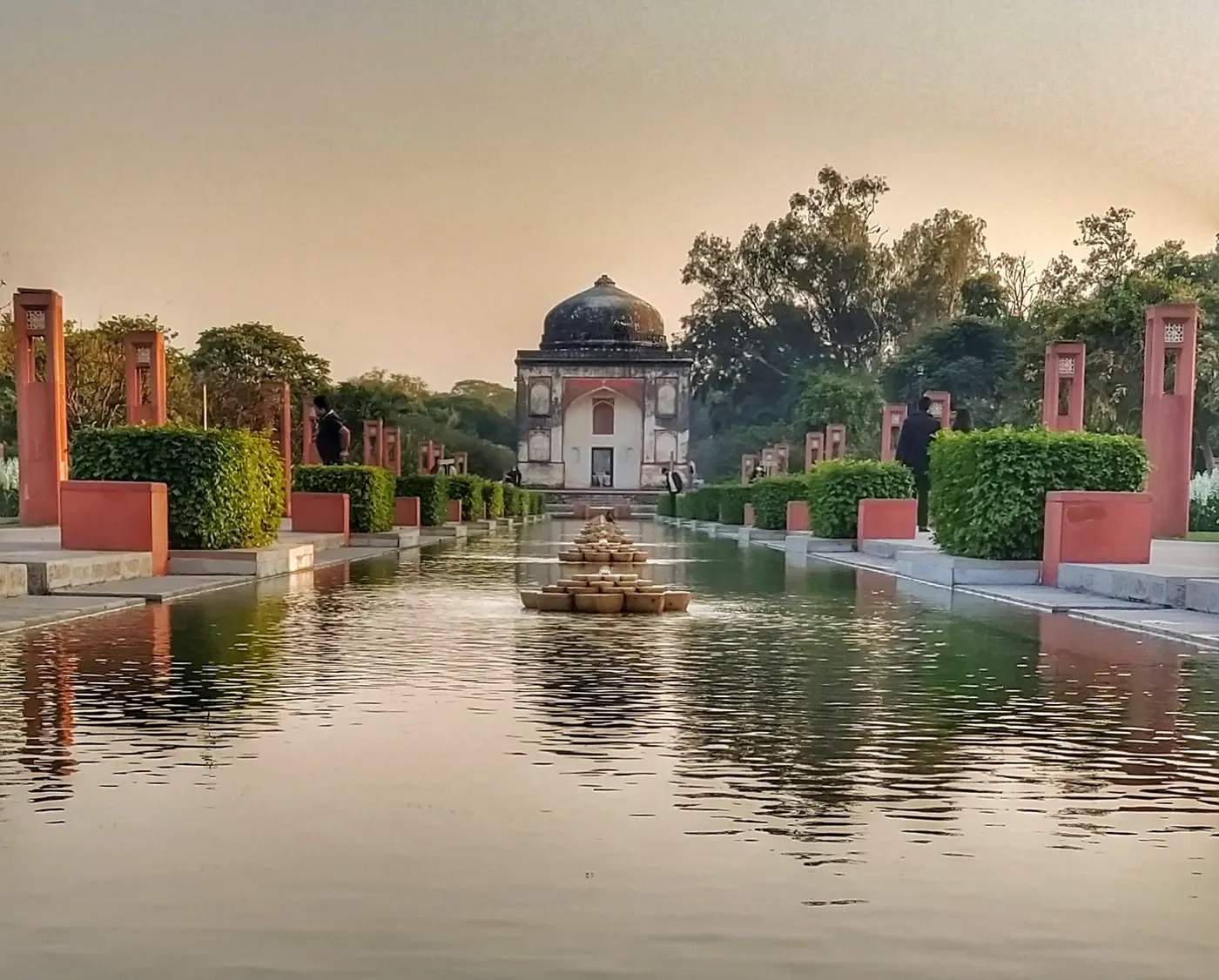
Sitting almost exactly between the dargah and Humayun's Tomb is Sunder Nursery — a roughly 90-acre heritage park built around a cluster of Mughal-era monuments, including the striking Sunder Burj and Lakkarwala Burj tombs, that had fallen into neglect over the decades.
A major restoration effort led by the Aga Khan Trust for Culture, working alongside government heritage bodies, transformed the site into a landscaped public park — formal gardens, a working nursery and micro-forest, an amphitheatre, and walking paths connecting its restored monuments — before reopening it fully to the public in 2018. It now functions as a buffer zone connected to the wider Humayun's Tomb UNESCO World Heritage complex, and is one of the more pleasant, unhurried green spaces in this part of Delhi.
It's easy to underestimate how much time Sunder Nursery deserves — most visitors treat it as a quick pass-through between the dargah and the tomb, but it rewards a slower wander, particularly in the cooler hours of morning or early evening.
The Nizamuddin Basti Heritage Walk
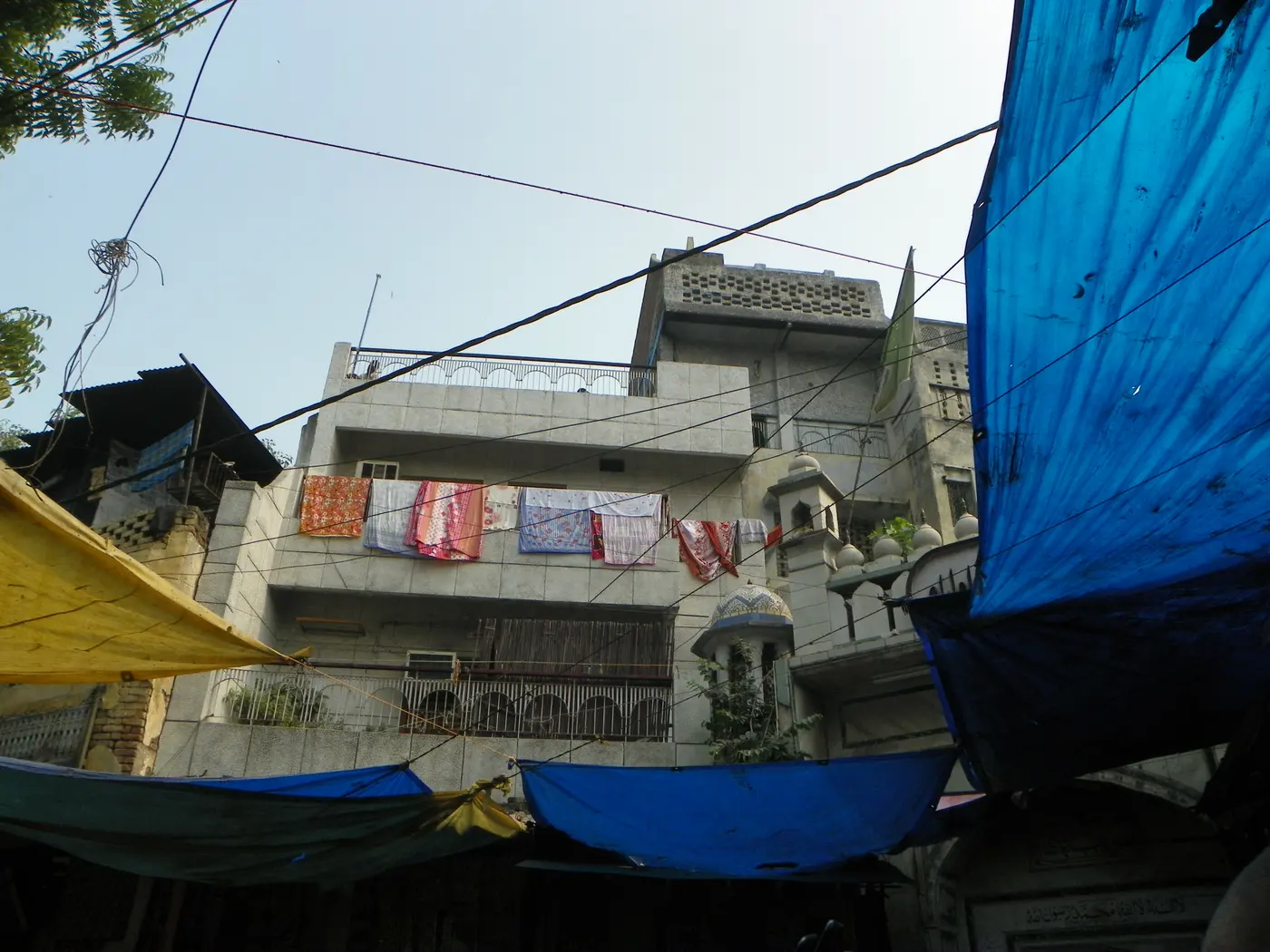
Beyond the dargah itself, Nizamuddin Basti is a genuinely fascinating place to walk through — a maze of lanes barely wide enough for two people to pass, lined with generations-old shops, small khanqahs (Sufi hospices), and homes of families whose ancestors have served the shrine for centuries.
Extensive conservation work in the basti, led over the past two decades by the Aga Khan Trust for Culture in partnership with local community organisations, has restored several historic structures, improved sanitation and public space within the neighbourhood, and trained local youth as heritage guides — part of a wider urban renewal initiative that also covers Humayun's Tomb and Sunder Nursery.
Guided heritage walks through the basti, often run by local community-based organisations, are a genuinely worthwhile way to experience the neighbourhood — they offer context on its history, architecture, and daily life that's easy to miss walking through alone, and directly support the community whose lanes you're walking through.
Where to Eat Around Nizamuddin
Nizamuddin Basti has its own dedicated street food culture, distinct from Old Delhi's Chandni Chowk but every bit as loved by locals — built almost entirely around Mughlai kebabs, biryani, and slow-cooked meat dishes served from small, decades-old establishments.
- Ghalib Kebab Corner: A well-known basti institution for seekh kebabs and other grilled meats, popular with both locals and visitors passing through after a dargah visit.
- Al Jawahar & similar basti eateries: Small, long-running restaurants serving mutton korma, nihari, and biryani in the narrow lanes near the dargah entrance — look for the busiest counters as a good sign.
- Nizamuddin's Karim's branch: A branch of the legendary Old Delhi Mughlai institution, serving the same kebab-and-biryani tradition close to the dargah.
- Street-side kebab stalls: Especially lively in the early evening before Thursday qawwali, when the basti's lanes fill with both worshippers and the smell of grilling meat.
- Chai stalls near the dargah entrance: A simple, inexpensive way to sit and take in the pace of the neighbourhood between the dargah and a walk toward Humayun's Tomb.
Budget Breakdown
A visit to Nizamuddin is inexpensive by design — the dargah itself is free, and most costs come down to optional donations, food, and Humayun's Tomb's entry ticket.
| Expense | Budget | Mid-Range | Comfortable |
|---|---|---|---|
| Dargah entry | Free | Free | Free |
| Shoe storage / donation | ₹20–50 | ₹50–150 | ₹150–500 |
| Humayun's Tomb entry | ₹35 (Indian) | ₹35 (Indian) | ₹35 (Indian) |
| Food (basti kebabs/biryani) | ₹150 | ₹400 | ₹900 |
| Local transport (auto/cab) | ₹100 | ₹300 | ₹800 |
| Guided heritage walk (optional) | — | ₹300–600 | ₹800+ |
* Humayun's Tomb ticket prices are typically higher for foreign nationals and are periodically revised — confirm current rates before visiting. Donations at the dargah are entirely optional.
Essential Tips & Etiquette
- Dress modestly, every time: Covered shoulders and knees for all visitors, and a headscarf for women, whether it's your first visit or your fifth.
- Remove shoes at the designated stalls: Use the guarded shoe-storage points near the entrance rather than leaving footwear unattended.
- Ask before photographing people: Especially inside the dargah and during qawwali — many worshippers are there for deeply personal reasons.
- Donations are optional, not obligatory: It's fine to politely decline offers of chadar, flowers, or a paid guided walk-through at the entrance.
- Arrive early for Thursday qawwali: The courtyard fills quickly after sunset — 30–45 minutes early secures a decent spot.
- Pair it with Humayun's Tomb and Sunder Nursery: All three sit within a 15–20 minute walk of each other and combine naturally into one half-day outing.
✅ Do
- →Cover shoulders and knees; women carry a headscarf
- →Remove shoes at the guarded storage stalls
- →Arrive early on Thursday for a good spot for qawwali
- →Walk quietly and follow the courtyard's lead during singing
- →Combine the visit with Humayun's Tomb and Sunder Nursery
- →Consider a guided heritage walk through the basti
❌ Don't
- →Wear shorts, sleeveless tops, or immodest clothing
- →Photograph worshippers up close without asking
- →Feel obligated to pay for chadar, flowers, or a guide
- →Walk through seated crowds during qawwali
- →Rush the basti's lanes — it rewards slow exploring
- →Skip Humayun's Tomb, assuming the dargah alone is enough
Frequently Asked Questions
Is Nizamuddin Dargah open to non-Muslims?
Yes. Hazrat Nizamuddin Dargah welcomes visitors of every faith, and it's common to see people of all backgrounds sitting quietly in the courtyard or listening to qawwali. The inner sanctum around the saint's grave is more tightly managed and, at points, gender-segregated, but the shrine as a whole is open and — during Thursday qawwali — genuinely one of the most inclusive religious spaces in Delhi.
What day is qawwali performed at Nizamuddin Dargah?
Qawwali is sung every Thursday evening after sunset, year-round, as it has been for generations — Thursday (the eve of the Muslim holy day) is considered especially auspicious at Sufi shrines. Shorter qawwali sessions sometimes happen on other evenings too, but Thursday night is the main, most reliably scheduled performance and the one most visitors plan around.
Is Humayun's Tomb near Nizamuddin Dargah?
Yes — Humayun's Tomb is only about a 10–15 minute walk from the dargah, on the other side of Mathura Road, and the two are often visited together in a single half-day. Sunder Nursery, a restored Mughal-era garden with several smaller monuments, sits directly between them and makes a natural stop on the way.
What should I wear to visit Nizamuddin Dargah?
Modest, conservative clothing that covers shoulders and knees for everyone, and a headscarf for women (available to borrow or buy cheaply near the entrance if you don't have one). Shoes must be removed before entering the shrine complex — inexpensive, guarded shoe-storage stalls line the approach lane, or you can simply carry a pair of socks.
Do I need to pay to enter Nizamuddin Dargah?
There's no entry fee. Donations (nazr) are entirely voluntary, though you'll likely be offered flower petals, chadar (ceremonial cloth for the grave), or a guided walk-through for a fee by people at the entrance — none of this is compulsory, and it's fine to politely decline and simply pay respects on your own terms.
How much time should I budget for Nizamuddin and Humayun's Tomb together?
A comfortable half-day — roughly 3 to 4 hours — covers the dargah, a short basti walk, and Humayun's Tomb at an unhurried pace. Add another hour if you want to properly explore Sunder Nursery, or a full evening if your visit is timed around the Thursday qawwali, which usually runs well into the night.
Is Nizamuddin Basti safe to walk through?
Yes, generally — it's a dense, working residential neighbourhood with narrow lanes, and like anywhere crowded, it pays to keep valuables secure and be mindful during peak Thursday evening crowds. Guided heritage walks run by local trusts are a good option for first-time visitors who'd rather navigate the basti with context than alone.
Published by the Kudozz Club editorial team · Last updated · How we research our guides
Want us to plan this trip for you?
Tell Kudozz Club where you want to go and what kind of trip you’re looking for. We’ll build a Delhi itinerary around your dates and budget.
Continue Exploring
View all guides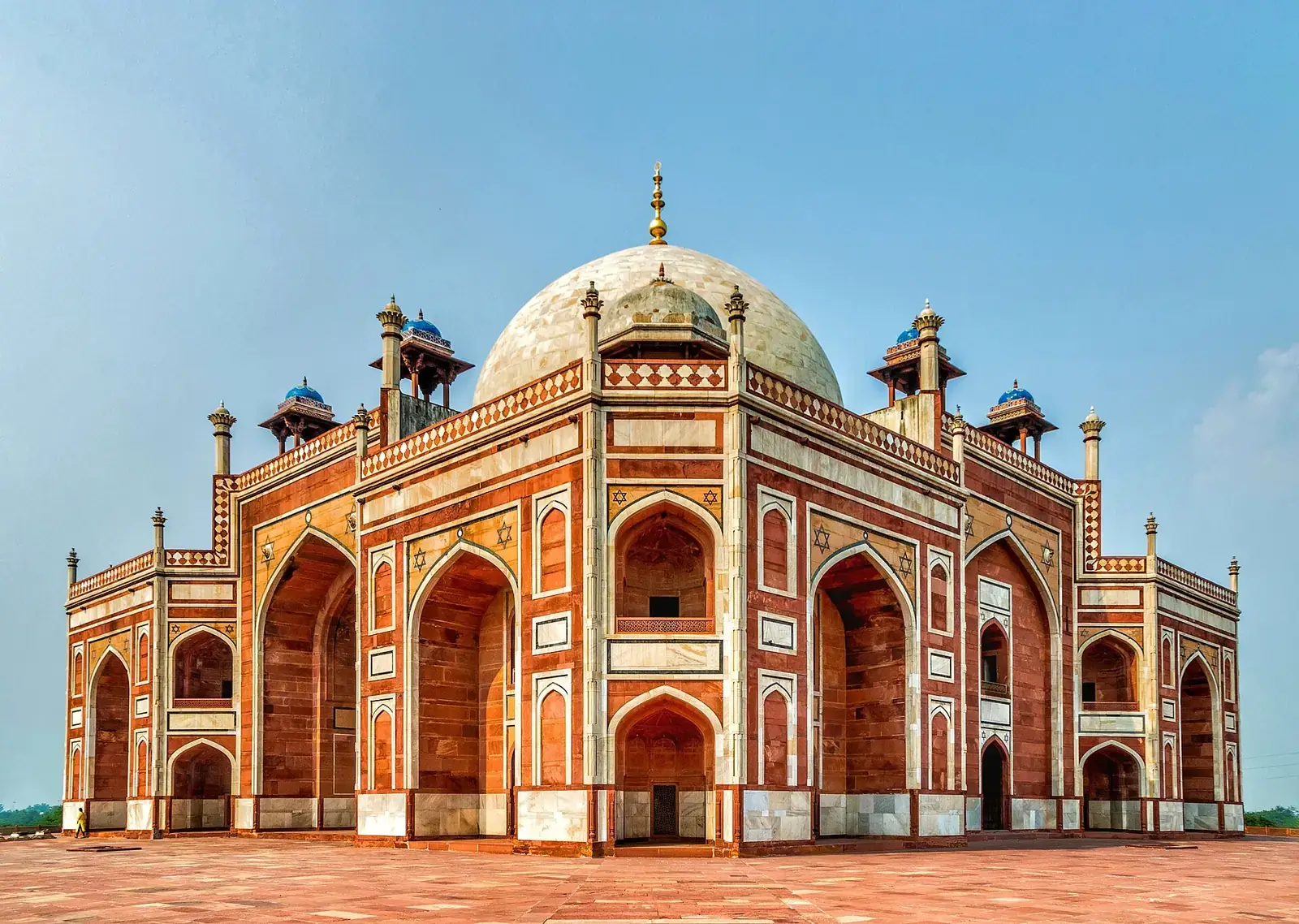 Heritage & Culture
Humayun's Tomb: History and Visiting Guide
A visitor's guide to Humayun's Tomb in Delhi: the 16th-century garden tomb of the second Mughal emperor, often seen as a forerunner of the Taj Mahal, the other tombs in the complex including Isa Khan's, the restoration by the Aga Khan Trust for Culture, the site museum, Sunder Nursery next door, practicalities and nearby Nizamuddin.
 Heritage
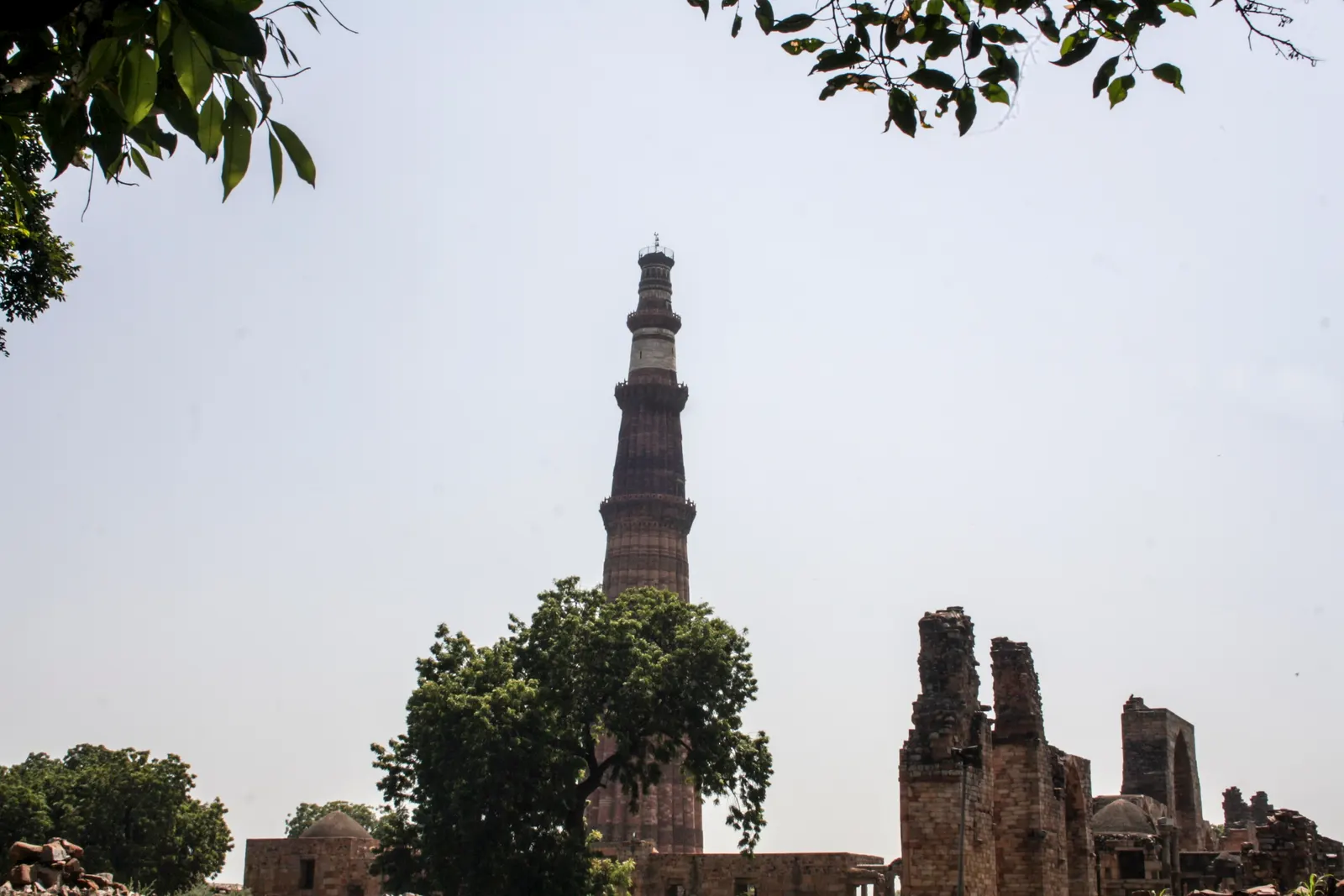
Mehrauli Travel Guide: Qutub Minar & Ancient Delhi
Delhi's oldest continuously inhabited settlement — Qutub Minar, the rust-resistant Iron Pillar, a forest full of forgotten tombs, and 800+ years of layered history in one walkable quarter.
 Heritage
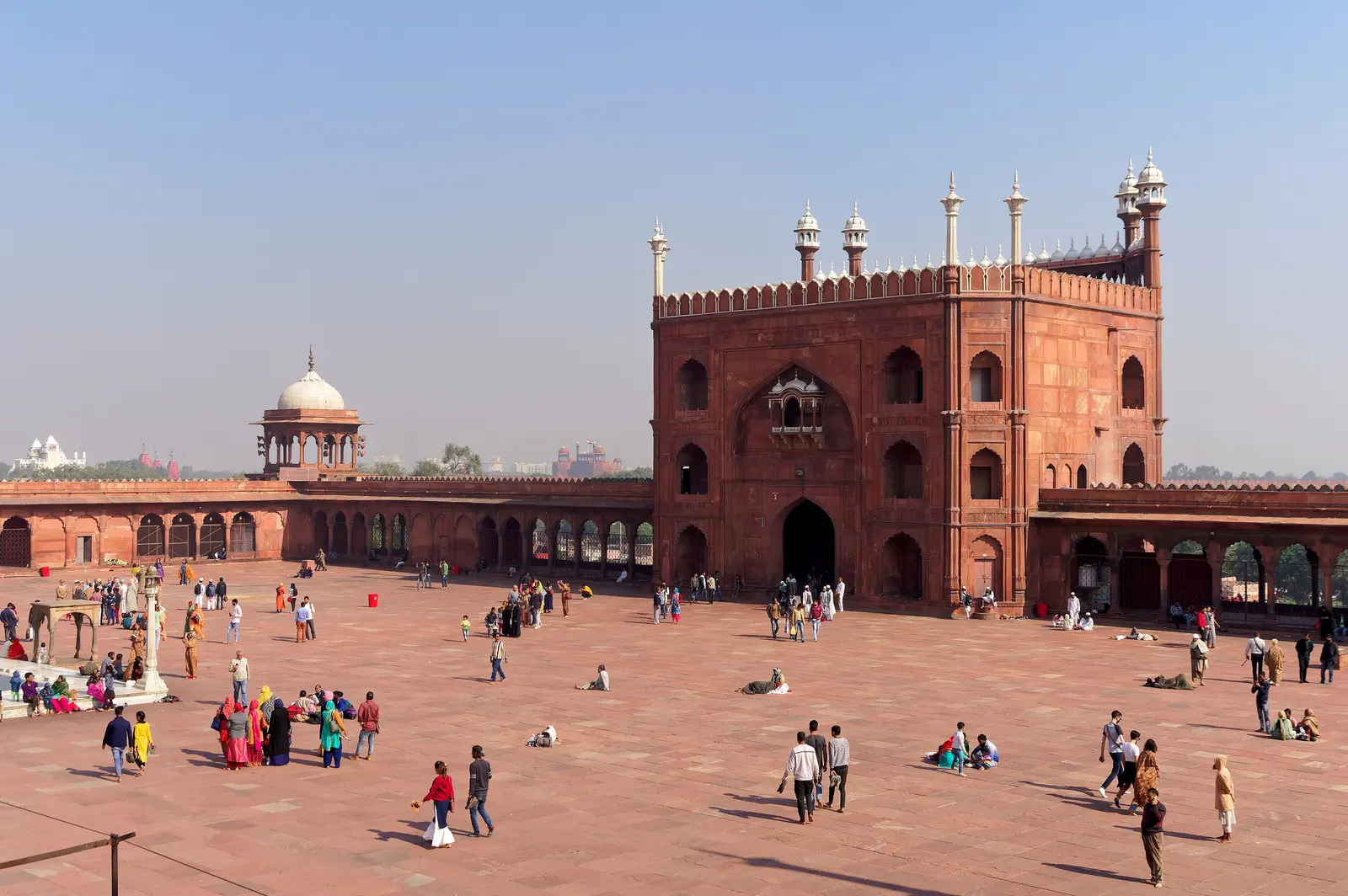
Old Delhi Travel Guide: Red Fort, Jama Masjid & Food
Shahjahanabad, Shah Jahan's 17th-century walled capital — Red Fort, India's largest mosque, cycle-rickshaw lanes, havelis, bazaars, and a street food trail running for well over a century.
 Heritage
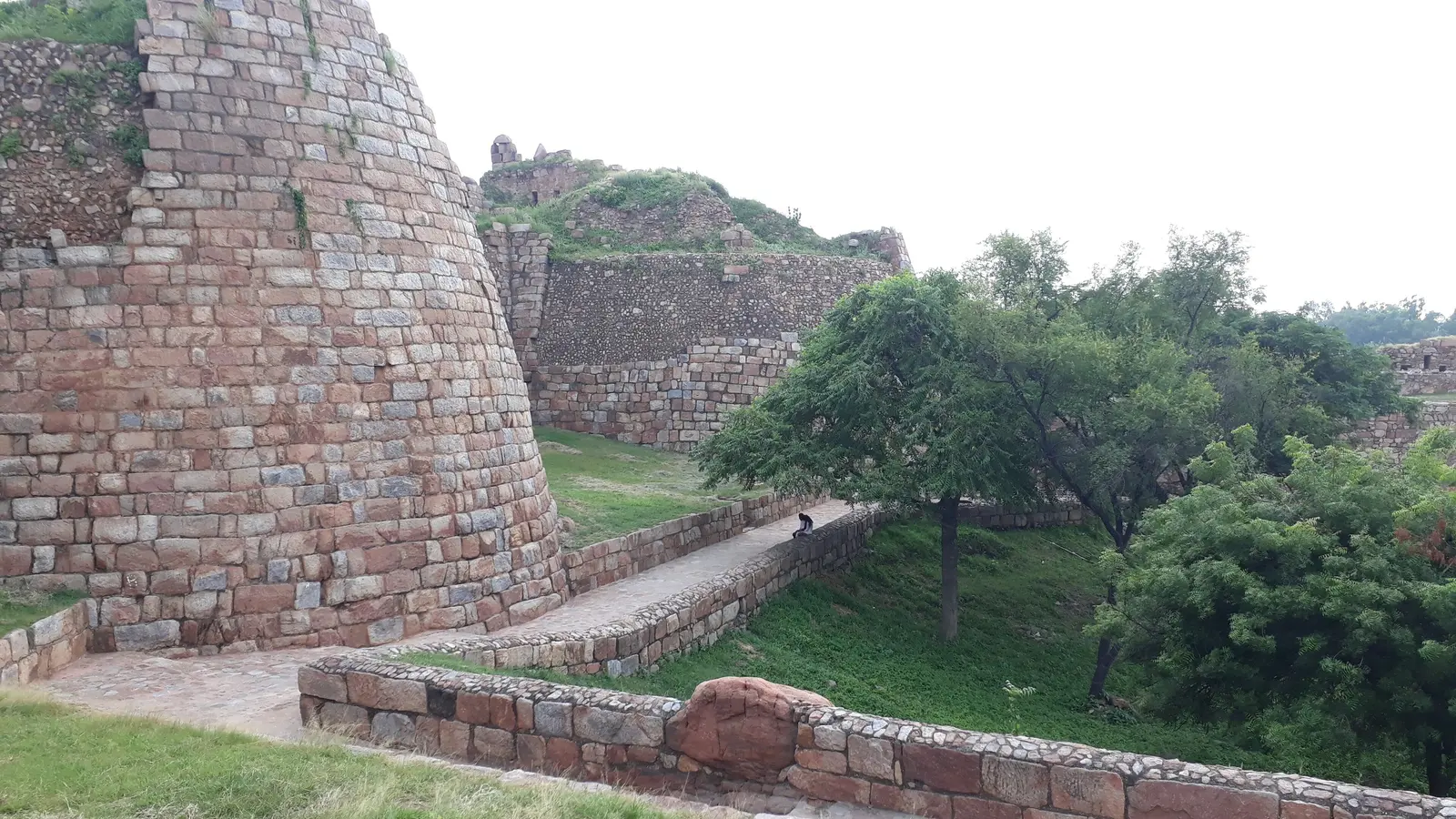
Tughlaqabad Fort Travel Guide: Delhi's Cursed City
Delhi's massive, mostly-empty 14th-century fort ruins built by Sultan Ghiyasuddin Tughlaq — sloping ramparts, 13 gates, an underground citadel, and the legendary curse of Nizamuddin Auliya.