Delhi's Park-Museum
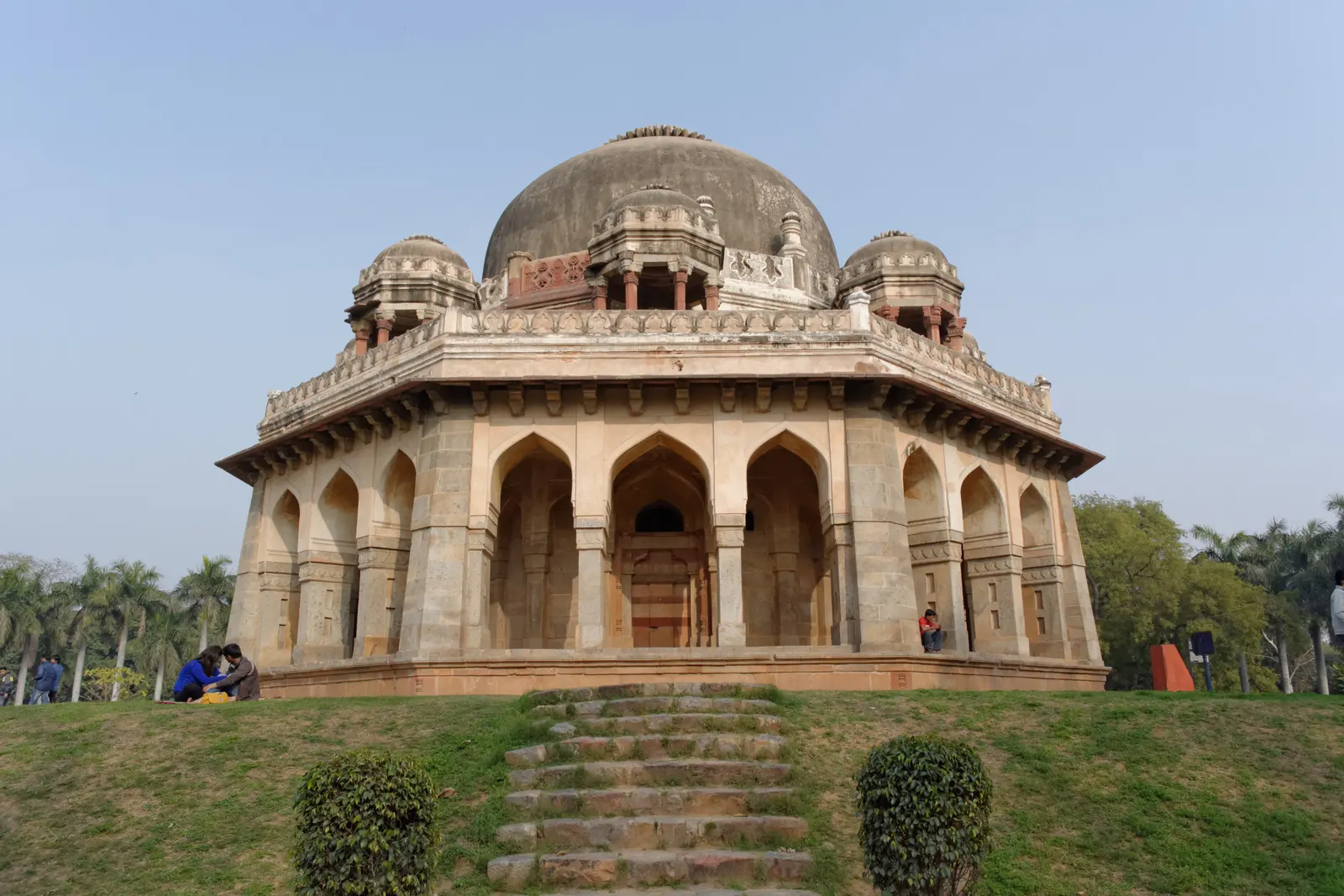
Lodhi Garden is 90 acres of landscaped green in the middle of Delhi, dotted with 500-year-old tombs from the Sayyid and Lodi dynasties — the two dynasties that ruled the Delhi Sultanate through most of the 15th century and into the early 16th. It is, in practice, two things at once: a genuinely important cluster of pre-Mughal monuments, and the most-used public park in South Delhi, where the tombs are as likely to be a jogger's backdrop as a tourist's photograph.
That double identity is what makes Lodhi Garden worth visiting even for travellers who've already covered Delhi's bigger-name monuments. Four major tombs and mosques — Bara Gumbad, Sheesh Gumbad, Mohammed Shah's Tomb, and Sikandar Lodi's Tomb — sit inside grounds that were substantially redesigned twice: once in the 1930s and 40s under the British, and again in the 1960s, when the American landscape architect Garrett Eckbo reworked its paths, tree cover, and open lawns into something closer to the park Delhiites use today.
Unlike Red Fort or Qutub Minar, there's no ticket, no security queue, and no fixed circuit — you simply walk in through one of several gates and wander. That informality is exactly why it's earned a permanent place in Delhi's daily life, not just its tourist itineraries.
🌳 Lodhi Garden at a Glance
Interested in the history? See our guide to heritage in Delhi.
Best Time to Visit Lodhi Garden
Because Lodhi Garden is free and outdoors, timing your visit well matters more than for most Delhi monuments — the difference between a crowded midday walk and a quiet golden-hour one is significant.
Soon after the gates open, the park is at its coolest and quietest — joggers and walking groups are out, but tour groups haven't arrived, and the light on the domes is soft and warm.
The hour before sunset is arguably Lodhi Garden's finest window — long shadows across the lawns, the sandstone monuments lit warm, and a relaxed, sociable crowd of locals rather than tourists.
Cool, comfortable temperatures make any time of day pleasant for walking the full loop — the peak season for both locals and visitors.
Winter brings migratory birds to the park's trees and ponds, making early mornings especially rewarding for anyone interested in birdwatching alongside the monuments.
Our pick: a winter weekday morning, arriving close to opening time. You'll get cool weather, good light, migratory birds in the trees, and a park that's still mostly locals rather than tour groups.
How to Reach Lodhi Garden
Lodhi Garden sits in one of Delhi's best-connected central neighbourhoods, close to Khan Market and Safdarjung's Tomb, which makes it easy to fold into a South Delhi day out.
- By Metro: Jorbagh station (Yellow Line) is the closest, about a 10-15 minute walk from the park's southern gates. Khan Market station (Violet Line) is a similar distance from the Lodhi Road side.
- By Auto/Cab: Both are the simplest option if arriving with luggage or in a group — the park has multiple entrances along Lodhi Road, Max Mueller Marg, and near the India International Centre.
- On foot from Khan Market: If you're already at Khan Market, it's an easy 10-minute walk to the nearest gate — a natural way to combine a park visit with lunch or a coffee stop.
The Monuments
Four principal structures anchor the park, built across roughly 75 years spanning the end of the Sayyid dynasty and the whole of the Lodi dynasty that followed it. Seen in sequence, they trace a fairly clear line of architectural development — one that later fed directly into the grander garden-tombs of the Mughal era.
Mohammed Shah's Tomb
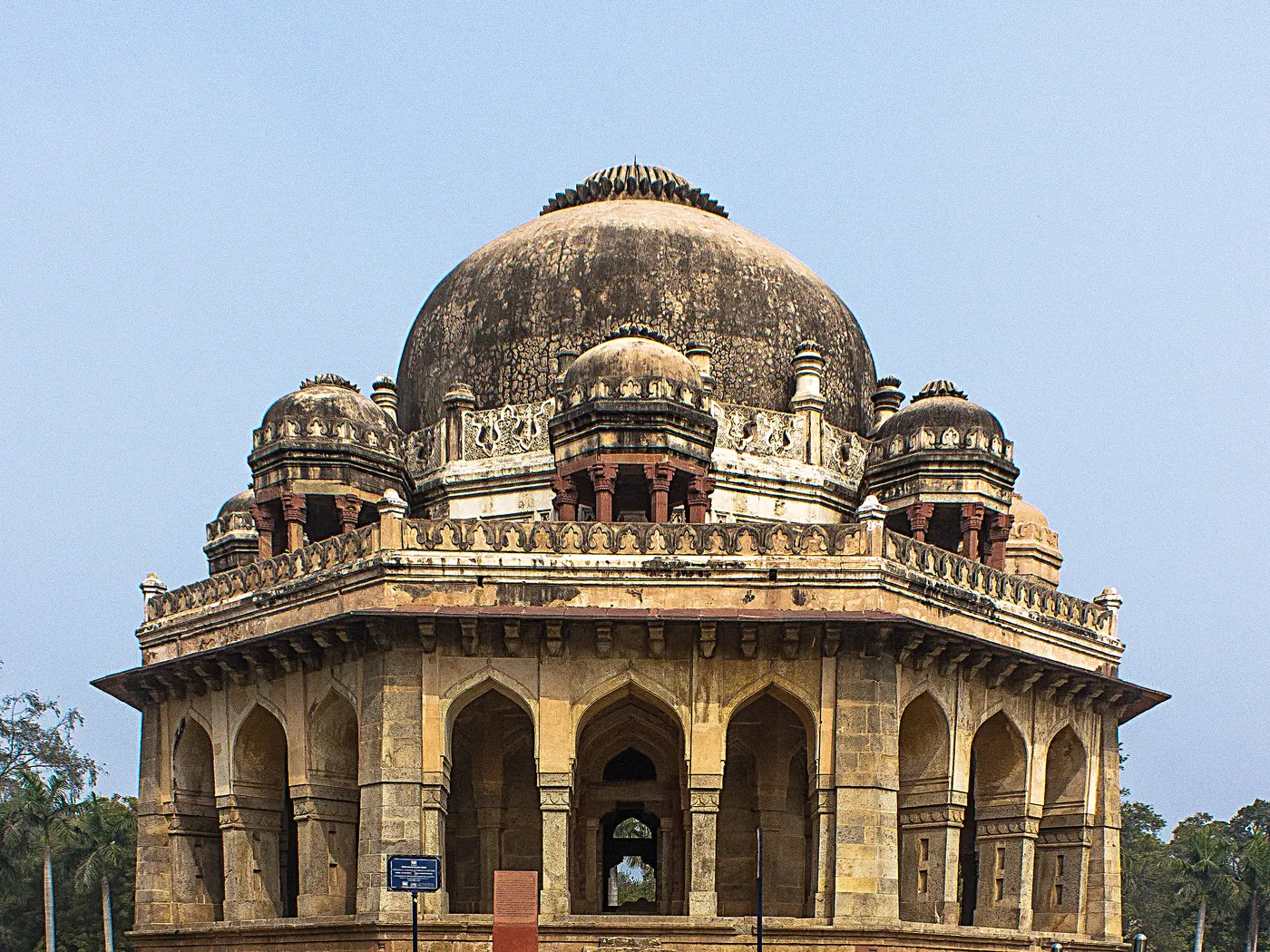
Built around 1444, this is the earliest of the garden's tombs — raised for Mohammed Shah, the last ruler of the Sayyid dynasty. It's an octagonal structure with a single central dome ringed by chhatris (domed kiosks), a design that would go on to influence virtually every major Sultanate and early Mughal tomb that followed it in Delhi.
Bara Gumbad
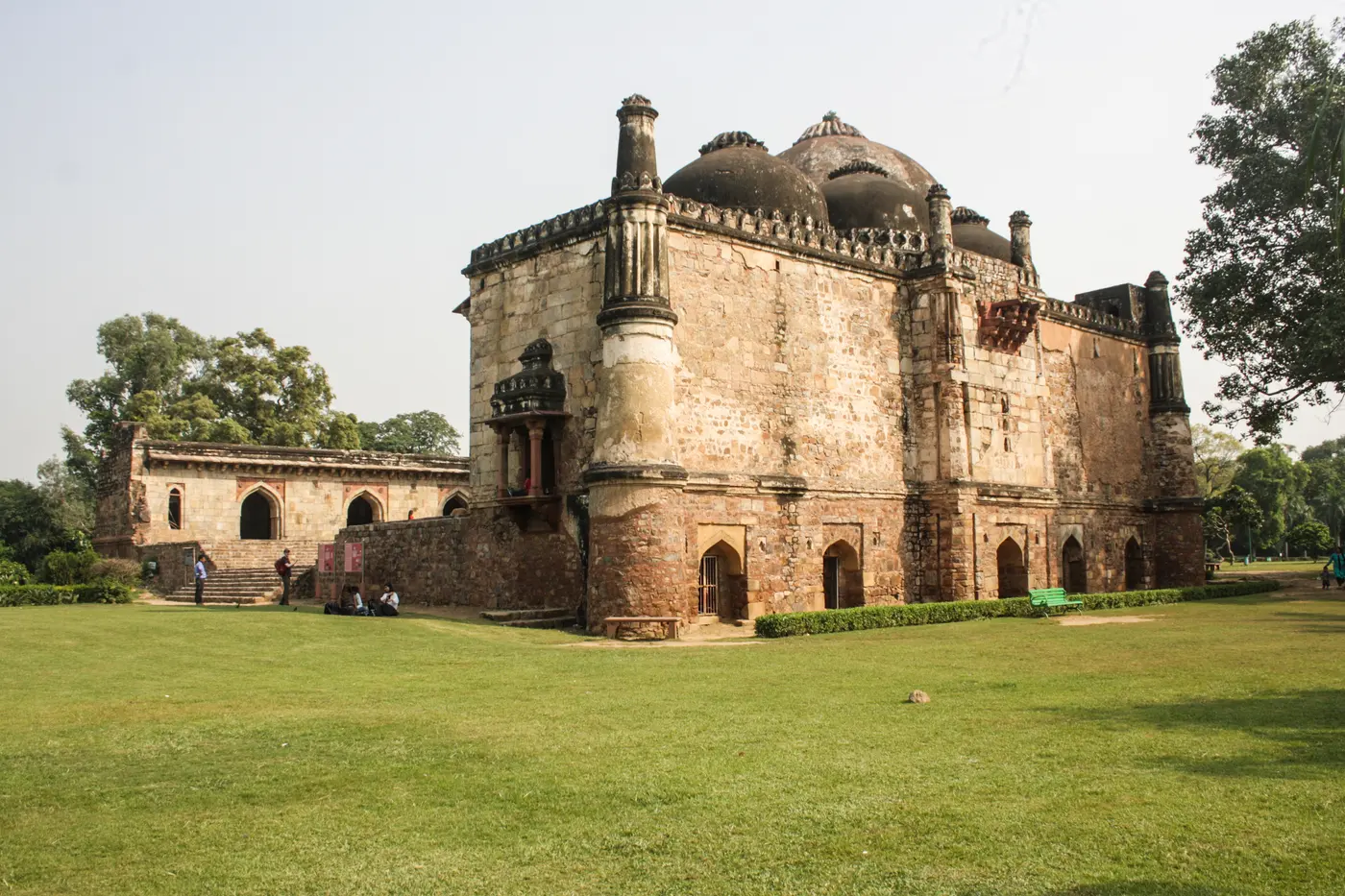
"Bara Gumbad" translates to "Big Dome" — a large, square domed structure built in 1494, standing alongside an attached mosque and a mehmaan khana (guest house) that together form a small, self-contained complex. Unusually, Bara Gumbad contains no grave at all, and historians still debate whether it functioned as a gateway, a gathering hall, or something else entirely.
Sheesh Gumbad
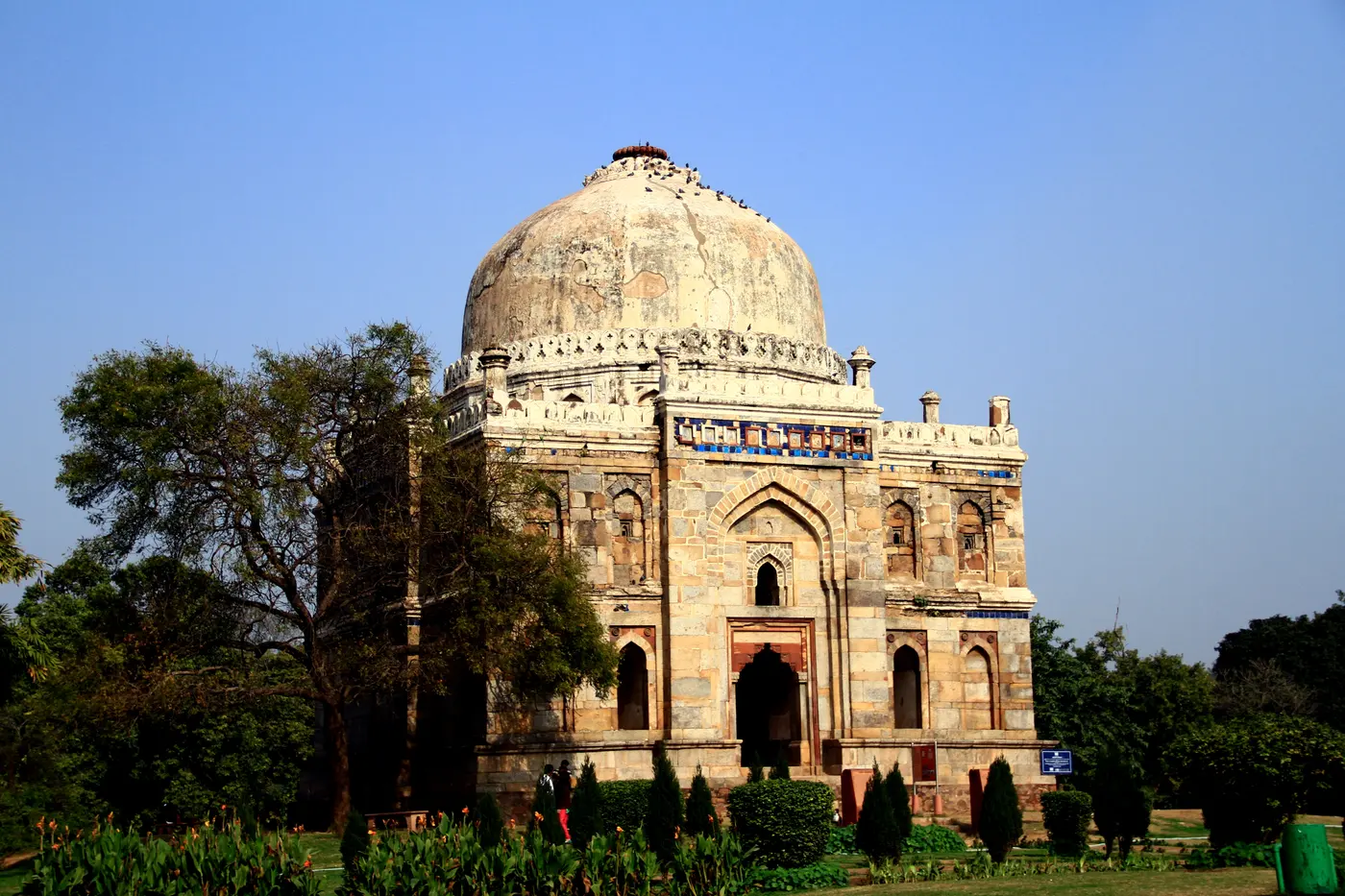
"Sheesh Gumbad" means "Glass Dome," named for the glazed blue and turquoise tilework that once covered much of its facade — traces of it are still visible today. Like Bara Gumbad, its exact occupants aren't definitively known, though it's generally believed to hold the graves of several Lodi-era nobles.
Sikandar Lodi's Tomb
The latest of the four, completed in 1517-18 by Sikandar Lodi's son and successor, Ibrahim Lodi. What sets it apart is its setting: the tomb sits inside its own high rubble-walled enclosure — a garden-within-the-garden — making it the first tomb in Delhi built specifically inside a walled garden compound. That layout directly foreshadows the grander Mughal garden-tombs that followed, most famously Humayun's Tomb and, eventually, the Taj Mahal.
National Bonsai Park
Tucked within Lodhi Garden's grounds is the National Bonsai Park, a smaller, dedicated section maintained by the NDMC that houses a collection of bonsai trees — some trained and shaped over decades. It's a quieter, more contemplative corner of the park, and a genuine change of pace from the open lawns and monuments elsewhere, worth a short detour if you're interested in horticulture or simply want a calm spot to sit.
The Athpula Bridge
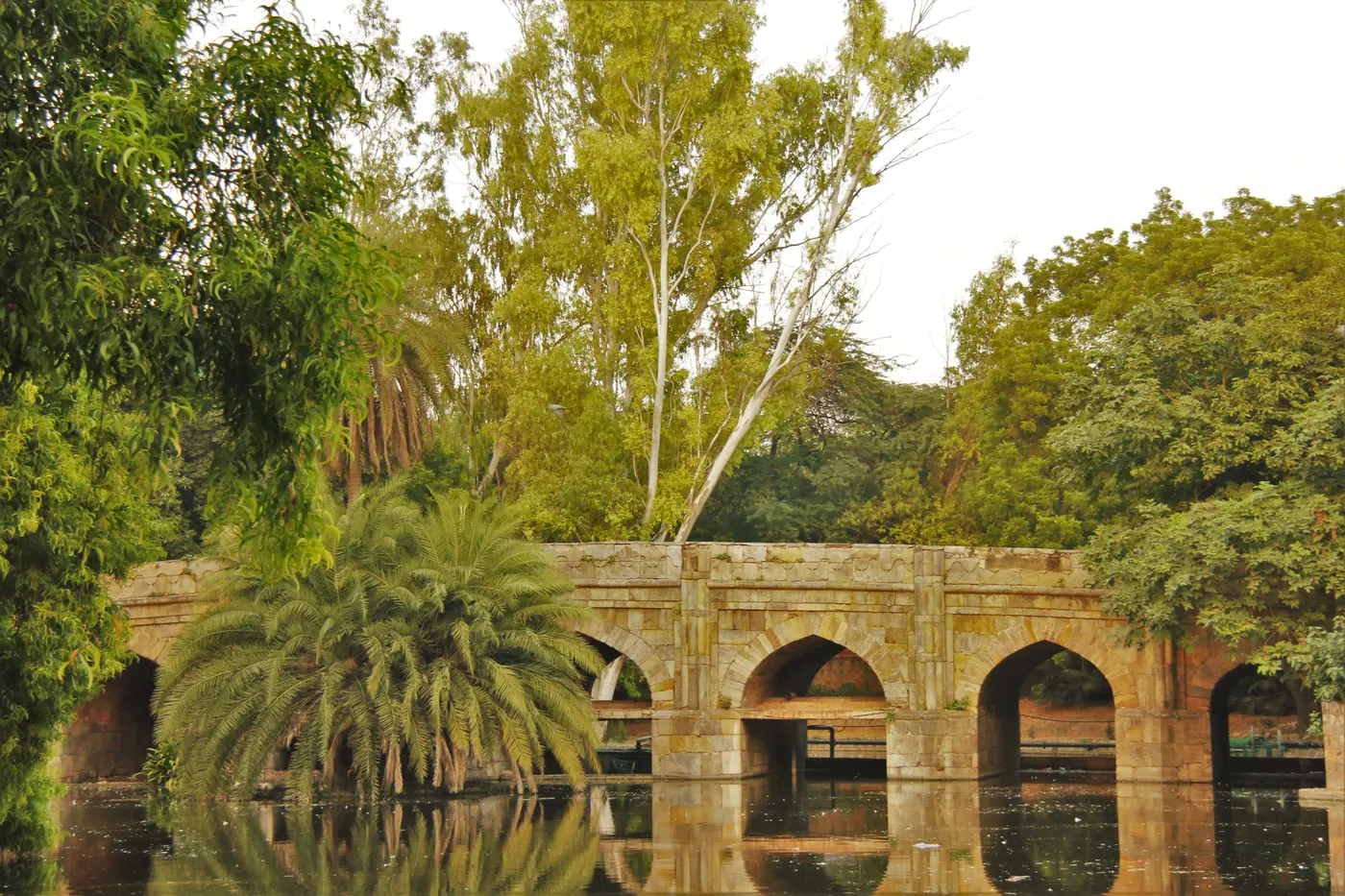
Near Sikandar Lodi's Tomb, spanning a stream that once fed the garden, stands the Athpula ("eight-piered bridge") — a Mughal-era stone bridge built during Emperor Akbar's reign in the late 16th century, making it later than the tombs around it despite sitting inside the same park. Athpula is one of the last surviving Mughal-era bridges in Delhi, and its seven arches (despite the "eight" in its name) still carry a footpath across the dry streambed today — an easy, easy-to-miss stop that rewards a slower walk through the park's northern end.
A Living Delhi Institution
What separates Lodhi Garden from a typical monument-and-ticket-counter site is how completely it's woven into ordinary Delhi life. On any given morning or evening, the park is genuinely full of people who have nothing to do with tourism at all:
- Joggers and walkers: The park's paved loop is one of South Delhi's most popular fitness circuits, busy from soon after sunrise through mid-morning, and again in the evening.
- Yoga and exercise groups: Informal groups gather on the lawns most mornings, especially on weekends, often near the open grass close to Bara Gumbad.
- Courting couples: Lodhi Garden has long had a reputation, half-joking and half-earnest, as one of Delhi's most reliable spots for young couples seeking a quiet bench or a patch of shade.
- Photographers: Between the domes, the tree cover, and the changing seasonal light, the park draws a steady stream of hobbyist and professional photographers, especially around golden hour and during pre-wedding shoots.
- Families and picnicking groups: Weekend afternoons bring families out onto the lawns, particularly in the cooler months.
None of this crowds out the monuments — if anything, it makes visiting Lodhi Garden feel less like sightseeing and more like briefly joining in on a piece of everyday Delhi.
Photography Tips
- Shoot at golden hour: Early morning or the last hour before sunset gives the sandstone and tile-work its warmest, most flattering light — harsh midday sun flattens the domes considerably.
- Use the domes as framing devices: Bara Gumbad's arched gateway and Sikandar Lodi's Tomb's enclosure walls both offer natural frames for wider shots of the park beyond.
- Come back after monsoon: The lawns are at their greenest from late August through October, offering a striking contrast against the grey-brown stone monuments.
- Bring a longer lens for birds: Winter months bring migratory species to the park's trees and water features — a modest telephoto lens goes a long way here.
- Mind the crowds at the Sheesh Gumbad tile detail: The remaining glazed tilework is a popular close-up subject — arrive early if you want it without other visitors in frame.
Suggested Visit Plan (1-1.5 Hours)
Lodhi Garden doesn't need a full day, but it rewards an unhurried hour or so far more than a rushed 20-minute walkthrough. Here's a simple loop that covers everything worth seeing.
Enter & Mohammed Shah's Tomb
- ✓Enter via the Lodhi Road / Bara Gumbad gate
- ✓Walk to Mohammed Shah's Tomb, the earliest structure
- ✓Take in the octagonal layout and surrounding chhatris
Bara Gumbad & Sheesh Gumbad
- ✓Bara Gumbad, its mosque, and mehmaan khana complex
- ✓A short walk to Sheesh Gumbad and its tile fragments
- ✓Photo stops at both domes if the light is good
Sikandar Lodi's Tomb & Athpula
- ✓Walk north to the walled Sikandar Lodi's Tomb enclosure
- ✓Continue to the Athpula bridge nearby
- ✓Pause by the streambed and surrounding tree cover
Bonsai Park & the Lawns
- ✓A short detour to the National Bonsai Park
- ✓Unhurried walk back through the open lawns
- ✓Exit toward Khan Market for food nearby
* Add 30-45 minutes if you're photographing seriously, birdwatching in winter, or simply want to sit on the lawns for a while before moving on.
Where to Eat Nearby
Lodhi Garden itself has no real food options beyond a few basic stalls near some gates, but Khan Market — a short walk from the Lodhi Road side — is one of Delhi's best dining districts and the natural place to head afterward.
- Khan Market cafés: A dense cluster of cafés and bistros covering everything from all-day breakfast spots to wine bars, popular with both locals and expatriates.
- Kathi rolls and quick bites: Khan Market has several well-known spots for rolls and quick North Indian food if you want something faster and less formal than a sit-down café.
- Coffee and dessert stops: Multiple specialty coffee shops around Khan Market make it an easy place to unwind after the walk with a coffee or a slow lunch.
Budget Breakdown
Lodhi Garden itself costs nothing — your only real expenses are getting there and, if you choose, food afterward at Khan Market.
| Expense | Budget | Mid-Range | Luxury |
|---|---|---|---|
| Park entry | Free | Free | Free |
| Transport to/from park | ₹40 (metro) | ₹200 (auto/cab) | ₹500 (private cab) |
| Food at Khan Market | ₹300 | ₹900 | ₹2,500+ |
| Photography (guide/tripod, optional) | — | ₹500 | ₹2,000+ |
| Total (approx.) | ₹340 | ₹1,600 | ₹5,000+ |
* Figures are per person, per visit. Lodhi Garden pairs naturally with a longer South Delhi day — see our South Delhi travel guide for how to combine it with nearby sights.
Essential Tips for Visiting Lodhi Garden
- Check seasonal timings before you go: Gate hours shift with sunrise and sunset across the year — roughly 6 AM to 8 PM in summer and closer to 7 AM to 7:30 PM in winter.
- No food stalls or alcohol inside: Alcohol is not permitted anywhere in the park, and formal food/drink stalls are minimal — eat before or after your visit rather than counting on options inside.
- Stay off restricted monument interiors: Some inner chambers and upper levels of the tombs are closed to visitors for conservation reasons — admire from the accessible areas rather than attempting to climb or enter roped-off sections.
- No vehicles inside the park: Lodhi Garden is a pedestrian-only space once you're past the gates — park or get dropped off outside.
- Combine with nearby sights: Safdarjung's Tomb, Khan Market, and the Hauz Khas and Nizamuddin areas are all within easy reach for a fuller South Delhi heritage day.
✅ Do
- →Visit early morning or golden-hour evening
- →Walk the monuments in their historical order
- →Check the day's opening and closing times
- →Carry water, especially in warmer months
- →Combine the visit with Khan Market food afterward
- →Bring a telephoto lens for winter birdwatching
❌ Don't
- →Bring alcohol or expect food stalls inside
- →Enter roped-off or restricted monument interiors
- →Assume vehicle access past the main gates
- →Visit at midday if photography is the priority
- →Rush the walk — it rewards an unhurried pace
- →Skip checking timings around dusk visits
Frequently Asked Questions
Is Lodhi Garden free?
Yes, entry to Lodhi Garden is completely free for all visitors, with no ticket counter or entry fee at any of its gates. It is a public park maintained by the NDMC, and the only things you can't bring in freely are vehicles, alcohol, and outside food vendors — the park itself has never charged for entry.
What is the entry timing for Lodhi Garden?
Lodhi Garden is open roughly from sunrise to sunset, extended into the evening — generally around 6 AM to 8 PM in summer months and closer to 7 AM to 7:30 PM in winter, when daylight hours shorten. Timings shift slightly with the season, so it's worth checking current hours before an early-morning or late-evening visit.
How old are the tombs in Lodhi Garden?
The tombs date from the 15th and early 16th centuries, spanning the Sayyid dynasty (1414–1451) and the Lodi dynasty (1451–1526) that succeeded it. Mohammed Shah's Tomb, the earliest of the group, was built around 1444; Sikandar Lodi's Tomb, the latest, was completed in 1517–18 — making the monuments roughly 500 to 580 years old.
Is Lodhi Garden good for morning walks?
Yes — it's one of Delhi's most popular spots for exactly that. Wide paved paths loop around lawns and monuments, the tree cover keeps early mornings pleasantly cool, and you'll find joggers, walking groups, and yoga circles out from soon after sunrise, especially on weekends.
Can I bring food or have a picnic inside Lodhi Garden?
Outside food in small quantities for personal consumption is generally tolerated on the lawns, but the park does not allow alcohol, and there's no formal picnicking infrastructure like tables or designated zones. For a proper meal, Khan Market's cafés are a five-to-ten-minute walk from the Lodhi Road gate.
How much time do I need to visit Lodhi Garden?
Budget about 1 to 1.5 hours for a comfortable walking loop covering the four main monuments, the Athpula bridge, and the bonsai park. Photographers, birdwatchers in winter, or anyone wanting to simply sit and slow down could easily stretch that to two or three hours.
What is the nearest metro station to Lodhi Garden?
Jorbagh (Yellow Line) is the closest metro station, roughly a 10-15 minute walk from the park's southern gates. Khan Market (Violet Line) is a similar distance from the Lodhi Road side and conveniently combines a park visit with a stop at Khan Market's restaurants afterward.
Published by the Kudozz Club editorial team · Last updated · How we research our guides
Want us to plan this trip for you?
Tell Kudozz Club where you want to go and what kind of trip you’re looking for. We’ll build a Delhi itinerary around your dates and budget.
Continue Exploring
View all guides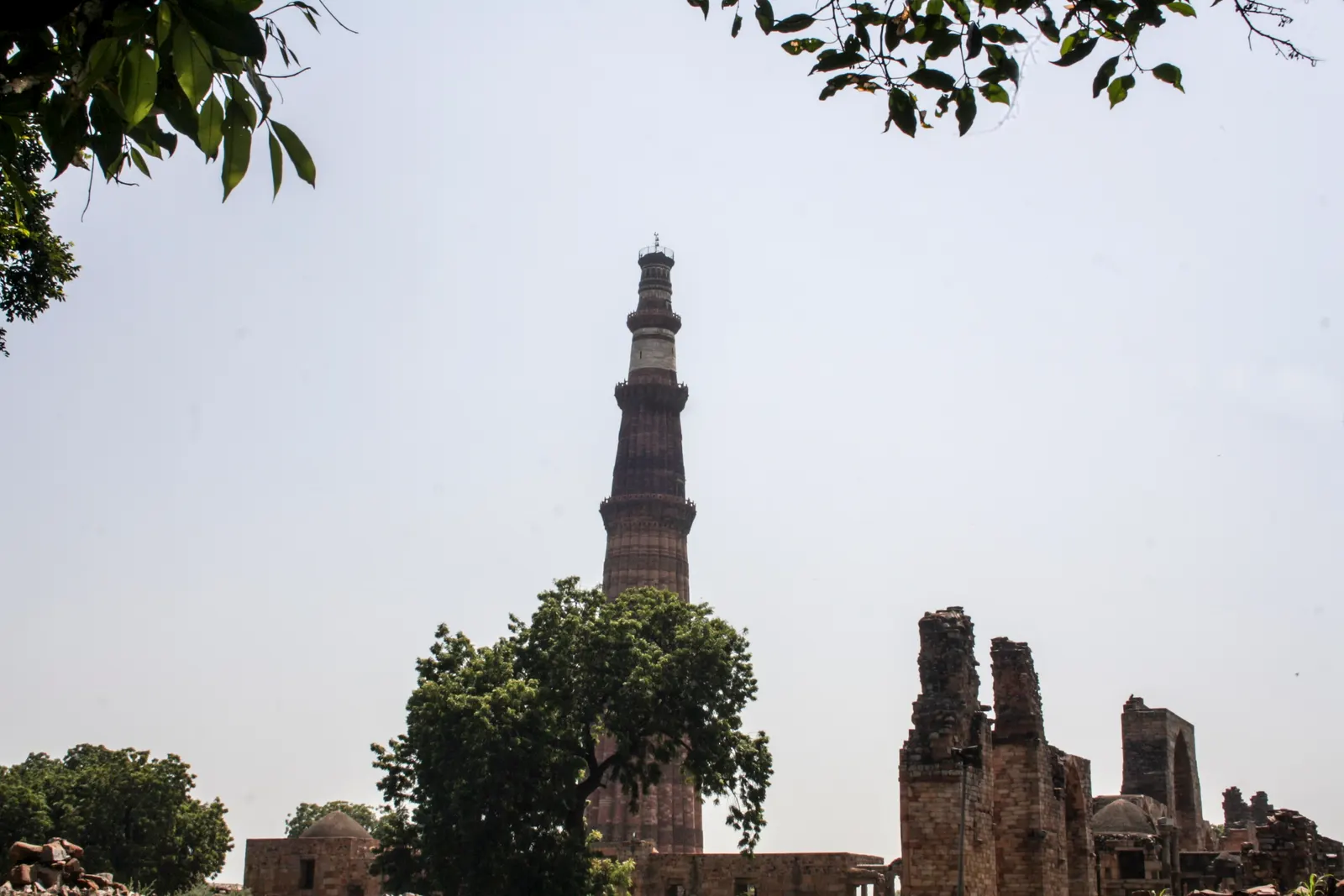 Heritage
Mehrauli Travel Guide: Qutub Minar & Ancient Delhi
Delhi's oldest continuously inhabited settlement — Qutub Minar, the rust-resistant Iron Pillar, a forest full of forgotten tombs, and 800+ years of layered history in one walkable quarter.
 Off-beat
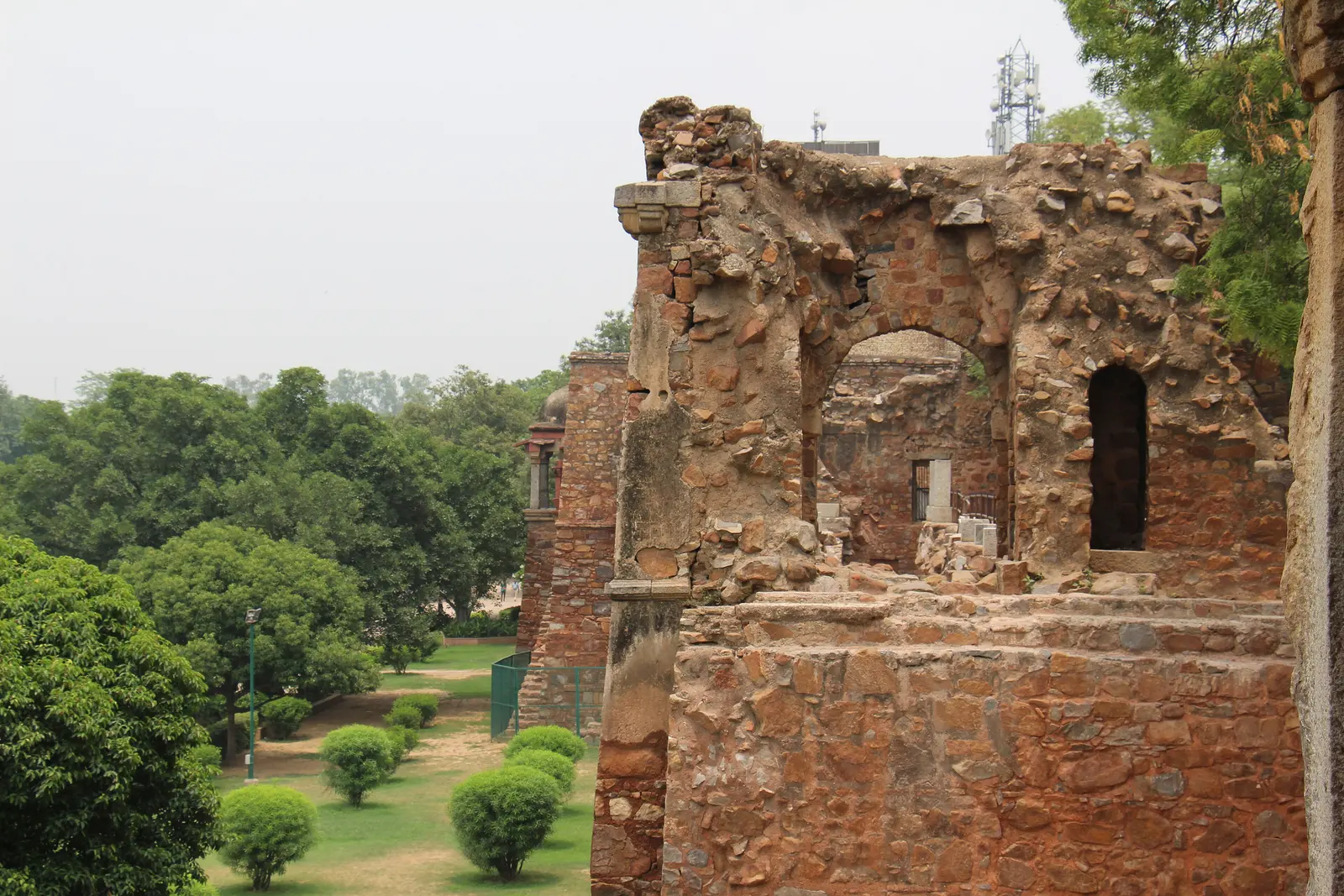
Hauz Khas Travel Guide: Village, Deer Park & Fort Ruins
A 700-year-old royal reservoir and madrasa ruins sit right beside Delhi's trendiest boutique-and-nightlife village — the complete Hauz Khas guide.
 Destination Guide
South Delhi Travel Guide: Best Areas & Things to Do
Hauz Khas, Greater Kailash, Saket, Vasant Kunj, Mehrauli, Lodhi Garden, and Chhatarpur Temple — a guide to Delhi's most affluent, green, and heritage-dense quarter, area by area.
 Heritage
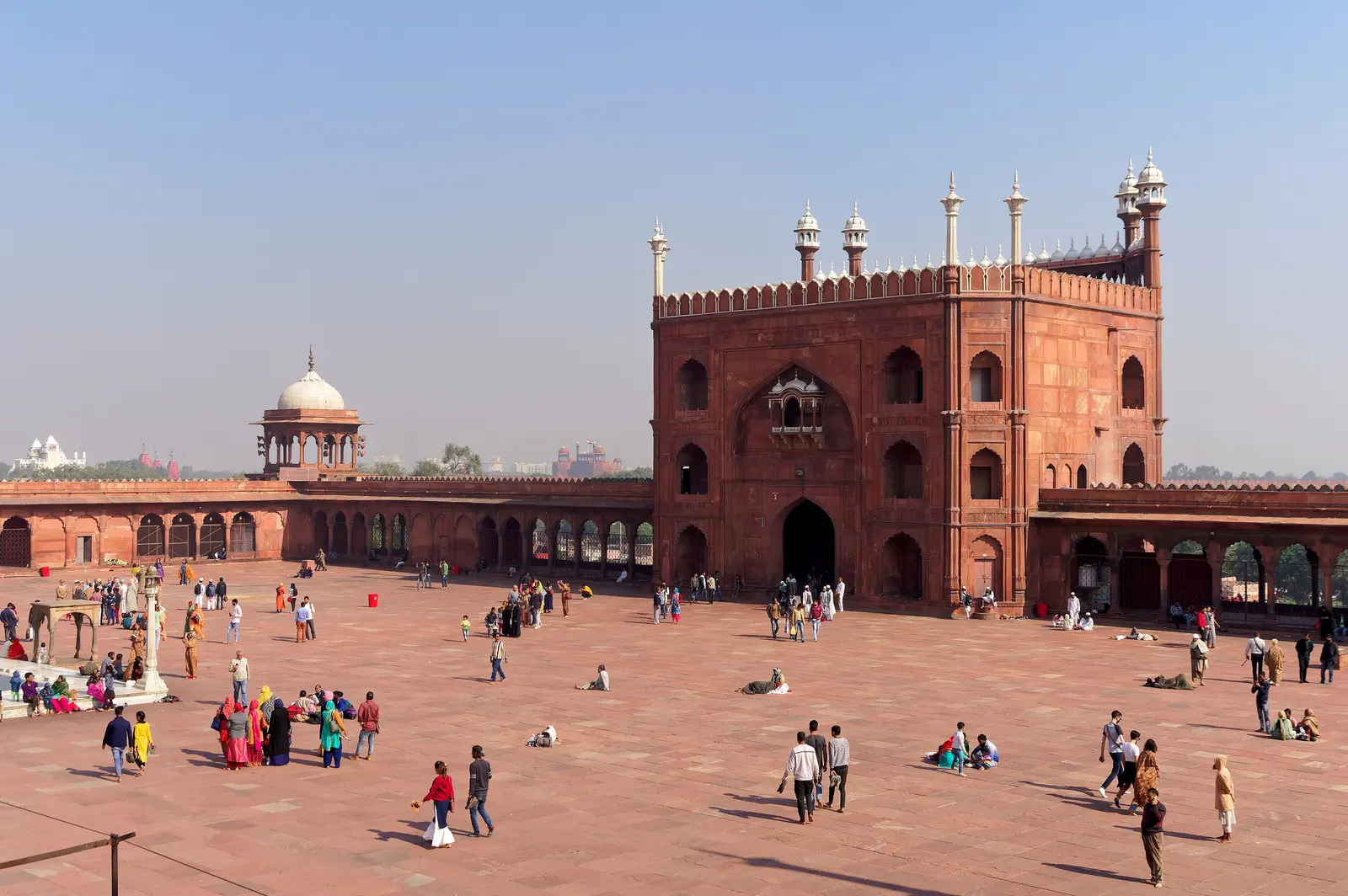
Old Delhi Travel Guide: Red Fort, Jama Masjid & Food
Shahjahanabad, Shah Jahan's 17th-century walled capital — Red Fort, India's largest mosque, cycle-rickshaw lanes, havelis, bazaars, and a street food trail running for well over a century.