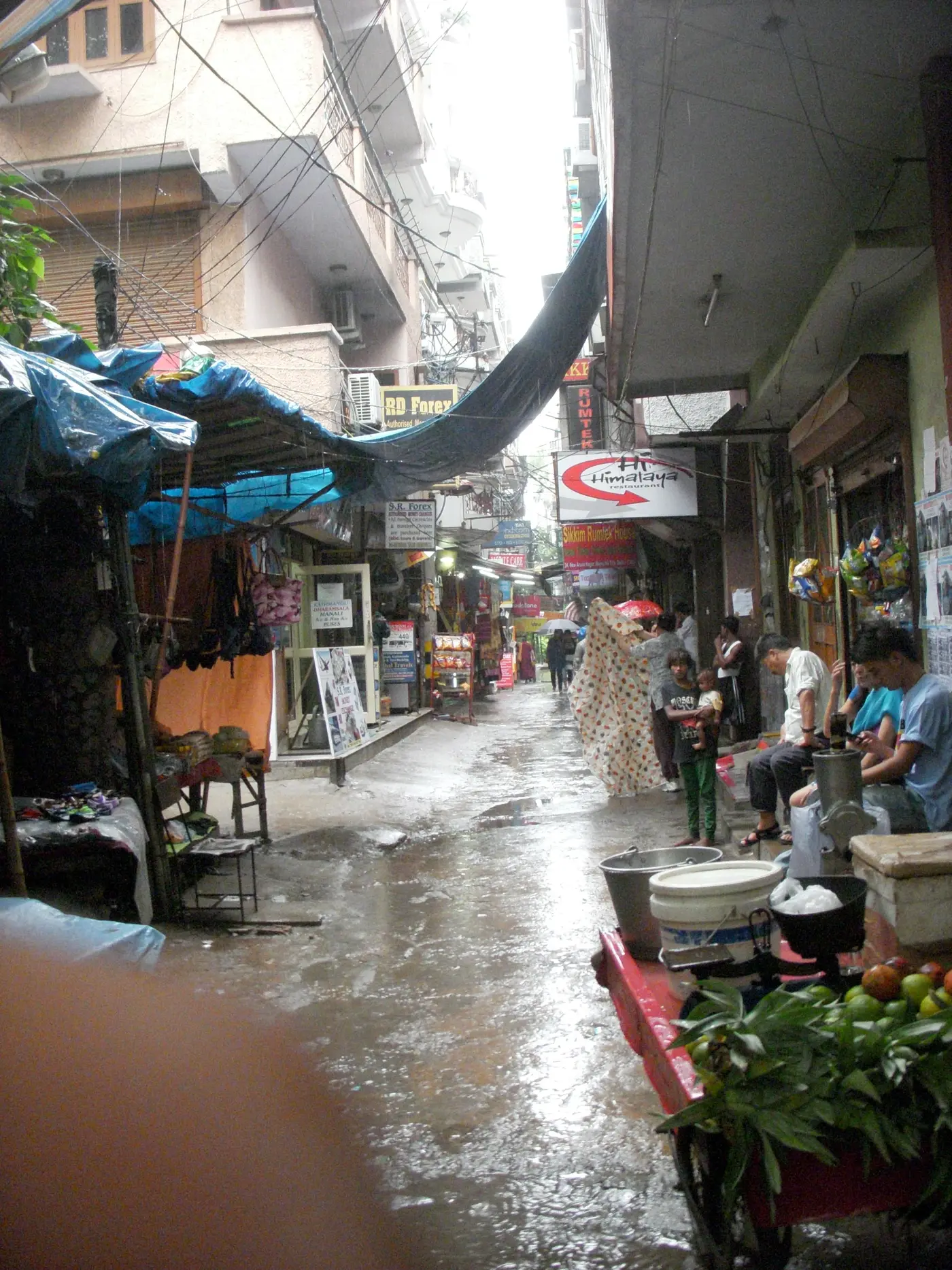
A Slice of Tibet on the Banks of the Yamuna
Tucked against the west bank of the Yamuna in North Delhi, Majnu Ka Tilla — formally New Aruna Nagar, but almost never called that — is a settlement quite unlike anywhere else in the capital. Established for Tibetan refugees in the late 1950s and 1960s, following the 1959 Tibetan uprising and the Dalai Lama's exile to India, it has grown over six decades into Delhi's most concentrated Tibetan cultural enclave, an unofficial nickname that fits it perfectly: "Little Tibet."
Step off the main road and the change is immediate. Prayer flags string between rooftops, shopfronts sell thangka paintings and singing bowls next to Korean skincare and imported snacks, and the smell of steaming momos drifts down narrow lanes barely wide enough for two people to pass. It's a working, residential community first — not a tourist attraction built for visitors — but it welcomes respectful travellers warmly, and rewards them with some of the most distinctive food and shopping in the entire city.
Majnu Ka Tilla sits close to the Kashmere Gate and Old Delhi area, and pairs naturally with a broader Delhi trip as an easy, off-beat half-day add-on — a total change of pace from the Mughal monuments and colonial avenues that dominate most Delhi itineraries.
🏮 Majnu Ka Tilla at a Glance
Best Time to Visit
Majnu Ka Tilla is an indoor-and-lane experience more than an open-air monument, so it's genuinely visitable year-round — but a few windows make the visit more comfortable.
Cool, pleasant weather makes wandering the narrow lanes and eating outdoors far more comfortable than the extremes of summer.
Delhi's summer heat makes daytime lane-walking uncomfortable; an early evening visit for dinner works much better.
The narrow lanes can flood lightly during heavy showers, but the market stays lively and covered eateries make it a good rainy-day option.
The market lanes and cafés fill up after 5 PM, especially with DU students — evenings capture the neighbourhood's energy best.
Our pick: a weekday evening between October and March — cool enough for a relaxed walk, and timed for when the market and food stalls are at their busiest and most atmospheric.
How to Reach Majnu Ka Tilla
Majnu Ka Tilla sits in North Delhi, close to the Delhi University North Campus and GTB Nagar area, roughly midway between Old Delhi and the university belt — genuinely easy to reach from almost anywhere in the city.
- By Metro: The nearest station is Vidhan Sabha on the Red Line, about a 10–15 minute auto-rickshaw ride or a longer walk from the colony. GTB Nagar station (Yellow Line) also works as an alternative approach from the university side.
- By Auto-Rickshaw or Cab: The most convenient option from most parts of Delhi — app-based cabs and autos can drop you right at the colony's main entrance on the Outer Ring Road side.
- By Road from Old Delhi: Only a short drive from Kashmere Gate and the ISBT area, making it easy to combine with a broader Old Delhi day.
The Market & Shopping
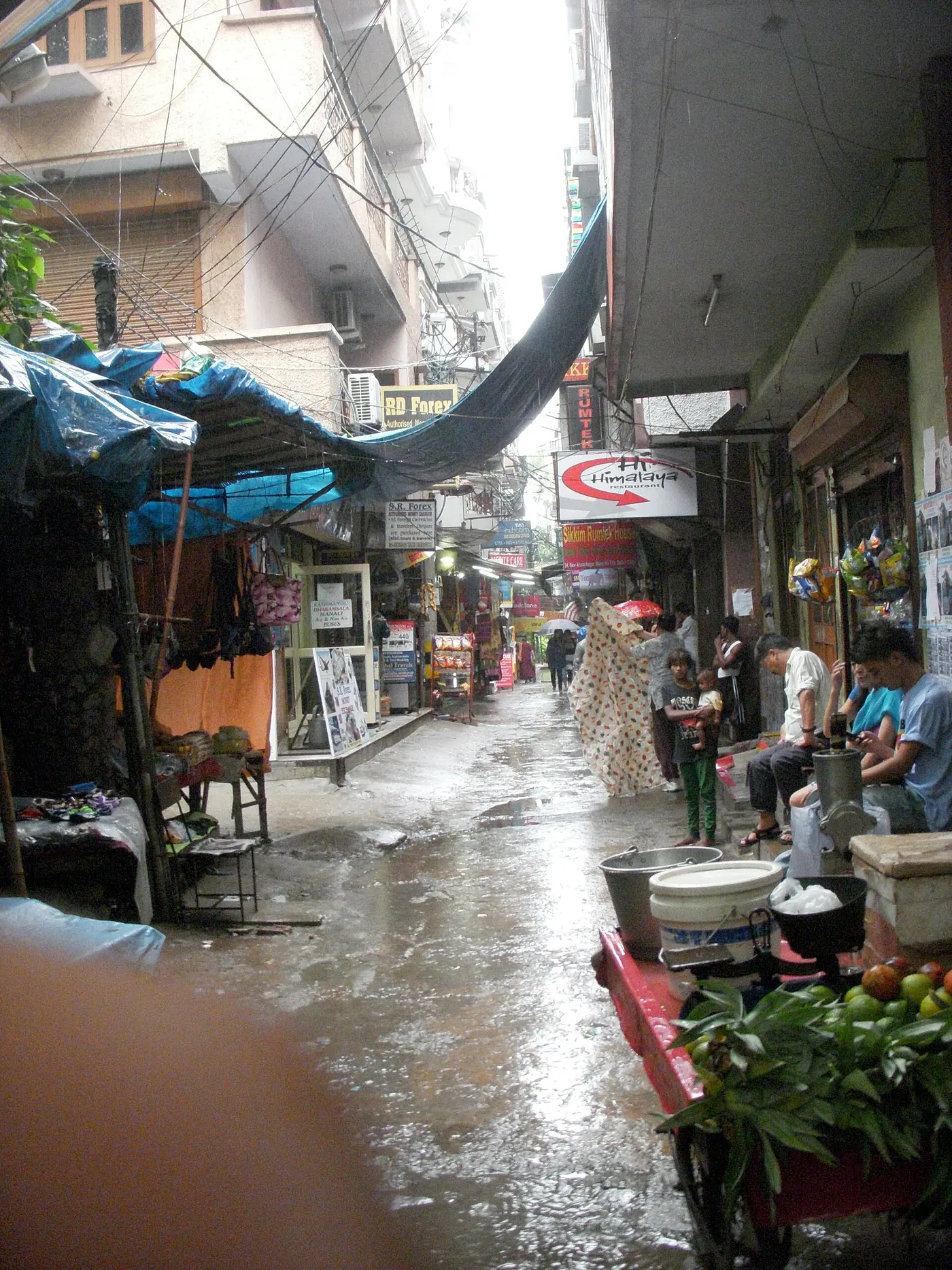
The main market lane running through Majnu Ka Tilla is a dense, narrow strip of shops that feels closer to a Southeast Asian night market than anything else in Delhi. Stalls and small storefronts sell a genuinely unusual mix for the city:
- Imported Korean goods: Skincare, snacks, instant noodles, and packaged foods that are hard to find elsewhere in Delhi — a big part of why the colony draws Korean-culture enthusiasts and K-pop fans.
- Clothing and streetwear: Affordable jackets, sweaters, and casual wear, popular with students hunting for winter layers at reasonable prices.
- Tibetan handicrafts and jewellery: Turquoise and coral jewellery, silver pieces, and handmade accessories reflecting Tibetan design traditions.
- Prayer flags and singing bowls: Strings of colourful Tibetan prayer flags, hand-hammered singing bowls, and small Buddhist devotional items — genuinely worthwhile souvenirs, not mass-produced tourist trinkets.
- Thangka paintings and prints: Religious Tibetan scroll paintings, both handmade and printed, available at a range of price points.
Prices here are generally reasonable and only lightly negotiable at most stalls — a different rhythm from Old Delhi's markets. Cash remains the most reliable payment method at smaller stalls, though many of the larger cafés and shops now accept UPI.
The Food Scene
Food is, without question, the biggest draw of Majnu Ka Tilla — and it operates on two distinct tracks that have grown up side by side over the years.
Authentic Tibetan Food
The colony's long-running Tibetan eateries serve some of the most authentic Tibetan food in Delhi, largely unchanged from what's been cooked here for decades:
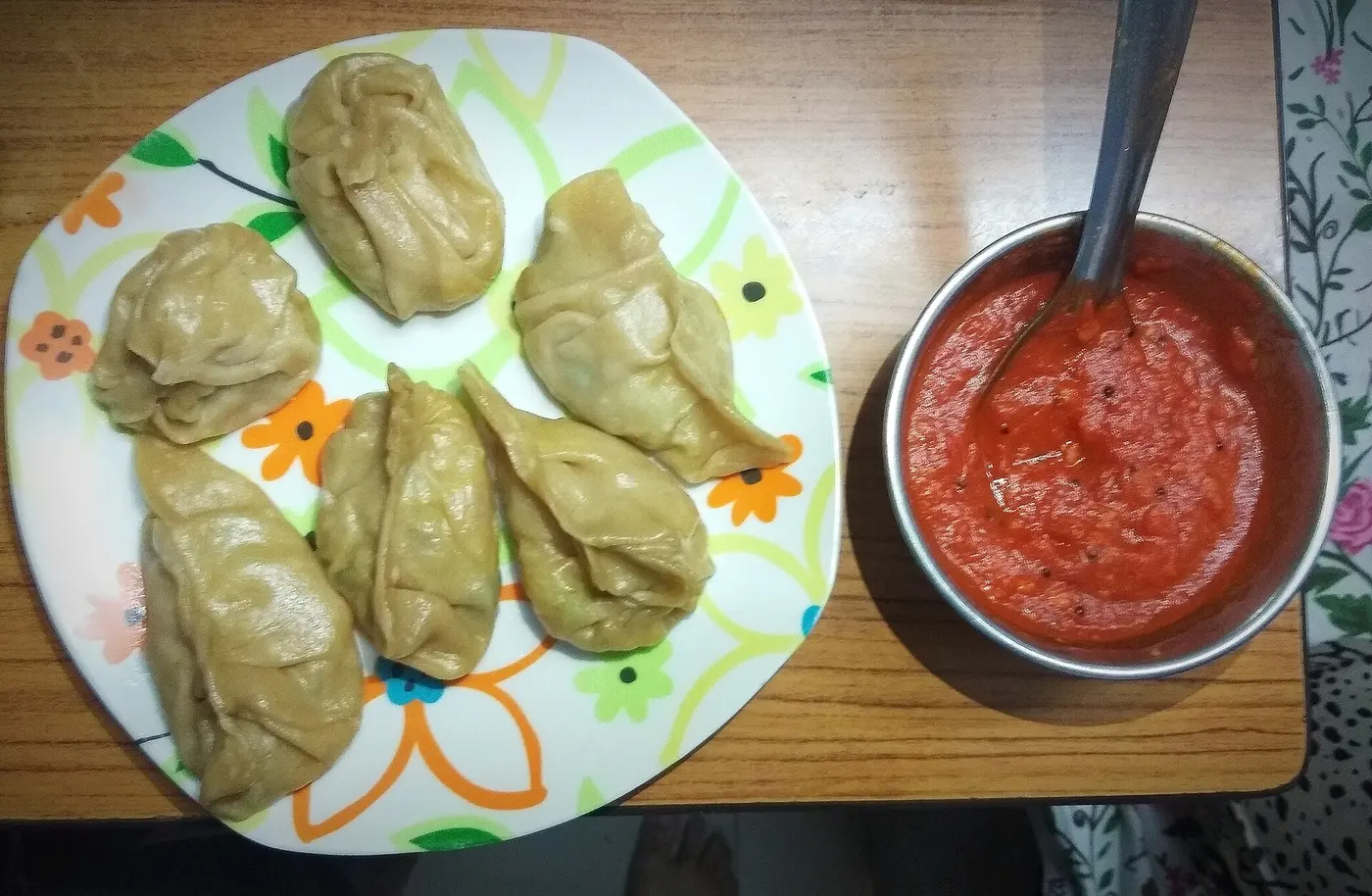
- Momos: Steamed or pan-fried dumplings filled with chicken, pork, or vegetables, served with a fiery red chilli chutney — the neighbourhood's undisputed signature dish.
- Thukpa: A hearty noodle soup with vegetables and meat, especially good on a cold Delhi evening.
- Thenthuk: Hand-pulled, flat noodle soup, a heartier cousin of thukpa and a bit harder to find outside genuine Tibetan kitchens.
- Shabhaley: A pan-fried Tibetan pastry filled with spiced minced meat — a lesser-known but excellent snack worth ordering alongside momos.
Korean Cafés & the DU Crowd
In the last decade, Majnu Ka Tilla has also become an unlikely hub for Korean food and culture, largely fuelled by its proximity to Delhi University's North Campus. Small Korean cafés and eateries now sit alongside the Tibetan originals, serving tteokbokki, kimbap, Korean fried chicken, and imported Korean instant noodles — a genuinely popular weekend spot for DU students and anyone curious about Korean street food without leaving the city.
Monastery & Tibetan Community Life
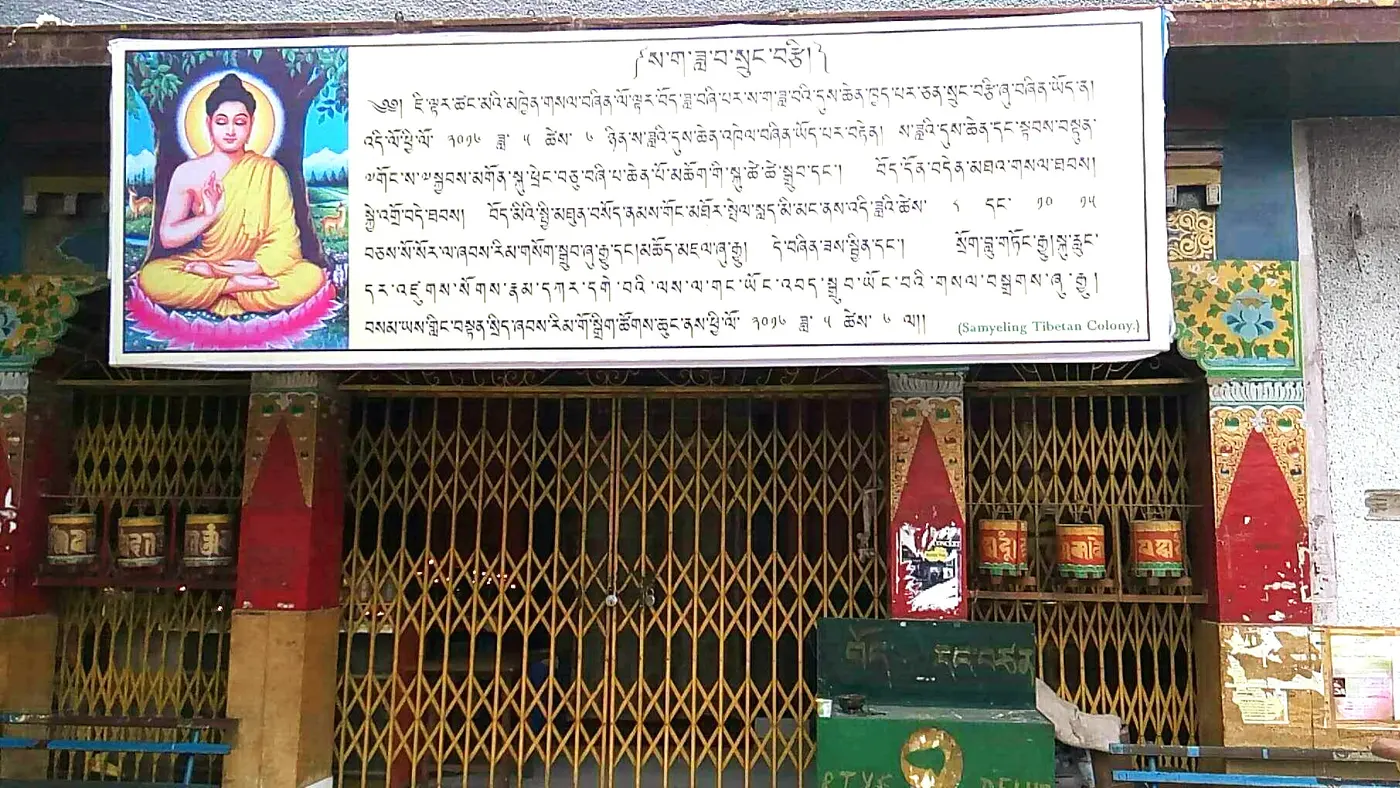
At the heart of the colony sits a working Tibetan Buddhist monastery, a quiet counterpoint to the bustle of the market lanes outside. Maroon-robed monks are a common, everyday sight around the colony, and the monastery itself remains open to respectful visitors interested in a few quiet minutes away from the crowds.
Beyond the monastery, Majnu Ka Tilla functions as a real, living residential community — multi-storey buildings packed close together, small courtyards strung with prayer flags, and a genuine sense of Tibetan cultural continuity that's rare to find concentrated so densely anywhere else in India. It's worth remembering, while exploring, that this is home to thousands of people, not a themed attraction — a little courtesy goes a long way.
A Brief History of Tibetan Refugee Settlement
Majnu Ka Tilla's story is part of a much larger one. Following the 1959 Tibetan uprising and the flight of the 14th Dalai Lama into exile in India, tens of thousands of Tibetan refugees followed over the subsequent years, settling across several locations the Indian government made available to them — from Dharamshala in Himachal Pradesh to settlements in Karnataka and beyond.
In Delhi, a Tibetan refugee camp took root on this stretch of land beside the Yamuna in the late 1950s and 1960s, initially as a temporary settlement. Over the following decades, through the 1960s to the 1970s, the Indian government formally allotted land here, and what began as a refugee camp gradually grew into the dense, permanent, multi-generational neighbourhood seen today.
More than six decades on, Majnu Ka Tilla remains home to a community that has preserved its language, food, religious practice, and cultural identity while building a genuinely integrated life within Delhi — a living piece of Tibetan history that continues, unbroken, on the banks of the Yamuna.
Suggested Half-Day Visit
Majnu Ka Tilla is best treated as a relaxed half-day detour rather than a rushed stop — here's a simple plan that covers the highlights without feeling hurried.
Arrive & Orient
- ✓Get dropped at the main entrance near the Outer Ring Road
- ✓Walk into the colony's main lane on foot
- ✓Take in the prayer flags and shopfronts as you enter
Browse the Market
- ✓Wander the main shopping lane
- ✓Browse Korean imports, clothing, and Tibetan handicrafts
- ✓Pick up prayer flags or a singing bowl as a souvenir
Visit the Monastery
- ✓Step into the local Tibetan Buddhist monastery
- ✓Spend a few quiet minutes away from the market bustle
- ✓Photograph respectfully, and only with permission
Eat
- ✓Sit down for momos and thukpa at a long-running Tibetan eatery
- ✓Or try a Korean café for tteokbokki and kimbap
- ✓Round it off with tea or a Korean-style snack
* The whole plan comfortably fits into 2–3 hours, making it an easy add-on to an Old Delhi or North Campus day rather than a standalone trip.
Budget Breakdown
Majnu Ka Tilla is one of Delhi's most affordable off-beat stops — a satisfying visit, food included, rarely crosses a modest daily budget.
| Expense | Budget | Mid-Range | Splurge |
|---|---|---|---|
| Momos & thukpa meal | ₹150 | ₹300 | ₹500 |
| Korean café meal | ₹250 | ₹500 | ₹900 |
| Market souvenirs (per item) | ₹100 | ₹400 | ₹1,200 |
| Local transport (round trip) | ₹150 | ₹300 | ₹600 |
| Half-day total (approx.) | ₹400 | ₹1,000 | ₹2,500 |
* Prices are indicative and vary by stall. Cash remains the most reliable payment method at smaller vendors.
Essential Tips for Visiting Majnu Ka Tilla
- Carry cash: Many of the smaller food stalls and market shops still prefer cash, even as UPI has become more common at larger cafés.
- Expect narrow lanes: The colony's interior lanes are pedestrian-only and genuinely cramped in places — comfortable footwear helps more than it might seem.
- Photograph respectfully: This is a residential refugee community, not a photo backdrop — ask before photographing people, homes, or the monastery's interior.
- Visit the monastery quietly: Keep noise down and dress modestly if stepping inside.
- Go hungry: The food is the main event — arrive with an appetite rather than filling up beforehand.
- Evenings are liveliest: The market and cafés pick up noticeably after 5 PM, especially with the student crowd from nearby DU colleges.
✅ Do
- →Carry cash for smaller stalls and shops
- →Try momos, thukpa, and at least one Korean café
- →Ask before photographing residents or monks
- →Visit the monastery quietly and dress modestly
- →Go in the evening for the liveliest atmosphere
- →Support long-running local eateries and shops
❌ Don't
- →Treat it as a photo-op attraction rather than a home
- →Expect large vehicles to fit through the interior lanes
- →Assume every stall accepts card or UPI
- →Photograph inside the monastery without asking
- →Rush through — the food and market reward slow browsing
- →Be loud or disruptive near the monastery grounds
Frequently Asked Questions
What is Majnu Ka Tilla famous for?
Majnu Ka Tilla is Delhi's most concentrated Tibetan cultural enclave, unofficially nicknamed 'Little Tibet'. It's known for authentic Tibetan food (momos, thukpa, thenthuk), a dense market selling imported Korean and Tibetan goods, prayer flags and singing bowls, a working monastery, and — more recently — a cluster of Korean cafés and eateries that have made it a favourite hangout for Delhi University students.
Is Majnu Ka Tilla safe?
Yes, generally. It's a settled residential community with a strong local presence, and the market lanes stay busy with shoppers, students, and residents well into the evening. As with any dense market area, keep an eye on belongings, and remember it's a lived-in neighbourhood, not a tourist attraction built for visitors — a bit of everyday street-smarts goes a long way.
Where is Majnu Ka Tilla located?
Majnu Ka Tilla (formally New Aruna Nagar) sits on the west bank of the Yamuna in North Delhi, close to the GTB Nagar and Delhi University area, roughly midway between Old Delhi and North Campus. It's easily reached from the Vidhan Sabha metro station on the Red Line, followed by a short auto-rickshaw or walk.
What food should I try in Majnu Ka Tilla?
Start with steamed or pan-fried momos (chicken, pork, or vegetable) and a bowl of thukpa (noodle soup) at one of the long-running Tibetan eateries along the main market lane. Thenthuk (hand-pulled noodle soup) and shabhaley (a Tibetan meat pastry) are also worth seeking out. The colony has more recently become known for Korean cafés serving tteokbokki, kimbap, and Korean-style fried chicken.
How much time do I need to visit Majnu Ka Tilla?
Two to three hours is enough for a satisfying visit — enough time to walk the market, eat a proper meal, and step into the monastery. Food enthusiasts and market browsers often stretch it into a relaxed half-day, especially if combining a sit-down meal with a slower wander through the shopping lanes.
What is the history of Majnu Ka Tilla as a Tibetan settlement?
Tibetan refugees began settling on this stretch of the Yamuna's bank in the late 1950s and early 1960s, following the 1959 Tibetan uprising and the Dalai Lama's exile to India. The Indian government formally allotted land for the settlement over the following decades, and it grew into the dense, multi-storey colony seen today — one of several Tibetan settlements established across India during this period.
Can I visit the monastery at Majnu Ka Tilla?
Yes, the local Tibetan monastery within the colony is open to respectful visitors. Dress modestly, keep noise levels down, and ask before photographing monks or the interior — it's an active place of worship and community life, not a museum.
Published by the Kudozz Club editorial team · Last updated · How we research our guides
Want us to plan this trip for you?
Tell Kudozz Club where you want to go and what kind of trip you’re looking for. We’ll build a Delhi itinerary around your dates and budget.
Continue Exploring
View all guides Off-beat
Hauz Khas Travel Guide: Village, Deer Park & Fort Ruins
A 700-year-old royal reservoir and madrasa ruins sit right beside Delhi's trendiest boutique-and-nightlife village — the complete Hauz Khas guide.
 Off-beat
Paharganj Travel Guide: Main Bazaar & Budget Stays
Delhi's classic backpacker district — Main Bazaar shopping, budget guesthouses, cheap eats, and honest safety tips, all right beside New Delhi Railway Station.
 Off-beat
Karol Bagh Travel Guide: Shopping, Markets & Budget Hotels
A pedestrianised bazaar on Ajmal Khan Road, Gaffar Market's electronics stalls, and one of Delhi's densest budget-hotel clusters — the complete guide to shopping, eating, and staying in Karol Bagh.
 Off-beat
Najafgarh Delhi Guide: History, Jheel & Sehwag
An honest guide to Najafgarh — Nawab Najaf Khan's 18th-century fort roots, the shrinking Najafgarh Jheel wetland, and its fame as Virender Sehwag's hometown.