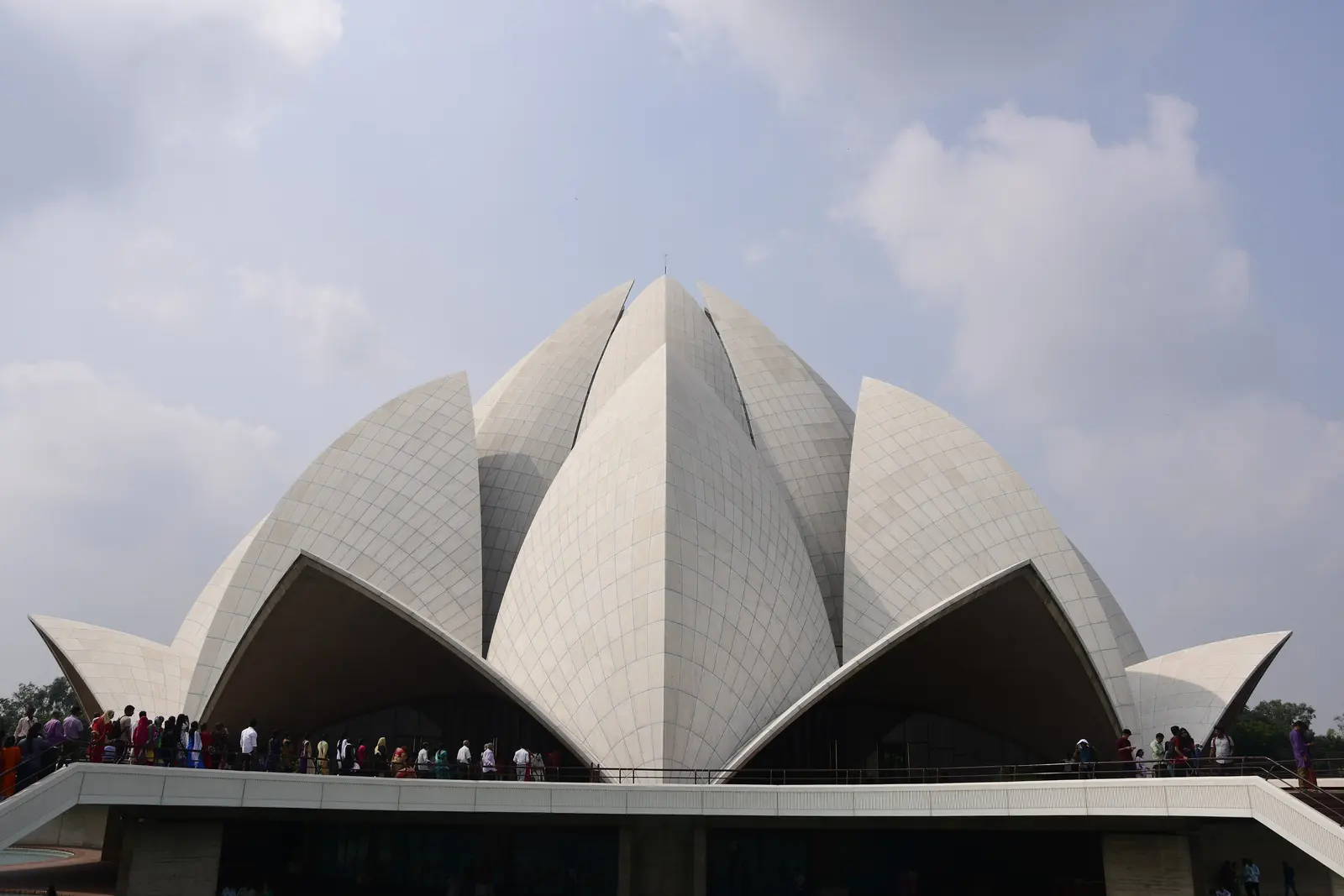
What Is South Delhi?
South Delhi isn't one neighbourhood — it's the broad, sprawling southern half of the city, and by most measures its most affluent, greenest, and heritage-dense quarter. It runs from Lodhi Garden, just south of central Delhi, all the way out to the ancient ruins of Mehrauli near the Qutub Minar — a stretch that covers everything from Sultanate-era tombs and reservoirs to some of the country's most polished malls, embassies, and dining rooms.
What sets South Delhi apart from Old Delhi's density or Central Delhi's government avenues is its sheer variety packed into a single zone: a 13th-century madrasa overlooking a lake in Hauz Khas, a mall-and-cinema complex a few kilometres away in Saket, embassies and diplomatic bungalows in Vasant Vihar, and a hilltop temple complex in Chhatarpur that draws thousands of devotees on weekends. It is, in many ways, the part of Delhi that best represents the city's contradictions — deeply old and thoroughly modern, occupying the same few square kilometres.
This guide is an orchestrator — an overview of what South Delhi actually covers, and which pocket of it suits your trip. Several of these neighbourhoods are substantial enough to deserve their own dedicated guides, which we link out to below for the full depth on each; think of this page as the map, and those as the close-up views. For the rest of the capital — Red Fort, Chandni Chowk, and Old Delhi's food trail — see our full Delhi travel guide.
🏙️ South Delhi at a Glance
Best Time to Visit South Delhi
South Delhi follows the same climate as the rest of the city, but its heavy tree cover — especially around Lodhi Garden, Hauz Khas, and Vasant Kunj's forest edges — makes it a genuinely more pleasant place to walk than the denser, more built-up parts of Delhi, even in shoulder-season heat.
Cool, dry days make walking Hauz Khas Village, Lodhi Garden, and the Mehrauli ruins genuinely enjoyable — peak season for outdoor sightseeing.
Outdoor sites like Qutub Minar and Mehrauli Archaeological Park are best done at opening time; malls in Saket and Vasant Kunj become the midday refuge.
South Delhi's parks and reservoirs (Hauz Khas, Lodhi Garden) look their greenest, though heavy showers can disrupt outdoor plans on short notice.
Comfortable temperatures for walking, but check AQI — South Delhi isn't spared from Delhi's winter smog despite its greenery.
Our pick: October to March. Mornings are crisp enough for a proper walk through Mehrauli Archaeological Park or Lodhi Garden, and evenings are comfortable for sitting out at a Hauz Khas or GK café.
How to Reach & Get Around South Delhi
South Delhi is well served by three Delhi Metro lines, which makes it genuinely feasible to hop between neighbourhoods without a car for most of the day.
- Yellow Line: Runs through Hauz Khas, Green Park, and Saket, connecting straight up to Connaught Place and New Delhi Railway Station — the single most useful line for a South Delhi day trip.
- Magenta Line: Connects Greater Kailash (via Nehru Enclave/Kalkaji), Saket, and continues toward Vasant Kunj and onward to the airport-adjacent stretch — useful for cross-South-Delhi journeys that avoid the centre entirely.
- Pink Line: Loops through several southern and southeastern pockets, useful for reaching Lajpat Nagar and connecting onward to other city quadrants without backtracking through the centre.
- Auto-rickshaws & app cabs: Essential for the last mile — Chhatarpur Temple, deeper stretches of Vasant Kunj, and parts of Mehrauli sit a short ride rather than a walk from the nearest Metro station.
Hauz Khas Village & Deer Park
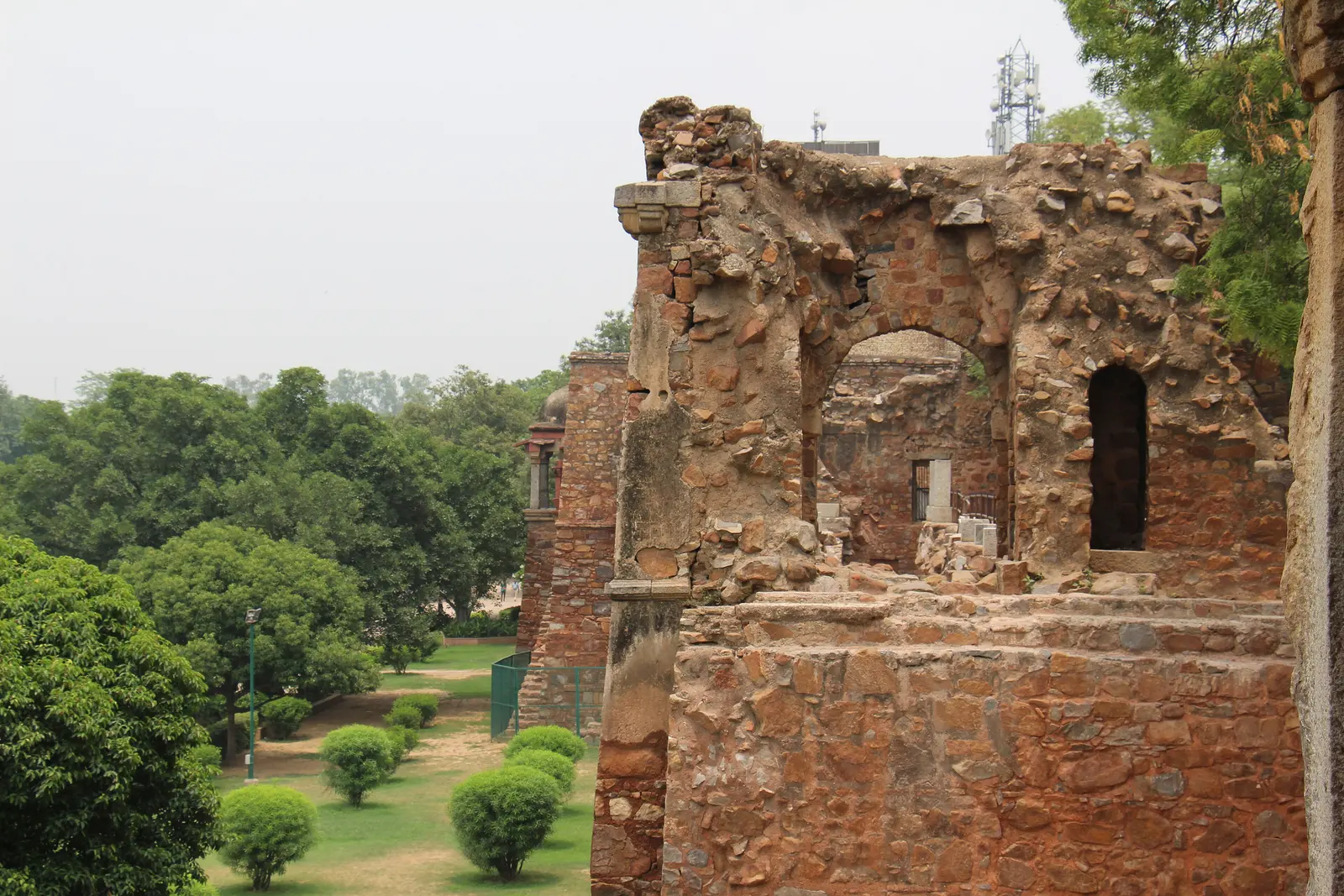
Built around a 13th-century reservoir and the ruins of a madrasa founded by Sultan Firoz Shah Tughlaq, Hauz Khas is the rare South Delhi neighbourhood where centuries-old heritage and a genuinely trendy café-and-boutique scene sit side by side. The Hauz Khas Complex — reservoir, tombs, and madrasa — is free to enter and quietly atmospheric, especially in the late afternoon light, while the adjoining Deer Park offers a genuinely peaceful green escape a few minutes' walk from the same lanes.
Hauz Khas Village itself is the neighbourhood's other draw — a maze of narrow lanes packed with independent boutiques, art galleries, and one of Delhi's densest concentrations of rooftop cafés and bars, many overlooking the reservoir itself.
For the full breakdown — best cafés, gallery picks, and how to spend a half-day here — see our dedicated Hauz Khas travel guide.
Greater Kailash (GK-I & GK-II)
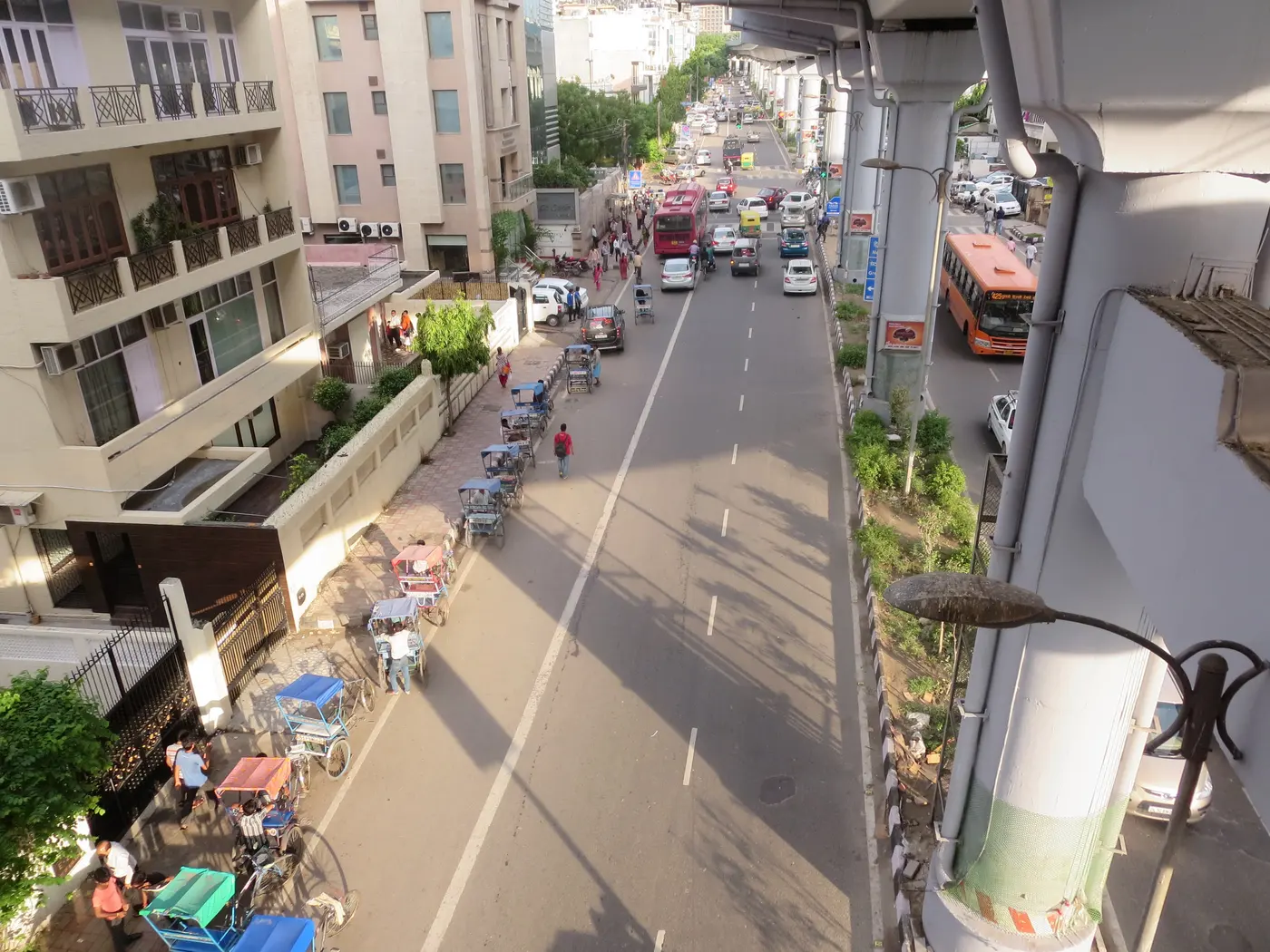
Greater Kailash, usually split into GK-I and GK-II, is one of South Delhi's most established upscale residential colonies, and its M-Block Market in GK-I is a genuine dining destination in its own right — a compact market packed with some of Delhi's most consistently well-reviewed restaurants, from long-standing Punjabi institutions to newer fine-dining openings.
Beyond M-Block, GK's tree-lined residential streets are worth a slow wander if you enjoy seeing how South Delhi actually lives — spacious bungalows, embassy-adjacent calm, and a noticeably quieter pace than the markets nearby. It's less a sightseeing stop than a dining one, best paired with an evening out rather than a dedicated half-day.
Saket
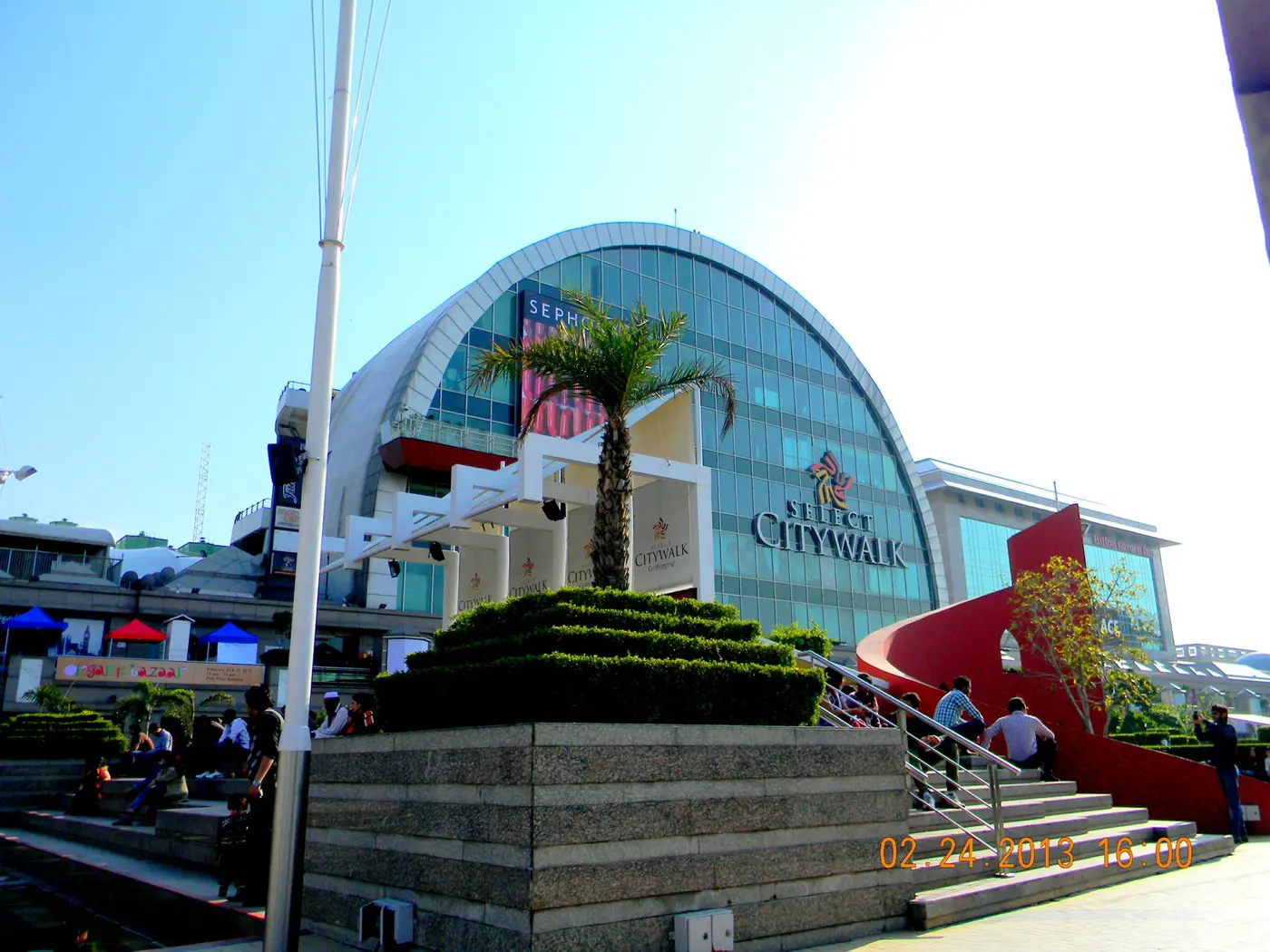
Saket is South Delhi's mall-and-multiplex hub, anchored by Select Citywalk — one of Delhi's most polished shopping malls, with a large multiplex, a dense food court, and a mix of international and Indian high-street brands. It's the easiest South Delhi stop for a comfortable, air-conditioned afternoon of shopping or a movie, and sits directly on the Yellow Line, making it simple to combine with Hauz Khas or Green Park earlier in the day.
Saket is also home to a cluster of well-regarded hospitals and business hotels, which makes it a practical, well-connected base if you're prioritising convenience over heritage character. It's less about standalone sights and more a comfortable, functional anchor point for a South Delhi itinerary.
Vasant Kunj
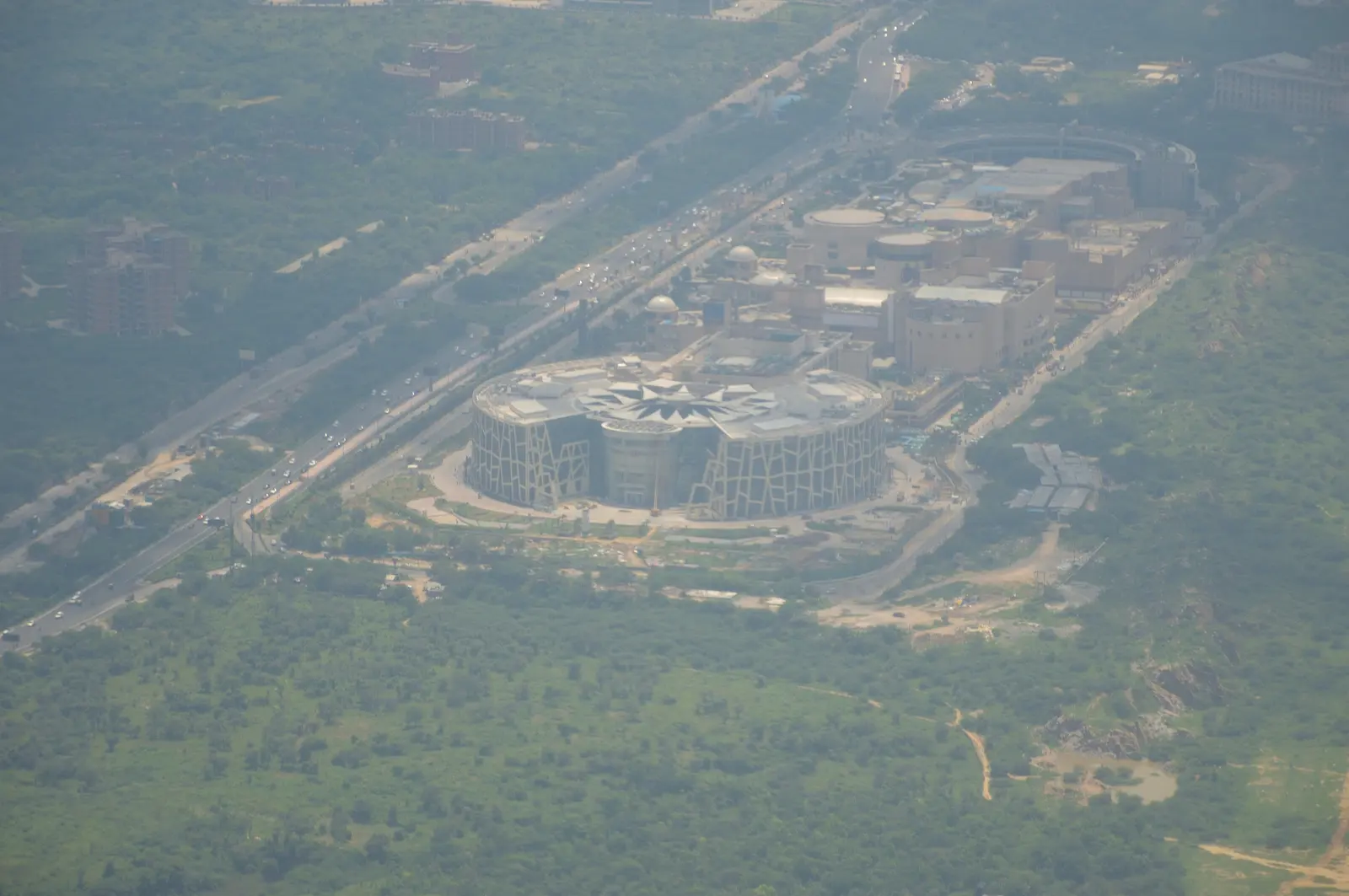
Vasant Kunj sits toward South Delhi's southwestern edge, closer to the airport, and combines a large residential colony with two major malls — Ambience Mall and DLF Promenade — plus easy access to the Asola Bhatti Wildlife Sanctuary on its outskirts, one of the few genuinely wild green spaces left inside Delhi's boundaries.
It's a popular base for travellers with early flights or business near the airport corridor, and its malls rival Saket's for scale, if slightly less central. For the fuller neighbourhood breakdown — including the wildlife sanctuary and hotel picks — see our dedicated Vasant Kunj travel guide.
Mehrauli & Qutub Minar
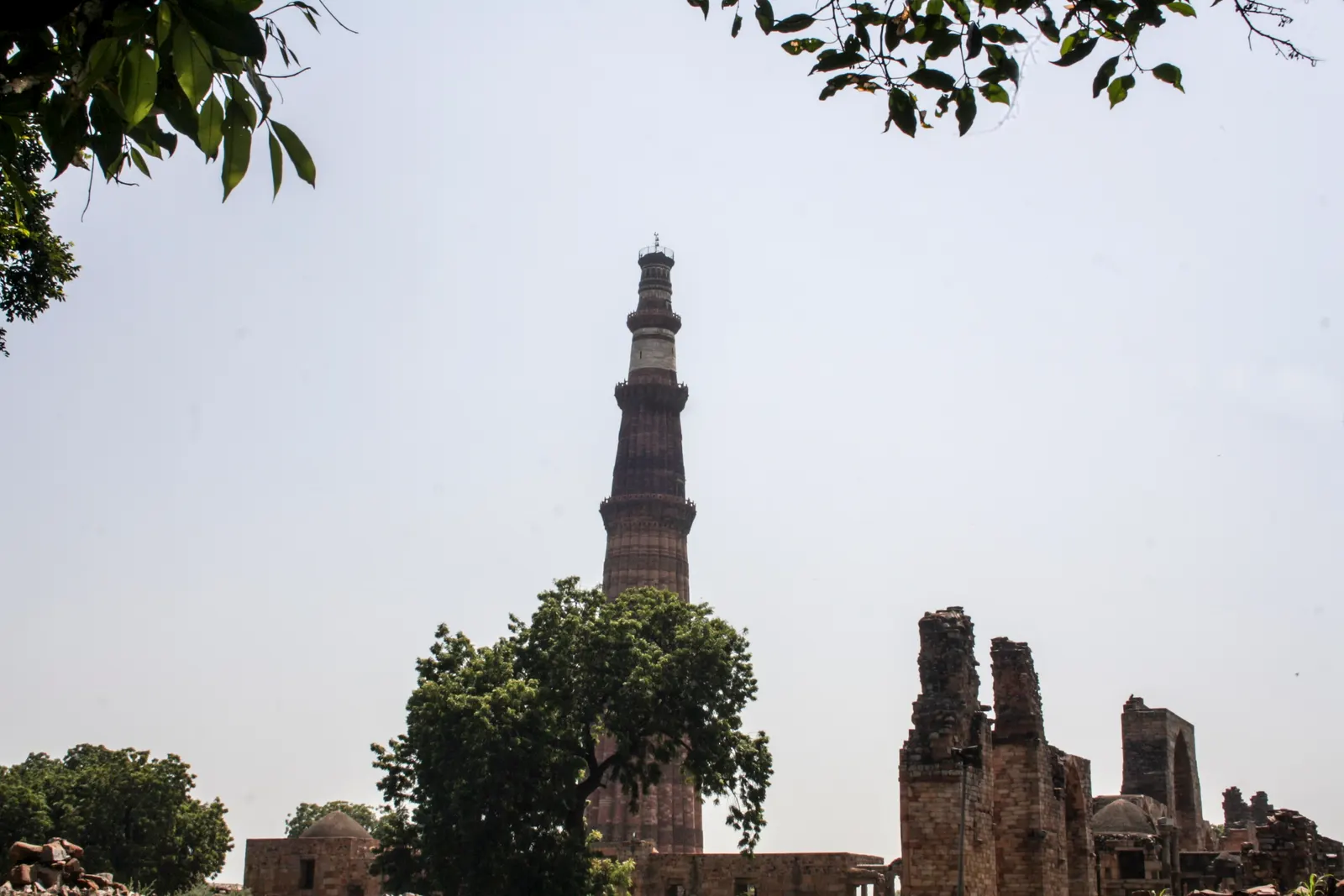
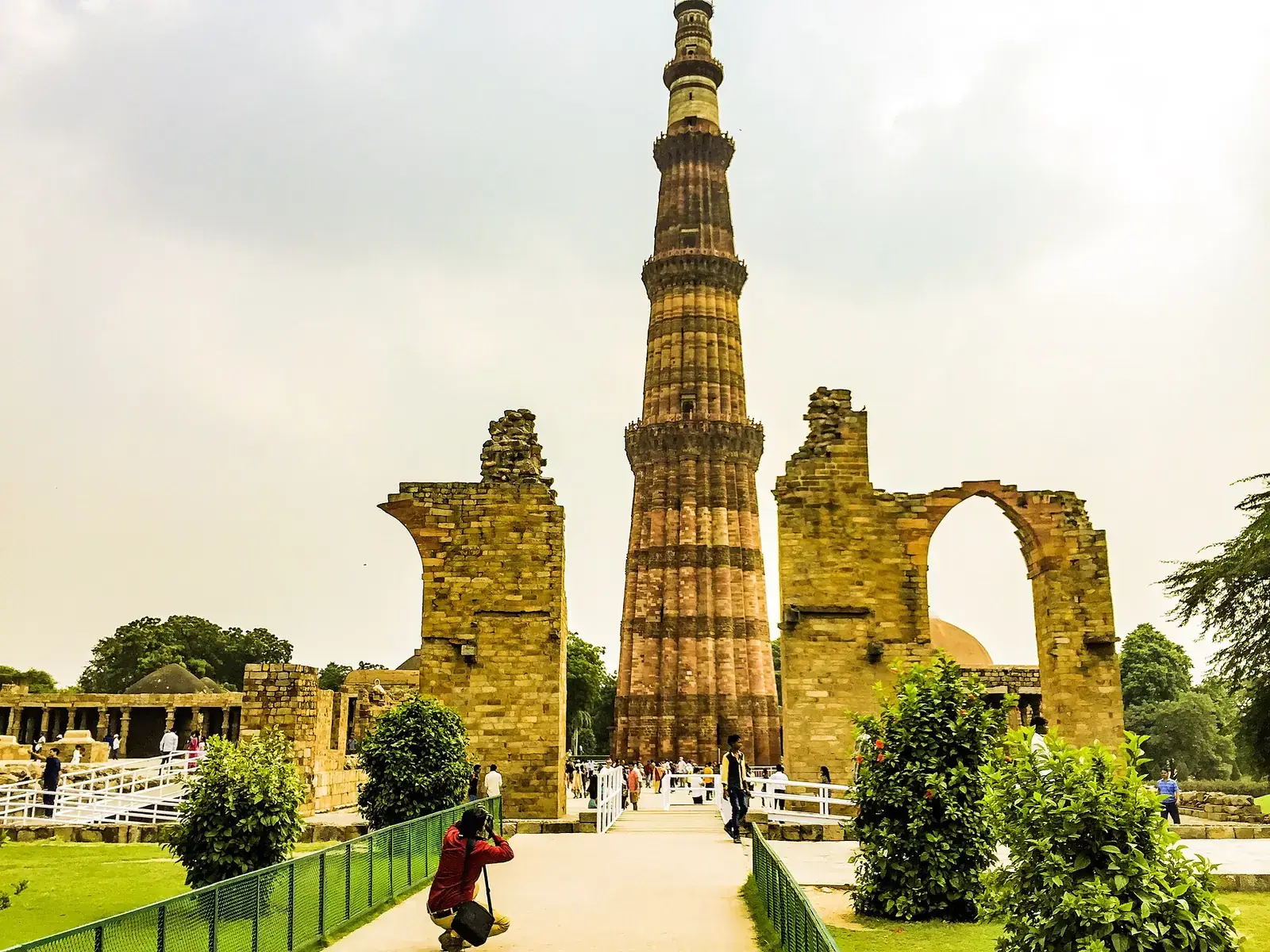
Mehrauli is arguably South Delhi's single most important heritage zone — home to the Qutub Minar, a 73-metre Sultanate-era minaret and UNESCO World Heritage Site, the tallest brick minaret in the world, set within a sprawling complex of ruins that also includes the Iron Pillar and Quwwat-ul-Islam Mosque. It's usually the single most-visited stop in all of South Delhi, and rightly so.
Just beyond the Qutub complex, the Mehrauli Archaeological Park spreads out over more than a hundred forgotten tombs, step-wells, and ruined pavilions spanning several centuries — far less crowded than Qutub Minar itself, and one of the best quiet-heritage walks anywhere in Delhi.
For the full walking route, opening hours, and how to combine Mehrauli with a Qutub Minar visit, see our dedicated Mehrauli travel guide.
Lodhi Garden & Khan Market
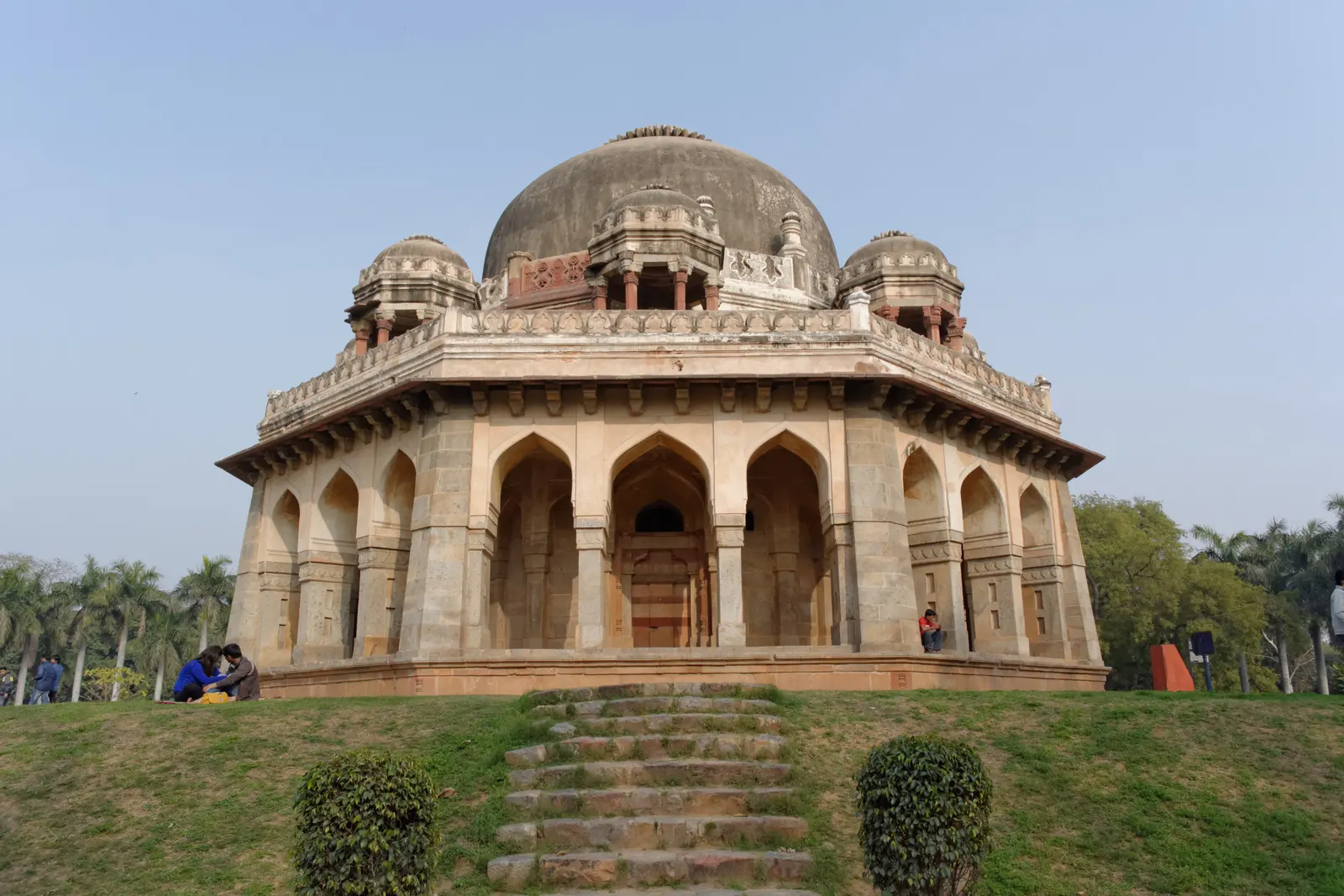
Lodhi Garden sits at South Delhi's northern edge, a sprawling, immaculately maintained park dotted with 15th-century Lodhi- and Sayyid-dynasty tombs — a genuinely striking sight, especially at sunrise or sunset, and one of the most popular spots in the city for a morning walk or run among joggers and history in equal measure.
A short walk or quick auto ride away, Khan Market is Delhi's most upscale shopping and dining district, long popular with diplomats, journalists, and well-heeled locals — bookstores, cafés, and some of the city's better restaurants packed into a compact, walkable market.
For the full guide to both — walking routes through the tombs, and the best of Khan Market's food and shopping — see our dedicated Lodhi Garden travel guide.
Chhatarpur Temple
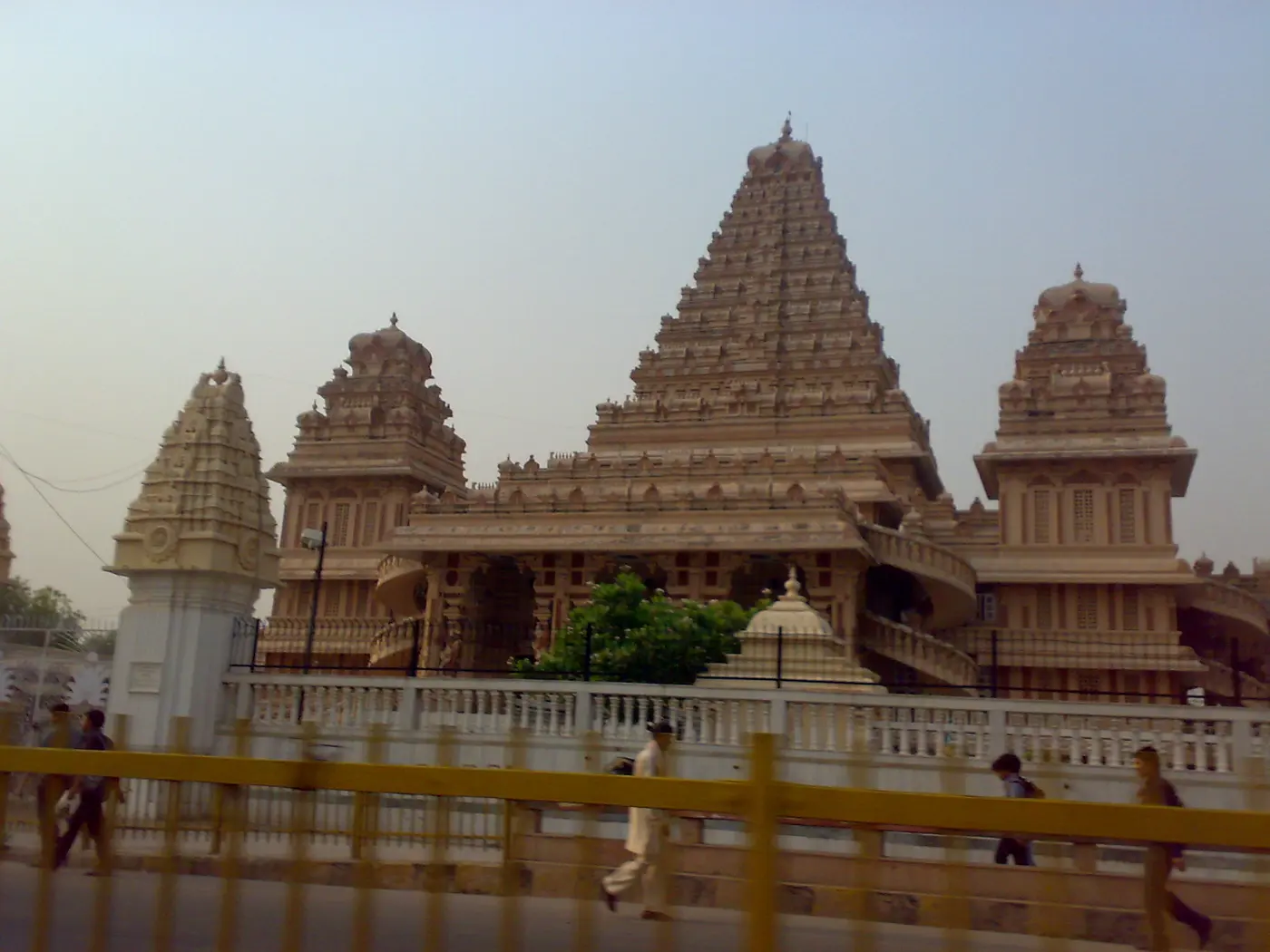
The Chhatarpur Temple complex (formally Sri Adya Katyayani Shakti Peeth) is one of India's largest temple complexes, a sprawling, ornately carved marble structure dedicated to Goddess Katyayani. It draws thousands of devotees on weekends and during Navratri, and is worth visiting even for non-religious travellers for the sheer scale of its architecture.
The complex sits toward South Delhi's southern edge, close to Mehrauli, and is easily reached via the Yellow Line (Chhatarpur station) followed by a short auto ride, or combined directly with a Qutub Minar / Mehrauli half-day since the two sit only about 10–15 minutes apart by road. Dress modestly and expect security screening, particularly during festival periods.
Dining, Nightlife & Café Scene
If there's one thing that unifies South Delhi's otherwise very different neighbourhoods, it's food — this is where Delhi's most ambitious restaurants, longest-running institutions, and best café culture all cluster.
- Hauz Khas Village: Rooftop bars and cafés overlooking the reservoir — Delhi's most concentrated nightlife strip outside Connaught Place, especially lively on weekend evenings.
- M-Block Market, GK-I: A dense cluster of well-reviewed sit-down restaurants, from decades-old Punjabi institutions to newer fine-dining spots — plan a proper dinner here rather than a quick bite.
- Khan Market: Upscale, often reservation-worthy dining alongside excellent independent cafés and bookstore-café combinations.
- Select Citywalk, Saket: A dependable food-court-and-restaurant mix for a comfortable, air-conditioned meal between sightseeing stops.
- Lodhi Colony's Lodhi Art District cafés: Smaller, quieter café options worth combining with a Lodhi Garden morning walk.
If you only have one South Delhi dinner to plan around, make it M-Block Market or Khan Market — both reward arriving without a fixed restaurant in mind and simply walking until something looks right.
1–2 Day South Delhi Itinerary
Two days is a comfortable way to see South Delhi's heritage and its markets without rushing either. If you only have one day, combine the morning of Day 1 with the evening of Day 2 below.
Heritage: Mehrauli, Qutub Minar & Chhatarpur
- ✓Morning: Qutub Minar and the Mehrauli Archaeological Park
- ✓Midday: Chhatarpur Temple (short ride from Mehrauli)
- ✓Afternoon: Lunch and a wander through Saket's Select Citywalk
- ✓Evening: Dinner in Greater Kailash's M-Block Market
Parks, Markets & Nightlife
- ✓Morning: Walk through Lodhi Garden's tombs
- ✓Late morning: Browse Khan Market
- ✓Afternoon: Hauz Khas Complex and Deer Park
- ✓Evening: Rooftop café or bar in Hauz Khas Village
* If your trip also includes Lajpat Nagar or Sarojini Nagar for shopping, both slot in well as a Day 2 afternoon detour before evening plans in Hauz Khas or GK.
Budget Breakdown
| Expense | Budget | Mid-Range | Luxury |
|---|---|---|---|
| Accommodation/night | ₹1,800 | ₹6,000 | ₹20,000 |
| Food/day | ₹800 | ₹2,500 | ₹6,000 |
| Local transport/day | ₹250 | ₹700 | ₹2,200 |
| Monument entry fees/day | ₹600 | ₹600 | ₹600 |
| Daily total | ₹3,450 | ₹9,800 | ₹28,800 |
| 2-Day trip total | ₹6,900 | ₹19,600 | ₹57,600 |
* Excludes travel to Delhi. South Delhi's dining and shopping tend to run higher than the city average — the figures above reflect that.
Essential Travel Tips for South Delhi
- Plan around a single Metro line where you can: The Yellow Line (Hauz Khas–Green Park–Saket) is the backbone of an efficient South Delhi day.
- Visit Qutub Minar and Mehrauli early: Both get hot and crowded by late morning — an early start is worth it, especially outside winter.
- Book restaurants in M-Block and Khan Market ahead: Popular spots fill up quickly on weekend evenings.
- Dress modestly for Chhatarpur Temple: Covered shoulders and knees are expected, and security screening is routine.
- Use app-cabs for the last mile: Several South Delhi pockets sit a short ride, not a walk, from the nearest Metro station.
- Check malls for weekday quiet: Select Citywalk and Ambience Mall get considerably busier on weekends — weekday visits are noticeably calmer.
✅ Do
- →Use the Yellow, Magenta, or Pink Metro lines to cross South Delhi
- →Visit Qutub Minar and Mehrauli early in the day
- →Book a table in M-Block or Khan Market ahead on weekends
- →Pair Chhatarpur Temple with a Mehrauli/Qutub half-day
- →Walk Lodhi Garden at sunrise or sunset for the best light
- →Dress modestly at Chhatarpur Temple
❌ Don't
- →Try to cover every South Delhi neighbourhood in a single day
- →Zig-zag across unrelated Metro lines when a single route works
- →Skip advance bookings for popular weekend restaurants
- →Underestimate how spread out Vasant Kunj and Chhatarpur are from the centre
- →Visit malls expecting weekend crowds to be light
- →Rush Mehrauli Archaeological Park — it rewards slow wandering
Frequently Asked Questions
What areas are considered South Delhi?
South Delhi is a broad municipal zone rather than a single neighbourhood — it typically includes Hauz Khas, Greater Kailash (GK-I and GK-II), Saket, Vasant Kunj, Vasant Vihar, Mehrauli, Lodhi Colony, Chhatarpur, Malviya Nagar, Lajpat Nagar, Sarojini Nagar, Green Park, and Defence Colony. It's the city's largest and most varied southern arc, stretching from Lodhi Garden near the centre out to Mehrauli's ancient ruins near the Qutub Minar.
Is South Delhi safe for travellers?
Yes, generally — South Delhi is considered one of the safer, more affluent parts of the city, with well-lit main markets, a heavy police and private security presence around malls and embassies, and a large resident expat and diplomatic community. As anywhere, keep the usual city-travel habits: use app-based cabs at night, avoid poorly lit back lanes alone late at night, and keep valuables secure in crowded markets like Sarojini Nagar or Lajpat Nagar.
Which is the best area to stay in South Delhi?
It depends on your priorities. Hauz Khas Village suits travellers who want cafés, nightlife, and a walkable arts district on their doorstep. Saket and Vasant Kunj are best if you want mall-adjacent comfort, cinemas, and easy airport access. Greater Kailash and Lodhi Colony/Khan Market suit those who want upscale dining and a quieter, leafier base. For most first-time visitors balancing sightseeing and convenience, Hauz Khas or Saket are the easiest picks — both sit on Metro lines with quick access to the rest of the city.
How many days do I need to explore South Delhi?
Two full days covers the highlights comfortably — one day for Mehrauli, Qutub Minar, and Chhatarpur Temple, and a second for Hauz Khas Village, Lodhi Garden, and an evening in Greater Kailash or Saket. If you want to properly linger in each neighbourhood's cafés and markets rather than just sightsee, three to four days is more realistic.
How do I get around South Delhi without a car?
The Delhi Metro is the easiest way — the Yellow Line runs through Hauz Khas and Saket, the Magenta Line connects Greater Kailash, Saket, and Vasant Kunj-adjacent stations, and the Pink Line links several southern neighbourhoods to the rest of the network. Auto-rickshaws and app-based cabs cover the last mile well, since several South Delhi pockets (Chhatarpur, deep Vasant Kunj, parts of GK) sit a short ride from the nearest station.
Is South Delhi expensive compared to the rest of the city?
Generally yes — it's the city's most affluent zone, and that shows up in restaurant prices, boutique shopping, and hotel rates compared to Old Delhi or Central Delhi. That said, it's not uniformly expensive: Hauz Khas Village and Lajpat Nagar's markets still offer plenty of budget-friendly food and shopping alongside the upscale options.
Can I visit Qutub Minar and Chhatarpur Temple in the same day?
Yes, easily — both sit in or near Mehrauli and are roughly a 10–15 minute drive apart. A common half-day plan is Qutub Minar and the surrounding Mehrauli Archaeological Park in the morning, followed by Chhatarpur Temple, then continuing on to Saket or Vasant Kunj for lunch and shopping in the afternoon.
Published by the Kudozz Club editorial team · Last updated · How we research our guides
Want us to plan this trip for you?
Tell Kudozz Club where you want to go and what kind of trip you’re looking for. We’ll build a Delhi itinerary around your dates and budget.
Continue Exploring
View all guidesOff-beatHauz Khas Travel Guide: Village, Deer Park & Fort Ruins
A 700-year-old royal reservoir and madrasa ruins sit right beside Delhi's trendiest boutique-and-nightlife village — the complete Hauz Khas guide.
 Heritage & Culture
Qutub Minar: History and Visiting Guide
A visitor's guide to the Qutub Minar complex in Mehrauli, Delhi: the 72.5 m minaret begun under Qutbuddin Aibak and completed under Iltutmish, the Quwwat-ul-Islam mosque, the Gupta-era Iron Pillar, the Alai Darwaza and the unfinished Alai Minar, practicalities, the metro, and Mehrauli Archaeological Park nearby.
HeritageLodhi Garden: Delhi's Tombs, Timings & Complete Visit Guide
90 acres of landscaped green in the middle of South Delhi, dotted with 500-year-old tombs from the Sayyid and Lodi dynasties — Delhi's favourite morning-walk park doubling as an open-air museum.
HeritageMehrauli Travel Guide: Qutub Minar & Ancient Delhi
Delhi's oldest continuously inhabited settlement — Qutub Minar, the rust-resistant Iron Pillar, a forest full of forgotten tombs, and 800+ years of layered history in one walkable quarter.