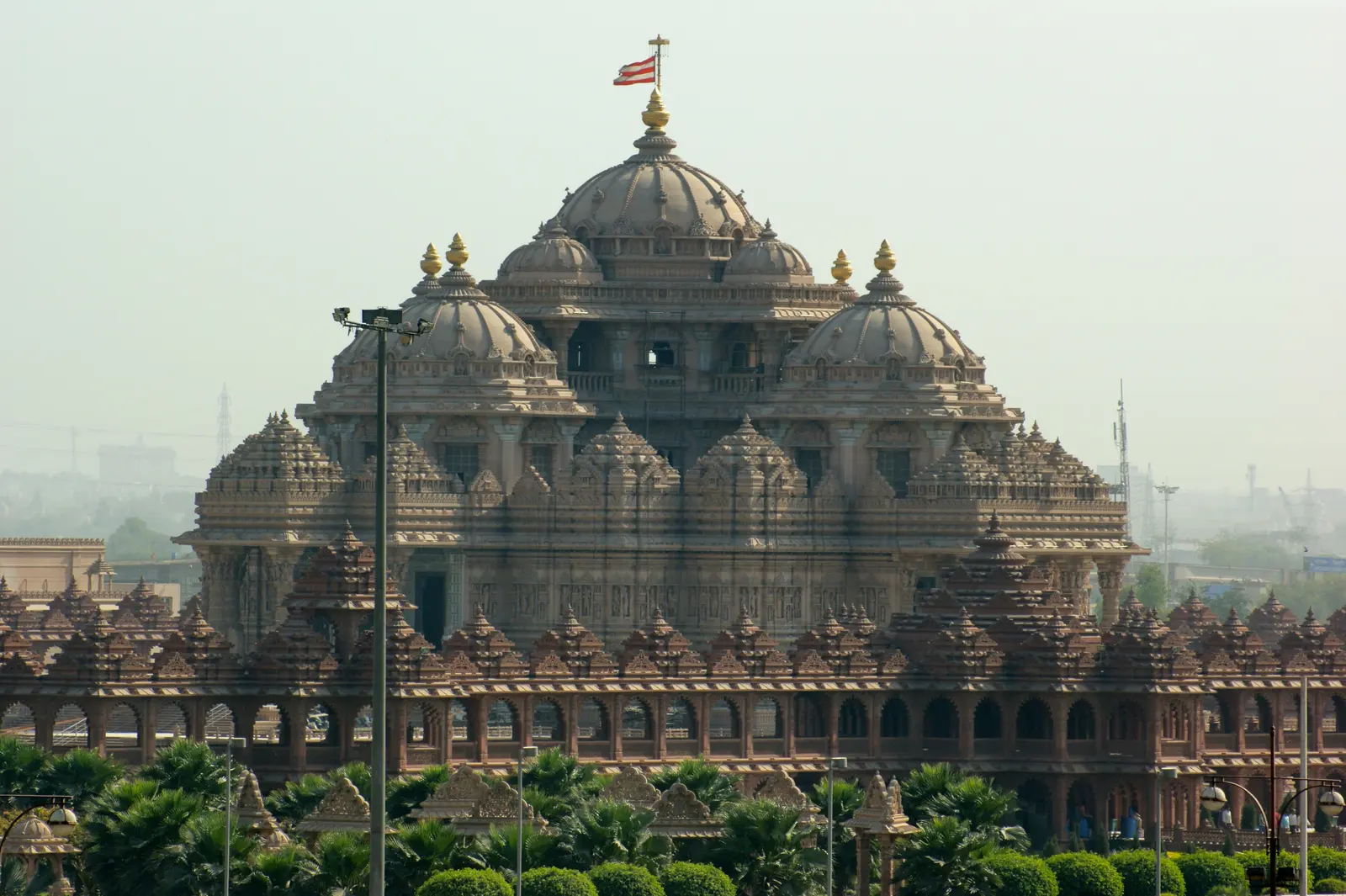
Akshardham: An Introduction
The Swaminarayan Akshardham complex sits on the eastern banks of the Yamuna in Delhi, and it is, by any measure, one of the most ambitious religious building projects completed anywhere in recent memory. Opened in November 2005 and built by the BAPS Swaminarayan Sanstha, the complex was recognised by the Guinness World Records as the world's largest comprehensive Hindu temple — a title that reflects not just the scale of the main mandir but the entire grounds around it: gardens, a stepwell, exhibition halls, and a boat ride, spread across acres of manicured complex on the Yamuna's floodplain.
What sets Akshardham apart from Delhi's older monuments — the Mughal forts, the Sultanate ruins — is that it's entirely modern, built between 2000 and 2005 by thousands of artisans and volunteers using traditional carving techniques on a genuinely enormous scale. There's no steel structural support anywhere in the main mandir; it stands on carved stone alone, in a construction style that deliberately echoes centuries-old temple-building traditions rather than modern engineering shortcuts.
This guide covers everything practical for a visit — timings, the ticketing structure, what's allowed inside (and, more importantly, what isn't), the boat ride and water show, and a realistic half-day itinerary. If you're building out a broader Delhi trip, our sibling guides to New Delhi, Nizamuddin, and Laxmi Nagar cover neighbourhoods within easy reach of Akshardham.
🛕 Akshardham at a Glance
Best Time to Visit Akshardham
Akshardham is an outdoor-and-indoor complex in roughly equal measure — the mandir itself is a covered structure, but the gardens, Yagnapurush Kund, and the walk between sections are all exposed to Delhi's weather, which makes season a real factor here.
Cool, comfortable days make the long walk across the grounds genuinely pleasant, and the gardens are at their best. The busiest window too, especially weekends.
Daytime heat regularly crosses 40°C with little shade across the open grounds — if visiting in this window, aim for a late-afternoon arrival timed around the evening water show.
Rain can interrupt outdoor viewing and occasionally affects the evening water show; the mandir and indoor exhibitions remain unaffected either way.
Comfortable temperatures for daytime visits, though dense winter fog can occasionally affect the visibility of the evening laser and water elements of the show.
Our pick: A weekday afternoon between October and March. You get comfortable weather for walking the grounds, thinner crowds than a weekend, and can time your visit to end with the evening water show without waiting through peak heat beforehand.
How to Reach Akshardham
Akshardham is unusually easy to reach for a site of its scale, mostly because of one thing: it has its own dedicated metro station right outside the gates.
- By Metro (recommended): Akshardham station on the Delhi Metro Blue Line sits directly beside the complex, with a short, well-signed walkway connecting the station exit to the entrance gate. This is by far the easiest, cheapest, and most predictable way in — no traffic, no parking search.
- By Car/Taxi: Akshardham sits just off NH-24 (the Delhi–Noida corridor), roughly 25–30 minutes from Connaught Place depending on traffic. A large paid parking lot is available on-site, though it fills up quickly on weekends and during festival periods.
- By Auto-rickshaw or App Cab: Widely available across Delhi and a reasonable option if you're not near a Blue Line station — just build in extra time for Delhi's traffic, especially in the evening around the water show timing.
The Mandir Architecture
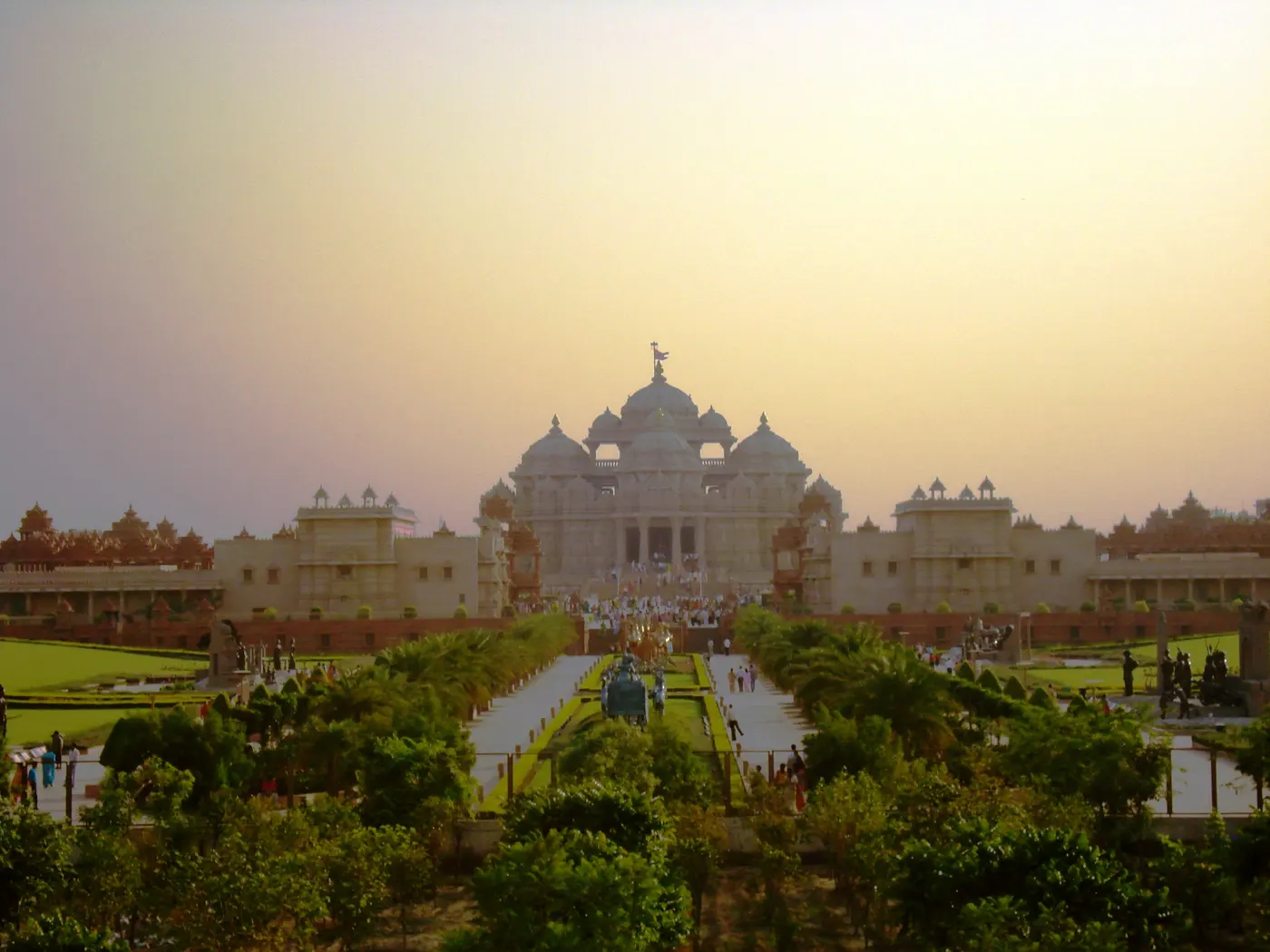
The main mandir is carved almost entirely from pink sandstone and Italian Carrara marble, with the exterior built up from the sandstone and the interior — pillars, domes, ceilings — finished largely in white marble. Every surface carries carving: over 20,000 murtis (sculpted figures) of deities, sages, devotees, and animals cover the walls, along with 234 intricately carved pillars supporting the structure.
What makes this genuinely remarkable from a construction standpoint is that no steel or structural iron was used anywhere in the mandir itself — it stands on carved and interlocked stone, following the traditional Indian shilpa shastra methods for temple building, scaled up to a size that had never been attempted this way before. Thousands of stone carvers worked on individual pieces before they were assembled on site, a process that took roughly five years from groundbreaking to opening.
The mandir rises to a height of about 43 metres, spans roughly 316 feet in length and 370 feet in width, and sits at the centre of a complex that also includes formal gardens (the Bharat Upvan), the Yagnapurush Kund stepwell, and separate exhibition buildings — the whole site covers close to 100 acres.
What's Inside the Complex
Akshardham isn't a single building to walk through and leave — it's a genuine campus, with several distinct experiences that most visitors try to cover in one visit.
Sahaj Anand Water Show
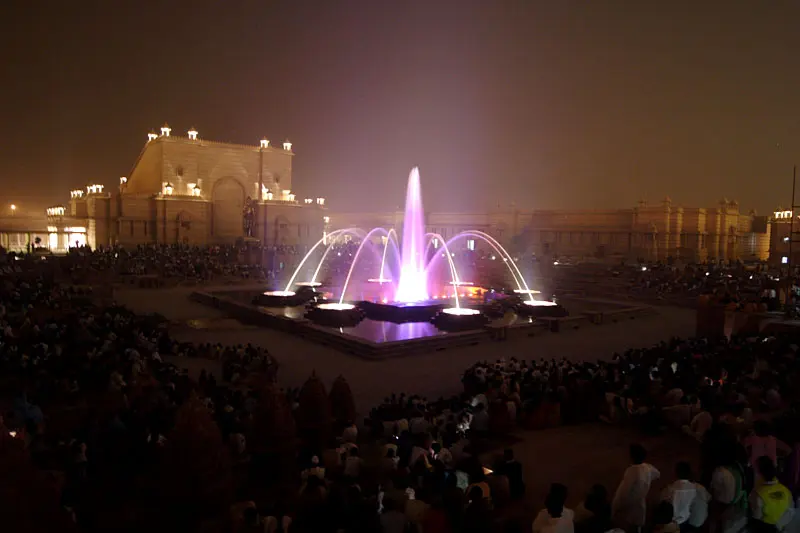
The evening musical fountain and light show is staged at the Yagnapurush Kund after dark, combining water jets, fire elements, laser projection, and underwater lighting with a soundtrack built around a story from Indian scripture. It's one of the most talked-about parts of a visit and draws large seated crowds on the Kund's steps — arriving 20–30 minutes before showtime secures a decent spot.
Yagnapurush Kund
Described as the world's largest stepwell of its kind, this vast stepped water tank sits in front of the mandir and doubles as the stage for the evening water show. By day, its symmetrical stone steps and central water body are worth a slow walk around on their own — it's a striking piece of architecture even without the evening performance.
Sanskruti Vihar Boat Ride
A paid, indoor boat ride that carries visitors past dioramas and sets depicting scenes from India's ancient history and cultural achievements — a relaxed, air- conditioned way to cover a lot of ground (figuratively) without much walking, and popular with families and elderly visitors.
Hall of Values & Exhibitions
Separately ticketed exhibition halls use large dioramas, audio-animatronic figures, and film presentations to walk through episodes from the life of Bhagwan Swaminarayan and broader themes of Indian philosophy and values. These are indoor, seated, and a good option for resting mid-visit while still taking something in.
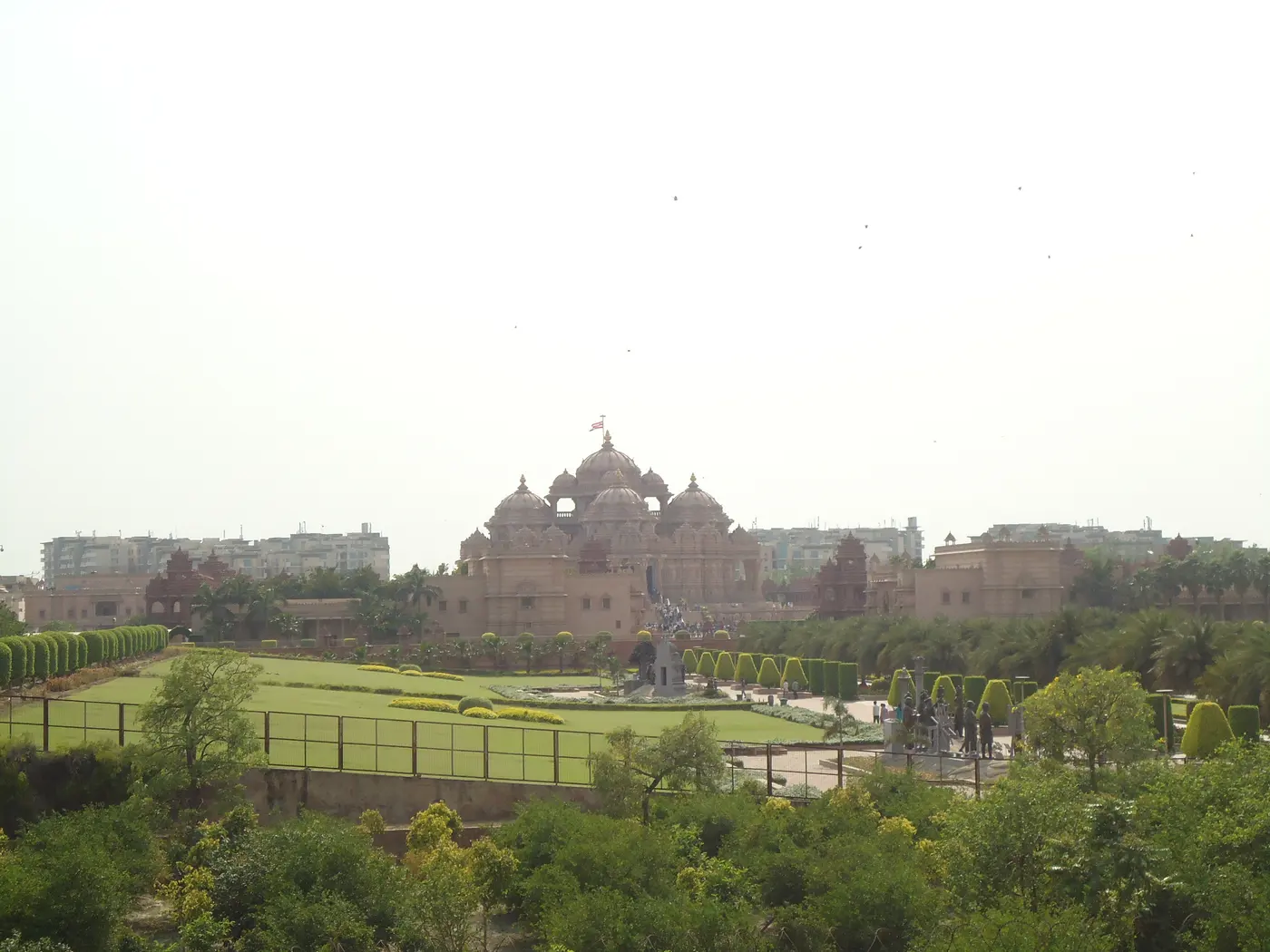
Around all of this sit the Bharat Upvan gardens — landscaped lawns with bronze sculptures of children, freedom fighters, and animals, a pleasant, shaded spot to walk or sit between the more structured parts of the visit.
Entry Rules & Security
This is the single most important practical section of this guide, and worth reading before you leave your hotel. Akshardham's security screening is among the strictest of any tourist site in Delhi, on par with airport security in some respects, and the list of banned items is long and consistently enforced.
- No mobile phones or electronics: Not permitted inside under any circumstance — this includes phones, cameras, power banks, smartwatches with camera functions, and USB drives.
- No bags: Handbags, backpacks, camera bags, and even small pouches are not allowed inside. Everything goes into the cloakroom before security.
- No food or drink: Including sealed water bottles — food courts are available inside the complex once you're through security, so there's no need to carry snacks in.
- No sharp objects, lighters, or matches: Standard security-screening restrictions, checked at a walk-through metal detector and manual frisking.
- No strollers/prams for young children: Families should be prepared to carry infants and toddlers through the mandir and grounds.
A paid cloakroom facility sits just outside the main entrance, specifically built to handle this — deposit your phone, bag, and other restricted items there before joining the security line, and keep the claim token safe until you exit. What you can carry in: your wallet or a small amount of cash, ID if needed, and eyeglasses.
Tickets & Pricing
Akshardham's ticketing is split into a free component and several paid add-ons, which sometimes confuses first-time visitors expecting either a single price or a single free entry.
- Main mandir & gardens: Free entry — you can walk into the complex, view the mandir, and explore the Bharat Upvan gardens without a ticket.
- Exhibitions (boat ride, Hall of Values): Ticketed separately, typically in the range of roughly ₹170–₹250 per adult depending on which exhibitions are combined, with lower rates for children and seniors — confirm current pricing at the counter, since it's revised periodically.
- Yagnapurush Kund evening water show: Timed separately from general entry; check at the complex whether the show requires its own ticket on the day of your visit, as seating arrangements have varied over time.
- Cloakroom fee: A small, nominal charge applies to deposit phones, bags, and other restricted items — worth carrying a little loose change for this.
Tickets for the paid exhibitions are sold at counters inside the complex, past the security check — you don't need to pre-book online, though it's worth checking the official Akshardham website before you travel in case that changes or in case of a temporary closure for maintenance.
Timings & Best Time of Day to Visit
Akshardham is open Tuesday through Sunday, with the mandir and grounds generally open through the morning, afternoon, and evening in a single continuous block, and the exhibitions and water show running on their own sub-schedules within that window.
- Closed: Every Monday, without exception — a common trip-planning mistake, so check your itinerary against this before finalising dates.
- Morning (opening – early afternoon): Quietest window, best light for photography of the exterior carving (from outside, since cameras aren't allowed in), and the most comfortable time to walk the full grounds in warmer months.
- Late afternoon: Crowds build steadily, especially on weekends — a good window for the exhibitions and food court before the evening show.
- Evening (water show): The Sahaj Anand Water Show is the last major event of the day and draws the largest single crowd — arrive early to get a good seat on the Kund's steps.
Suggested Half-Day Visit Timeline
Here's a realistic plan for a visitor arriving in the afternoon and staying through the evening water show — the single most common way to structure an Akshardham visit.
Arrive & Cloakroom
- ✓Arrive via Akshardham Metro station
- ✓Deposit phone, bag, and electronics at the cloakroom
- ✓Clear the security screening
Main Mandir & Gardens
- ✓Walk through the main mandir complex
- ✓View the carved pillars and murtis up close
- ✓Stroll the Bharat Upvan gardens
Exhibitions
- ✓Buy tickets for the boat ride and/or Hall of Values
- ✓Sanskruti Vihar boat ride (air-conditioned, seated)
- ✓Hall of Values audio-animatronic presentation
Food Court Break
- ✓Early dinner or snacks at the on-site food court
- ✓Rest before the evening crowds build
Yagnapurush Kund & Water Show
- ✓Walk around the Kund before the show
- ✓Take a seat 20–30 minutes before showtime
- ✓Sahaj Anand Water Show, then exit via cloakroom
* Prefer mornings over evenings? Simply shift this whole block earlier — arrive at opening, cover the mandir and exhibitions before midday crowds build, and skip the water show if evening timing doesn't suit your schedule.
Where to Eat Near Akshardham
Since outside food isn't permitted inside, the on-site food court is the practical option for anyone spending a full afternoon or evening at the complex — and it's a genuinely decent one by tourist-site standards.
- On-site food court: Located past security, inside the complex, serving pure-vegetarian meals, snacks, and beverages — the only food option available once you're through the gate, and reasonably priced for what it is.
- Vegetarian-only policy: In keeping with the site's religious character, no meat, egg, or alcohol is served anywhere inside the complex.
- Outside the complex: A short auto or cab ride toward Noida or East Delhi's residential pockets brings you to a wider range of restaurants and cafés, useful if you're visiting outside the food court's operating hours or want something more substantial before or after.
Budget Breakdown
Akshardham is one of the more affordable half-day experiences in Delhi — the mandir itself is free, and most of the cost, if any, comes from the exhibitions and food.
| Expense | Budget | Mid-Range | With Extras |
|---|---|---|---|
| Main mandir entry | Free | Free | Free |
| Exhibitions (boat ride, Hall of Values) | Skip | ₹170–₹250 | ₹250+ (both) |
| Cloakroom fee | ₹20–₹50 | ₹20–₹50 | ₹20–₹50 |
| Food court meal/snacks | ₹150 | ₹300 | ₹500 |
| Metro fare (round trip) | ₹60 | ₹60 | ₹60 |
| Half-day total (approx.) | ₹230 | ₹630 | ₹880 |
* Figures are representative estimates — exhibition and cloakroom pricing is revised periodically, so confirm current rates at the counter on arrival.
Essential Tips for Visiting Akshardham
- Plan to carry almost nothing: The shorter your list of things to deposit at the cloakroom, the faster you'll clear the entry process — leave non-essentials at your hotel if possible.
- Dress modestly: Covered shoulders and knees are expected, in keeping with the site's status as an active place of worship, not just a tourist attraction.
- Wear comfortable shoes: The grounds are large, and covering the mandir, gardens, exhibitions, and Kund on foot easily adds up to a few kilometres of walking.
- Arrive early for the water show: Good seating on the Kund's steps fills up 20–30 minutes before the show starts, especially on weekends.
- Expect no re-entry: Once inside, plan your visit as one continuous block — stepping out means going through security and the cloakroom process again.
- Check the schedule for Mondays and holidays: Weekly closure on Mondays and occasional closures for festivals or maintenance are worth confirming before you travel across the city.
✅ Do
- →Take the metro directly to Akshardham station
- →Carry only ID and cash — leave the rest behind
- →Dress modestly, covering shoulders and knees
- →Arrive by mid-afternoon to fit in the water show
- →Wear comfortable shoes for the large grounds
- →Confirm ticket prices at the counter on arrival
❌ Don't
- →Bring phones, cameras, or any electronics
- →Carry bags, food, or water bottles to the gate
- →Plan a visit on a Monday — the complex is closed
- →Expect to step out and re-enter without security again
- →Bring a stroller or pram for young children
- →Wear sleeveless tops or shorts inside the mandir
Frequently Asked Questions
What is not allowed inside Akshardham?
Security at Akshardham is genuinely strict, and the list of banned items is long: mobile phones, cameras, USB drives, any electronic device, bags of any kind (including small handbags and camera pouches), food, water bottles, chewing gum, matches or lighters, sharp objects, and leather items such as belts or wallets in certain areas. There is no exception process at the gate — everything on this list has to be checked into the cloakroom outside before you enter.
How much time do I need for Akshardham?
Budget a minimum of 3 to 4 hours for the mandir complex, the exhibitions, and the Yagnapurush Kund — most first-time visitors comfortably spend a full afternoon here. If you're also doing the Sanskruti Vihar boat ride and staying on for the evening Sahaj Anand Water Show, plan for a half-day visit of roughly 5 to 6 hours from entry to exit.
Is Akshardham open on Mondays?
No. Akshardham is closed to visitors every Monday, a detail that trips up a fair number of travellers planning a quick Delhi itinerary. It's open Tuesday through Sunday, so if Monday is the only free day in your schedule, plan another Delhi sight for that day and come back to Akshardham later in the trip.
Can I carry my phone inside Akshardham?
No — phones are on the banned items list along with all other electronics, and this is enforced consistently at the security check. You'll need to deposit your phone at the cloakroom counter outside the complex before entering, along with cameras, bags, and anything else on the restricted list. Carry only ID, cash or cards, and essentials that clear the security screening.
Is there an entry fee for Akshardham temple?
Entry to the main mandir complex and its gardens is free — you can walk in, view the temple, and explore the grounds without buying a ticket. The paid components are the exhibitions (the boat ride and audio-animatronic show), which are ticketed separately at a counter inside the complex, along with the Yagnapurush Kund evening water show which is separately timed and, in some cases, ticketed. Confirm current pricing at the counter on arrival, since it's revised periodically.
What is the best time to visit Akshardham to see the water show?
The Sahaj Anand Water Show (the musical fountain) runs in the evening after sunset and is genuinely one of the highlights of a visit, combining water jets, lasers, fire, and light with a soundtrack. Arrive at the complex by mid-to-late afternoon, cover the mandir and exhibitions first, eat at the food court, and stay on for the show — it draws large crowds, so getting a seat early is worth it.
How do I reach Akshardham by metro?
Akshardham has its own dedicated metro station — Akshardham — on the Delhi Metro's Blue Line, with a direct walkway connecting the station to the complex's entrance. It's by far the easiest and most reliable way to get there, avoiding Delhi's traffic and parking hassles entirely.
Can senior citizens and children visit Akshardham comfortably?
Yes. The complex has wheelchair access in most areas, ample seating, and the walking distances, while considerable across the full grounds, can be managed at a slow pace with rest breaks. Families with young children should note that strollers and prams are also restricted inside, similar to bags, so plan for carrying younger children through the mandir sections.
Published by the Kudozz Club editorial team · Last updated · How we research our guides
Want us to plan this trip for you?
Tell Kudozz Club where you want to go and what kind of trip you’re looking for. We’ll build a Delhi itinerary around your dates and budget.
Continue Exploring
View all guides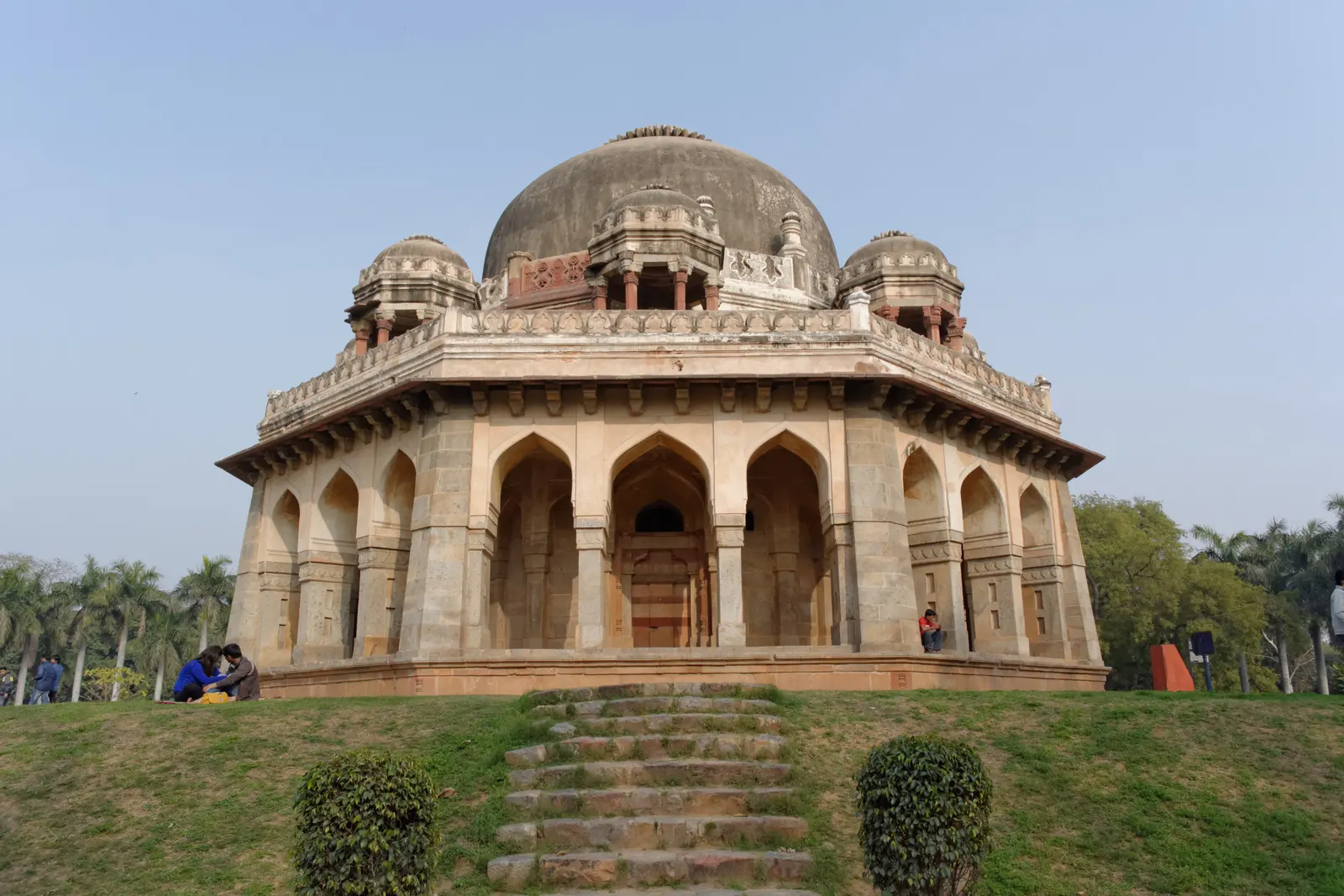 Heritage
Lodhi Garden: Delhi's Tombs, Timings & Complete Visit Guide
90 acres of landscaped green in the middle of South Delhi, dotted with 500-year-old tombs from the Sayyid and Lodi dynasties — Delhi's favourite morning-walk park doubling as an open-air museum.
 Heritage
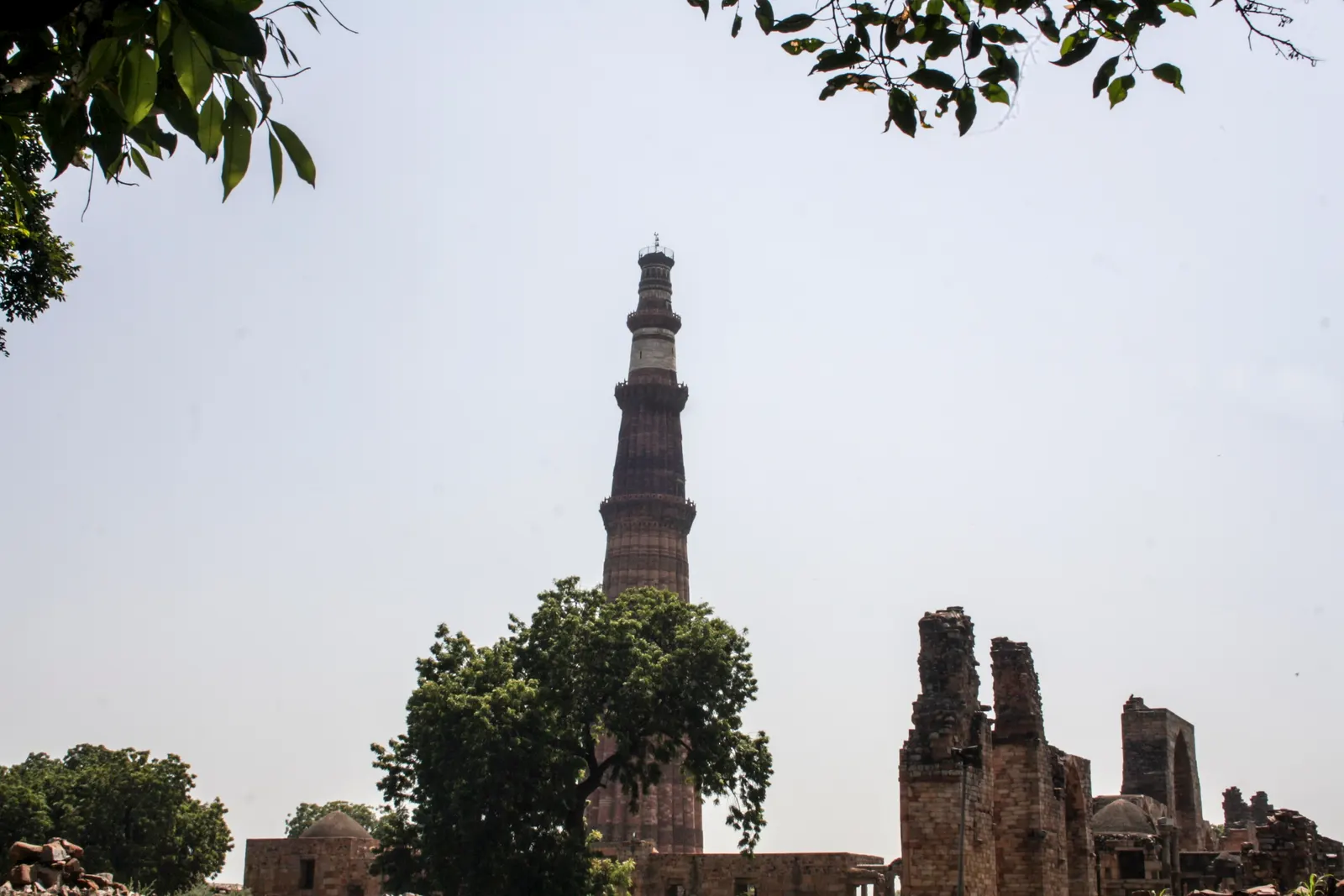
Mehrauli Travel Guide: Qutub Minar & Ancient Delhi
Delhi's oldest continuously inhabited settlement — Qutub Minar, the rust-resistant Iron Pillar, a forest full of forgotten tombs, and 800+ years of layered history in one walkable quarter.
 Heritage
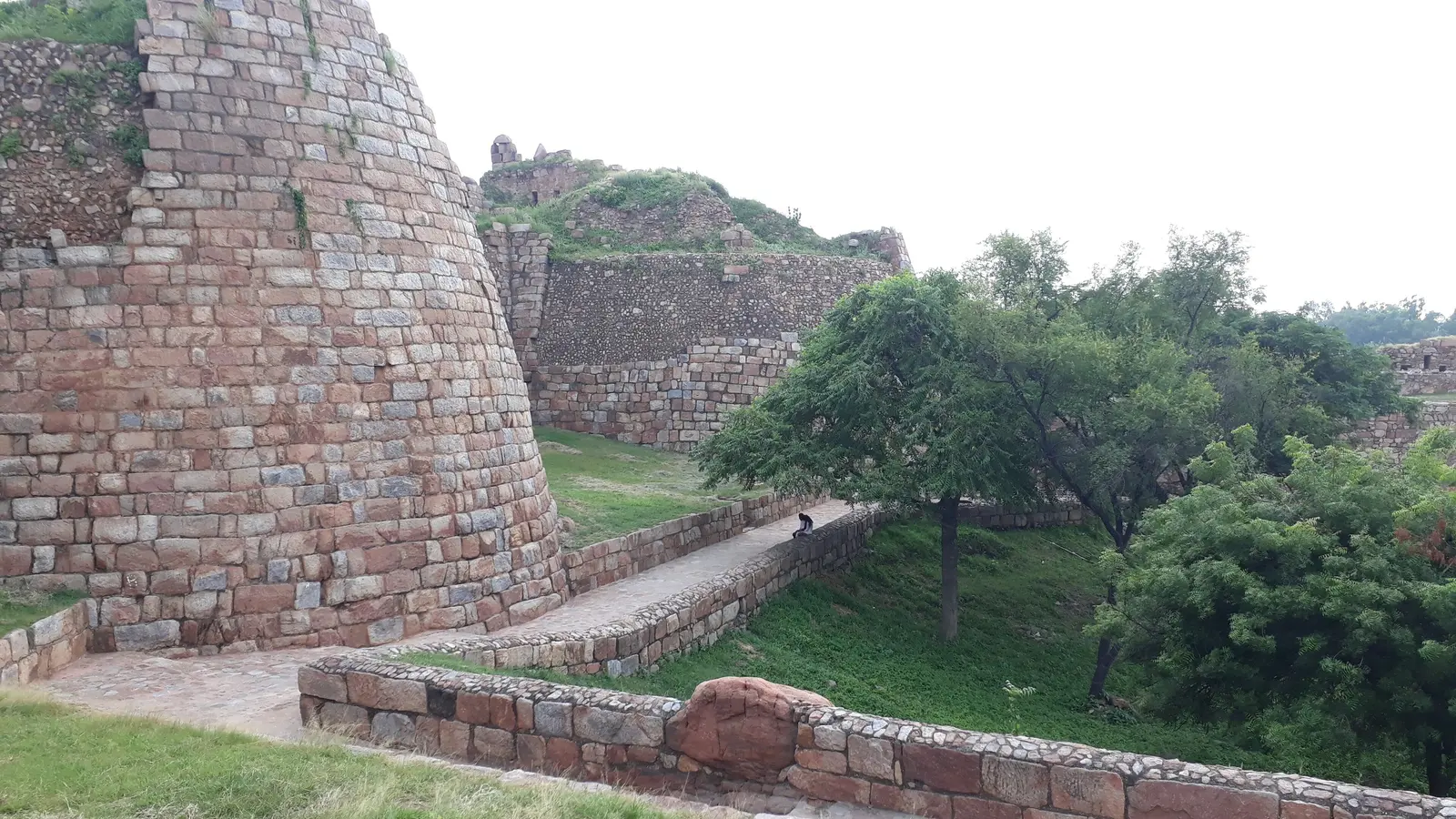
Tughlaqabad Fort Travel Guide: Delhi's Cursed City
Delhi's massive, mostly-empty 14th-century fort ruins built by Sultan Ghiyasuddin Tughlaq — sloping ramparts, 13 gates, an underground citadel, and the legendary curse of Nizamuddin Auliya.
 Heritage
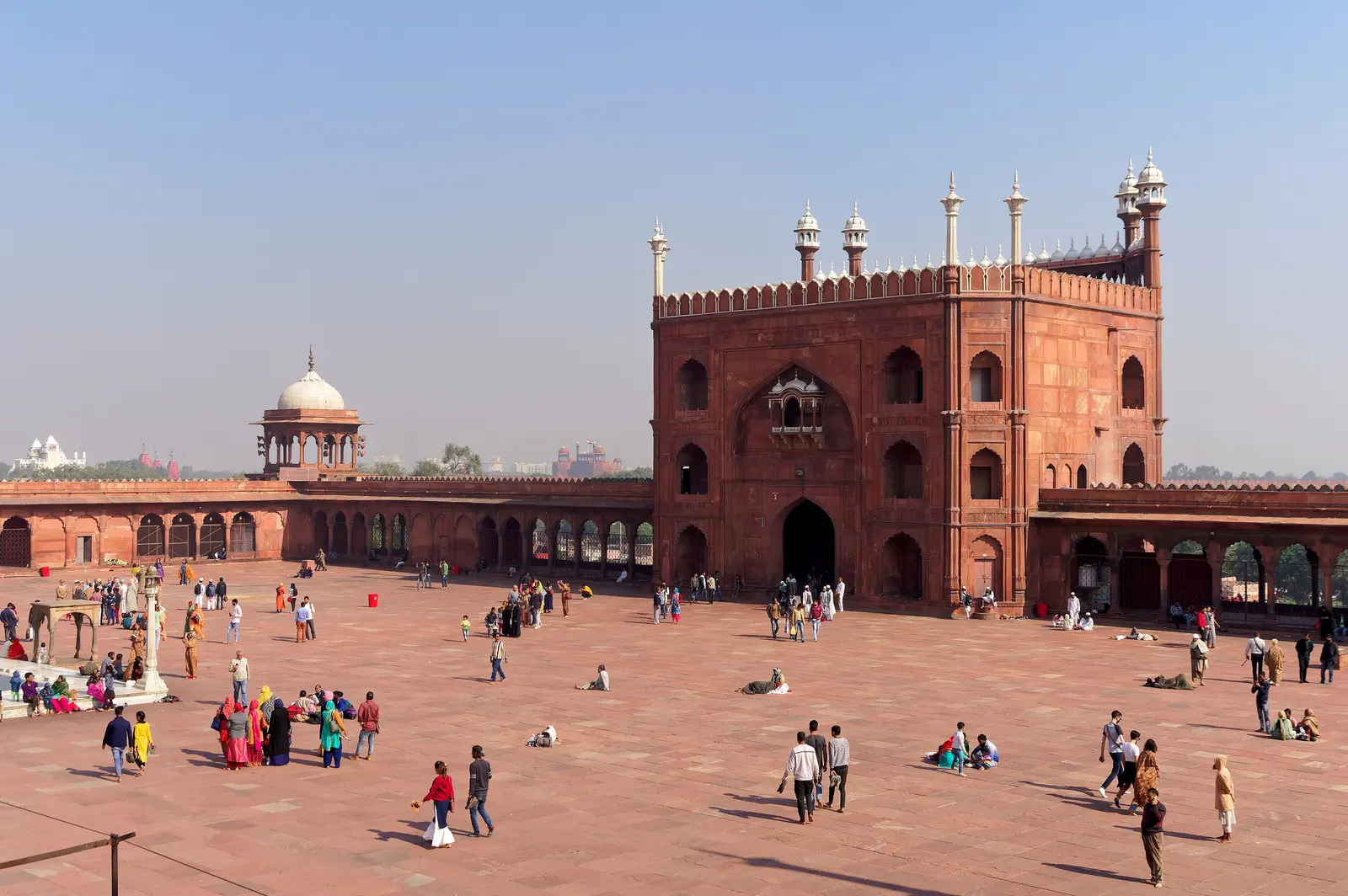
Old Delhi Travel Guide: Red Fort, Jama Masjid & Food
Shahjahanabad, Shah Jahan's 17th-century walled capital — Red Fort, India's largest mosque, cycle-rickshaw lanes, havelis, bazaars, and a street food trail running for well over a century.