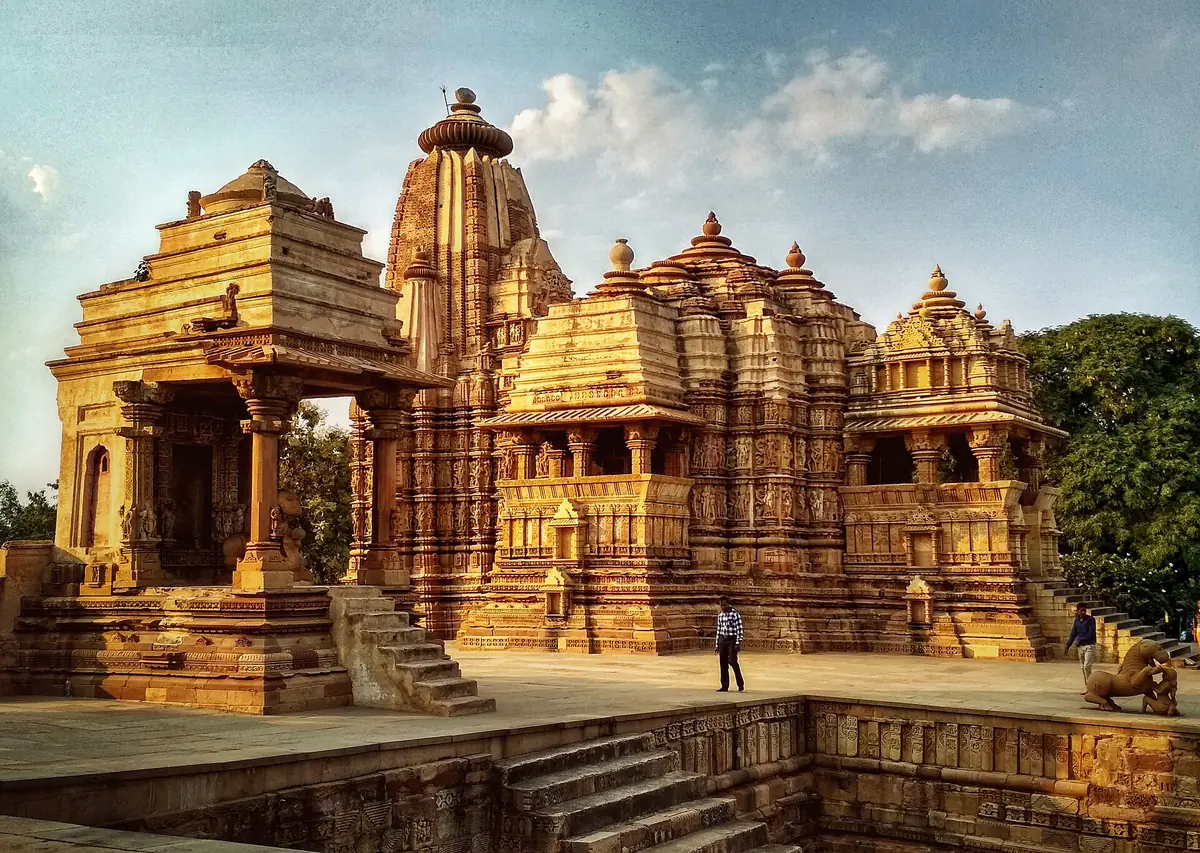
Why Khajuraho?
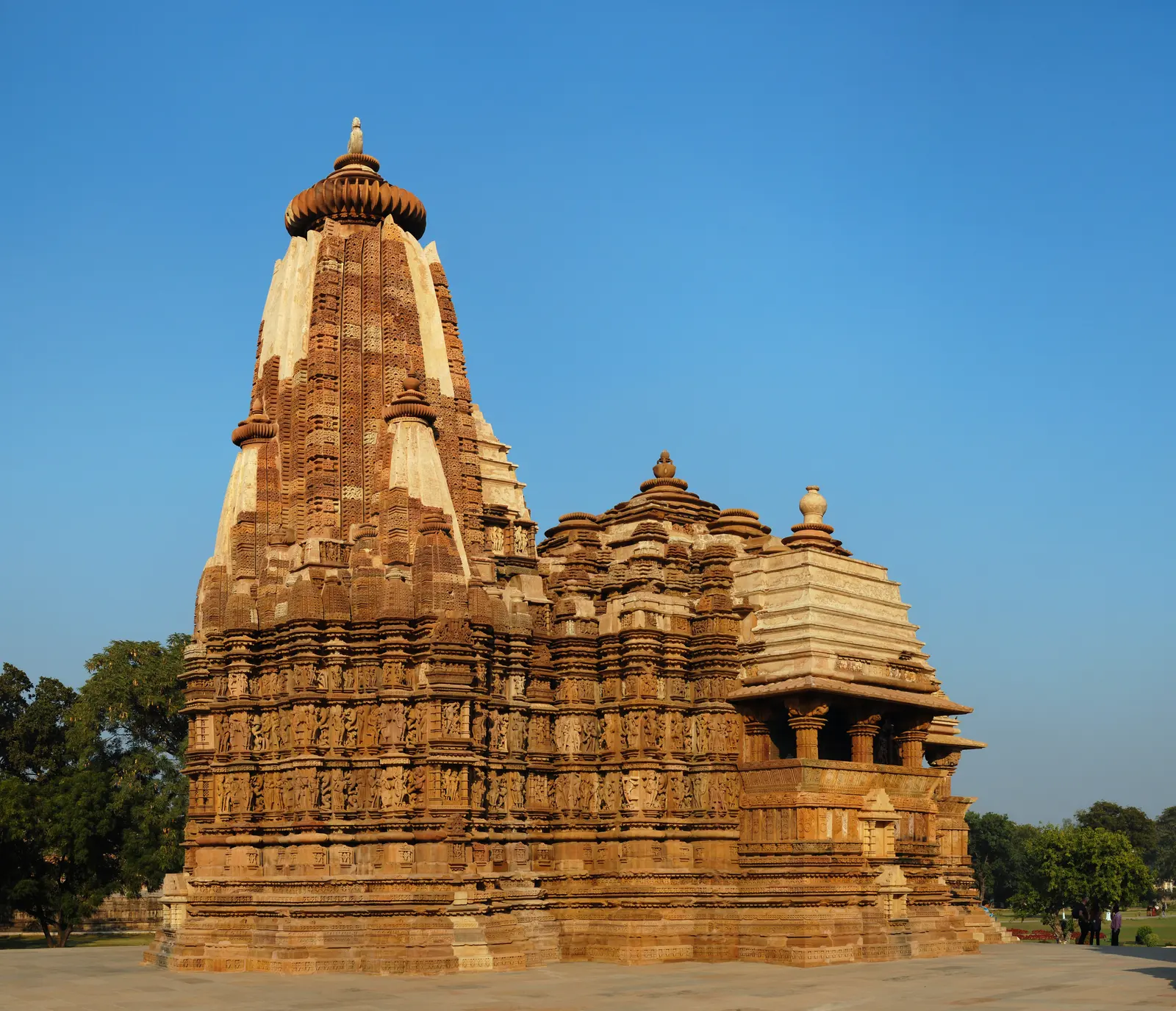
In a quiet corner of Madhya Pradesh's Chhatarpur district sits one of India's greatest concentrations of temple architecture — the Khajuraho Group of Monuments, built by the Chandela dynasty between the 9th and 12th centuries CE. Of the roughly 85 temples thought to have originally stood here, around 20-25 survive, spread across three groups on the edge of a small town that has grown up entirely around them.
Khajuraho's fame rests on its carving — sandstone worked into astonishingly detailed friezes of deities, celestial dancers (apsaras), animals, and scenes of daily life, wrapped around temple exteriors from base to spire. A portion of that carving is explicitly erotic, which is the detail most people have heard about before they arrive — but it's one theme among many on a handful of temples, set within a far broader visual language celebrating life, devotion, and craftsmanship. Walking the Western Group in full is really a walk through a thousand years of stone-carving skill.
A UNESCO World Heritage Site since 1986, Khajuraho rewards travellers who give it a proper two days rather than a rushed afternoon between flights.
🛕 Khajuraho at a Glance
Looking for activities and experiences? See our guide to the best things to do in Khajuraho.
Interested in the history? See our guide to a Madhya Pradesh heritage itinerary.
Planning a pilgrimage? See our guide to famous temples in India.
Planning a wildlife trip? See our guide to wildlife tourism in Madhya Pradesh.
Best Time to Visit Khajuraho
Cool, dry weather ideal for hours of outdoor temple walking, plus the Khajuraho Dance Festival typically falls in this window.
Temperatures climb sharply by midday. Plan temple visits for early morning and keep afternoons for indoor breaks.
Rain is intermittent rather than constant, and the surrounding countryside turns green, but humidity makes long temple circuits tiring.
Temperatures start easing and crowds are lighter than the winter peak, though the dance festival hasn't started yet.
Our pick: Late November to February — comfortable temperatures for walking all three temple groups, and a good chance of catching the Khajuraho Dance Festival if the dates line up.
How to Reach Khajuraho
- By Air: Khajuraho Airport (HJR) has direct flights from Delhi, Varanasi, and several other cities — by far the easiest way in.
- By Train: Khajuraho has its own railway station with reasonable long-distance connectivity, including to Delhi and Varanasi.
- By Road: Road connections from major cities are long (Khajuraho sits somewhat off the main highway grid) — flying or the train are the practical options for most travellers.
The Three Temple Groups
- Western Group: The most famous and best-preserved cluster, and the one most visitors mean when they picture Khajuraho. Includes Kandariya Mahadeva Temple — the largest and most ornately carved temple at the site — alongside Lakshmana Temple and Vishvanatha Temple. Ticketed and maintained as a landscaped archaeological park.
- Eastern Group: A mix of Jain and Hindu temples in the old village area, including Parshvanath Temple — the largest of the Jain temples here, with carving of similarly high quality to the Western Group but far fewer visitors.
- Southern Group: The smallest and quietest cluster, centred on Duladeo Temple and Chaturbhuj Temple — worth the short trip out for travellers who want Khajuraho without the crowds.
Khajuraho Dance Festival & Light Show
- Khajuraho Dance Festival: An annual classical Indian dance festival typically held in winter, staged against the floodlit backdrop of the Western Group temples — a genuinely striking setting for Bharatanatyam, Kathak, Odissi, and other classical forms.
- Light & Sound Show: A nightly show at the Western Group narrating Khajuraho's history against the illuminated temples — a good way to close out a day of temple-hopping, generally in both Hindi and English sessions.
Where to Stay in Khajuraho
- → MP Tourism guesthouses
- → Budget hotels near the Western Group
- → Simple stays along the main market road
- → Boutique heritage-style hotels
- → Chain hotels near the airport road
- → Resort-style properties on the town outskirts
- → Taj/premium heritage resorts
- → Luxury pool villas near the Western Group
- → High-end wellness resort stays
What to Eat in Khajuraho
- Poha & jalebi: The classic Madhya Pradesh breakfast combination, widely available at local eateries in the market area.
- Bhutte ki kees: A savoury grated-corn dish popular across the region — worth trying at least once.
- Multi-cuisine hotel restaurants: Given the international tourist traffic, most mid-range and luxury hotels run reliable multi-cuisine menus alongside local Madhya Pradesh dishes.
- Thalis: Simple vegetarian thalis at local restaurants near the temple groups are an easy, filling option between sightseeing stops.
2-Day Khajuraho Itinerary
Western Group & Light Show
- ✓Early morning: Western Group, starting with Kandariya Mahadeva Temple
- ✓Continue through Lakshmana and Vishvanatha temples
- ✓Afternoon: rest or explore the local market
- ✓Evening: Light & Sound show at the Western Group
Eastern & Southern Groups
- ✓Morning: Eastern Group, including Parshvanath Temple
- ✓Continue to the Southern Group — Duladeo and Chaturbhuj temples
- ✓Afternoon: local museum or archaeological museum visit
- ✓Evening: departure or festival performance if dates align
Budget Breakdown
| Expense | Budget | Mid-Range | Luxury |
|---|---|---|---|
| Accommodation/night | ₹900 | ₹3,500 | ₹13,000 |
| Food/day | ₹400 | ₹900 | ₹2,200 |
| Local transport/day | ₹300 | ₹800 | ₹2,000 |
| Entry fees & guide | ₹700 | ₹1,200 | ₹1,200 |
| Daily total | ₹1,500 – ₹1,900 | ₹5,500 | ₹18,400 |
| 2-Day trip total | ₹3,700 | ₹12,400 | ₹37,600 |
* Excludes flights/trains to Khajuraho. Entry fees are approximate — confirm current ASI rates locally before you go.
Essential Travel Tips for Khajuraho
- Hire an ASI-approved guide: Available at the Western Group entrance — worth it for context on the carving and temple architecture.
- Visit the Western Group early morning: Best light for photography and noticeably fewer tour groups than mid-morning onward.
- Don't skip the Eastern and Southern groups: They hold carving of comparable quality to the Western Group with a fraction of the crowds.
- Check festival dates ahead: The Khajuraho Dance Festival dates shift year to year — worth timing a trip around if classical dance interests you.
- Carry water and sun protection: Temple courtyards offer little shade across a multi-hour visit.
- Book flights early in winter: Khajuraho Airport has limited capacity and fills up around the festival season.
✅ Do
- →Visit all three temple groups, not just the Western Group
- →Hire a guide for historical and architectural context
- →Go early morning for the best light and fewer crowds
- →Catch the evening Light & Sound show
- →Time your trip for the Dance Festival if it interests you
- →Carry water and sun protection for the open courtyards
❌ Don't
- →Assume Khajuraho is only about the erotic carvings
- →Skip the Eastern and Southern groups
- →Visit at midday in peak summer without shade breaks
- →Rely on road travel from distant cities — fly or take the train instead
- →Forget to book flights early during festival season
- →Rush the visit into a single half-day
Frequently Asked Questions
How many days do I need in Khajuraho?
Two days is comfortable — one for the Western Group (the largest, most ornate temples plus the evening Light & Sound show), and one for the quieter Eastern and Southern groups. A rushed visit can technically cover the highlights in a single long day.
Are the erotic sculptures the main thing at Khajuraho?
No — they're a famous but relatively small part of the overall carving. The vast majority of Khajuraho's sculpture depicts deities, celestial figures, everyday life, animals, and mythological narratives. The erotic panels appear on specific temples and are generally read as one theme among many in a broader celebration of life carved into the stone.
What is the best time to visit Khajuraho?
November to February is ideal — cool, dry weather for walking between temple groups, plus the Khajuraho Dance Festival typically held in winter. March through May gets hot for extended outdoor sightseeing.
How do I reach Khajuraho?
Khajuraho Airport (HJR) has direct flights from Delhi, Varanasi, and other cities, and is by far the easiest way in. Khajuraho also has its own railway station with reasonable connectivity. Road connections from major cities are long, so flying or taking the train is the common approach.
Do I need a guide at Khajuraho?
It isn't mandatory, but it genuinely helps — the temples' carving depicts specific mythological narratives and architectural symbolism that are easy to miss walking through alone. ASI-approved guides are available at the Western Group entrance.
Which temple group should I prioritise if I only have one day?
The Western Group — it holds the largest and best-preserved temples, including Kandariya Mahadeva, the site's largest and most ornate, plus the Light & Sound show in the evening.
What is the budget for a trip to Khajuraho?
A budget traveller can manage on roughly ₹1,500–₹1,900 a day (stay, food, local transport, entry), a mid-range trip runs closer to ₹4,500–₹5,500 a day, excluding flights or trains into the region.
Published by the Kudozz Club editorial team · Last updated · How we research our guides
Want us to plan this trip for you?
Tell Kudozz Club where you want to go and what kind of trip you’re looking for. We’ll build a Khajuraho Temples and Madhya Pradesh itinerary around your dates and budget.
Continue Exploring
View all guides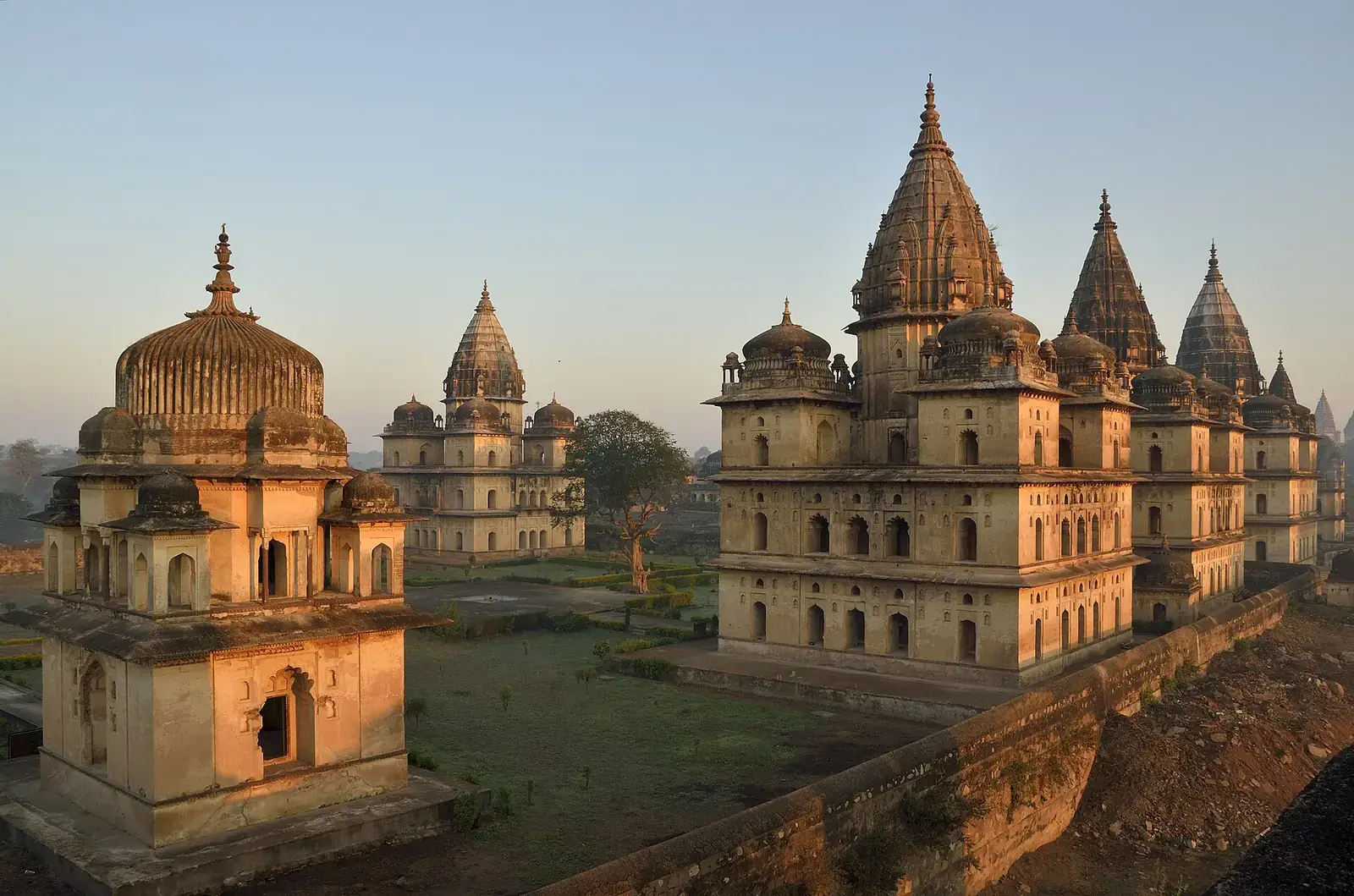 Heritage & Culture
Madhya Pradesh Heritage Itinerary: Gwalior, Orchha, Khajuraho, Sanchi and Mandu
An 11-day Madhya Pradesh heritage itinerary: Gwalior's hilltop fort, Orchha's palaces and cenotaphs, the temples of Khajuraho, Bhopal with day trips to Sanchi, Udayagiri and Bhimbetka, and the Malwa plateau's Mandu and Maheshwar, reached from Indore, with travel times and seasonal tips.
 Things to Do
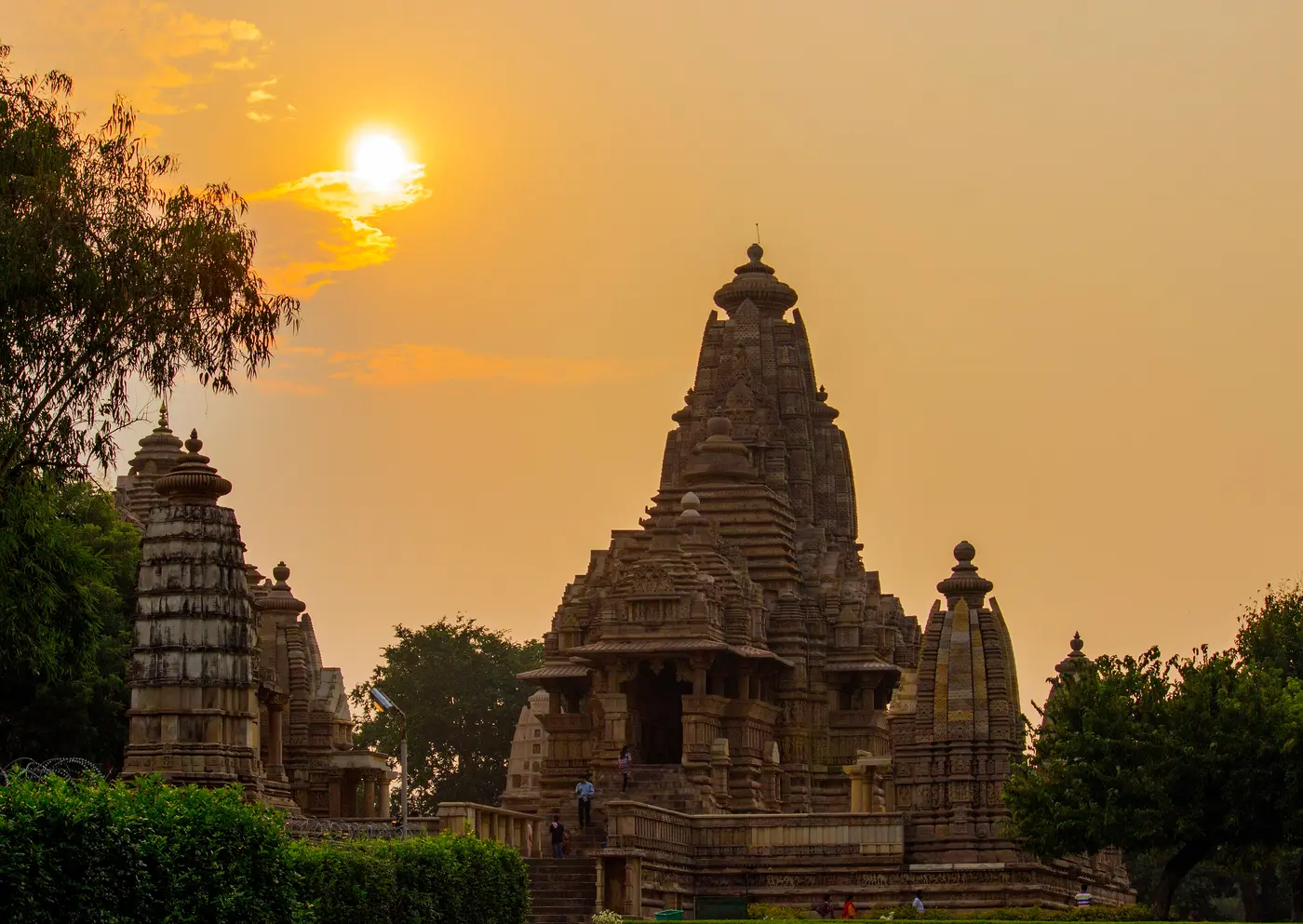
Things to Do in Khajuraho: Chandela Temples, Light Show, Panna & Raneh Falls
Things to do in Khajuraho: the Western Group of temples including Kandariya Mahadeva, the Eastern Jain temples, the Southern Group, the light and sound show, the Archaeological Museum, the Khajuraho Dance Festival, Panna National Park and Raneh Falls.
 Heritage & Culture
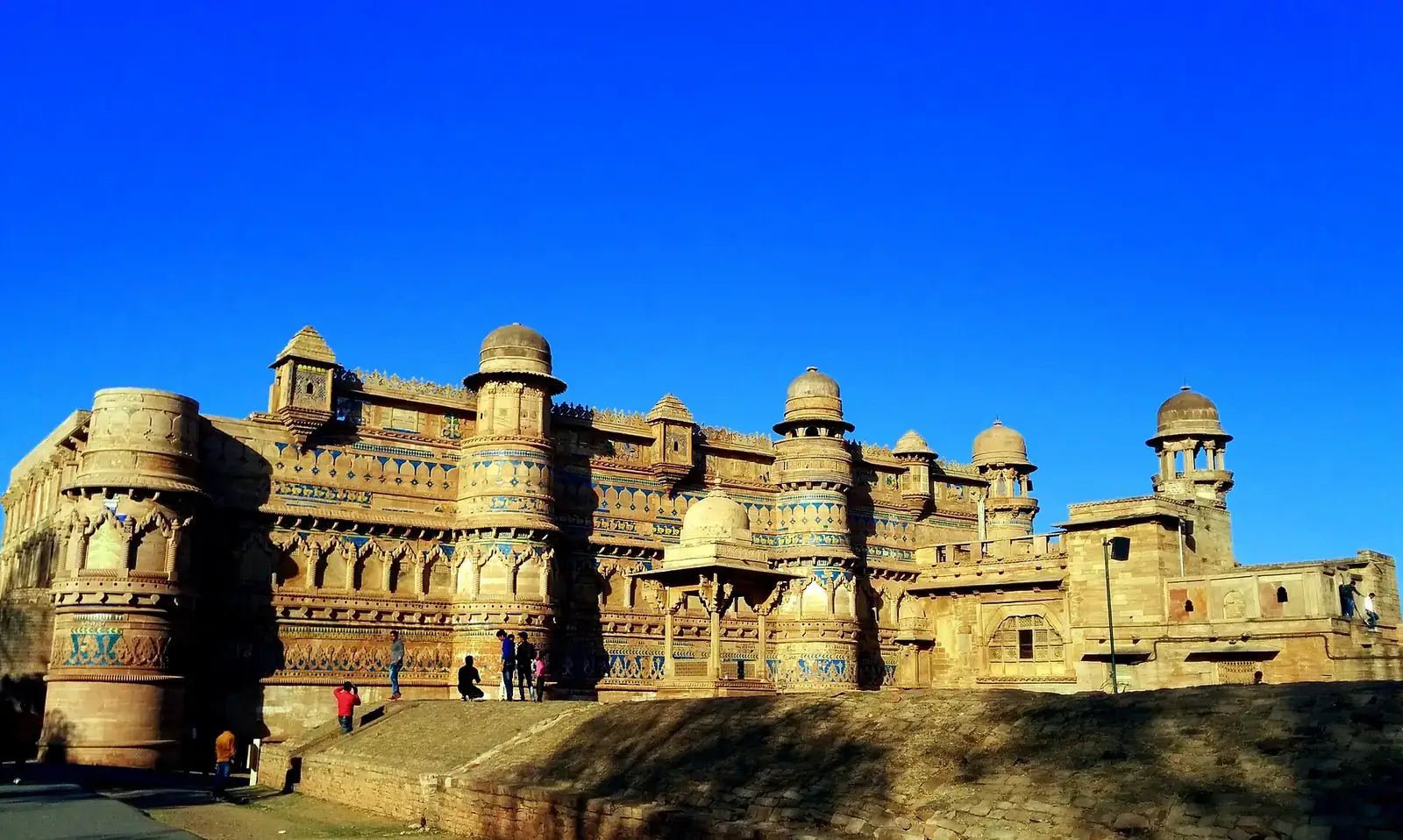
Heritage Tourism in Madhya Pradesh: Khajuraho, Gwalior, Orchha and Mandu
A guide to heritage tourism in Madhya Pradesh: its three UNESCO cultural sites (Khajuraho, Sanchi and Bhimbetka), the forts and palaces of Gwalior, Orchha and Datia, Mandu and Maheshwar on the Malwa plateau, the weaving towns of Chanderi and Maheshwar, Bhopal's museums, the Khajuraho Dance Festival and Gwalior's music heritage, with how to plan a route.
 Destination Guide
Madhya Pradesh Travel Guide: Khajuraho, Bandhavgarh & Gwalior Fort
Temples carved with astonishing detail, some of India's best tiger sightings, and a hilltop fortress that guarded the heart of the country — the complete guide to Madhya Pradesh.