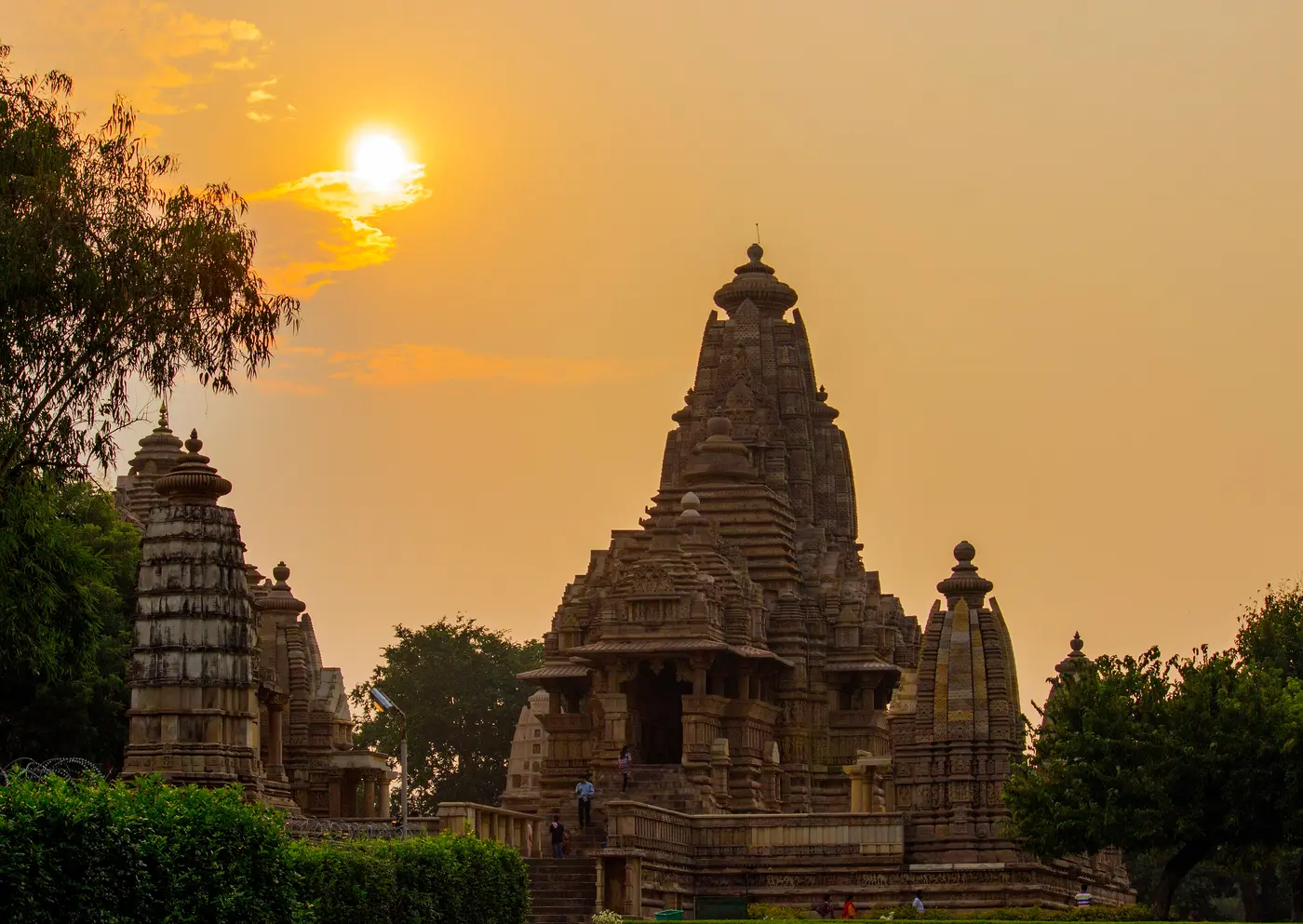
Khajuraho, in the Chhatarpur district of Madhya Pradesh, was a religious centre of the Chandela dynasty, which built around 85 temples here between about 950 and 1050 CE. Around 25 survive, and together they were listed as a UNESCO World Heritage Site in 1986.
The temples are famous for their sculpture: thousands of figures of gods, celestial dancers, musicians, warriors, animals and scenes of daily life, among which the erotic carvings are only a small part. The things to do in Khajuraho include the Western, Eastern and Southern groups of temples, the museum, the evening light show and, nearby, Panna National Park and the canyon at Raneh Falls.
One to two days is enough. October to March is the best time; the Khajuraho Dance Festival is held in February.
For how to get there, when to go and where to stay, see our Khajuraho travel guide.
Quick answer: best things to do in Khajuraho
- Explore the Western Group of temples
- See Kandariya Mahadeva, the largest temple
- Visit the Jain temples of the Eastern Group
- See Duladeo and Chaturbhuj in the Southern Group
- Watch the light and sound show
- Visit the Archaeological Museum
- Attend the Khajuraho Dance Festival
- Go on a safari in Panna National Park
- See the canyon at Raneh Falls
- Cycle to nearby villages
Interested in the history? See our guide to a Madhya Pradesh heritage itinerary.
Planning a pilgrimage? See our guide to famous temples in India.
Planning a wildlife trip? See our guide to wildlife tourism in Madhya Pradesh.
The Western Group
Explore the Western Group
The Western Group, in a landscaped enclosure, holds the finest temples, including Lakshmana, Kandariya Mahadeva, Vishwanath, Chitragupta and Devi Jagadambi. Each stands on a high platform with rising towers meant to evoke Mount Kailash, and bands of carvings wrap around the walls. Hiring a licensed guide helps you read the sculptures.
Look for the sculptures of apsaras applying make-up, writing letters or removing thorns from their feet, and the friezes of armies, hunting scenes and processions along the plinths. The Lakshmana Temple is one of the best preserved, with a full set of subsidiary shrines at its corners.
- Time needed
- 2–3 hours
- Best time
- Early morning or late afternoon
See Kandariya Mahadeva
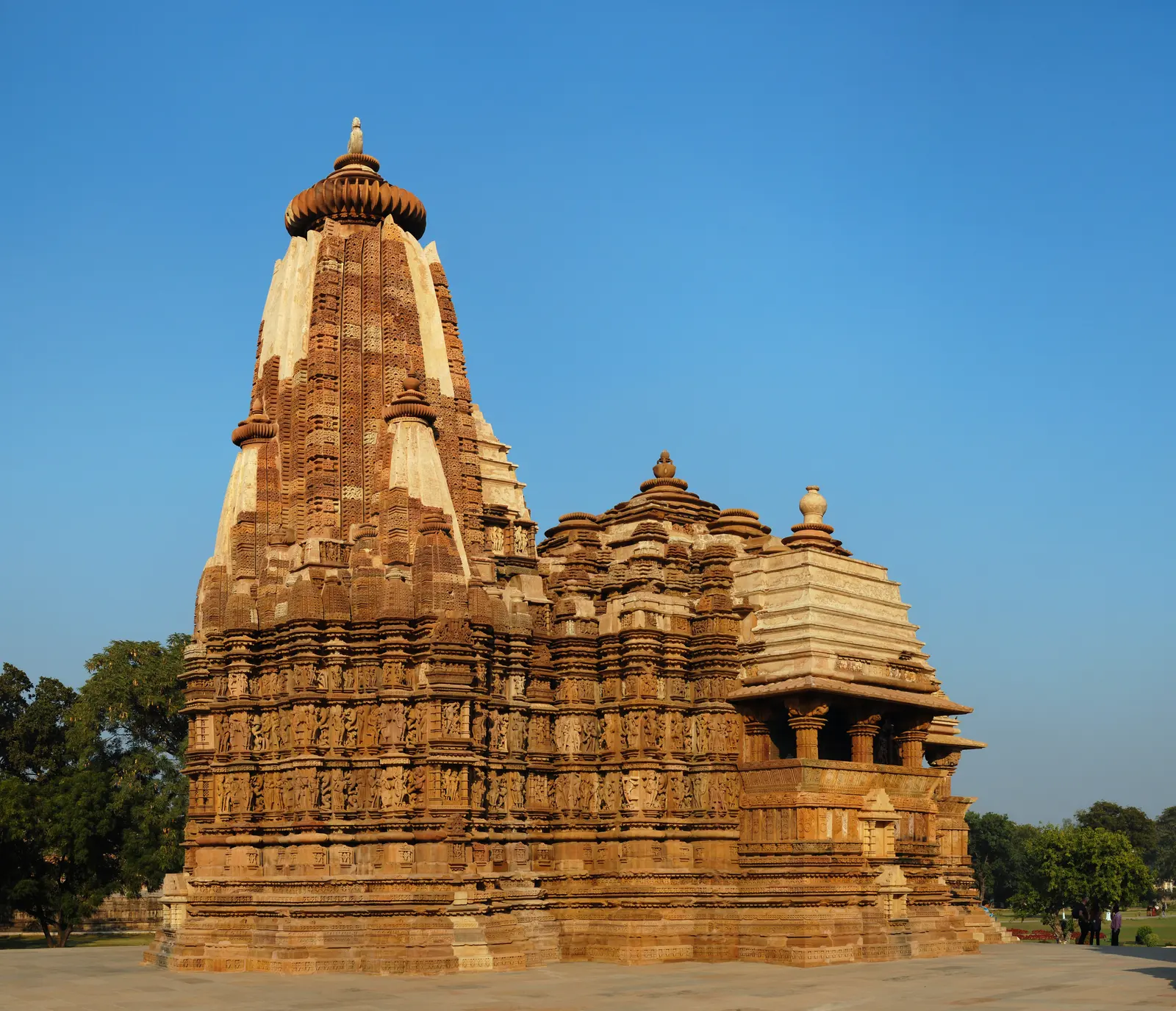
Kandariya Mahadeva, dedicated to Shiva, is the largest and most elaborate temple at Khajuraho, with over 800 sculptures and a tower about 31 metres high.
Walk around the temple clockwise to follow the carved bands, then look up at how the smaller towers climb towards the main spire, mirroring a mountain range. Late afternoon light brings out the depth of the carving.
Visit Matangeshwar Temple
Matangeshwar, next to the Western Group, is the only temple still in active worship, with a huge lingam. It is busy during Mahashivratri.
Watch the light and sound show
An evening light and sound show in the Western Group tells the story of the Chandelas and the temples, in English and Hindi.
- Best time
- Evening
Eastern and Southern groups
Visit the Jain temples
The Eastern Group includes Jain temples such as Parsvanath, Adinath and Shantinath, with fine carvings, and Hindu temples such as Vamana and Javari.
See Duladeo and Chaturbhuj
The Southern Group has the Duladeo Temple, one of the last built, and the Chaturbhuj Temple, with a large carved image of Vishnu. They are quieter and good at sunset.
Museum, culture and nature
Visit the Archaeological Museum
The ASI museum opposite the Western Group has sculptures from the temples, including fine figures that were found loose around the site. It is closed on Fridays.
- Time needed
- 1 hour
Attend the Khajuraho Dance Festival
Every February, the Khajuraho Dance Festival brings India's leading classical dancers to an open-air stage with the illuminated temples as backdrop.
- Best time
- February
Go on a safari in Panna
Panna National Park, about 25 km away, is a tiger reserve along the Ken river, where tigers were successfully reintroduced after they had disappeared. Jeep safaris and boat rides on the Ken are possible.
Pandav Falls, near the park, is a waterfall over a rock overhang with caves linked in legend to the Pandavas. The park is also good for vultures, crocodiles and birds along the river.
- Best time
- October to June
See Raneh Falls
Raneh Falls, about 20 km away, flows through a canyon of pink, red and grey granite. It is dramatic after the monsoon; in the dry season the rock formations themselves are the attraction. The Ken Gharial Sanctuary is nearby.
Cycle to nearby villages
Renting a bicycle to ride between temple groups and into the surrounding villages is a pleasant way to see rural Bundelkhand.
By season
October to March
The best season for temples and safaris; the Dance Festival is in February.
April to June
Very hot; see the temples at dawn and dusk. Panna safaris have good sightings.
July to September
The monsoon brings green fields and full waterfalls; Panna's core zone is closed.
Things to do in Khajuraho by type of traveller
History and art lovers: A guided morning at the Western Group, the museum and the Southern Group at sunset.
Wildlife lovers: Panna safaris and a boat on the Ken.
Culture seekers: Time a visit for the Dance Festival in February.
Families: The light and sound show, cycling between temple groups and a boat ride on the Ken river at Panna.
What to do in Khajuraho with one day
Visit the Western Group at opening time with a guide, then the Archaeological Museum. After lunch, cycle to the Eastern and Southern groups, and return for the evening light and sound show.
Practical tips for Khajuraho
- Khajuraho has a small airport and railway station; Jhansi is about four hours away.
- Hire licensed guides at the ticket office.
- Carry water and a hat; there is little shade.
- Combine with Orchha and Panna for a longer trip.
- Mornings are the best time for photography at the Western Group, before the crowds and heat.
Plan the rest of your Khajuraho trip
Khajuraho things to do: FAQs
What are the best things to do in Khajuraho?
See the Western, Eastern and Southern groups of temples, watch the light and sound show, visit the Archaeological Museum, attend the Dance Festival and visit Panna National Park and Raneh Falls.
Are all Khajuraho carvings erotic?
No. Erotic sculptures are only a small part; most show gods, dancers, musicians, animals and daily life.
How many days are enough for Khajuraho?
One to two days.
When is the Khajuraho Dance Festival?
Usually in February.
Things to do near Khajuraho
- Things to do in Orchha: Bundela palaces, about four hours away
- Panna: tiger reserve nearby
- Things to do in Varanasi: the ghats, reachable by train
More things to do in Madhya Pradesh
Published by the Kudozz Club editorial team · Last updated · How we research our guides
Want us to plan this trip for you?
Tell Kudozz Club where you want to go and what kind of trip you’re looking for. We’ll build a Khajuraho Temples and Madhya Pradesh itinerary around your dates and budget.
Continue Exploring
View all guides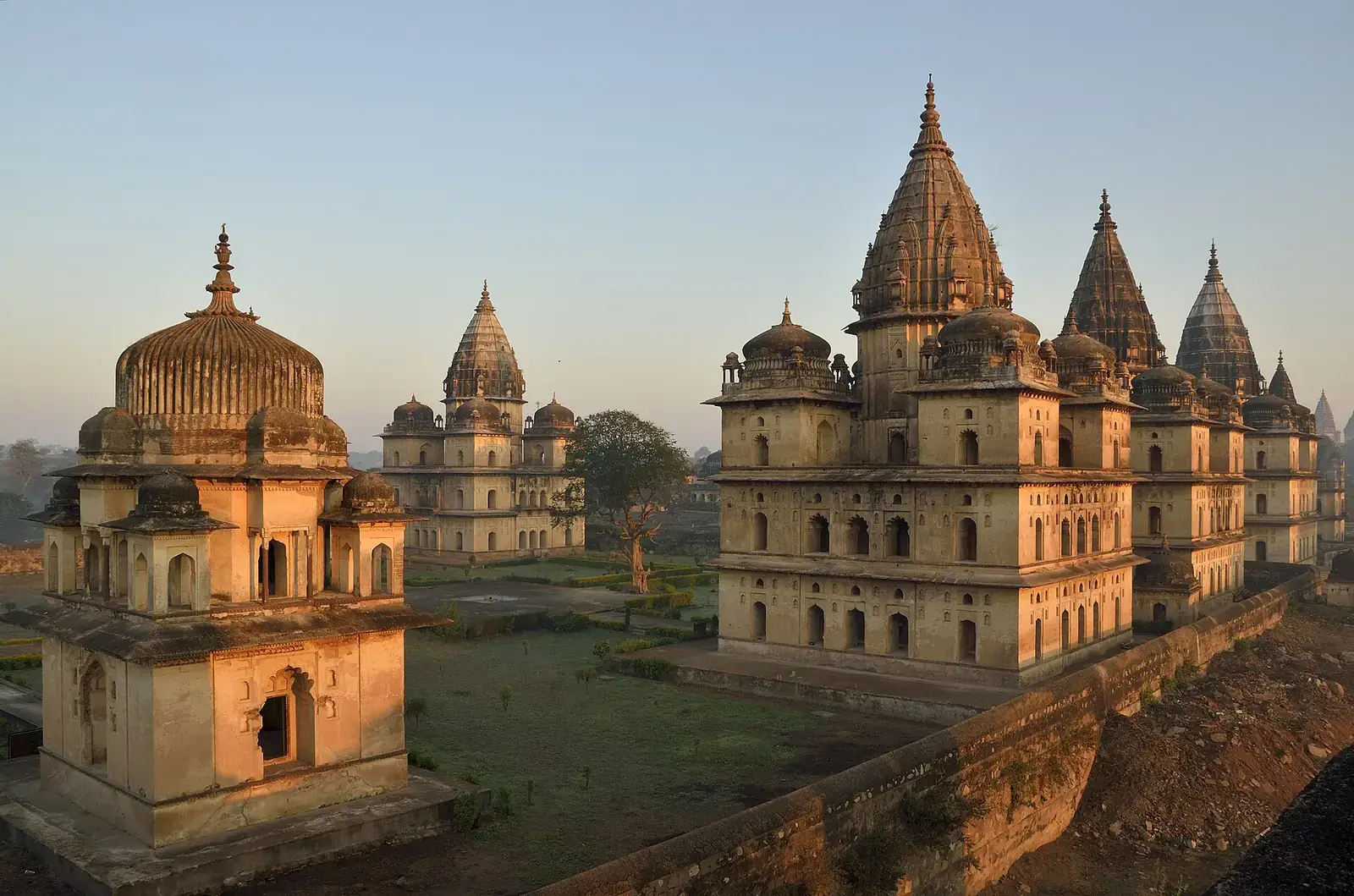 Heritage & Culture
Madhya Pradesh Heritage Itinerary: Gwalior, Orchha, Khajuraho, Sanchi and Mandu
An 11-day Madhya Pradesh heritage itinerary: Gwalior's hilltop fort, Orchha's palaces and cenotaphs, the temples of Khajuraho, Bhopal with day trips to Sanchi, Udayagiri and Bhimbetka, and the Malwa plateau's Mandu and Maheshwar, reached from Indore, with travel times and seasonal tips.
 Heritage & Culture
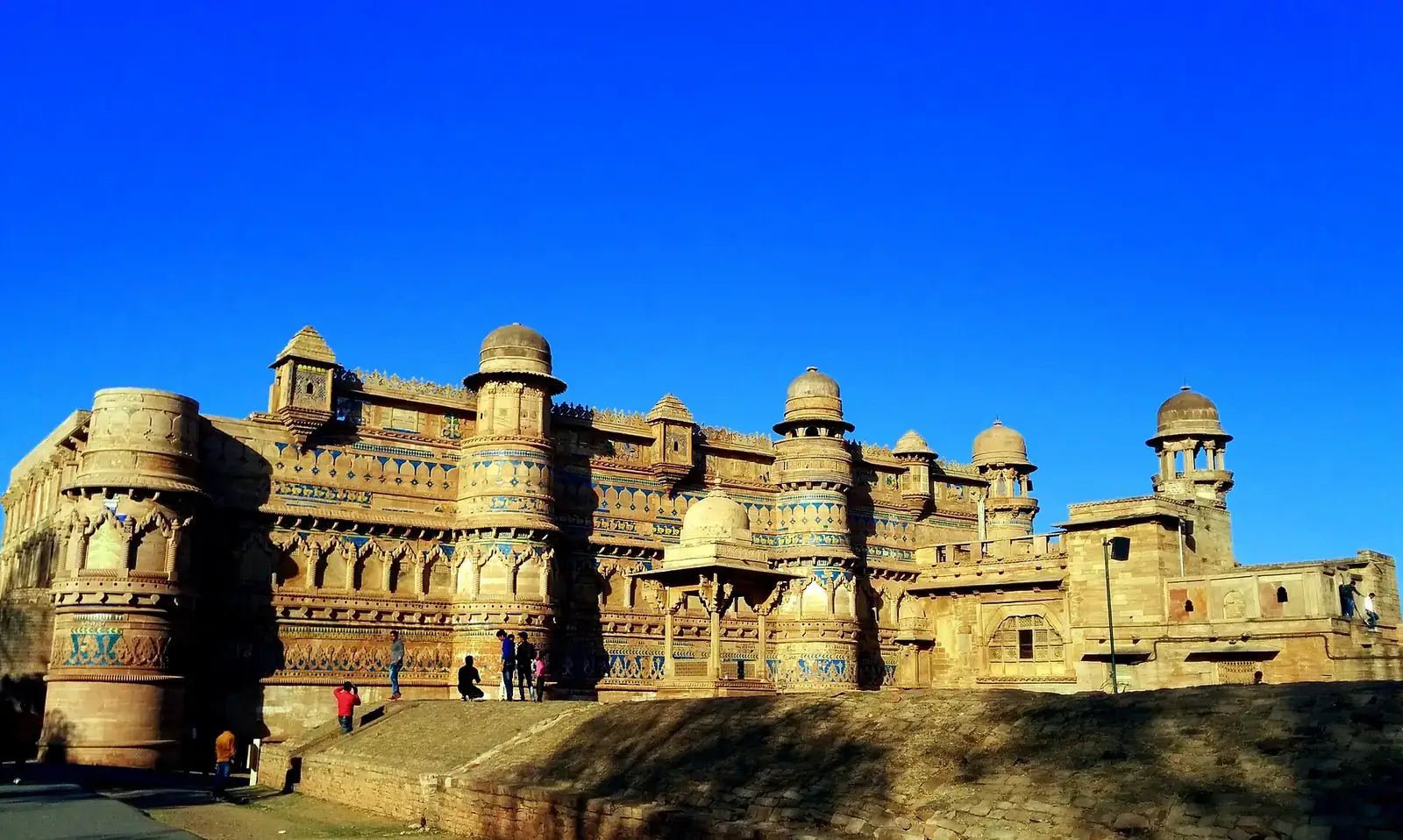
Heritage Tourism in Madhya Pradesh: Khajuraho, Gwalior, Orchha and Mandu
A guide to heritage tourism in Madhya Pradesh: its three UNESCO cultural sites (Khajuraho, Sanchi and Bhimbetka), the forts and palaces of Gwalior, Orchha and Datia, Mandu and Maheshwar on the Malwa plateau, the weaving towns of Chanderi and Maheshwar, Bhopal's museums, the Khajuraho Dance Festival and Gwalior's music heritage, with how to plan a route.
Destination GuideMadhya Pradesh Travel Guide: Khajuraho, Bandhavgarh & Gwalior Fort
Temples carved with astonishing detail, some of India's best tiger sightings, and a hilltop fortress that guarded the heart of the country — the complete guide to Madhya Pradesh.
 Heritage
Orchha Travel Guide: Cenotaphs, Palaces & Betwa River
A 16th-century Bundela capital of sandstone palaces and riverside chhatris, still remarkably uncrowded — the complete guide to Orchha.