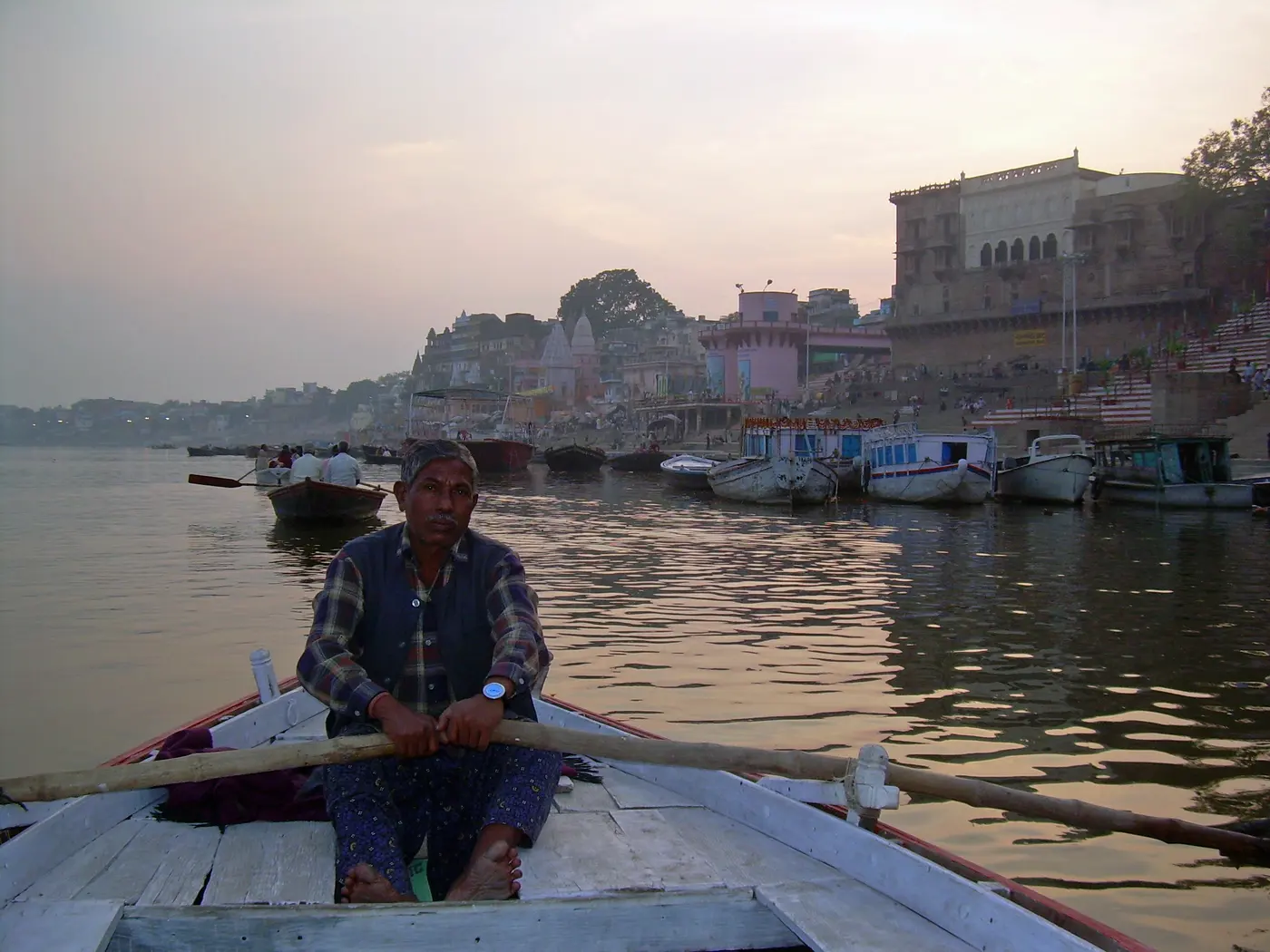
Varanasi, also called Kashi and Banaras, stands on the western bank of the Ganga in eastern Uttar Pradesh and is often described as one of the oldest continuously inhabited cities in the world. For Hindus it is the holiest of cities: to die here is believed to bring release from the cycle of rebirth, which is why cremations take place on its ghats day and night.
The things to do in Varanasi are about the river and the rituals around it: a boat at dawn, the walk along the ghats, the evening aarti and the temples of the old city. Around them are the lanes and their food, Banarasi silk weaving, classical music, and Sarnath, where the Buddha gave his first sermon, just 10 km away.
Three to four days is comfortable for a first visit. October to March is the best season.
For how to get there, when to go and where to stay, see our Varanasi travel guide.
Quick answer: best things to do in Varanasi
- Take a sunrise boat ride along the ghats
- Watch the evening Ganga Aarti at Dashashwamedh Ghat
- Walk the ghats from Assi to Manikarnika
- Visit Kashi Vishwanath Temple through the new corridor
- Observe Manikarnika Ghat respectfully from a distance
- Get lost in the old city's galis and eat kachori-sabzi and malaiyo
- Watch Banarasi silk being woven
- Take a half-day trip to Sarnath
Interested in the history? See our guide to heritage in Uttar Pradesh.
Planning a pilgrimage? See our guide to the Ayodhya, Varanasi and Prayagraj itinerary.
The ghats and the Ganga
Varanasi has more than 80 ghats stretching about 6 km along the river. Each has its own character and history.
Take a sunrise boat ride
A rowing boat at dawn is the single best way to understand Varanasi. As the sun comes up over the far bank, you drift past pilgrims bathing, priests performing rituals, washermen, yoga on the steps and the smoke of the cremation grounds. Rowing boats are quieter than motorboats; agree the route, duration and price before setting off.
Most rides run between Assi and Manikarnika ghats and take about an hour.
- Where
- Dashashwamedh, Assi or any central ghat
- Time needed
- 1–1.5 hours
- Best time
- Just before sunrise
- Good for
- Everyone
Watch the evening Ganga Aarti
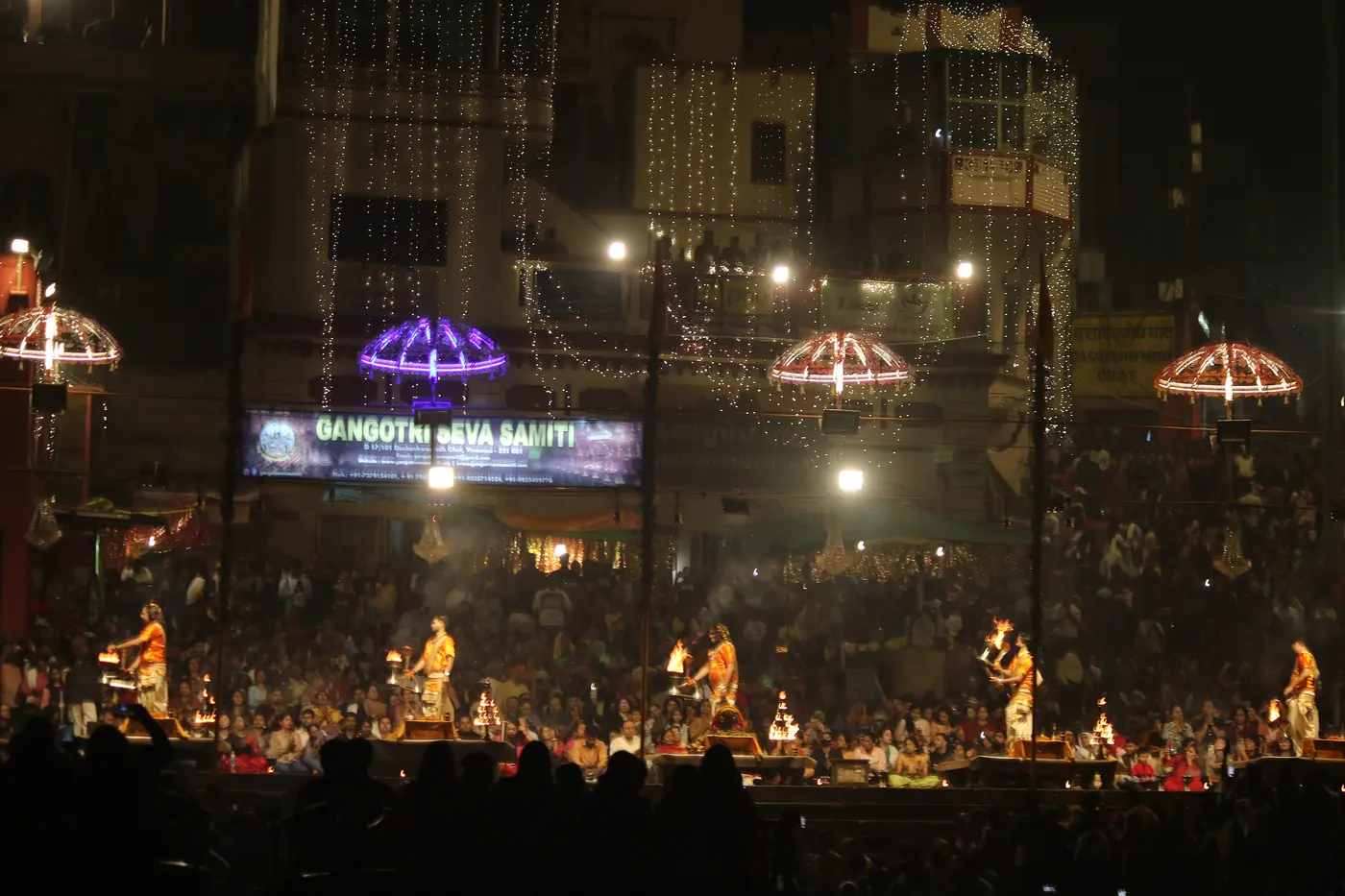
Every evening at sunset, young priests perform the Ganga Aarti at Dashashwamedh Ghat with large brass lamps, conch shells, bells and chanting. It is a spectacular, well-choreographed ceremony and draws big crowds.
You can watch from the steps (arrive 45 to 60 minutes early), from a rooftop overlooking the ghat, or from a boat on the river, which gives the best view of the whole scene. Assi Ghat holds a smaller aarti, and a morning aarti at sunrise.
- Where
- Dashashwamedh Ghat
- Time needed
- 1–1.5 hours
- Best time
- Sunset
- Good to know
- Crowds are dense; keep valuables close
Walk the ghats from Assi to Manikarnika
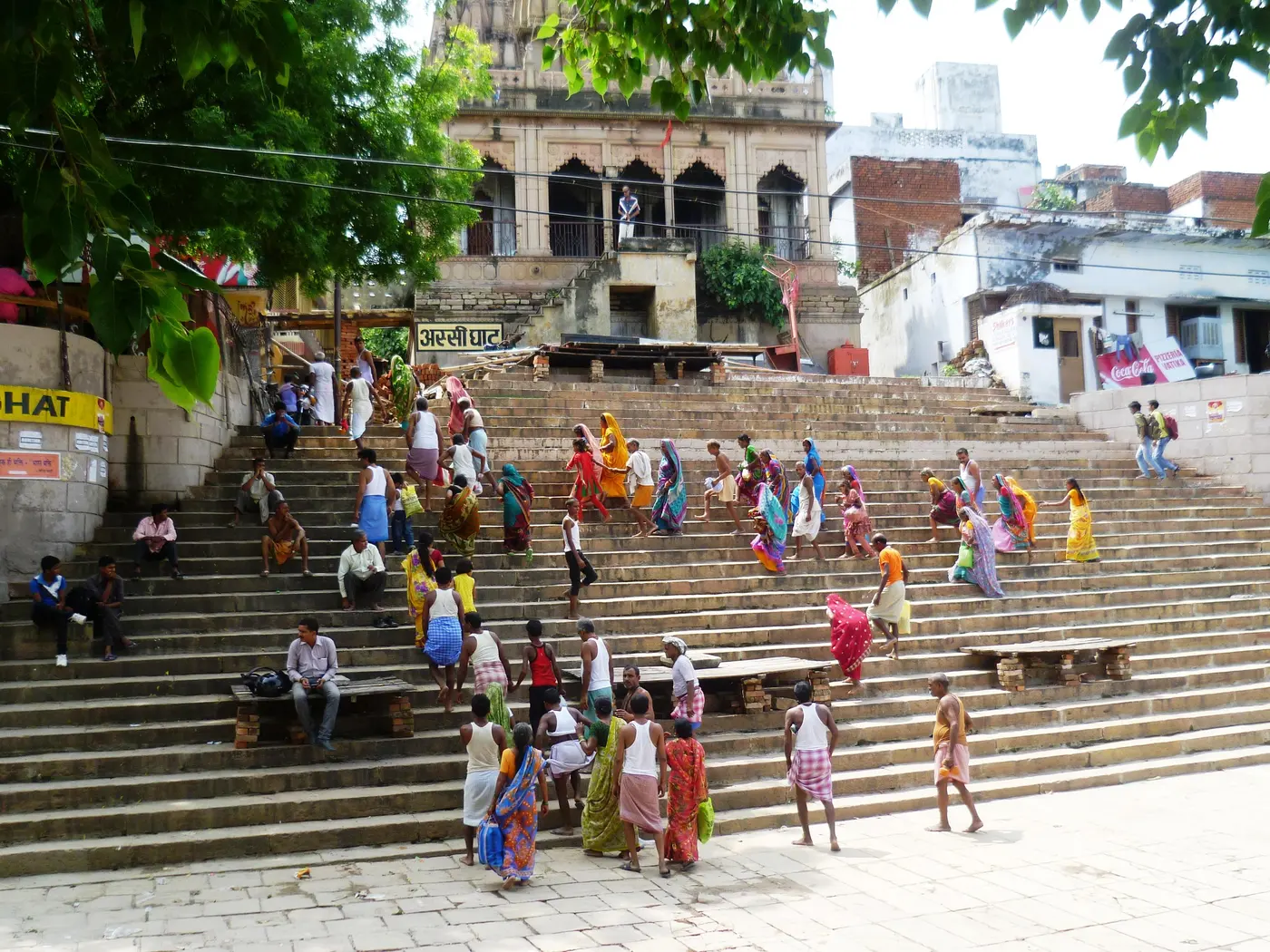
Walking the riverfront is free and endlessly interesting. Start at Assi Ghat in the south, where there are cafés and a relaxed atmosphere, and walk north past Tulsi Ghat, Harishchandra Ghat, the colourful Chet Singh Ghat, Dashashwamedh and on to Manikarnika. Late afternoon, before the aarti, is a good time. In the monsoon, the lower steps flood and the walk may not be possible.
- Time needed
- 2–3 hours
- Best time
- Early morning or late afternoon
Observe Manikarnika Ghat with respect
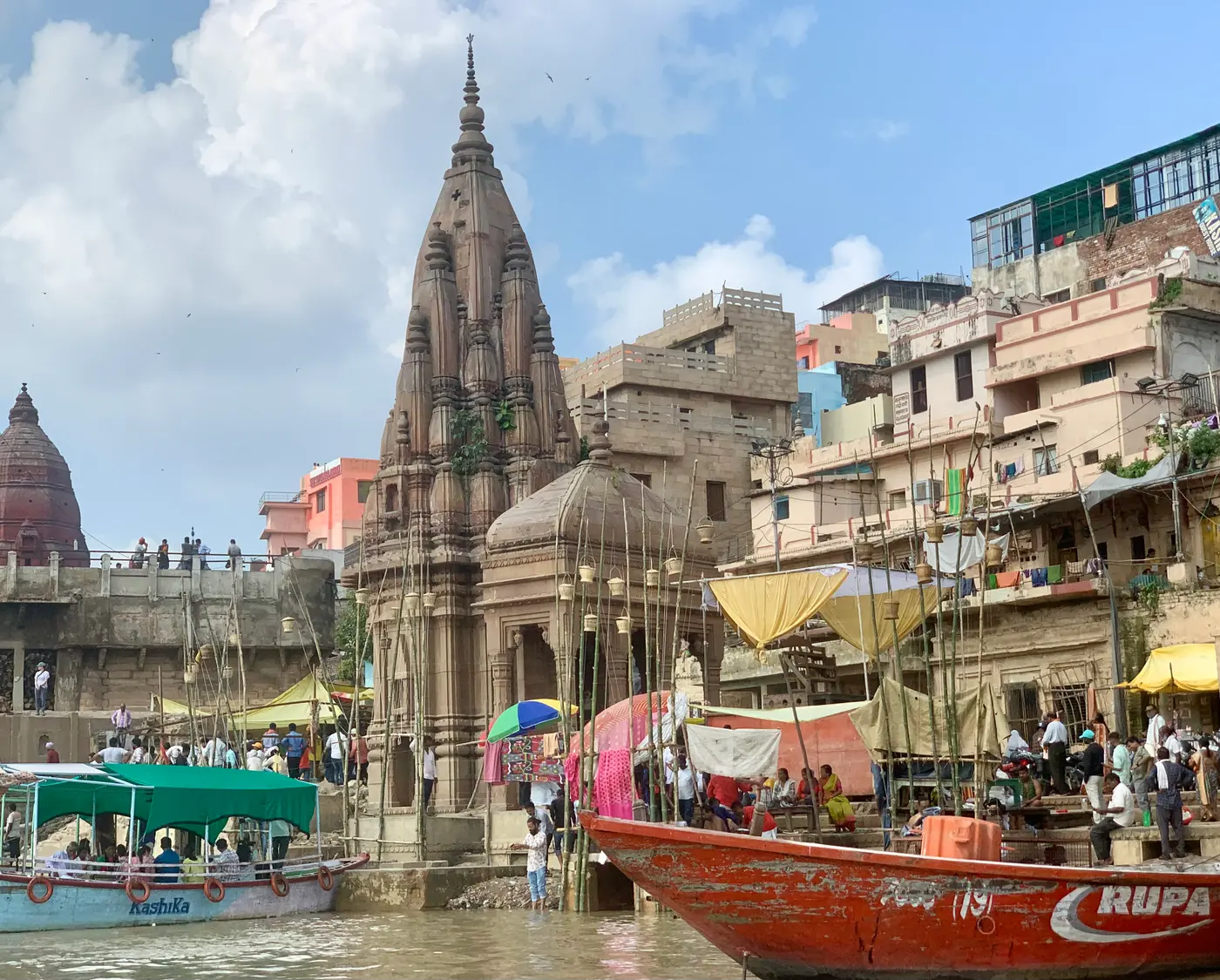
Manikarnika is the main cremation ghat, where fires burn around the clock. Watching from a respectful distance, or from a boat, is accepted, as cremation here is a public rite. Never photograph pyres or grieving families, and ignore people who offer to show you around in return for large 'donations' for wood.
- Good to know
- No photography; decline unofficial guides
Temples and spiritual experiences
Visit Kashi Vishwanath Temple
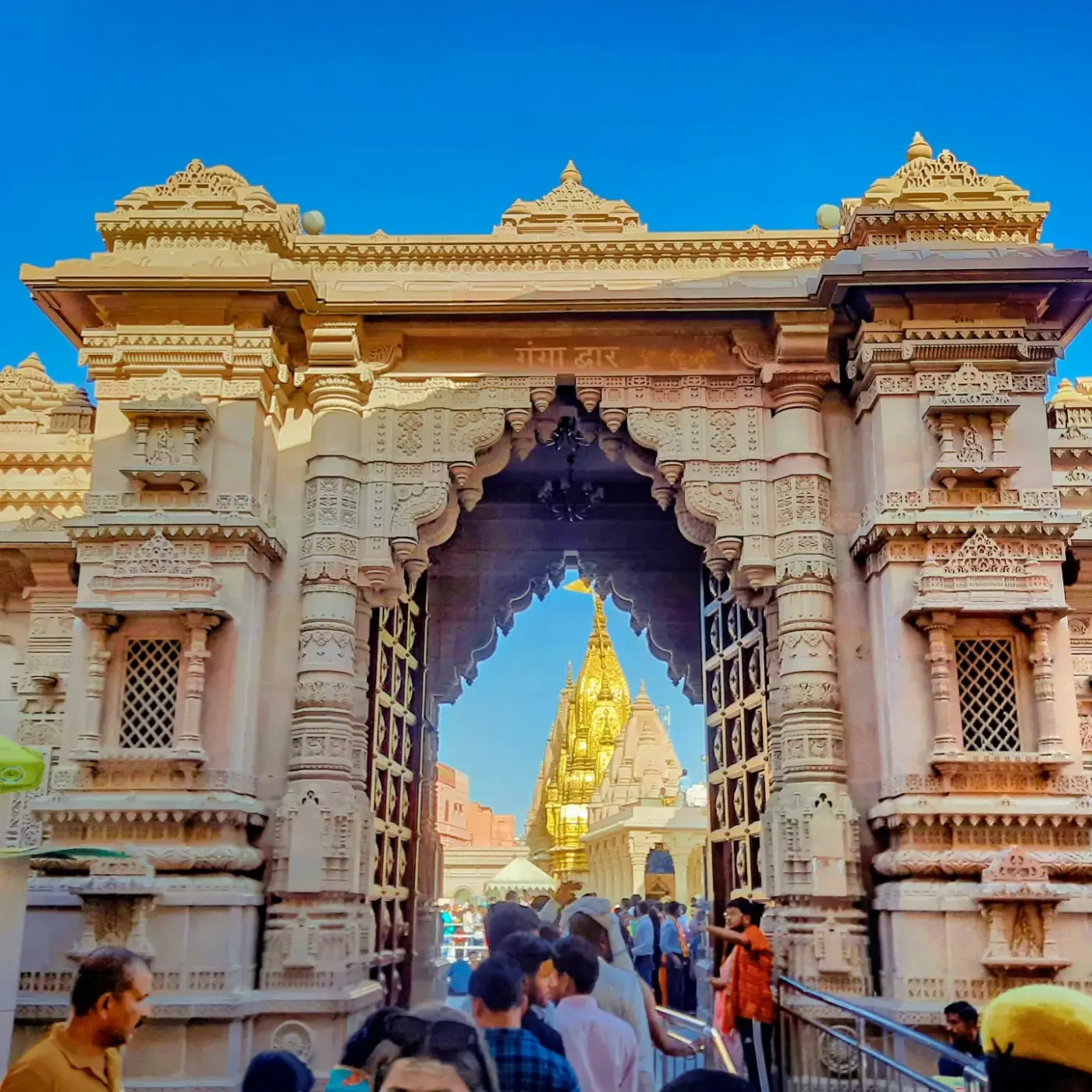
The Kashi Vishwanath Temple, dedicated to Shiva, is one of the 12 Jyotirlingas and the most important temple in the city. The Kashi Vishwanath Corridor, opened in 2021, links the temple to the river with a wide plaza. Phones, cameras, bags and leather items are not allowed inside; lockers are available. Queues can be very long on Mondays and festival days.
- Time needed
- 1–3 hours depending on queues
- Best time
- Early morning
- Good to know
- Leave phones and bags in lockers
See Sankat Mochan and Durga temples
Sankat Mochan Hanuman Temple, founded according to tradition by the poet Tulsidas, is one of the city's most loved temples and hosts a classical music festival every spring. The nearby red Durga Temple and the modern Tulsi Manas Temple are close by in the south of the city.
Learn yoga or meditation
Morning yoga on the ghats, especially around Assi, and classes at ashrams and centres across the city are easy to join. Many travellers also attend talks on Hindu philosophy or Sanskrit.
The old city, food, silk and music
Get lost in the galis
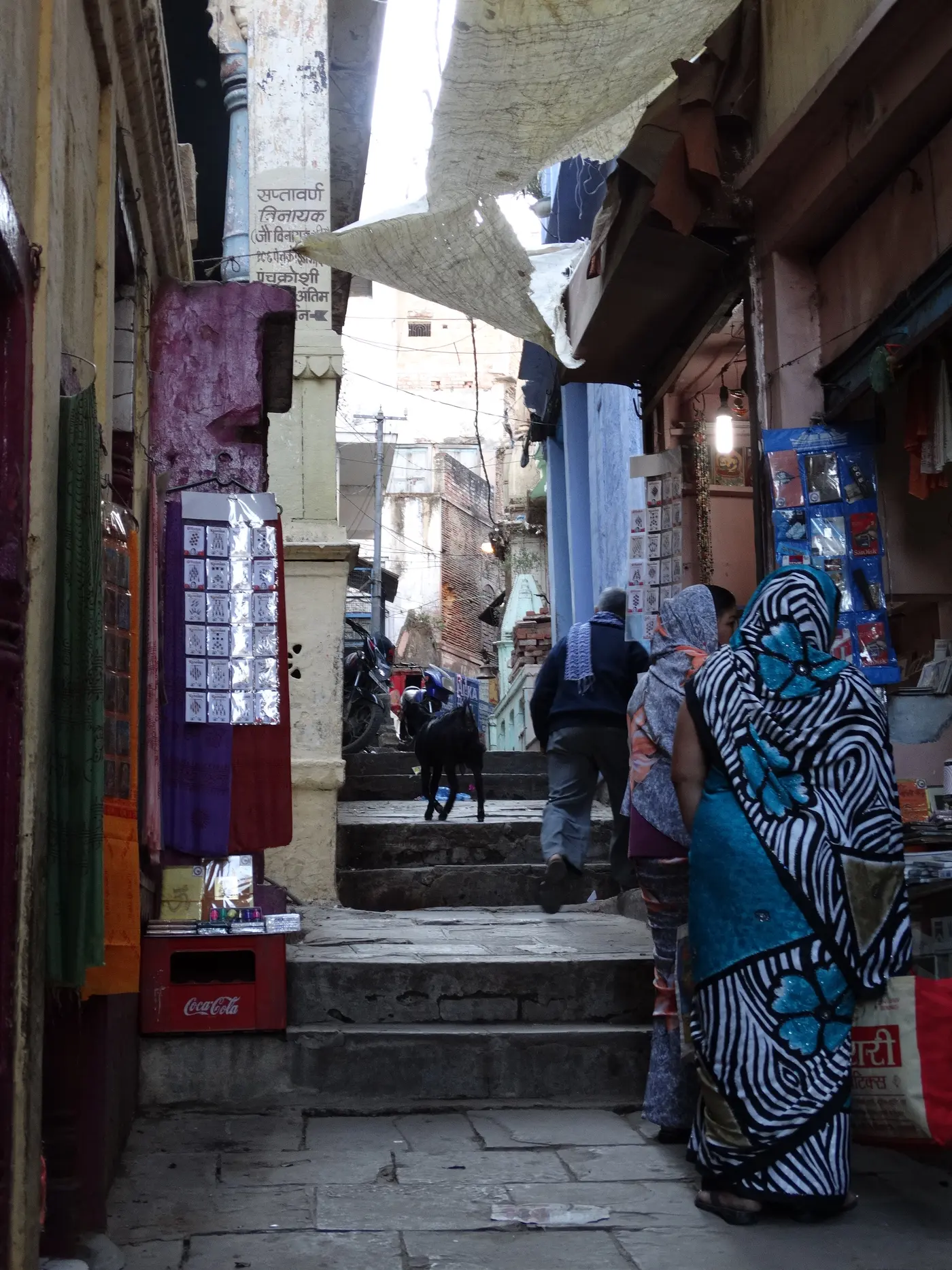
Behind the ghats lies a maze of narrow lanes (galis) full of small shrines, sweet shops, silk stores and houses, shared by people, motorbikes and the occasional cow. Wandering here, ideally with a local guide on a heritage or food walk, is one of the best things to do in Varanasi.
- Time needed
- 2–3 hours
- Good for
- Curious travellers, photographers
Eat through the old city
Start the day with kachori-sabzi and jalebi. Try tamatar chaat, baati chokha and a clay cup of thick lassi. In winter, look for malaiyo, a frothy saffron milk dessert sold only in the early mornings. End with a Banarasi paan, a city institution.
- Best time
- Early morning and evening
- Good for
- Food lovers
See Banarasi silk being woven
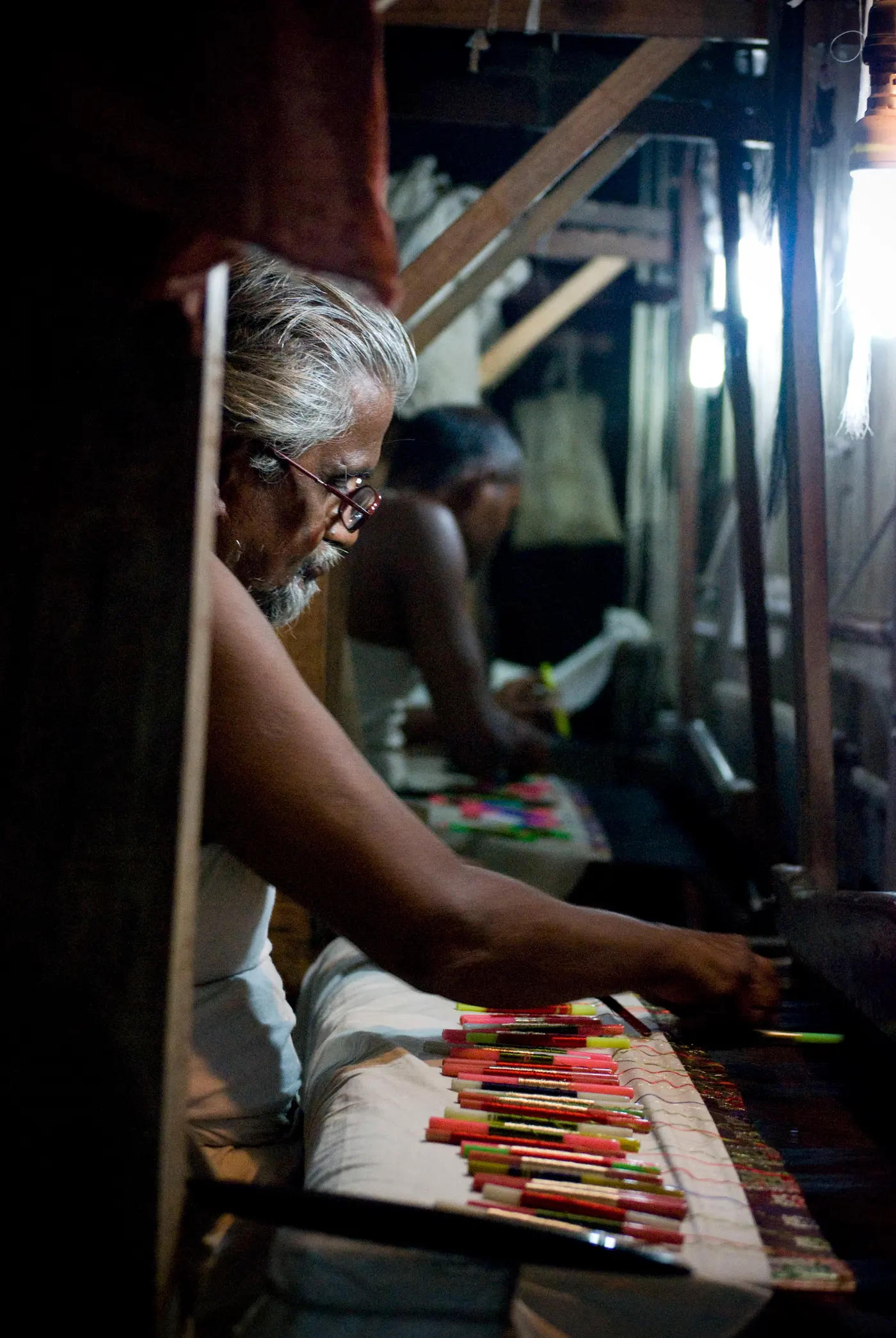
Banarasi silk saris, with their gold and silver brocade, are made on handlooms in weaving neighbourhoods such as Madanpura and Peeli Kothi. Some workshops welcome visitors. Look for the GI tag and buy from established shops or cooperatives.
Hear classical music
Varanasi has a strong tradition of Hindustani classical music and has produced masters such as Bismillah Khan and Ravi Shankar. Small concerts are held in music schools and guesthouses, and the city's music festivals, including Sankat Mochan's, attract top performers.
Visit Ramnagar Fort and Banaras Hindu University
Across the river, the 18th-century Ramnagar Fort is the seat of the Maharaja of Banaras and has a museum of vintage cars, palanquins and weapons. Banaras Hindu University, one of Asia's largest residential campuses, has the Bharat Kala Bhavan museum and the New Vishwanath Temple.
Sarnath: a half-day trip
See where the Buddha first taught
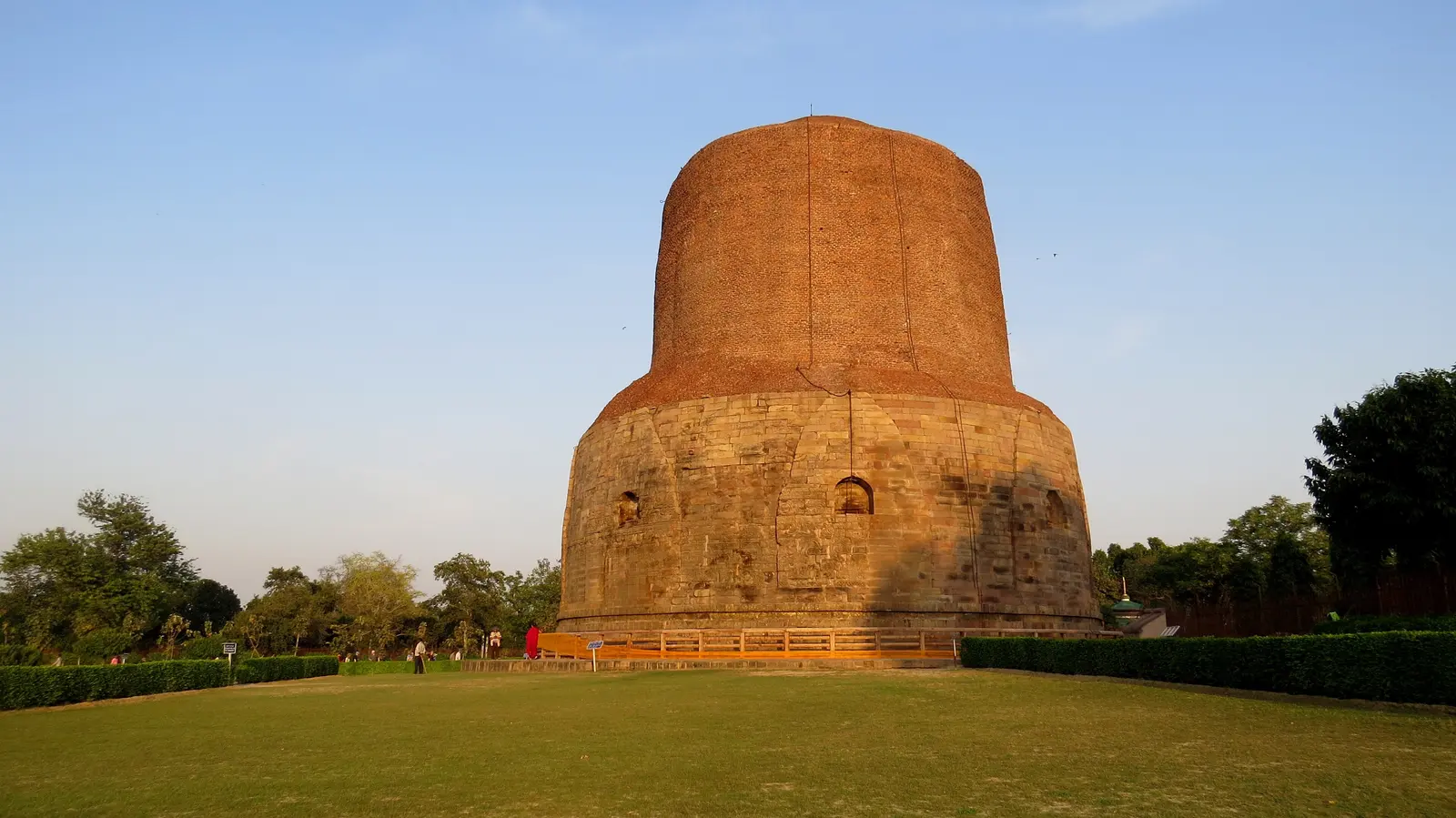
Sarnath, about 10 km from central Varanasi, is where the Buddha gave his first sermon after enlightenment. See the massive Dhamek Stupa, the remains of Ashoka's pillar, the ruins of ancient monasteries, and the Archaeological Museum, which holds the Lion Capital adopted as India's national emblem.
- Time needed
- Half a day
- Good to know
- The museum is closed on Fridays
Things to do in Varanasi by type of traveller
Families: The boat ride, the evening aarti, Ramnagar Fort and Sarnath work well with children. The crowds and cremation ghats can be intense, so prepare children for what they will see.
Couples: A private boat at dawn, rooftop dinner overlooking the ghats and a classical music evening.
Pilgrims: Kashi Vishwanath, a dip at Dashashwamedh, the Panchkroshi circuit of temples and the aarti. Mondays and Mahashivratri are the busiest days.
Photographers: Dawn from a boat, the lanes in soft afternoon light and the aarti from the river. Always ask before photographing people.
What to do in Varanasi with one day
Take a sunrise boat from Dashashwamedh to Manikarnika and back, then have kachori-sabzi and lassi in the lanes. Visit Kashi Vishwanath through the corridor mid-morning. After lunch, go to Sarnath for the afternoon. Return in time to walk from Assi Ghat towards Dashashwamedh and watch the evening aarti from a boat or rooftop.
Practical tips for Varanasi
- Dress modestly, covering shoulders and knees, especially near temples and cremation ghats.
- Agree boat prices and durations before you set off, and be firm but polite with touts.
- Kashi Vishwanath does not allow phones, cameras or leather items; use the lockers.
- From July to September the monsoon often floods the lower ghats and boat rides may be suspended.
- The old city is walk-only; carry little, wear comfortable shoes and use cycle-rickshaws to get to its edge.
Plan the rest of your Varanasi trip
Varanasi things to do: FAQs
What are the best things to do in Varanasi?
Take a sunrise boat ride, watch the evening Ganga Aarti at Dashashwamedh, walk the ghats, visit Kashi Vishwanath Temple, explore the old city's lanes and food, see silk weaving, and take a half-day trip to Sarnath.
What can I do in Varanasi at night?
Watch the evening aarti from the steps, a rooftop or a boat, walk the ghats as the crowds thin, eat in the lanes around Godowlia and Vishwanath Gali, or attend a classical music performance.
How many days are enough for Varanasi?
Three to four days is comfortable for a first visit, including a morning boat ride, the aarti, temples, the old city and a half-day at Sarnath.
Is it respectful for tourists to visit Manikarnika Ghat?
Yes, if you observe from a distance and never photograph pyres or families. Decline unofficial guides who ask for donations.
What is the best time to visit Varanasi?
October to March, when the weather is comfortable and the ghats are dry. Dev Deepawali, in November, is spectacular but very crowded.
Things to do near Varanasi
- Sarnath: where the Buddha gave his first sermon, 10 km away
- Things to do in Prayagraj: the Triveni Sangam, about three hours west
- Things to do in Bodh Gaya: where the Buddha attained enlightenment, in Bihar
- Chandauli: waterfalls and forests south-east of the city
More things to do in Uttar Pradesh
Published by the Kudozz Club editorial team · Last updated · How we research our guides
Want us to plan this trip for you?
Tell Kudozz Club where you want to go and what kind of trip you’re looking for. We’ll build a Varanasi and Uttar Pradesh itinerary around your dates and budget.
Continue Exploring
View all guides Heritage
Prayagraj Travel Guide: Triveni Sangam & Kumbh Mela
The sacred Ganga-Yamuna-Saraswati confluence, home to the Kumbh Mela — plus Allahabad Fort, Anand Bhavan, and Khusro Bagh.
 Heritage
Chitrakoot Travel Guide: Ram's Forest Exile Site
Where Ram, Sita, and Lakshman spent part of their exile — Kamadgiri's parikrama, Ramghat's evening aarti, and a quieter Ramayana circuit.
 Heritage
Naimisharanya Travel Guide: Sacred Forest & Temples
An ancient sacred forest of the Puranas — Chakra Tirtha, the Lalita Devi Shakti Peeth, and a genuinely off-the-beaten-path pilgrimage near Lucknow.
 Heritage
Ayodhya Travel Guide: Ram Mandir & Saryu Ghats
The newly consecrated Ram Mandir, Hanuman Garhi, and the Saryu River's evening aarti — a complete guide to Lord Ram's birthplace.