Where the Wheel of Dharma Turned
Sarnath is where, according to Buddhist tradition, Gautama Buddha delivered his first sermon after attaining enlightenment at Bodh Gaya — an event known as the "turning of the wheel of dharma" (Dhammacakkappavattana). He is said to have preached to five ascetics in a deer park here, laying out the Four Noble Truths and the Eightfold Path for the first time. That moment makes Sarnath one of Buddhism's four most sacred sites, alongside Lumbini, Bodh Gaya, and Kushinagar.
Just 10 km from Varanasi's dense, ritual-heavy ghats, Sarnath is a study in contrast — an open, green, contemplative site of brick ruins and monasteries rather than crowded temples and riverside chaos. It rewards a slow, unhurried half-day visit within a wider Uttar Pradesh itinerary.
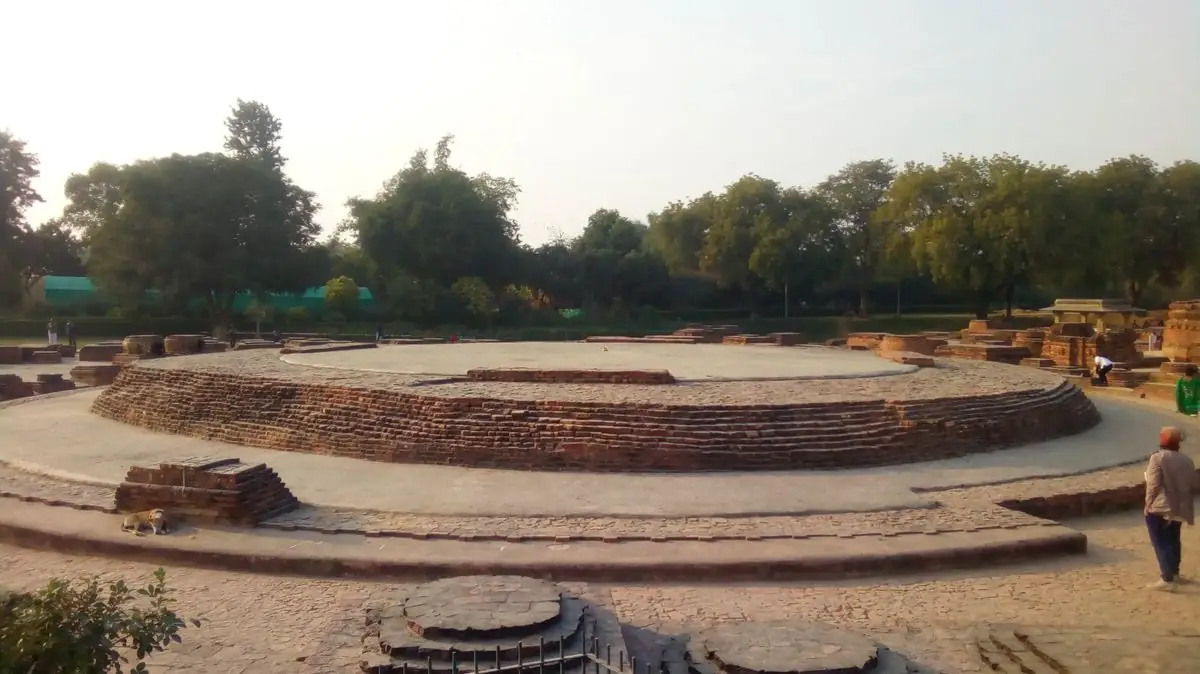
In July 2026 the World Heritage Committee inscribed the Ancient Buddhist Site of Sarnath on the UNESCO World Heritage List, India's 45th World Heritage Site. The listing covers the excavated remains around the Dhamek Stupa and the Chaukhandi Stupa.
🦌 Sarnath at a Glance
Interested in the history? See our guide to UNESCO World Heritage Sites in India.
Planning a pilgrimage? See our guide to the Buddhist Circuit.
Best Time to Visit Sarnath
As an open-air archaeological site with little shade, Sarnath is best visited in the cooler months.
Comfortable temperatures for walking the open stupa grounds and Deer Park at a relaxed pace, ideal for a morning visit.
The open grounds offer little shelter from the heat; visiting first thing in the morning is essential if travelling in this window.
The grounds turn lush green, but rain can interrupt an unhurried walk between the stupa, museum, and temple.
Sarnath sees a large gathering of pilgrims and monks for Buddha's birth anniversary, with special prayers at Mulagandha Kuti Vihar.
Our pick: A cool winter morning, combined with an early sunrise boat ride in Varanasi beforehand — Sarnath makes an easy, contemplative second half of the day.
How to Reach Sarnath
Sarnath has no airport or major railway station of its own — nearly every visitor arrives as a short trip from Varanasi, which shares the same gateway infrastructure.
- By air: Lal Bahadur Shastri International Airport in Varanasi, about 20-25 km from Sarnath, is the nearest airport.
- By rail: Varanasi Junction is the practical rail gateway; Sarnath does have a small local station, but it sees limited service compared to the main junction.
- By road: The most common approach — an auto-rickshaw, taxi, or app-based cab from anywhere in Varanasi takes roughly 30-40 minutes.
What to See in Sarnath
Dhamek Stupa
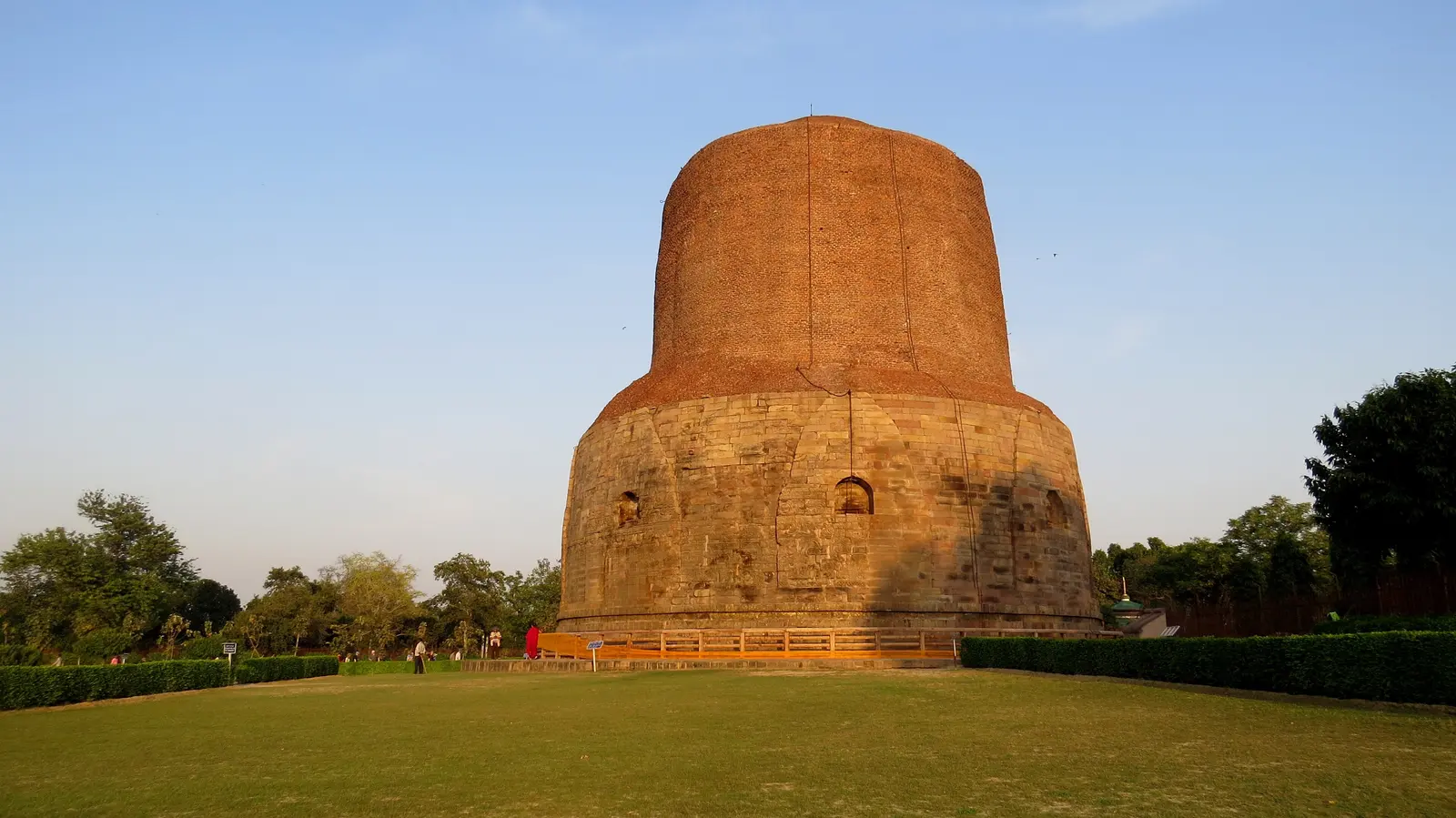
The centrepiece of the site, the Dhamek Stupa is a massive cylindrical structure of brick and stone, roughly 43.6 metres tall, believed to mark the exact spot of the Buddha's first sermon. Its current form dates largely to around the 5th century CE, though it stands on foundations laid centuries earlier under Emperor Ashoka. Intricate carved geometric and floral patterns are still visible on its lower section.
The Ashoka Pillar & Its Lion Capital
Near the Dhamek Stupa lie the broken remains of the Ashoka Pillar, erected by Emperor Ashoka in the 3rd century BCE to mark the site's sanctity. The pillar's capital — four back-to-back lions atop a wheel and a base carved with an elephant, horse, bull, and lion — was recovered largely intact and is now displayed in the site museum. In 1950, free India adopted this same lion capital as the national emblem, and its four-lion motif now appears on the currency, passports, and official seals of the country.
Sarnath Archaeological Museum
Just outside the main park, this museum holds the original Ashoka lion capital along with an outstanding collection of Buddhist sculpture excavated from the site, including several graceful Buddha and Bodhisattva images from the Gupta period — among the finest examples of early Indian Buddhist art anywhere.
Mulagandha Kuti Vihar & the Deer Park
A modern temple built in the 20th century by the Maha Bodhi Society, Mulagandha Kuti Vihar houses vivid mural paintings by Japanese artist Kosetsu Nosu depicting scenes from the Buddha's life, and a Bodhi tree grown from a sapling of the original tree at Bodh Gaya. Adjacent to it, the Deer Park — deer still roam a fenced enclosure here — recalls the setting of the original sermon.
Where to Stay
Sarnath has a modest number of stays of its own — mostly geared toward Buddhist pilgrims — but the overwhelming majority of visitors base themselves in Varanasi and visit as a half-day trip.
- → Buddhist monastery guesthouses
- → Basic lodges near the main complex
- → Budget stays back in Varanasi
- → Government-run tourist bungalows
- → Mid-size hotels near Sarnath
- → Comfortable stays in Varanasi Cantt
- → 5-star hotels back in Varanasi
- → Full-service resorts near the airport road
- → Heritage riverfront properties
Suggested Visit Plan (Half-Day)
Stupa Grounds & Museum
- ✓Depart Varanasi early to beat the day's heat
- ✓Walk the Dhamek Stupa and Ashoka Pillar remains
- ✓Visit the Sarnath Archaeological Museum
Temple & Deer Park
- ✓See the murals at Mulagandha Kuti Vihar
- ✓Walk through the Deer Park enclosure
- ✓Return to Varanasi by early afternoon
* Serious Buddhist circuit travellers often continue from Sarnath toward Kushinagar for a multi-day pilgrimage extension.
Where to Eat
- Small dhabas near the entrance: Simple North Indian thalis and snacks close to the main complex gate.
- Monastery canteens: Some Buddhist monasteries in Sarnath serve simple vegetarian meals to visitors and pilgrims.
- Back in Varanasi: Most travellers save a proper meal for their return to Varanasi, where the food scene is considerably wider.
Budget Breakdown
| Expense | Budget | Mid-Range | Luxury |
|---|---|---|---|
| Round-trip taxi from Varanasi | ₹600 | ₹1,000 | ₹1,800 |
| Museum entry | ₹25 | ₹25 | ₹25 |
| Stupa complex entry | ₹25 | ₹25 | ₹25 |
| Food (half-day) | ₹150 | ₹350 | ₹800 |
* Entry fees are nominal and identical across budget tiers; taxi and food costs are what vary.
Essential Tips for Visiting Sarnath
- Go early: The stupa grounds have little shade, so a morning visit beats the midday heat, especially outside winter.
- Hire round-trip transport: Auto-rickshaws and taxis are easy to find in Varanasi but scarcer right outside the Sarnath complex.
- Don't skip the museum: The original Ashoka lion capital and Gupta-period sculptures here are genuinely world-class and easy to rush past.
- Dress modestly: Mulagandha Kuti Vihar and other temple spaces expect respectful, covered clothing.
- Pair with Varanasi: Sarnath works best as a contemplative counterpoint to a day or two of Varanasi's ghats, not as a standalone trip.
✅ Do
- →Visit the museum for the original lion capital
- →Go in the morning to avoid the midday heat
- →Hire a taxi for the round trip from Varanasi
- →Walk the full stupa grounds slowly
- →Dress modestly for the temple spaces
❌ Don't
- →Rush through in under an hour
- →Expect a wide dining scene right at the site
- →Visit at midday in summer without shade cover
- →Assume return transport is easy to flag down
- →Skip the Deer Park thinking it's just for kids
Frequently Asked Questions
What is Sarnath famous for?
Sarnath is the site where Gautama Buddha is traditionally held to have delivered his first sermon (the 'Dhammacakkappavattana Sutta,' or 'setting the wheel of dharma in motion') after attaining enlightenment at Bodh Gaya. This makes it one of the four most important pilgrimage sites in Buddhism, alongside Bodh Gaya, Kushinagar, and Lumbini. Since July 2026 it has also been a UNESCO World Heritage Site.
How far is Sarnath from Varanasi and how do I get there?
Sarnath is about 10 km from central Varanasi, roughly a 30-40 minute ride by auto-rickshaw or taxi. There's no separate airport or major rail station at Sarnath itself — nearly everyone visits as a half-day trip from Varanasi, which shares the same airport and rail gateway.
What is the connection between the Ashoka Pillar at Sarnath and India's national emblem?
The four-lion capital that once topped the Ashoka Pillar at Sarnath — carved in the 3rd century BCE under Emperor Ashoka — was adopted as independent India's official State Emblem in 1950, and the four-lion motif appears on Indian currency, passports, and government seals. The original capital, minus the pillar itself, is preserved in the Sarnath Archaeological Museum.
How much time do I need to see Sarnath?
A half-day (3-4 hours) is enough to see the Dhamek Stupa, the Ashoka Pillar remains, the Deer Park, Mulagandha Kuti Vihar, and the Archaeological Museum at an unhurried pace. It pairs easily with a Varanasi itinerary as a single-day excursion.
Is Sarnath part of a larger Buddhist pilgrimage circuit?
Yes. Sarnath is one of the four principal sites of the Buddhist pilgrimage circuit, alongside Lumbini (birthplace, Nepal), Bodh Gaya (enlightenment, Bihar), and Kushinagar (site of Buddha's death/parinirvana, also in Uttar Pradesh). Many pilgrims visiting Varanasi combine Sarnath with a longer trip covering Kushinagar and Bodh Gaya.
Published by the Kudozz Club editorial team · Last updated · How we research our guides
Want us to plan this trip for you?
Tell Kudozz Club where you want to go and what kind of trip you’re looking for. We’ll build a Sarnath and Uttar Pradesh itinerary around your dates and budget.
Continue Exploring
View all guides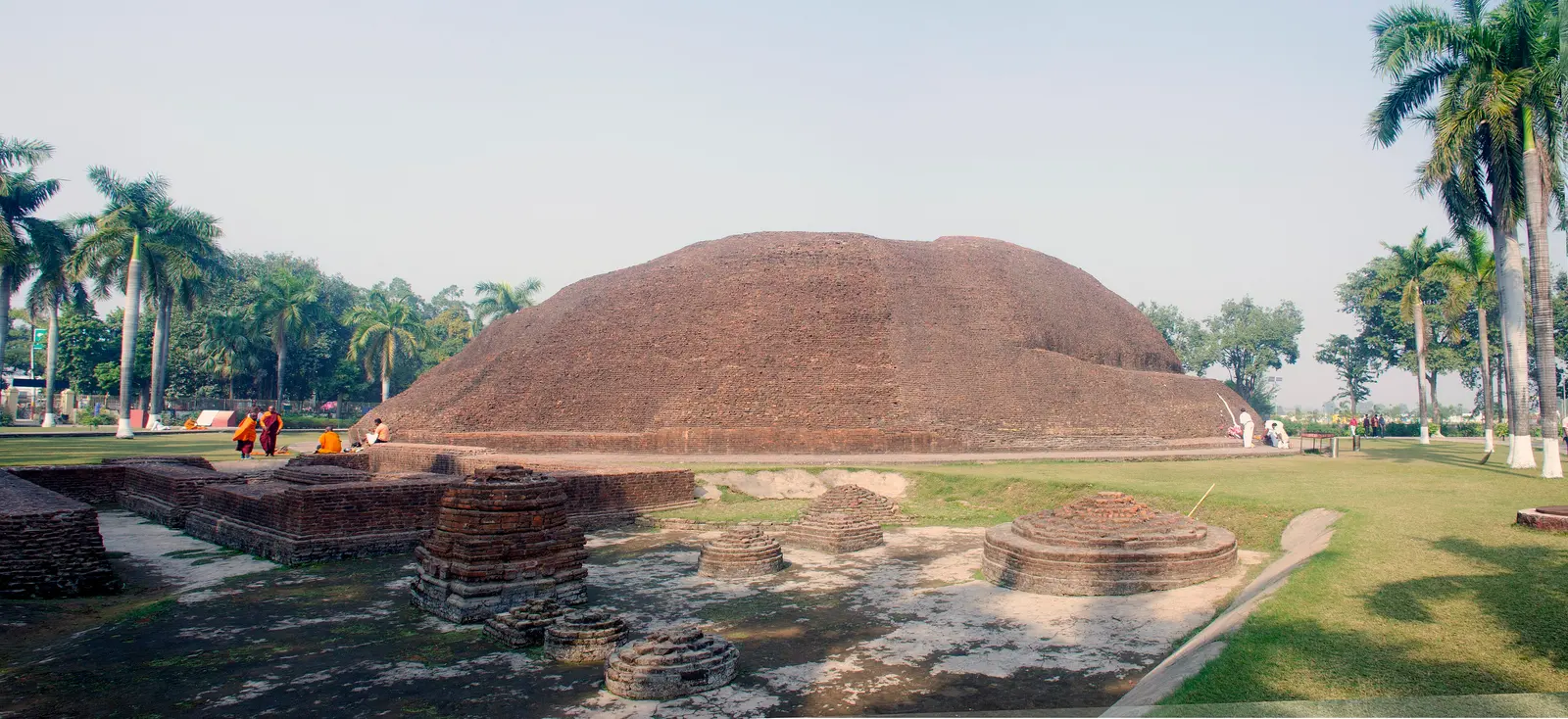 Heritage
Kushinagar Travel Guide: Buddha's Final Resting Place
Where the Buddha attained Mahaparinirvana — the reclining Buddha statue, Ramabhar Stupa, and international monasteries from across Asia.
 Heritage
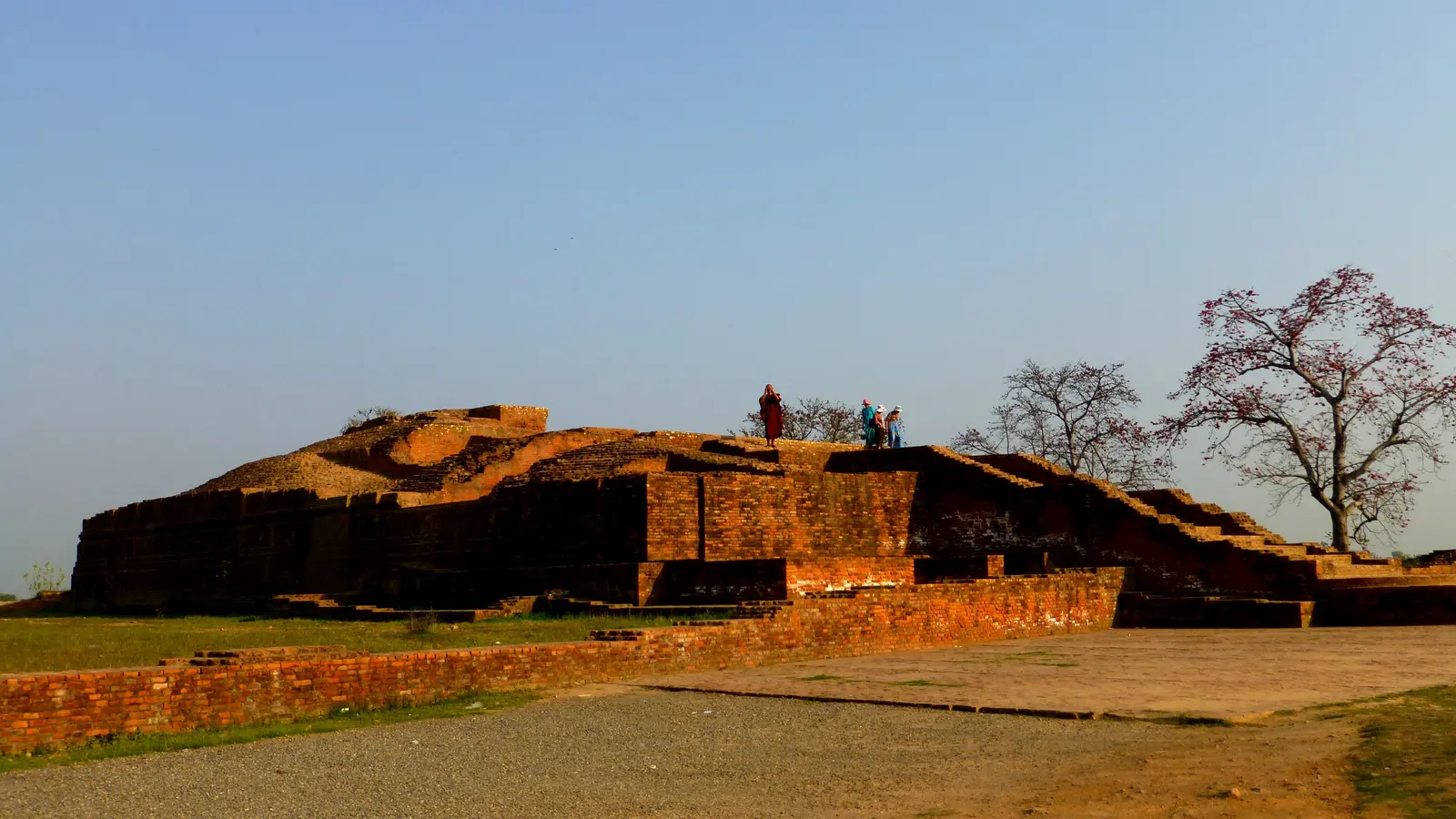
Shravasti Travel Guide: Jetavana Monastery Ruins
Where the Buddha spent the most rainy-season retreats of his life — the Jetavana Monastery ruins and a quiet stop on the Buddhist circuit.
 Heritage
Varanasi Travel Guide: Ganga Ghats & Ganga Aarti
Complete Varanasi guide — the Dashashwamedh Ghat Ganga Aarti, Kashi Vishwanath Temple, a sunrise boat ride, and the old city's narrow lanes.
 Heritage & Culture
Heritage Tourism in Uttar Pradesh: Agra, Lucknow, Varanasi and Beyond
A guide to heritage tourism in Uttar Pradesh: its four UNESCO cultural sites (the Taj Mahal, Agra Fort, Fatehpur Sikri and Sarnath), Mughal Agra, Nawabi Lucknow, the ghats of Varanasi, Jhansi and the Bundelkhand forts, Buddhist sites, crafts such as chikankari, Banarasi silk and marble inlay, and the Kathak tradition, with how to plan a route.