Where Buddha's Journey Ended
Kushinagar is one of Buddhism's four most sacred sites — the place where, according to tradition, the Buddha, around the age of 80, delivered his final teachings and attained Mahaparinirvana, the passing beyond the cycle of rebirth that ends a life of complete enlightenment. For Buddhists, this makes Kushinagar not a place of mourning but one of quiet completion, and it draws pilgrims and travellers from across the world every year.
A small, unhurried town in eastern Uttar Pradesh, Kushinagar centres on the Mahaparinirvana Temple and its large reclining Buddha statue, the Ramabhar Stupa marking the cremation site a short walk away, and an expanding ring of monasteries built by Thailand, Myanmar, Japan, Sri Lanka, Tibet, Vietnam, and South Korea, each in its own national architectural style. Together with Sarnath, Bodh Gaya, and Lumbini across the border in Nepal, it forms one of the four principal stops on the wider Buddhist pilgrimage circuit.
Kushinagar rewards a slow visit. There are no crowds to fight through, no queues to rush — just temple courtyards, prayer flags, and the low hum of chanting drifting between monasteries built thousands of kilometres from their home countries.
🛕 Kushinagar at a Glance
Planning a pilgrimage? See our guide to the Buddhist Circuit.
Best Time to Visit Kushinagar
Kushinagar sits in the Gangetic plains, where summers run brutally hot and the monsoon brings heavy, disruptive rain — winter is comfortably the best season to visit.
Cool, pleasant temperatures ideal for walking between temples and monasteries. December-January can get foggy in the mornings but stays comfortable through the day.
Summer heat in this part of Uttar Pradesh regularly crosses 40°C, making extended outdoor temple-hopping genuinely uncomfortable.
Heavy rain is common and can make travel between sites inconvenient, though the temple grounds themselves stay open.
Buddha Purnima (Buddha's birth, enlightenment, and death, traditionally observed together) draws larger pilgrim numbers — a meaningful time to visit if you can handle the heat.
Our pick: October to March — cool weather that makes it comfortable to walk the monastery zone at your own pace, without the summer heat or monsoon disruption.
How to Reach Kushinagar
Kushinagar has an airport of its own, built specifically to serve Buddhist pilgrimage tourism, though for now Gorakhpur remains the more practical gateway for most travellers.
- By air (direct): Kushinagar International Airport was constructed specifically to bring international Buddhist pilgrims closer to the site, but flight frequency remains limited compared to major hubs — check current routes before relying on it.
- By air/rail via Gorakhpur: Gorakhpur, around 50 km away, has far better rail and air connectivity to the rest of India. Most travellers fly or take a train to Gorakhpur and cover the remaining distance by road in about 1-1.5 hours.
- By road: Kushinagar sits on the wider Buddhist circuit road network, making it easy to combine with a Gorakhpur stopover or a longer loop through eastern Uttar Pradesh.
- Getting around: The main sites — Mahaparinirvana Temple, Ramabhar Stupa, and the monastery zone — sit close enough together to cover on foot or by a short auto-rickshaw ride.
The Sacred Sites
Mahaparinirvana Temple
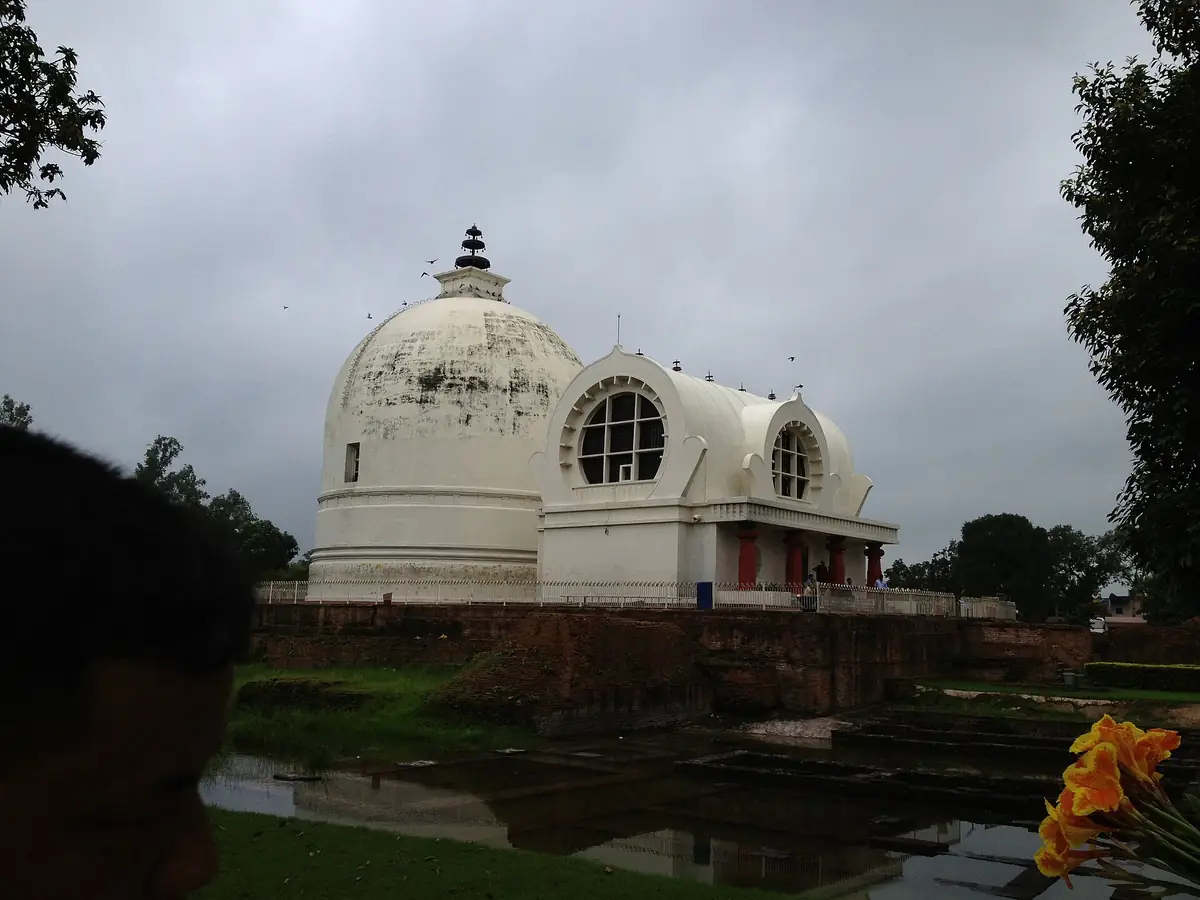
The heart of Kushinagar, this temple houses a 6.1-metre reclining Buddha statue carved from a single block of sandstone, dated to around the 5th century CE, depicting the Buddha in his final moments. The statue was excavated in a damaged state in the late 19th century and later restored; today it remains one of the most striking Buddha images anywhere on the subcontinent, and the temple's calm, dimly lit interior is often filled with the murmur of pilgrims chanting.
Ramabhar Stupa
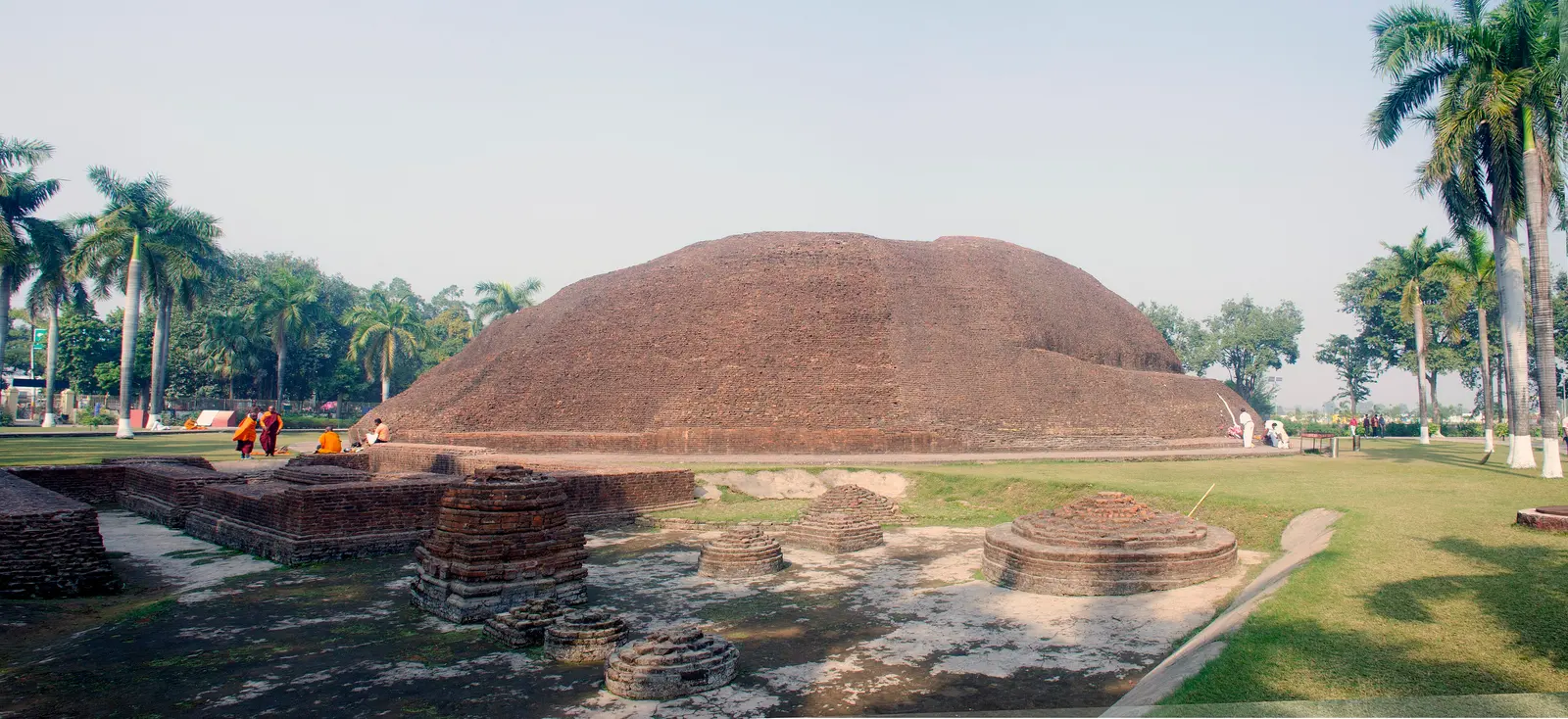
A short walk east of the main temple, this large brick stupa marks the spot traditionally identified as the site of the Buddha's cremation. Its scale and simplicity — a broad dome rising from the plain eastern Uttar Pradesh landscape — make it one of the more quietly powerful stops on the circuit, especially around sunset.
Mathakuar Shrine
A smaller shrine associated with the Buddha's last sermon before his passing, housing a black stone Buddha image. Less visited than the main temple complex, it's a good stop for travellers wanting a quieter moment away from the bigger sites.
The International Monastery Zone
Kushinagar's monastery cluster is what sets it apart from many other pilgrimage towns — Thailand, Myanmar, Japan, Sri Lanka, Tibet, Vietnam, and South Korea have all built monasteries or temples here, each faithfully rendered in its home country's architectural style. Wat Thai Kushinagar, with its steep, gold-accented Thai-temple roofline, is one of the most photographed; the Myanmar (Burmese) monastery and Japan's temple, styled after Japanese Buddhist architecture, are equally worth the walk. Visiting even three or four of these back-to-back is a genuinely unusual way to compare Buddhist architectural traditions from across Asia in a single afternoon.
Where to Stay in Kushinagar
Kushinagar's accommodation is modest compared to major tourist towns, reflecting its role as a pilgrimage stop rather than a resort destination — but there's enough range to suit most budgets.
- → Monastery guesthouses
- → Basic lodges near the bus stand
- → UP Tourism budget rooms
- → UPSTDC forest lodges
- → Private mid-range hotels on the main road
- → Pilgrim-oriented business hotels
- → A handful of upscale chain-affiliated hotels
- → Larger properties near the airport road
- → Resort-style stays with landscaped grounds
Suggested Visit Plan (1-2 Days)
Core Sacred Sites
- ✓Morning at the Mahaparinirvana Temple
- ✓Walk to Ramabhar Stupa for late-morning quiet
- ✓Afternoon visit to Mathakuar Shrine
- ✓Sunset back at Ramabhar Stupa
Monastery Zone
- ✓Morning walk through Wat Thai Kushinagar
- ✓Visit the Myanmar and Japanese monasteries
- ✓Explore Tibetan and Sri Lankan temples nearby
- ✓Onward travel via Gorakhpur
* Travellers building a full Buddhist circuit often combine Kushinagar with Shravasti and Sarnath over a longer, multi-city eastern Uttar Pradesh loop.
Where to Eat in Kushinagar
- Monastery canteens: Some monasteries serve simple vegetarian meals to visitors, often at modest cost — a good way to eat close to where you're sightseeing.
- Local dhabas: Straightforward North Indian thalis and regional Purvanchal dishes at inexpensive roadside eateries near the main market.
- Hotel restaurants: The mid-range and larger hotels offer more varied multi-cuisine menus for travellers wanting familiar options.
Budget Breakdown
| Expense | Budget | Mid-Range | Luxury |
|---|---|---|---|
| Accommodation/night | ₹1,200 | ₹3,500 | ₹8,000 |
| Gorakhpur transfer (round trip) | ₹500 | ₹1,200 | ₹2,500 |
| Food/day | ₹400 | ₹900 | ₹2,000 |
| Local auto/rickshaw hire | ₹300 | ₹500 | ₹1,000 |
| Entry/donations | ₹100 | ₹200 | ₹500 |
* Figures are per person, per day. Most temples and stupas are free to enter; the Mahaparinirvana Temple accepts voluntary donations.
Essential Tips for Visiting Kushinagar
- Dress modestly: Cover shoulders and knees when entering temple and monastery grounds, as a mark of respect at an active place of worship.
- Remove footwear before entering shrines: Standard practice at every temple and monastery on the site — carry socks if walking on stone floors bothers you.
- Keep noise low: This remains an active pilgrimage site for many visitors — speak quietly inside temple halls and around meditating pilgrims.
- Base yourself in Gorakhpur if flights are limited: Checking Kushinagar International Airport's route list before booking can save an unnecessary detour.
- Carry cash: ATM and card-payment access is limited outside the main market area.
✅ Do
- →Dress modestly and remove footwear at shrines
- →Visit Ramabhar Stupa around sunset
- →Walk through at least three of the monasteries
- →Check flight routes before relying on Kushinagar airport
- →Carry enough cash for the whole visit
- →Combine with Shravasti or Sarnath for a fuller circuit
❌ Don't
- →Wear shorts or sleeveless tops into temple halls
- →Speak loudly near meditating pilgrims
- →Assume wide flight availability at the local airport
- →Rush through the monastery zone in under an hour
- →Expect extensive nightlife or shopping options
- →Skip carrying cash outside the main market
Frequently Asked Questions
What is Kushinagar famous for?
Kushinagar is the place where, according to Buddhist tradition, the Buddha attained Mahaparinirvana — passed away at around the age of 80. It's home to the Mahaparinirvana Temple with its 6th-century reclining Buddha statue, the Ramabhar Stupa marking the cremation site, and a growing cluster of monasteries built by Buddhist nations from across Asia.
How do I reach Kushinagar?
Kushinagar International Airport, opened specifically to serve Buddhist pilgrimage tourism, has limited direct flights. Most travellers fly or take a train into Gorakhpur, roughly 50 km away, which has far better rail and air connectivity, then continue to Kushinagar by road (around 1-1.5 hours).
Is Kushinagar part of the Buddhist Circuit?
Yes. Kushinagar is one of the four principal Buddhist pilgrimage sites, alongside Lumbini (birthplace, in Nepal), Bodh Gaya (enlightenment), and Sarnath (first sermon). Many pilgrims and travellers combine two or more of these on a single circuit.
How much time do I need in Kushinagar?
A focused half-day covers the Mahaparinirvana Temple, Ramabhar Stupa, and Mathakuar Shrine. A full day lets you also walk through several of the international monasteries at a relaxed pace, which is worth doing if you have the time.
Which international monasteries can I visit in Kushinagar?
Thailand, Myanmar (Burma), Japan, Sri Lanka, Tibet, Vietnam, and South Korea, among others, have all built monasteries or temples in Kushinagar, each reflecting its home country's architectural style. Wat Thai Kushinagar, with its gold-accented Thai-style roofline, is one of the most visited.
Is Kushinagar suitable for non-Buddhist travellers?
Yes. While it holds deep religious significance for Buddhists, Kushinagar is open to all visitors and offers a quiet, contemplative experience along with genuinely interesting architecture and history — a good stop for anyone curious about the region's past even without a religious connection.
Published by the Kudozz Club editorial team · Last updated · How we research our guides
Want us to plan this trip for you?
Tell Kudozz Club where you want to go and what kind of trip you’re looking for. We’ll build a Kushinagar and Uttar Pradesh itinerary around your dates and budget.
Continue Exploring
View all guides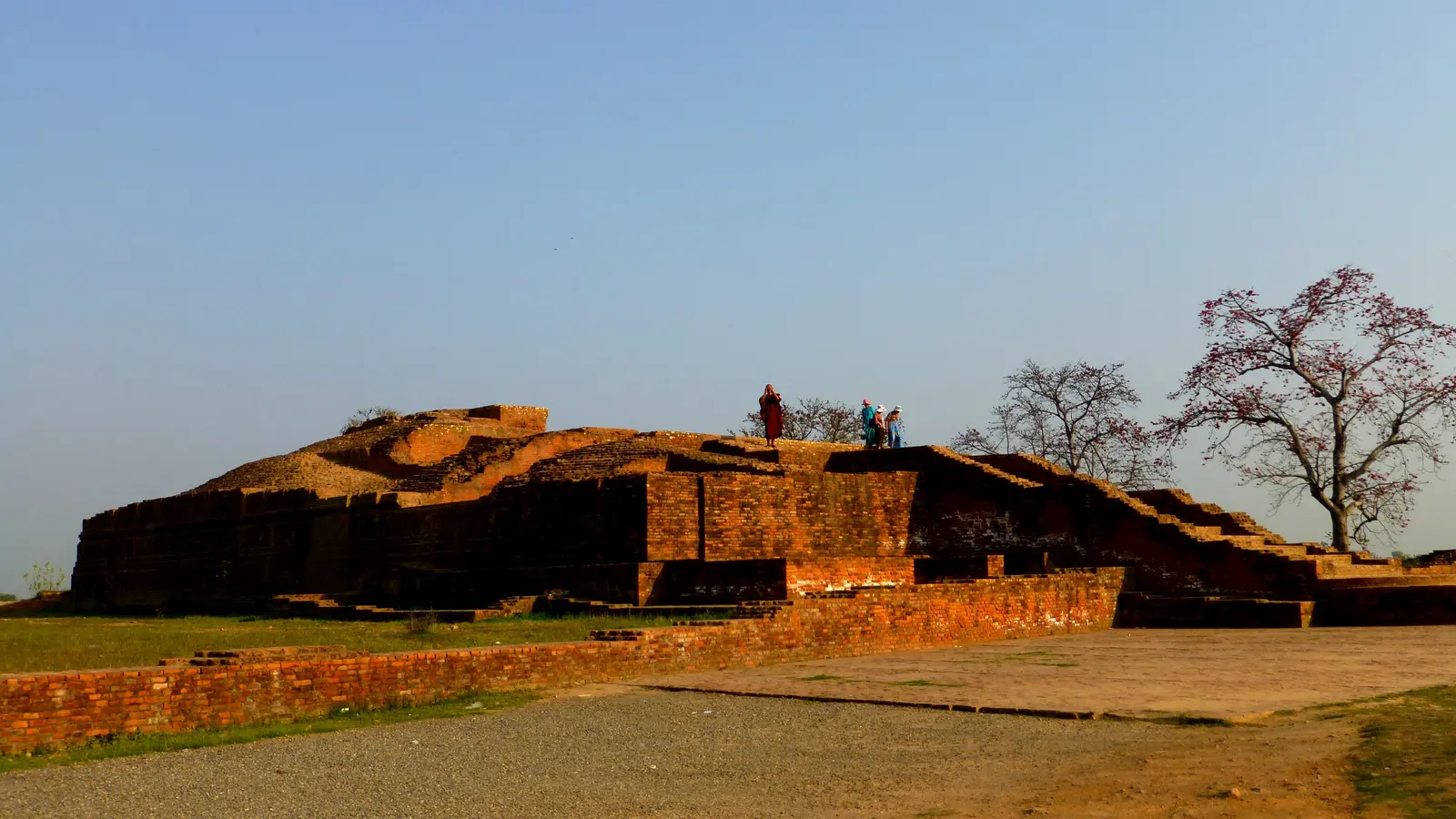 Heritage
Shravasti Travel Guide: Jetavana Monastery Ruins
Where the Buddha spent the most rainy-season retreats of his life — the Jetavana Monastery ruins and a quiet stop on the Buddhist circuit.
 Heritage
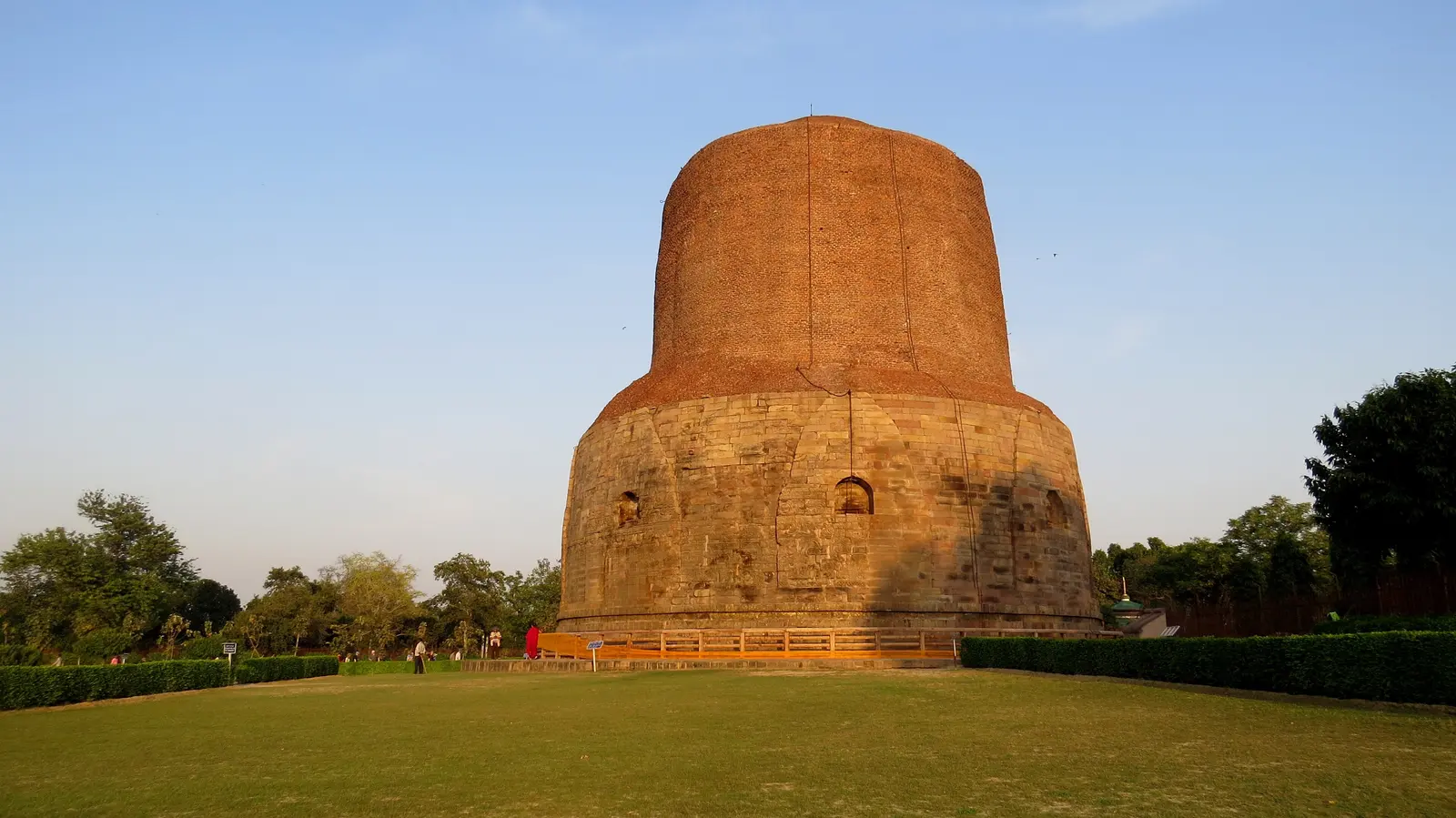
Sarnath Travel Guide: Buddha's First Sermon Site
Where the Buddha gave his first sermon — the Dhamek Stupa, the Ashoka Pillar's lion capital, and Sarnath's place on the Buddhist circuit.
 Spiritual Tourism
The Buddhist Circuit in India: Sites, Route and Itinerary
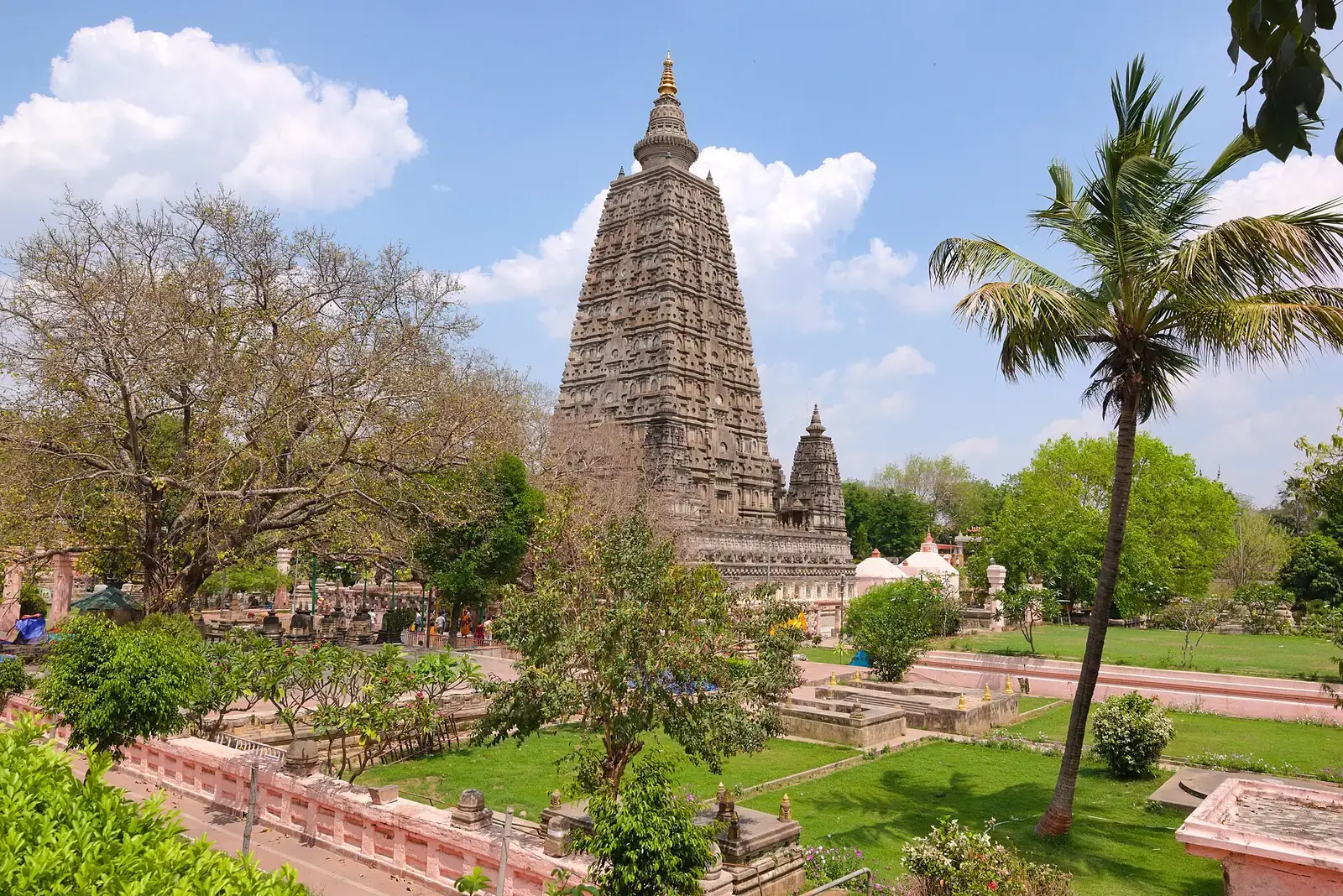
A planning guide to the Buddhist Circuit in Bihar, Uttar Pradesh and Nepal: the places linked to the Buddha's life (Lumbini, Bodh Gaya, Sarnath, Kushinagar) and the other great pilgrimage sites (Rajgir, Vaishali, Shravasti, Sankassa), plus Nalanda, a route, a nine-day itinerary, airports and trains, the best season and crossing into Nepal.
 Heritage
Vrindavan Travel Guide: Temples & Krishna Lore
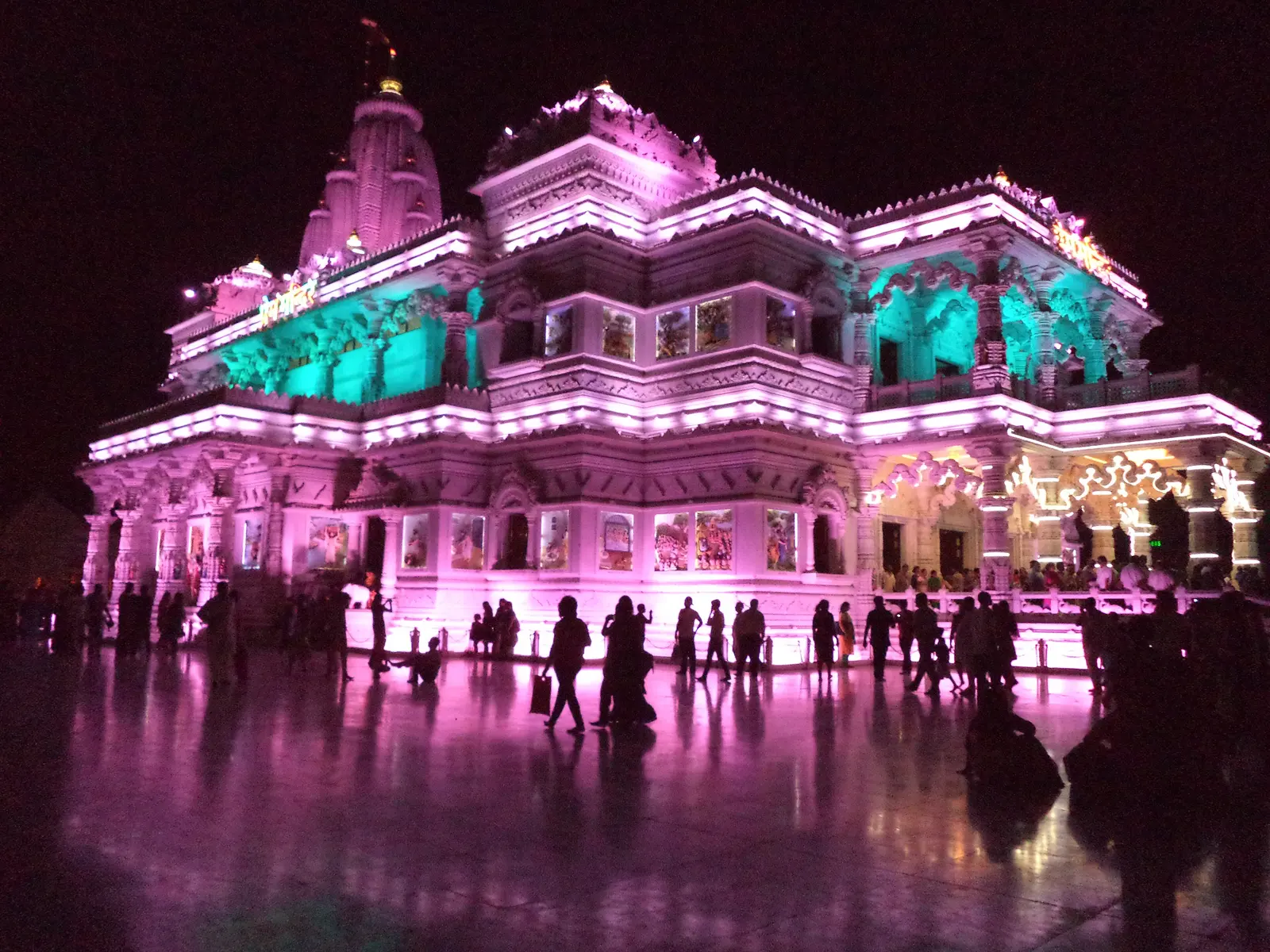
Banke Bihari's curtain ritual, ISKCON's Krishna Balaram Mandir, and Prem Mandir's evening light show — the complete Vrindavan temple-town guide.