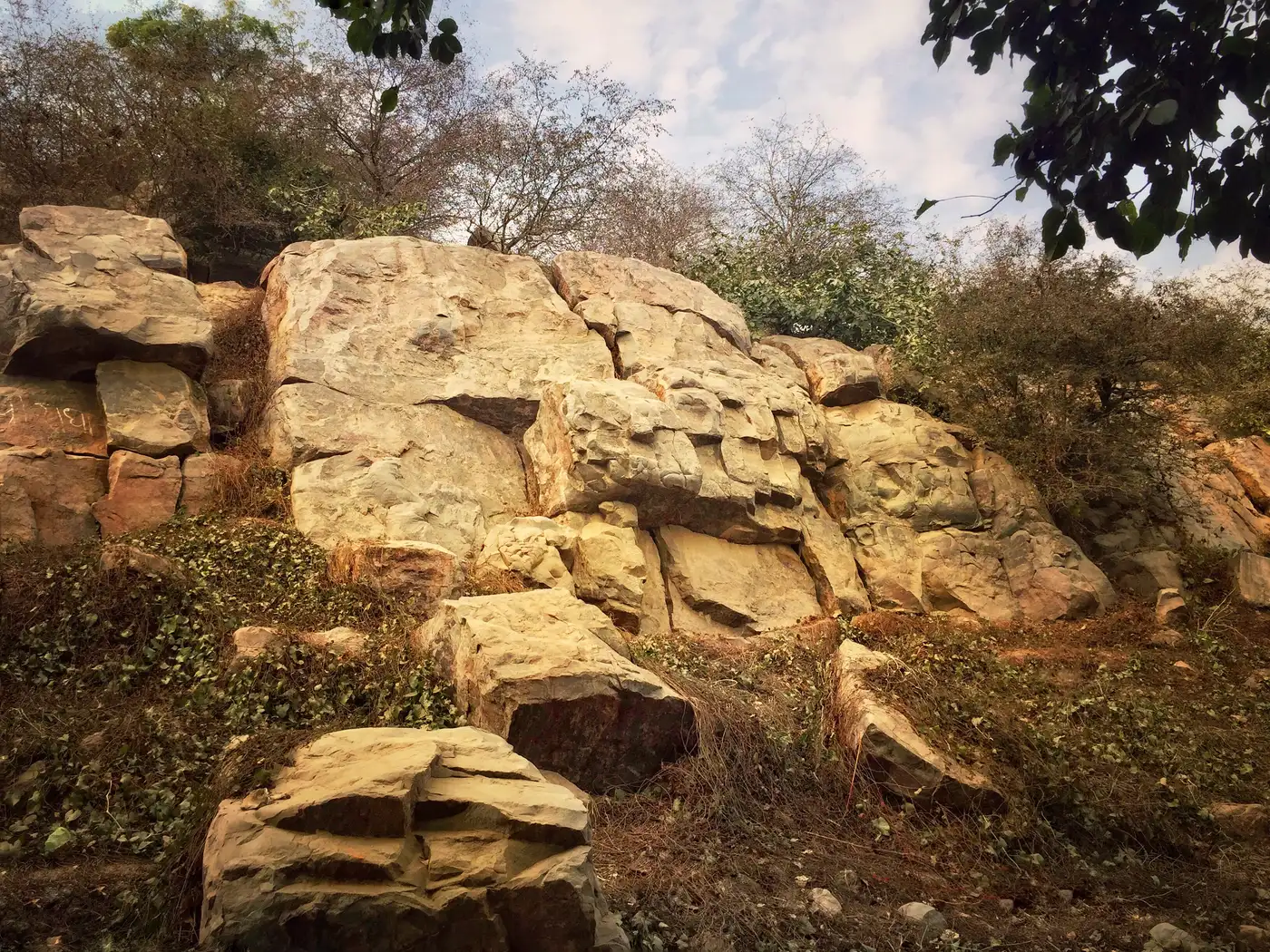
The Hill Krishna Lifted
Govardhan is built around a long, low sandstone hill of the same name — one of the most sacred sites in the Braj region, despite being modest in height compared to almost any hill elsewhere in India. According to the Bhagavata Purana, a young Krishna lifted the entire hill on the little finger of his left hand and held it aloft for seven days and nights, sheltering the villagers of Braj and their cattle from a relentless storm sent by an angered Indra. The story is why Govardhan Hill is worshipped as a deity in its own right, not simply visited as a landmark.
The town's central ritual is the Govardhan Parikrama — a roughly 23km circumambulation path that circles the entire hill. Pilgrims walk it, many barefoot, and some perform the more arduous dandavat parikrama, prostrating themselves full-length repeatedly around the whole route as an act of profound devotion.
Beyond the parikrama, Govardhan is home to Radha Kund and Shyam Kund — twin sacred ponds tied to Radha and Krishna — the Mansi Ganga tank, and the Daan Ghati Temple. Compared to Mathura and Vrindavan, Govardhan remains notably quieter and less commercial, despite its central place in the Krishna story.
⛰️ Govardhan at a Glance
Planning a pilgrimage? See our guide to spiritual places in Uttar Pradesh.
Best Time to Visit Govardhan
Since much of the Govardhan experience involves walking — whether a short visit to the main temples or the full parikrama — comfortable weather matters even more here than elsewhere in the Braj region.
Cool, walkable conditions make this the ideal window for the parikrama and for exploring the temples and kunds without the summer heat.
The town's biggest festival, timed around Diwali, features a large communal annakut food offering and draws sizeable crowds of devotees.
High daytime temperatures make the 23km walk genuinely tough; if visiting, stick to early morning temple visits rather than the full circuit.
Rain keeps things green but can make the parikrama path muddy and uneven in stretches — manageable, but less pleasant underfoot.
Our pick: October to March, ideally on an early morning start, gives you the coolest and most comfortable conditions for both the parikrama and the temple visits.
How to Reach Govardhan
Govardhan has no rail or air access of its own — nearly every visitor arrives by road as part of a wider Braj region trip.
- From Mathura: About 26km, roughly a 45-60 minute drive by taxi, auto-rickshaw, or shared transport — the most common route.
- From Vrindavan: Around 40km, about an hour by road, often combined with a stop in Mathura along the way.
- By train or air: The nearest railhead and airport connections are through Mathura and Agra; from either, hire a taxi or join a day-trip tour covering the wider Braj circuit.
- Getting around Govardhan: The parikrama path itself is walked on foot (or, for some pilgrims, by cycle-rickshaw for shorter distances); autos and taxis connect the town centre to Radha Kund and Shyam Kund.
The Parikrama & Sacred Sites
Govardhan Hill & the Parikrama
The hill itself is long and low rather than dramatic — its significance is entirely devotional rather than scenic. The roughly 23km parikrama path circles its base, dotted with small temples and shrines, monkeys, and a steady stream of pilgrims at almost any time of day. Most visitors complete the walk in around 6-8 hours; the more devout dandavat parikrama, involving repeated full-body prostration around the entire route, can take several days.
Radha Kund & Shyam Kund
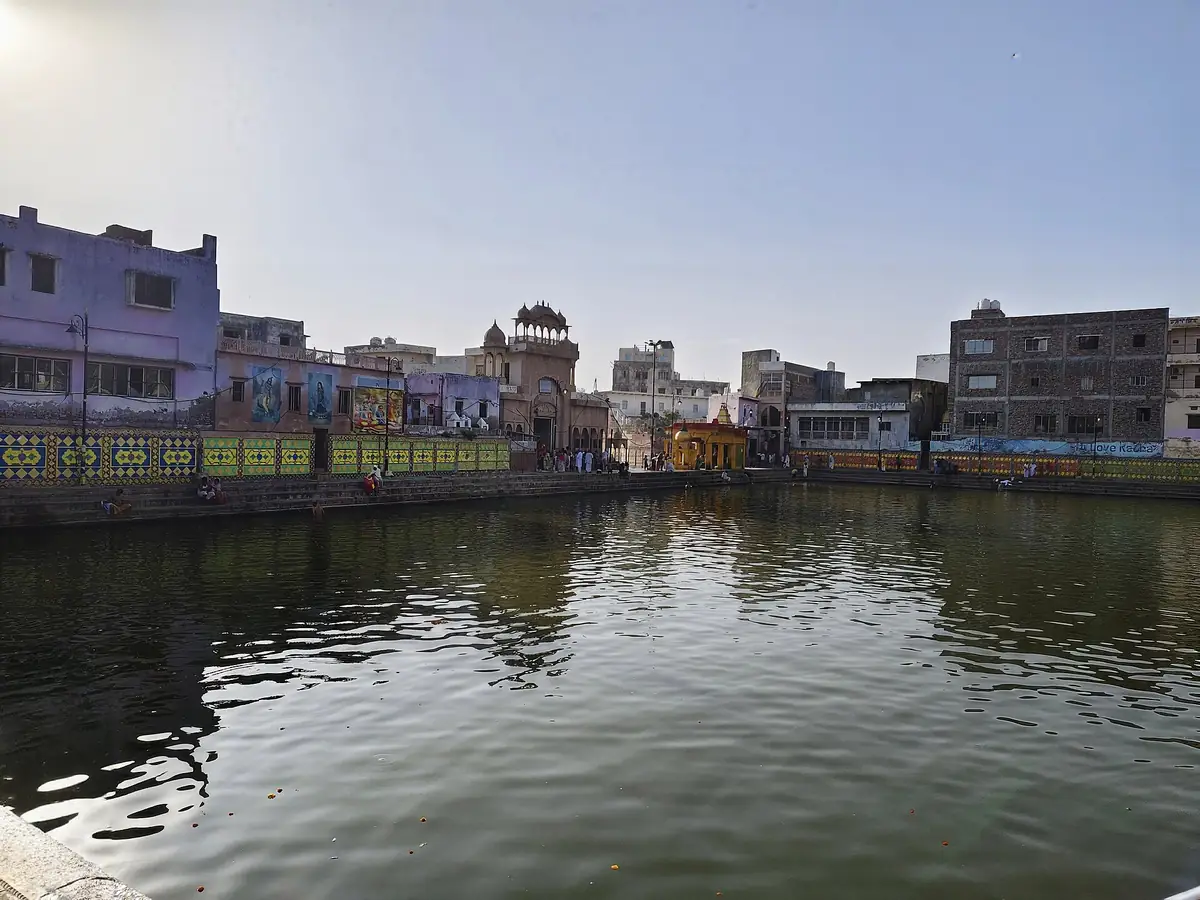
These twin ponds, separated by a narrow strip of land, are among the holiest bathing sites in the Braj region — Radha Kund associated with Radha and Shyam Kund with Krishna. Many pilgrims consider a dip here, especially during Kartik Purnima, spiritually significant enough to plan their entire Govardhan visit around it.
Mansi Ganga & Daan Ghati Temple
Mansi Ganga is a large rectangular sacred tank at the start of the parikrama route, believed to have been created by Krishna's thought alone. Nearby, the Daan Ghati Temple marks the spot where, per local tradition, Krishna playfully demanded a "toll" of curd and butter from the gopis passing through — a lighter, more playful counterpoint to the hill-lifting legend that defines the rest of the town.
Where to Stay in Govardhan
Govardhan has limited accommodation compared to Mathura or Vrindavan, and most visitors — especially those not walking the full parikrama — base themselves in one of those two towns instead and day-trip in.
- → Dharamshalas along the parikrama route
- → Simple pilgrim guesthouses
- → Ashram-run stays near Radha Kund
- → Small hotels in Govardhan town
- → Better-equipped guesthouses near Radha Kund
- → Mathura- or Vrindavan-based day trip instead
- → No major luxury properties in Govardhan itself
- → Best luxury options are in nearby Mathura
- → Or in Vrindavan's higher-end hotels
Suggested Visit Plan (Day Trip or 1 Night)
Day Trip from Mathura/Vrindavan
- ✓Early departure to reach Govardhan by mid-morning
- ✓Visit Mansi Ganga, Daan Ghati Temple, and a section of the parikrama
- ✓Stop at Radha Kund and Shyam Kund before returning
Full Parikrama (1 Night)
- ✓Arrive the evening before, stay near the parikrama's start point
- ✓Begin the full 23km parikrama at dawn
- ✓Rest at Radha Kund before heading back to Mathura or Vrindavan
* Combine with Mathura and Vrindavan for a complete 3-4 day Braj region itinerary.
Where to Eat in Govardhan
- Roadside stalls along the parikrama: Simple vegetarian snacks, fruit, and refreshments cater to pilgrims walking the route.
- Dharamshala kitchens: Many pilgrim guesthouses serve basic, home-style vegetarian thalis at low cost.
- Better options in Mathura/Vrindavan: For a wider choice of restaurants, most travellers eat before or after their Govardhan visit in one of the two larger towns.
Budget Breakdown
| Expense | Budget | Mid-Range | Luxury |
|---|---|---|---|
| Taxi from Mathura (round trip) | ₹1,200 | ₹1,800 | ₹2,500 |
| Accommodation/night (if staying) | ₹500 | ₹2,500 | n/a (base elsewhere) |
| Food/day | ₹300 | ₹700 | ₹1,500 |
| Local transport on-site | ₹100 | ₹300 | ₹600 |
| Temple/kund donations | ₹100 | ₹300 | ₹500+ |
* Figures are per person, per day, in Indian Rupees. Most travellers treat Govardhan as a day trip rather than an overnight stay.
Essential Tips for Visiting Govardhan
- Wear comfortable walking footwear: Even a partial parikrama involves a fair amount of walking on uneven ground.
- Carry water and snacks: Stalls line the parikrama route, but options can be sparse in quieter stretches.
- Watch for monkeys: As with most Braj-region pilgrimage sites, monkeys are common along the parikrama path — keep food and loose items secure.
- Start early: A dawn start avoids both the day's heat and the busiest crowds on the parikrama path.
- Combine with Mathura and Vrindavan: Govardhan is best experienced as one leg of a broader Braj circuit rather than a standalone destination.
✅ Do
- →Start the parikrama early in the morning
- →Carry water and light snacks for the walk
- →Wear sturdy, comfortable footwear
- →Visit Radha Kund and Shyam Kund together
- →Keep valuables secure around monkeys
- →Combine with Mathura and Vrindavan
❌ Don't
- →Attempt the full parikrama in peak summer heat
- →Expect wide dining or hotel choice on-site
- →Leave food or bags open near monkeys
- →Skip carrying enough cash — ATMs are limited
- →Rush the visit into a quick drive-by stop
- →Forget sun protection on the open parikrama path
Frequently Asked Questions
What is the story behind Govardhan Hill?
According to the Bhagavata Purana, Krishna lifted Govardhan Hill on the little finger of his left hand and held it aloft for seven days and nights, sheltering the villagers of Braj and their cattle from a torrential storm sent by an angered Indra, the god of rain and thunder. The episode is one of the best-known stories from Krishna's youth and is why the hill is worshipped rather than merely visited.
How long is the Govardhan Parikrama?
The full circumambulation path around Govardhan Hill is roughly 23km. Pilgrims walk it, and some undertake it barefoot or even perform dandavat parikrama (prostrating full-body length repeatedly around the entire route) as an act of devotion — a practice that can take several days to complete.
How far is Govardhan from Mathura and Vrindavan?
Govardhan is about 26km from Mathura and roughly 40km from Vrindavan, typically a 45-60 minute drive from either. It's commonly visited as a day trip from both towns as part of a wider Braj region itinerary.
What is Govardhan Puja?
Govardhan Puja is a major Hindu festival celebrated around Diwali (October/November), commemorating Krishna's lifting of the hill. Communities prepare a large annakut — literally a 'mountain of food' — offering dozens of dishes to the deity, symbolically recreating the abundance Krishna's protection made possible for the villagers of Braj.
Is Govardhan less crowded than Mathura and Vrindavan?
Yes, generally. Despite its deep religious significance, Govardhan sees noticeably fewer tourists and remains a quieter, more rural experience than the denser temple towns of Mathura and Vrindavan — a good choice if you want the Braj region's spiritual character without the crowds.
What are Radha Kund and Shyam Kund?
Radha Kund and Shyam Kund are twin sacred ponds near Govardhan, believed to have been created by Radha and Krishna respectively. They are considered among the holiest bathing sites in the Braj region, and many pilgrims combine a visit here with the Govardhan Parikrama.
Published by the Kudozz Club editorial team · Last updated · How we research our guides
Want us to plan this trip for you?
Tell Kudozz Club where you want to go and what kind of trip you’re looking for. We’ll build a Govardhan and Uttar Pradesh itinerary around your dates and budget.
Continue Exploring
View all guides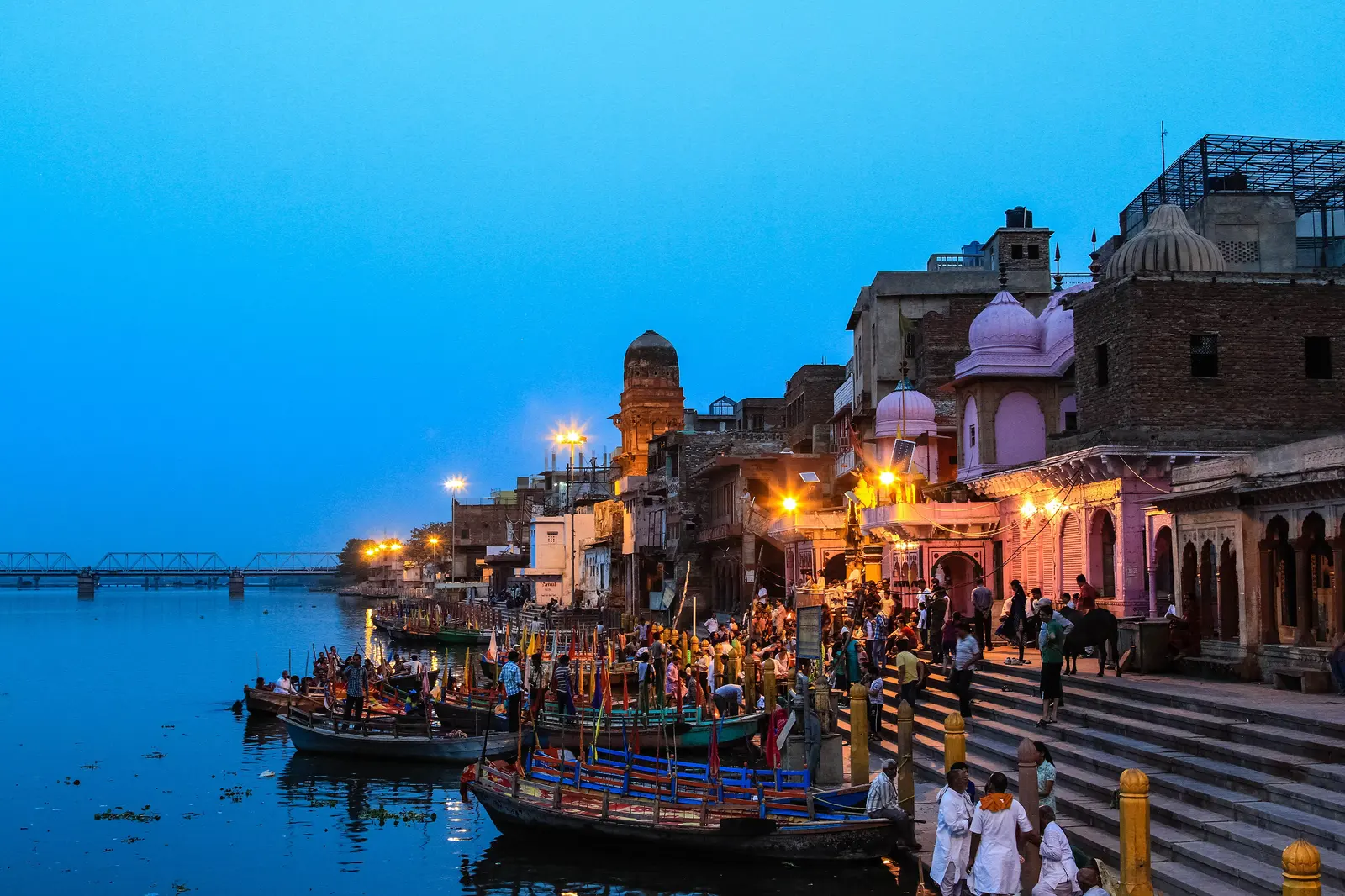 Heritage
Mathura Travel Guide: Krishna Janmabhoomi & Temples
Complete Mathura guide to Krishna Janmabhoomi Temple, Vishram Ghat's evening aarti, Dwarkadhish Temple, and the gateway to the wider Braj region.
 Heritage
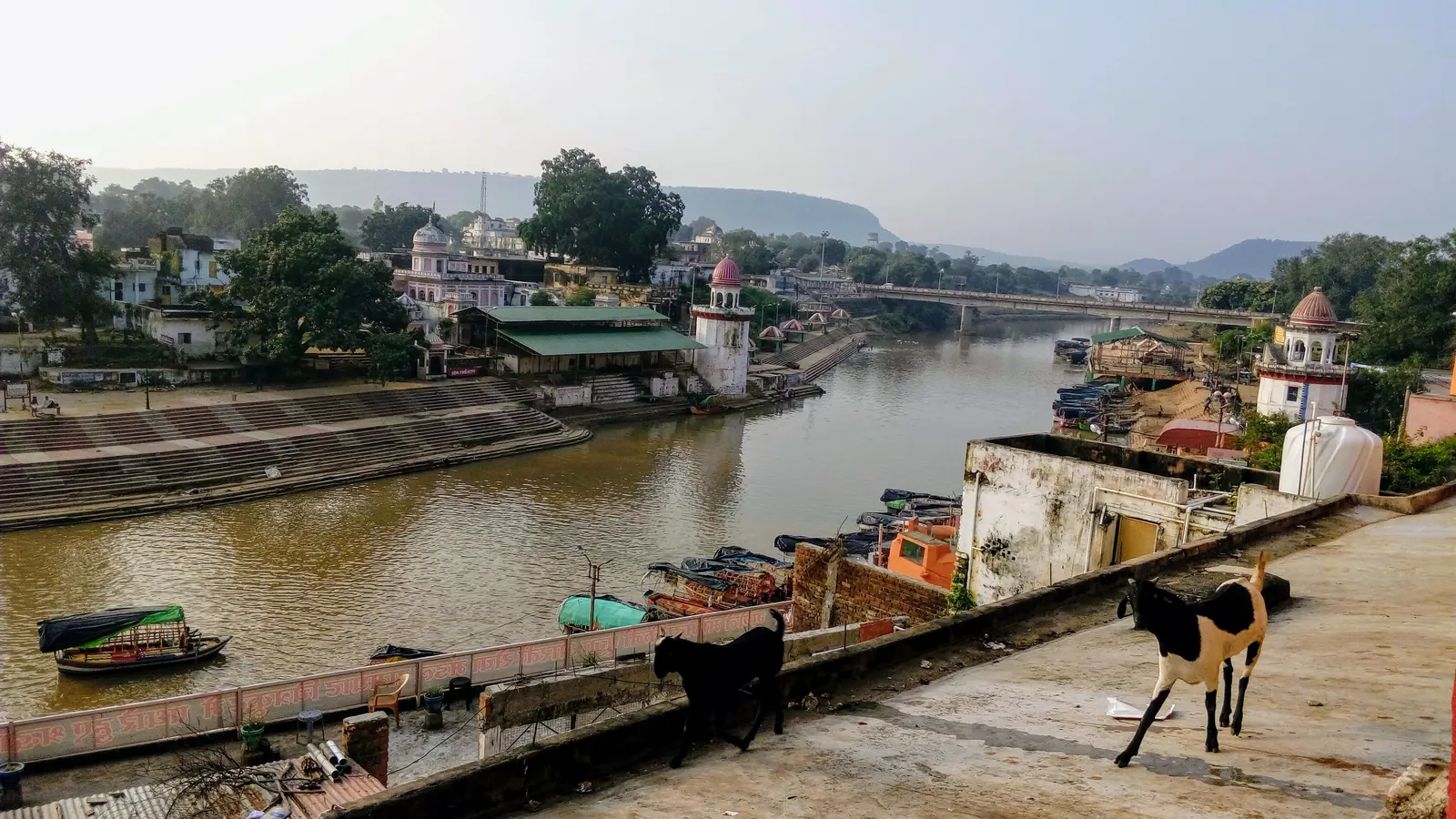
Chitrakoot Travel Guide: Ram's Forest Exile Site
Where Ram, Sita, and Lakshman spent part of their exile — Kamadgiri's parikrama, Ramghat's evening aarti, and a quieter Ramayana circuit.
 Heritage
Ayodhya Travel Guide: Ram Mandir & Saryu Ghats
The newly consecrated Ram Mandir, Hanuman Garhi, and the Saryu River's evening aarti — a complete guide to Lord Ram's birthplace.
 Heritage
Prayagraj Travel Guide: Triveni Sangam & Kumbh Mela
The sacred Ganga-Yamuna-Saraswati confluence, home to the Kumbh Mela — plus Allahabad Fort, Anand Bhavan, and Khusro Bagh.