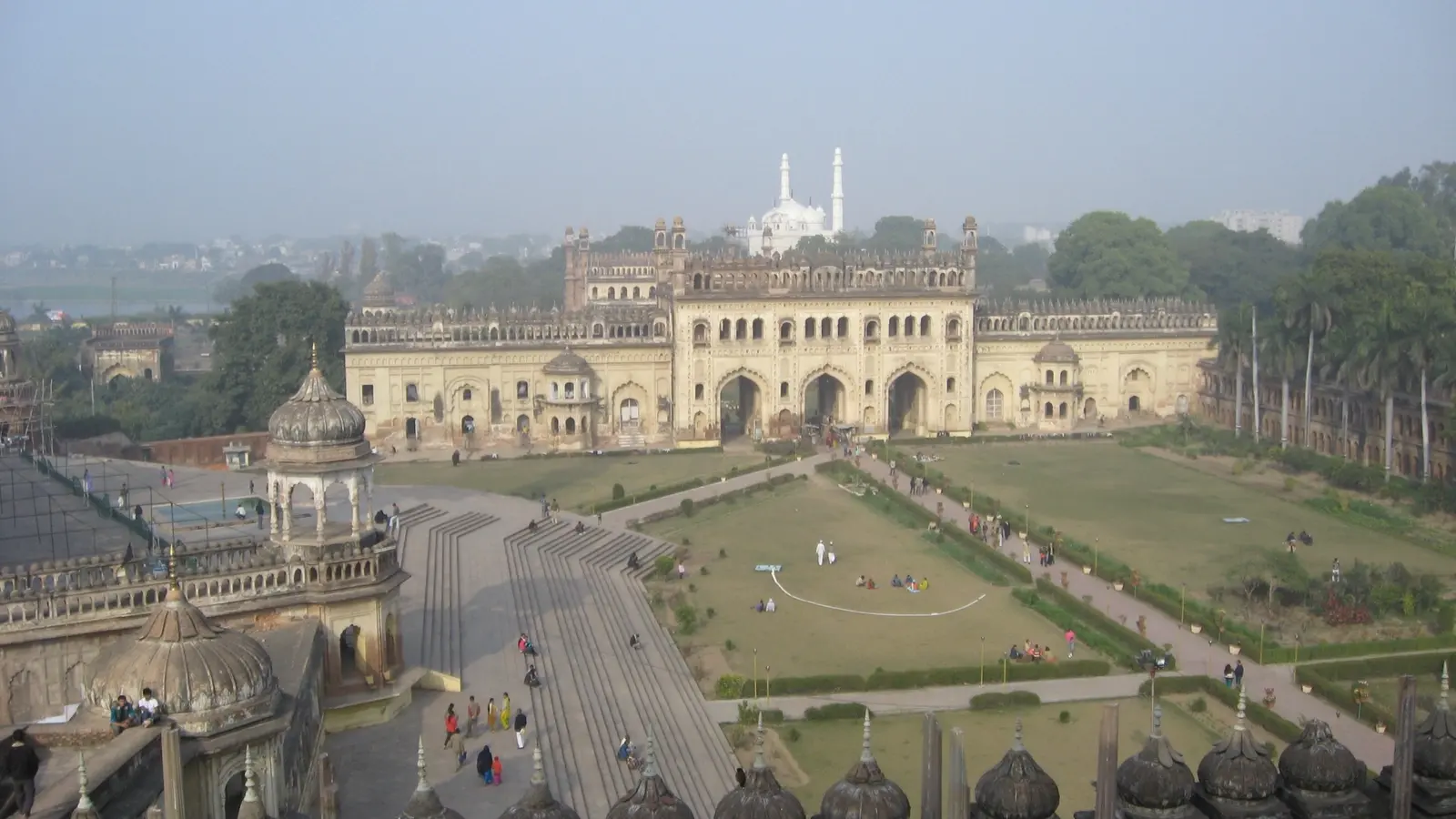
The City of Nawabs
Lucknow, the capital of Uttar Pradesh, carries a nickname it has earned over nearly three centuries: the City of Nawabs. From the mid-18th century, as Mughal power weakened, the Nawabs of Awadh made Lucknow their capital and poured extraordinary wealth into architecture, poetry, music, cuisine, and a particular style of courtly manners that the city is still known for today. The result is a place where grand Indo-Islamic monuments, a genuinely distinct craft tradition, and one of India's most celebrated food cultures all sit within a compact, walkable old city.
Lucknow's skyline is still dominated by its Nawabi-era landmarks — the vast congregation hall of Bara Imambara, the delicately ornamented Chota Imambara, and the ceremonial arch of Rumi Darwaza — while the Residency's bullet-scarred ruins tell a very different, later chapter of the city's history, from the 1857 Revolt. Layered over all of this is Lucknow's living culture: the fine white-thread Chikankari embroidery sold across Chowk and Hazratganj, and street food — galouti kebabs, dum-cooked biryani, kulfi falooda — that has shaped how much of India thinks about Awadhi cuisine.
Lucknow is also a genuinely useful base. Its rail and road links make it a practical launchpad for trips further into Uttar Pradesh — the perfume town of Kannauj, the sacred forest of Naimisharanya, and onward toward Ayodhya and Shravasti. Most visitors give the city itself 2-3 days before heading further out.
🕌 Lucknow at a Glance
Looking for activities and experiences? See our guide to the best things to do in Lucknow.
Interested in the history? See our guide to heritage in Uttar Pradesh.
Best Time to Visit Lucknow
Lucknow sits in the Gangetic plains, which means sharp seasonal swings — winter is genuinely pleasant for sightseeing, while summer is punishing.
Cool, dry, and comfortable for walking the old city and its markets. December-January can turn cold and foggy in the mornings — pack a light jacket.
Daytime temperatures frequently cross 40°C with dry, dusty heat. Sightseeing is punishing outside early morning and evening hours.
Humid with periodic heavy rain, but temperatures are lower than summer. Indoor sights and markets remain fully accessible.
The most pleasant window for daytime sightseeing, but early mornings can be foggy enough to delay trains and flights — build in buffer time.
Our pick: October to March — comfortable temperatures for exploring the old city on foot and for lingering over street food without the summer heat cutting your day short.
How to Reach Lucknow
As the state capital, Lucknow is one of the best-connected cities in North India by air, rail, and road.
- By Air: Chaudhary Charan Singh International Airport has frequent domestic flights from Delhi, Mumbai, Bangalore, Kolkata, and other major cities, plus a handful of international connections to the Gulf.
- By Rail: Lucknow Junction (Charbagh) is one of North India's major rail hubs, with trains arriving from virtually every part of the country. Lucknow's distinctive Charbagh station building, with its domes styled after Rajasthani palaces, is worth a look even if you're just passing through.
- By Road: Well connected via NH27, the Agra-Lucknow Expressway, and the Purvanchal Expressway, which links Lucknow eastward toward Ayodhya, Azamgarh, and Ghazipur.
Things to Do in Lucknow
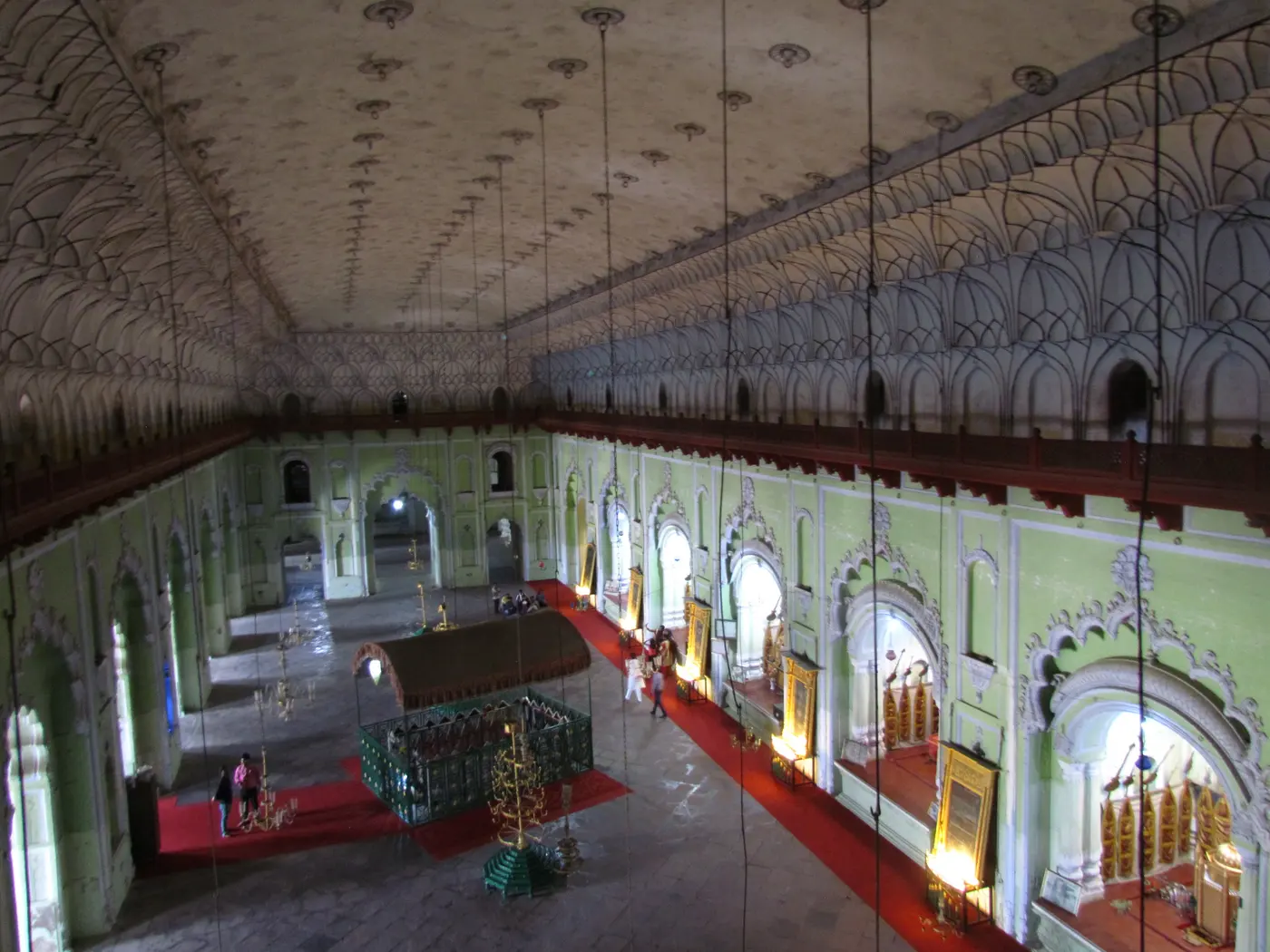
Bara Imambara & the Bhul Bhulaiya
Built in 1784 by Nawab Asaf-ud-Daula, Bara Imambara is best known for two things: its central hall, one of the largest arched halls in the world constructed entirely without beams or supporting pillars, and the Bhul Bhulaiya — a labyrinth of narrow, interconnecting passages built into the structure's upper storey. The maze isn't just a curiosity; it's structurally load-bearing, distributing weight above the beamless hall below. Local guides are genuinely useful here — the passages have hundreds of near-identical doorways, and getting lost without one is easy. The complex also includes the Asfi Mosque and a stepwell, both worth building into your visit.
Chota Imambara
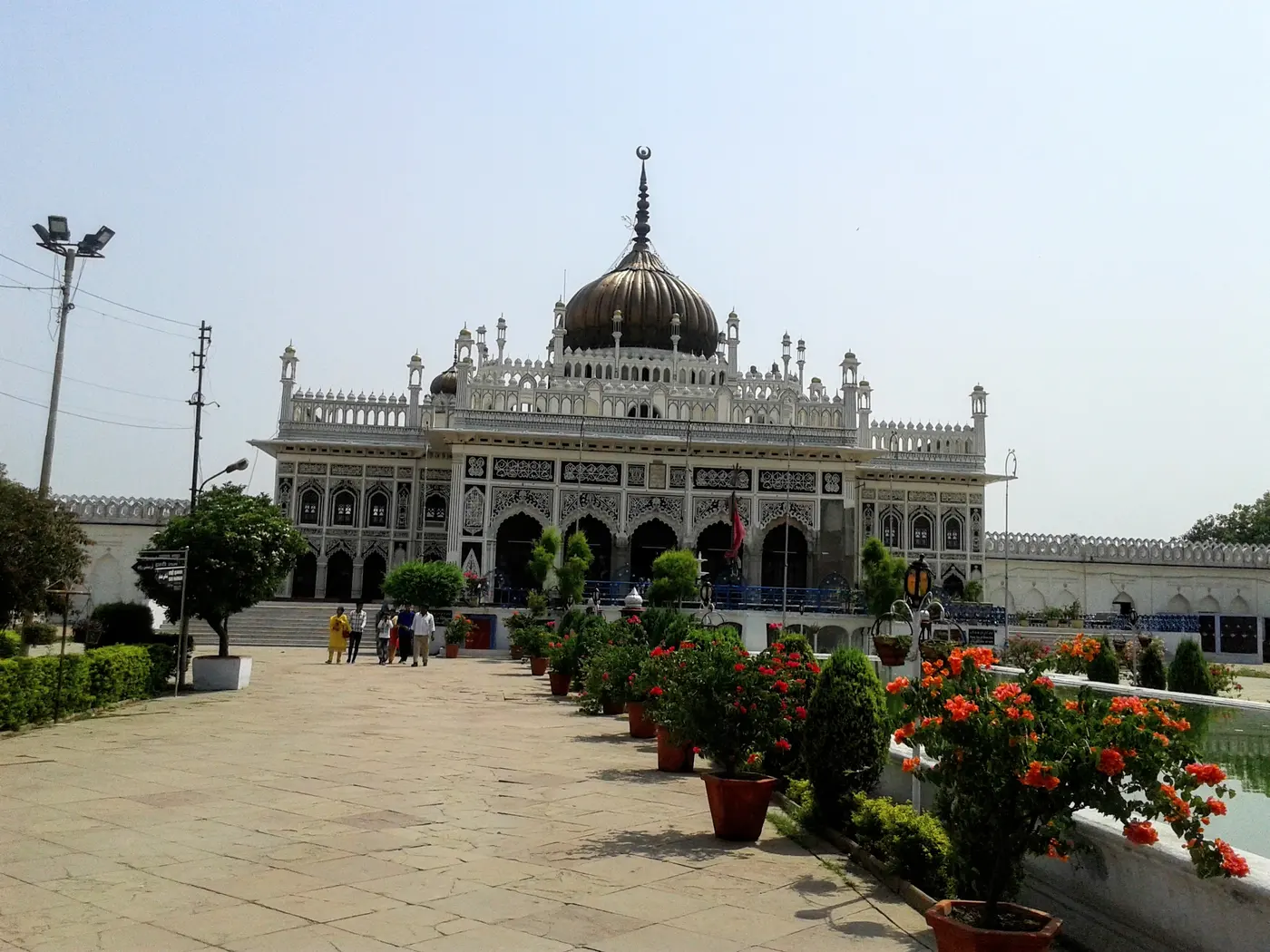
Built roughly half a century after its larger namesake by Nawab Muhammad Ali Shah, Chota Imambara is smaller but considerably more ornate — its interior is decorated with chandeliers, gilded mirrors, and calligraphy, and it doubles as the mausoleum of the Nawab who commissioned it. The reflecting pool in front of the building, flanked by smaller domed pavilions, makes for one of Lucknow's most photographed views, particularly around sunset.
Rumi Darwaza
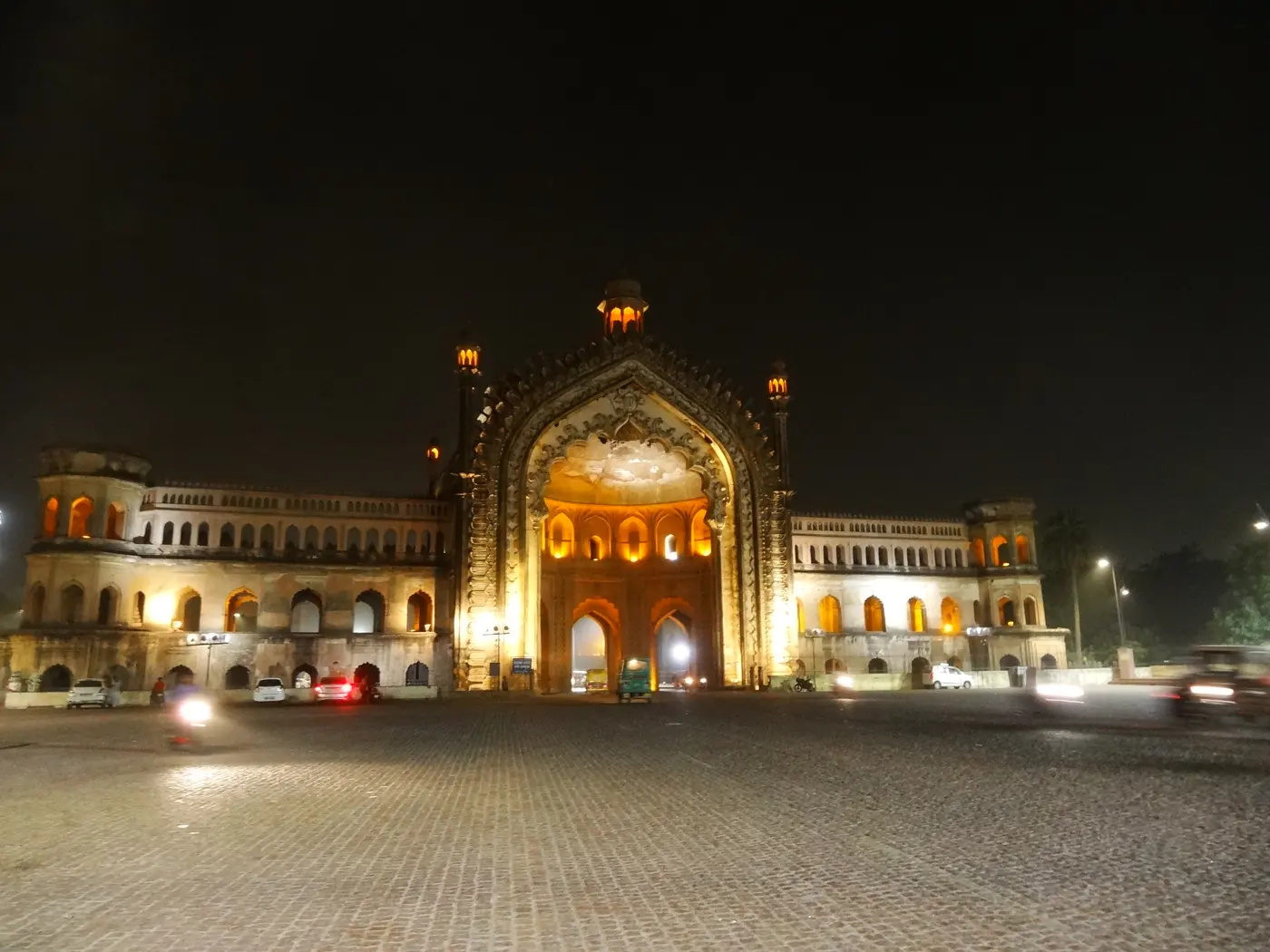
A soaring 60-foot gateway built in the same construction programme as Bara Imambara, Rumi Darwaza is styled after a gate in Istanbul and has become one of Lucknow's unofficial symbols — it appears on municipal signage and tourism branding across the city. It's illuminated at night and sits close enough to Bara Imambara and Chota Imambara to combine all three in a single walking loop through the old city.
The Residency
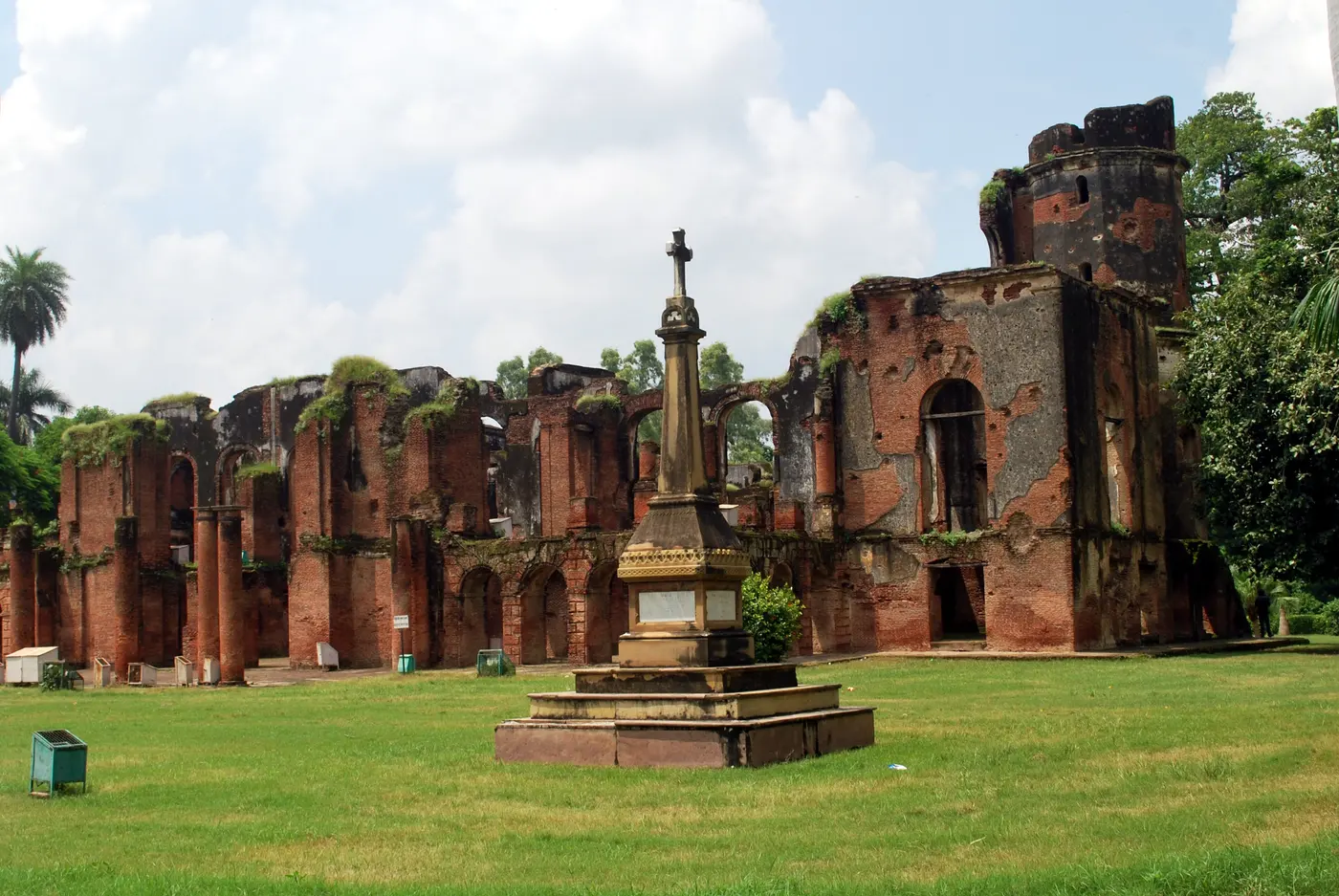
A markedly different historical register from the Nawabi monuments: the Residency was the fortified compound of the British Resident, besieged for nearly five months during the 1857 Revolt. Its buildings still stand as ruins, pockmarked by cannon and musket fire, set within a quiet, well-tended park that makes for a reflective contrast to the ornamentation of the old city's other monuments. An on-site museum covers the siege in detail.
Other Notable Sights
Beyond the headline monuments, the Husainabad Clock Tower — one of the tallest clock towers in India, built in a distinctly Victorian-Gothic style that stands out against Lucknow's Indo-Islamic architecture — and the domed Jama Masjid nearby are both easy add-ons to an old-city walking route. Travellers with more time also visit the British Residency's Shaheed Smarak and the leafy grounds of La Martiniere College, one of India's most distinctive school buildings.
Chikankari & Shopping
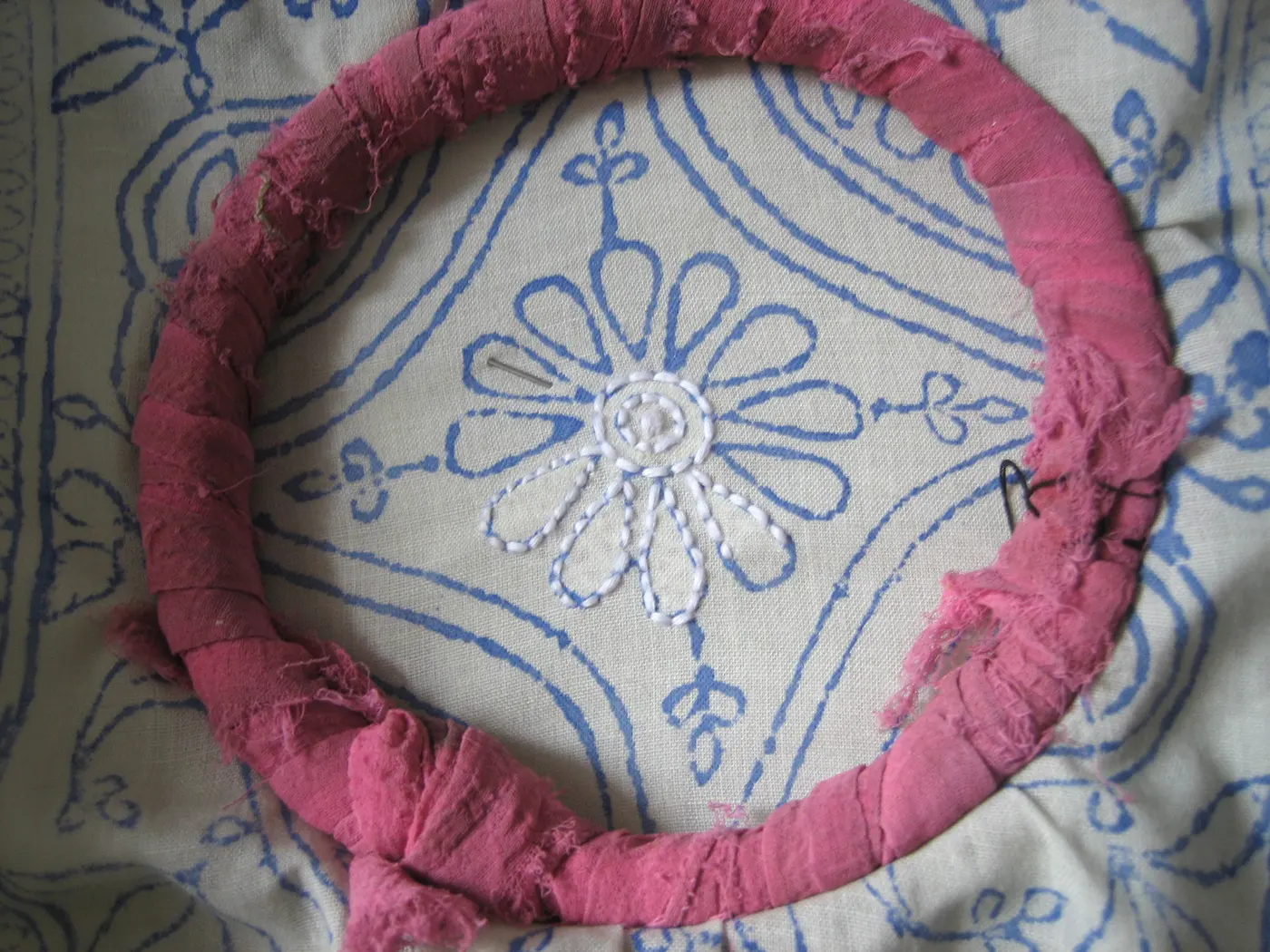
Chikankari is Lucknow's most famous craft export — a delicate white-thread shadow embroidery traditionally worked on fine muslin, cotton, or georgette. Popular tradition credits its refinement to the Nawabi court, though the technique's roots likely reach further back; what's certain is that Lucknow became, and remains, its recognised home. Skilled artisans work dozens of stitch types by hand, and genuine hand-embroidered pieces can take days or weeks to complete, which shows in the price difference between machine and hand work.
- Chowk: The traditional heart of Chikankari, with generations-old family workshops and wholesale-facing shops lining its narrow lanes — the place to see the craft closest to its roots.
- Hazratganj: Lucknow's most polished shopping street, with organised boutiques selling Chikankari on kurtas, sarees, and dupattas alongside cafés and other retail — a more comfortable first stop if Chowk's lanes feel overwhelming.
- Aminabad: A busy, largely local market good for everyday shopping, street food, and a more unfiltered sense of the old city's commercial life.
Where to Stay in Lucknow
Hazratganj and Gomti Nagar are the most convenient bases for most visitors — central, well connected, and close to both the old city's monuments and the newer parts of town.
- → Guesthouses near Charbagh station
- → Budget hotels in Aminabad/Hazratganj
- → Chain budget hotels near the airport
- → Business hotels in Hazratganj
- → Boutique heritage-style stays near Chowk
- → Mid-range chains in Gomti Nagar
- → International 5-star chains in Gomti Nagar
- → Heritage-style luxury properties
- → Premium business hotels near the airport
Suggested Visit Plan (2-3 Days)
Old City Monuments
- ✓Morning at Bara Imambara and the Bhul Bhulaiya
- ✓Rumi Darwaza and Chota Imambara nearby
- ✓Evening street food trail in Chowk
History & Shopping
- ✓Morning at the Residency ruins and museum
- ✓Afternoon Chikankari shopping in Hazratganj
- ✓Evening at Husainabad Clock Tower
Day Trip or Onward
- ✓Day trip to Kannauj or Naimisharanya
- ✓Or continue onward toward Ayodhya/Shravasti
* Many travellers use Lucknow as a base for Kannauj or Naimisharanya day trips before continuing to Ayodhya.
Where to Eat in Lucknow
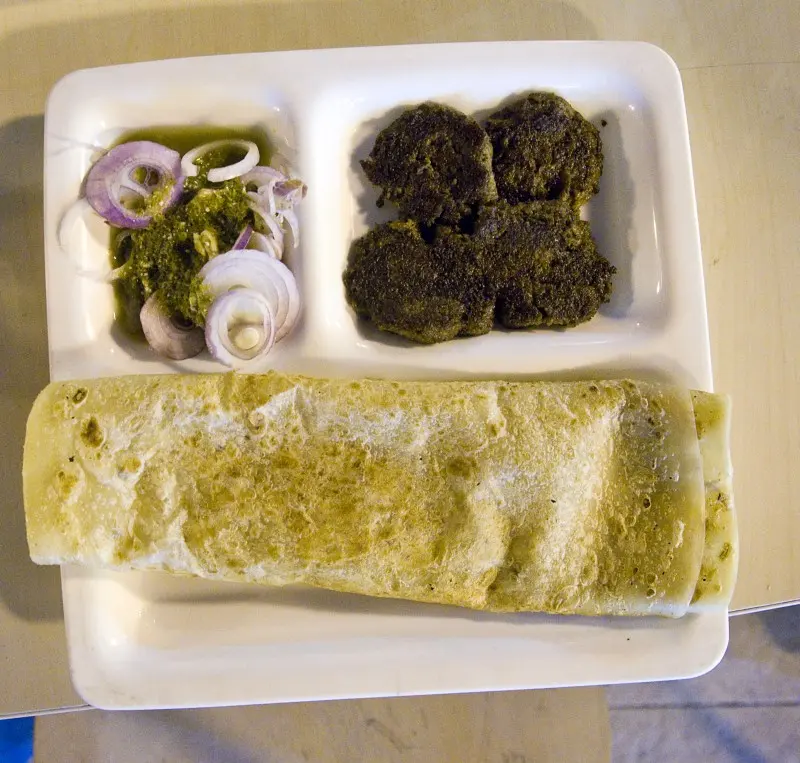
Awadhi cuisine is arguably Lucknow's single biggest draw for many visitors — a tradition of slow, dum-style cooking developed under Nawabi kitchens and still very much alive in the old city's food lanes.
- Galouti kebab: Finely minced, heavily spiced meat kebabs cooked on a griddle, famous for being soft enough to eat without much chewing — legend attributes their invention to an ageing Nawab who could no longer manage tougher kebabs. Tunday-style kebab shops around Chowk and Aminabad are the classic places to try them, usually stuffed into a small roomali roti.
- Awadhi biryani: Distinct from Hyderabadi or Kolkata biryani, cooked using the dum method — meat and part-cooked rice sealed together and finished slowly over low heat — resulting in a lighter, more fragrant dish than its heavier southern cousins.
- Nihari and kulcha: A slow-cooked, richly spiced meat stew traditionally eaten at breakfast, paired with soft leavened bread — widely available in the old city's morning food stalls.
- Kulfi falooda: Dense, slow-churned kulfi served with vermicelli noodles and rose syrup — the city's signature dessert, sold at long-running stalls across Chowk and Hazratganj.
- Paan: Lucknow's betel-leaf paan culture is its own small tradition, with elaborate sweet and savoury preparations sold at dedicated shops across the old city.
Budget Breakdown
| Expense | Budget | Mid-Range | Luxury |
|---|---|---|---|
| Accommodation/night | ₹1,500 | ₹5,000 | ₹14,000 |
| Food/day | ₹500 | ₹1,300 | ₹3,000 |
| Local transport/day | ₹300 | ₹700 | ₹1,800 |
| Monument entry fees | ₹200–500 | ₹200–500 | ₹200–500 |
| Chikankari shopping | ₹800+ | ₹2,500+ | ₹8,000+ |
* Figures are per person, per day. Chikankari costs vary enormously by piece and whether it's hand or machine embroidered.
Essential Tips for Visiting Lucknow
- Hire a guide for Bhul Bhulaiya: The passages inside Bara Imambara are genuinely confusing — an official guide (available at the site) makes the visit far more worthwhile.
- Visit monuments early morning: Bara Imambara and the Residency get busy and hot by midday — arriving soon after opening is more comfortable and less crowded.
- Dress modestly at religious sites: Bara Imambara's complex includes an active mosque — cover shoulders and knees out of respect.
- Bargain respectfully in Chowk: Prices in the old city's markets are often negotiable, especially for Chikankari — but keep in mind genuine hand embroidery takes real time and skill to produce.
- Try food where locals queue: Lucknow's best kebab and biryani spots are often small, decades-old stalls rather than large restaurants — a queue is usually a good sign.
✅ Do
- →Take a guide through the Bhul Bhulaiya
- →Visit Bara Imambara and the Residency early morning
- →Ask specifically for hand-embroidered Chikankari
- →Try galouti kebabs and kulfi falooda in Chowk
- →Combine Rumi Darwaza with both Imambaras in one loop
❌ Don't
- →Wander the Bhul Bhulaiya alone without a guide
- →Visit major monuments during peak midday heat in summer
- →Assume every Chikankari piece is hand-embroidered
- →Rush the old city — it rewards slow walking
- →Skip breakfast nihari thinking it's just another curry
Frequently Asked Questions
What is the Bhul Bhulaiya inside Bara Imambara?
The Bhul Bhulaiya is a labyrinth of narrow interconnecting passages built into the upper storey of Bara Imambara, designed with hundreds of identical doorways so that navigating it without a guide is genuinely disorienting. It also serves a structural purpose — the maze of galleries helps support the vast central hall below, which is one of the largest arched halls in the world built without a single supporting beam or pillar.
How many days do I need in Lucknow?
2-3 days covers the city comfortably — a full day for Bara Imambara, Chota Imambara, and Rumi Darwaza in the old city; half a day for the Residency; and time set aside for Chikankari shopping and working through the street food trail in Hazratganj, Chowk, and Aminabad. Add a day if you're using Lucknow as a base for a day trip to Kannauj or Naimisharanya.
What is Chikankari and where should I buy it in Lucknow?
Chikankari is Lucknow's signature white-thread shadow embroidery, traditionally worked on fine muslin or cotton and said to have been refined under Nawabi patronage in the 18th and 19th centuries. Chowk is the traditional heart of the craft, with generations-old family workshops and retailers, while Hazratganj offers a more organised, boutique shopping experience for the same embroidery on kurtas, sarees, and dupattas.
What is Lucknow's food famous for?
Lucknow's Awadhi cuisine is built on slow-cooked, richly spiced Mughlai-influenced food — melt-in-the-mouth galouti kebabs (developed, legend has it, for a toothless Nawab), fragrant dum-cooked biryani, nihari, and kulfi falooda for dessert. The old city's food lanes around Chowk and Aminabad are where most of this tradition is still eaten standing up at decades-old stalls.
What does Lucknow's 'tehzeeb' reputation actually mean?
Tehzeeb refers to a wider culture of refined courtesy, unhurried hospitality, and elaborate politeness that Lucknow became known for during its Nawabi period — the classic (if exaggerated) example is two people at a doorway each insisting the other go first. It shows up today in the city's famously polite forms of address and its slower, more gracious pace compared to many other big Indian cities.
How do I reach Lucknow?
Chaudhary Charan Singh International Airport connects Lucknow to most major Indian cities and several international destinations. Lucknow Junction (Charbagh) is one of North India's major rail hubs with trains from across the country, and the city is well linked by road via NH27, the Agra-Lucknow Expressway, and the Purvanchal Expressway.
Is Lucknow a good base for day trips in Uttar Pradesh?
Yes — Lucknow's rail and road connectivity make it a practical base for day or overnight trips to Kannauj (India's perfume town), the sacred forest town of Naimisharanya, and onward travel toward Ayodhya or Shravasti, all of which sit within a few hours of the city.
Published by the Kudozz Club editorial team · Last updated · How we research our guides
Want us to plan this trip for you?
Tell Kudozz Club where you want to go and what kind of trip you’re looking for. We’ll build a Lucknow and Uttar Pradesh itinerary around your dates and budget.
Continue Exploring
View all guides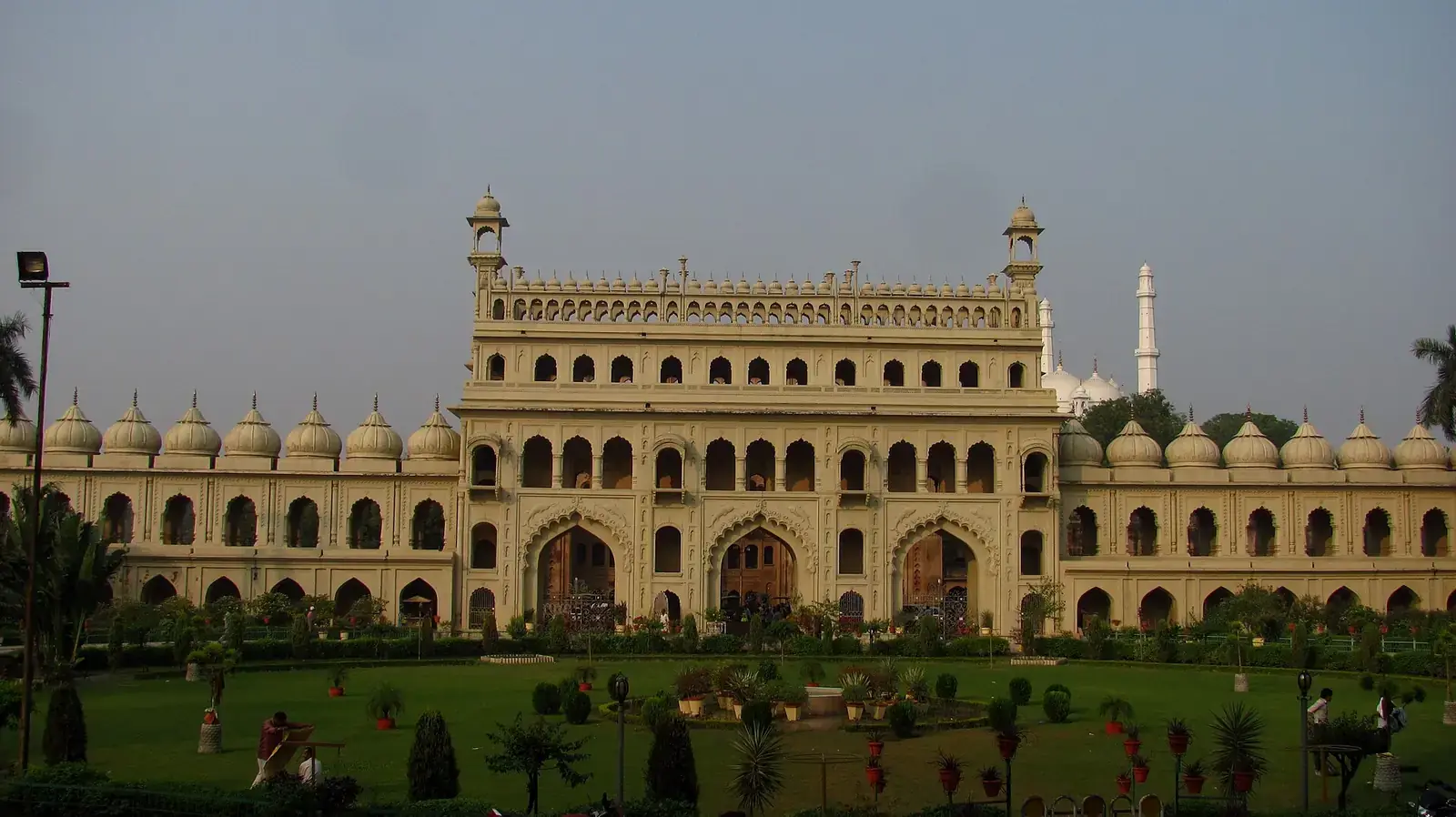 Heritage & Culture
Heritage Tourism in Uttar Pradesh: Agra, Lucknow, Varanasi and Beyond
A guide to heritage tourism in Uttar Pradesh: its four UNESCO cultural sites (the Taj Mahal, Agra Fort, Fatehpur Sikri and Sarnath), Mughal Agra, Nawabi Lucknow, the ghats of Varanasi, Jhansi and the Bundelkhand forts, Buddhist sites, crafts such as chikankari, Banarasi silk and marble inlay, and the Kathak tradition, with how to plan a route.
Things to DoThings to Do in Lucknow: Nawabi Monuments, Kebabs & Chikankari
Things to do in Lucknow: explore Bara Imambara and the Bhul Bhulaiya, Chota Imambara and Rumi Darwaza, the 1857 Residency, a kebab trail through Chowk and Aminabad, and chikankari shopping.
 Destination Guide
Delhi Travel Guide: Red Fort, Qutub Minar & 3-Day Itinerary
Mughal forts, Sultanate-era minarets, colonial avenues, and one of the world's great street food scenes — the complete guide to India's layered capital.
 Destination Guide
Indore Travel Guide: Sarafa Bazaar, Rajwada & Street Food Capital
India's cleanest city and its unofficial street food capital, with a night market that comes alive after 9pm and an 18th-century Holkar palace at its heart — the complete guide to Indore.