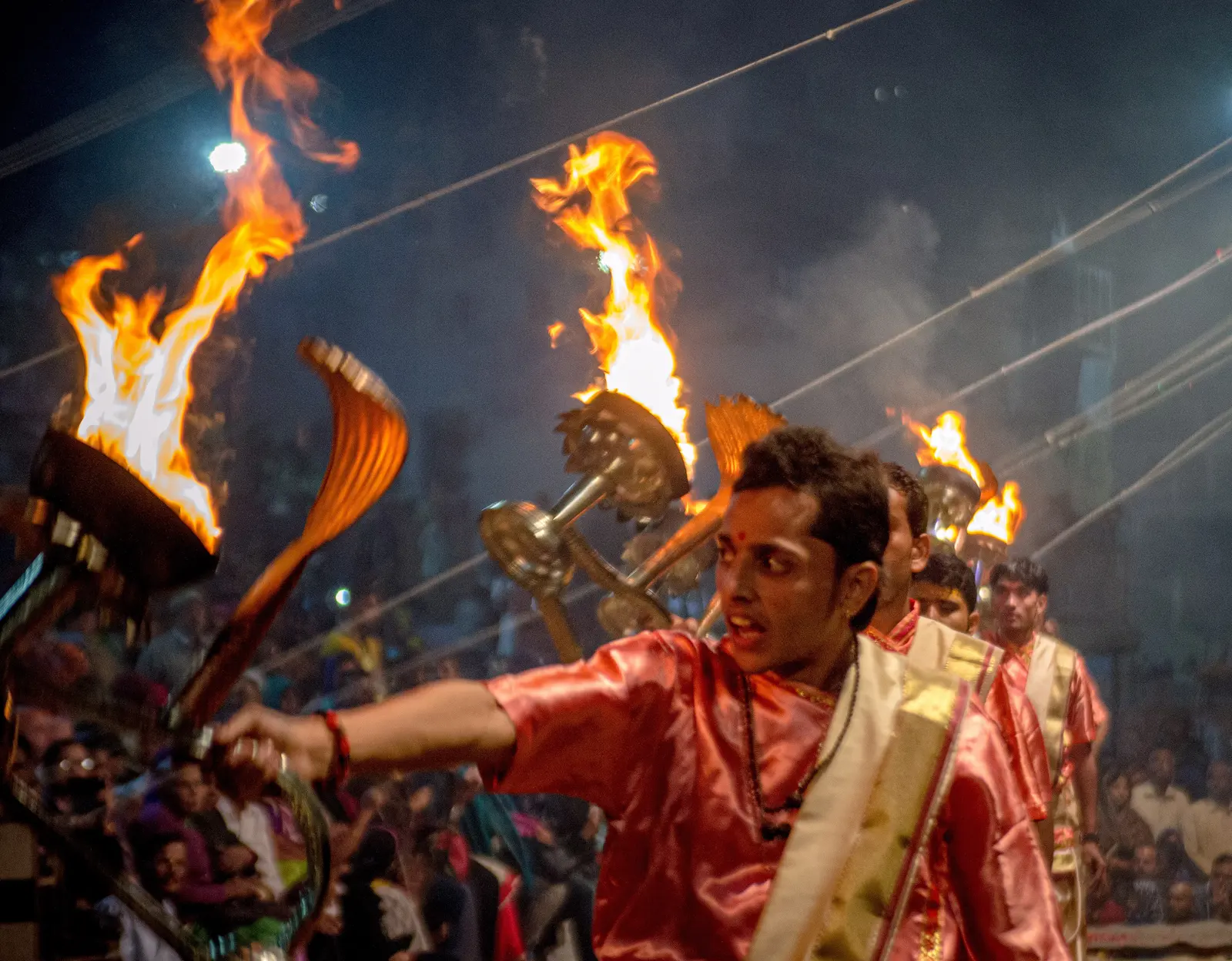
One of the World's Oldest Cities
Varanasi — known through its history as Kashi ("the luminous one") and Banaras — is widely considered one of the oldest continuously inhabited cities on Earth, with settlement stretching back at least 3,000 years and mythological roots that reach further still. In the Uttar Pradesh pilgrimage circuit, it is the anchor: a city built almost entirely around its relationship with the Ganga, the river that Hindu tradition holds as literally sacred, capable of washing away sin and, for those cremated on its banks, of granting moksha — liberation from the cycle of rebirth.
Nothing about Varanasi reveals itself from a car window. The city has to be walked — along the 88-odd stone ghats that line roughly 6-7 km of the river's western bank, through the narrow lanes of the old quarter, and into temples that have stood, in one form or another, for centuries. Mark Twain's line about the city being "older than history, older than tradition, older even than legend" is quoted often here for good reason — it still fits.
This guide covers the ghats and the evening Ganga Aarti, Kashi Vishwanath Temple and its redeveloped corridor, Manikarnika Ghat's cremation rites and how to visit respectfully, the old city's silk-weaving lanes and food culture, and a day-trip plan to nearby Sarnath.
🛕 Varanasi at a Glance
Looking for activities and experiences? See our guide to the best things to do in Varanasi.
Interested in the history? See our guide to heritage in Uttar Pradesh.
Planning a pilgrimage? See our guide to the Ayodhya, Varanasi and Prayagraj itinerary.
Best Time to Visit Varanasi
Varanasi's ghats are outdoor, riverside, and largely unshaded — the season you pick shapes the visit far more than in most Indian cities.
Pleasant days (15-28°C), cool mornings ideal for a sunrise boat ride, and dry ghat steps. Peak season falls around Dev Deepawali (Nov) and the winter months, when the city is busiest.
Punishing heat, regularly crossing 40-42°C by mid-afternoon. If you must visit, restrict outdoor time to early morning and evening.
The Ganga rises significantly, often submerging the lower steps of Manikarnika and Dashashwamedh and pushing the Aarti and cremation platforms to higher ground. Humid and unpredictable for walking tours.
The 'Diwali of the Gods,' fifteen days after regular Diwali, sees every ghat lined with thousands of oil lamps — extraordinary to witness, but book accommodation months ahead.
Our pick: November to February — comfortable temperatures, dry ghats, and cool, misty mornings that make the sunrise boat ride genuinely memorable.
How to Reach Varanasi
Varanasi is one of North India's best-connected pilgrim cities, with air, rail, and road options all converging here.
- By air: Lal Bahadur Shastri International Airport (VNS), about 25 km from the city centre, has direct domestic flights from Delhi, Mumbai, Bengaluru, Kolkata, and other major hubs, plus a handful of international connections.
- By rail: Varanasi Junction (Varanasi Cantt, station code BSB) is one of India's busiest railway stations, with direct trains from Delhi, Mumbai, Kolkata, Chennai, and virtually every major city — the most common way pilgrims and travellers arrive.
- By road: NH19 connects Varanasi to Prayagraj and onward toward Delhi/Kanpur, while NH35 and other highways link it to Chandauli, Mirzapur, and eastern Bihar. State buses and private taxis run frequently on these routes.
- Getting around the city: Auto-rickshaws and cycle-rickshaws cover most distances; the old city's lanes near the ghats are walk-only, too narrow for any vehicle.
The Ghats & Ganga Aarti
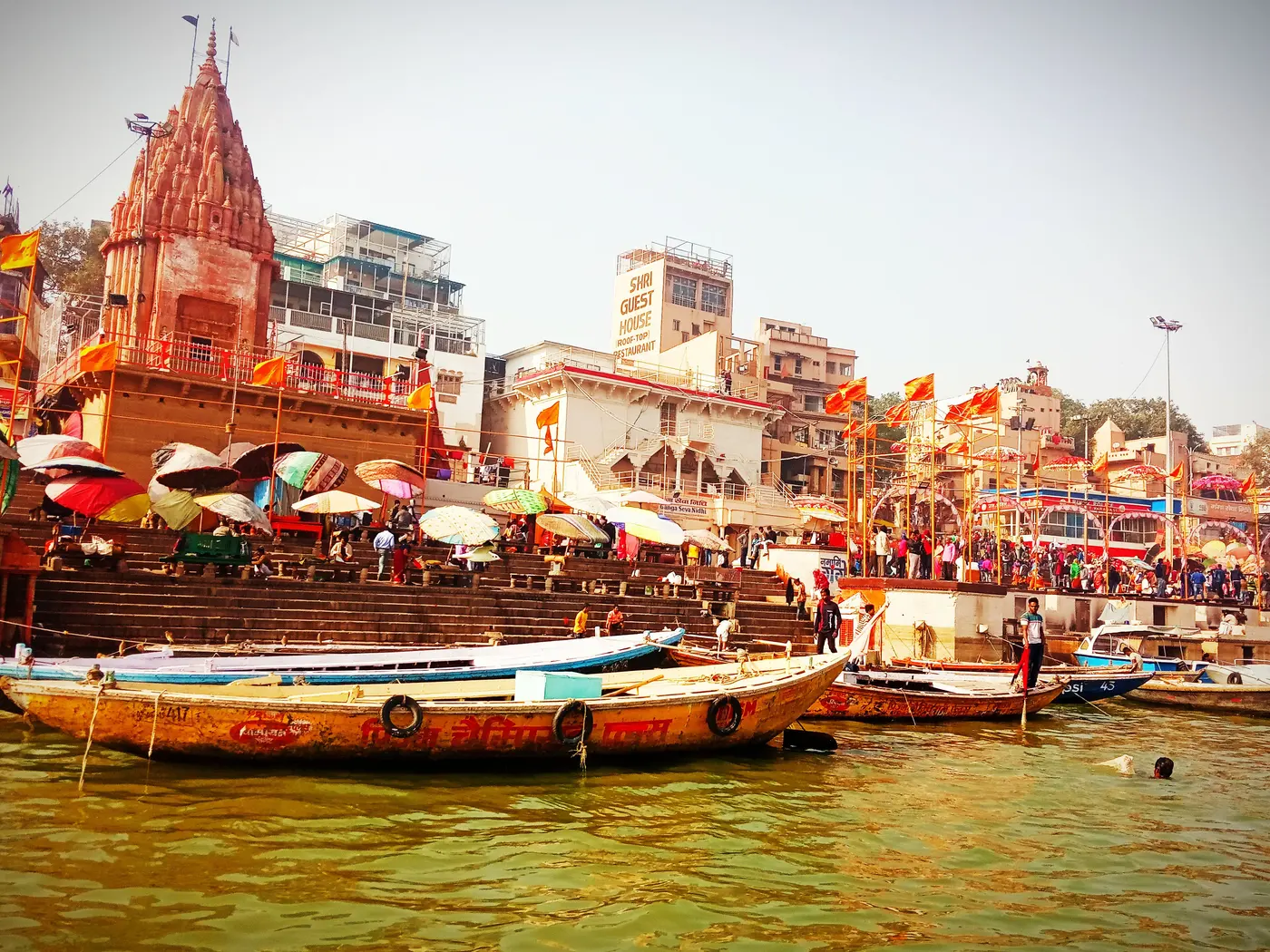
Varanasi's identity is built on its ghats — long stretches of stone steps descending to the river, each with its own history, deity, or ritual purpose. Walking the full length from Assi Ghat in the south to Manikarnika and beyond in the north is the single best way to understand the city.
Dashashwamedh Ghat & the Evening Ganga Aarti
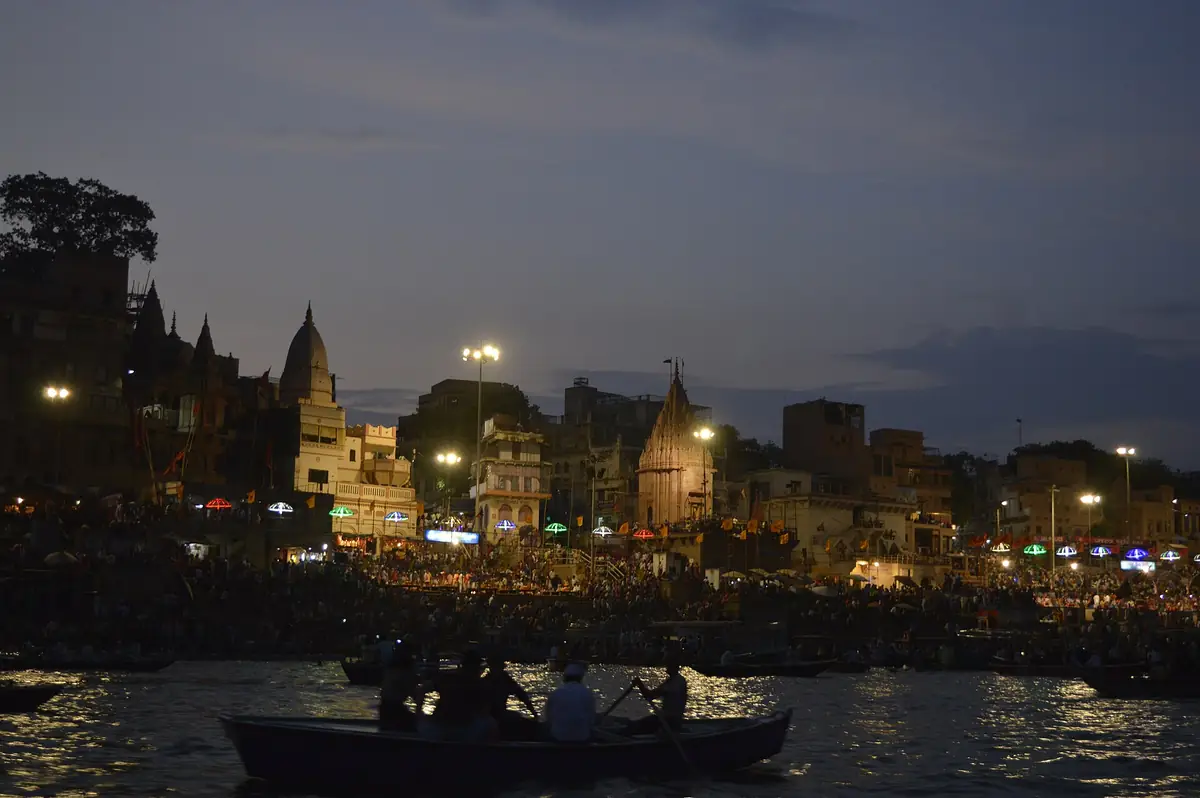
The busiest and most central of the ghats, Dashashwamedh is where the nightly Ganga Aarti is performed — an elaborate fire ritual conducted by a row of young priests in unison, each swinging multi-tiered brass lamps, conch shells, and incense in choreographed arcs to the sound of bells and devotional chanting. Crowds gather on the steps and in boats anchored just offshore; arriving 45-60 minutes before start time (roughly sunset, adjusted seasonally) is necessary to get a decent vantage point on the steps themselves. Watching from a rented rowboat costs more but gives an unobstructed view of all the priests performing together, without the crowd crush.
Assi Ghat
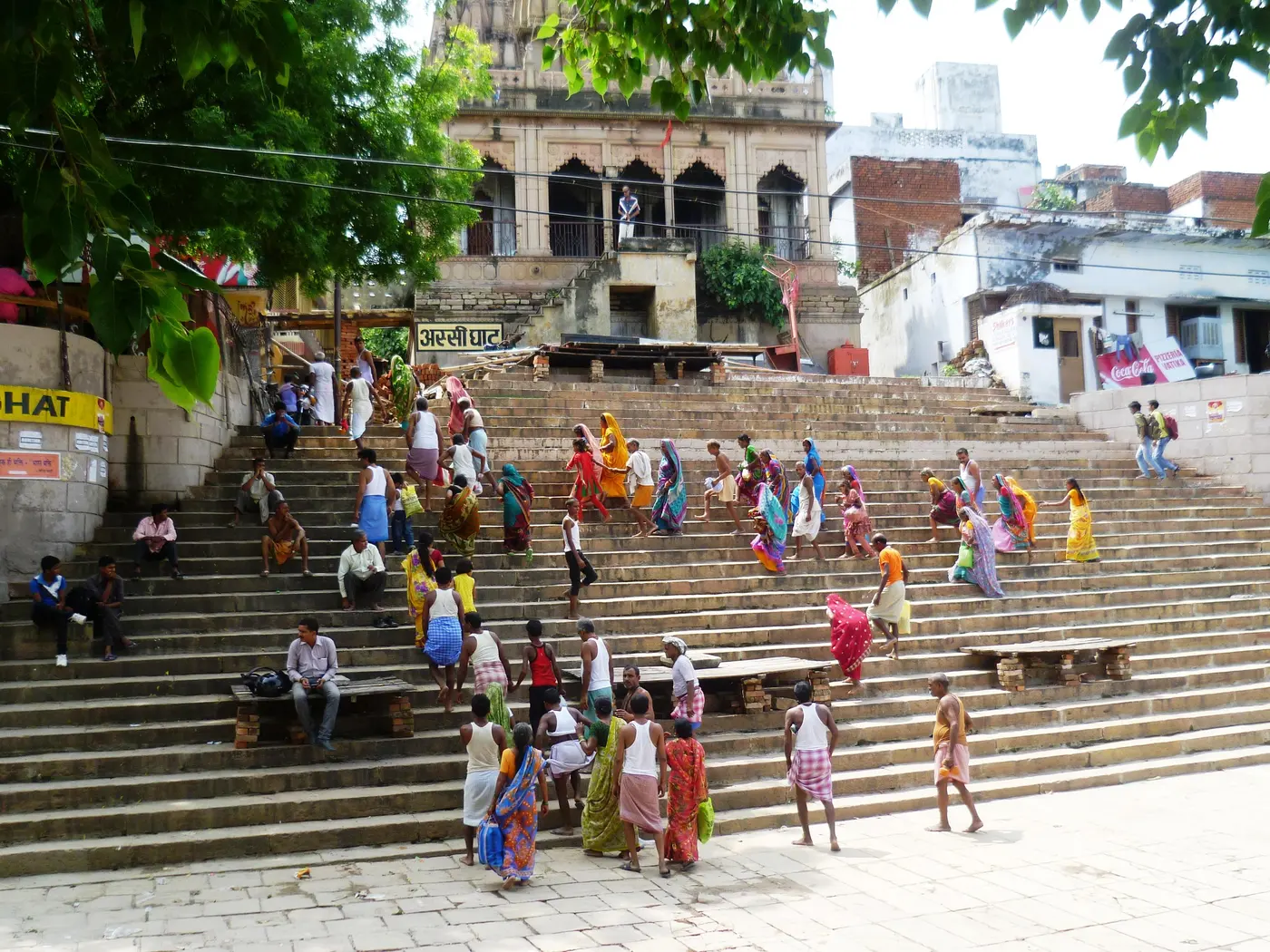
At the southern end of the ghat stretch, Assi Ghat has a younger, more relaxed energy — it's popular at sunrise with joggers, yoga groups, and a smaller, quieter version of the Aarti performed here each morning. It's also where several riverside cafés and guesthouses cluster, making it a common base for longer stays.
Sunrise Boat Ride
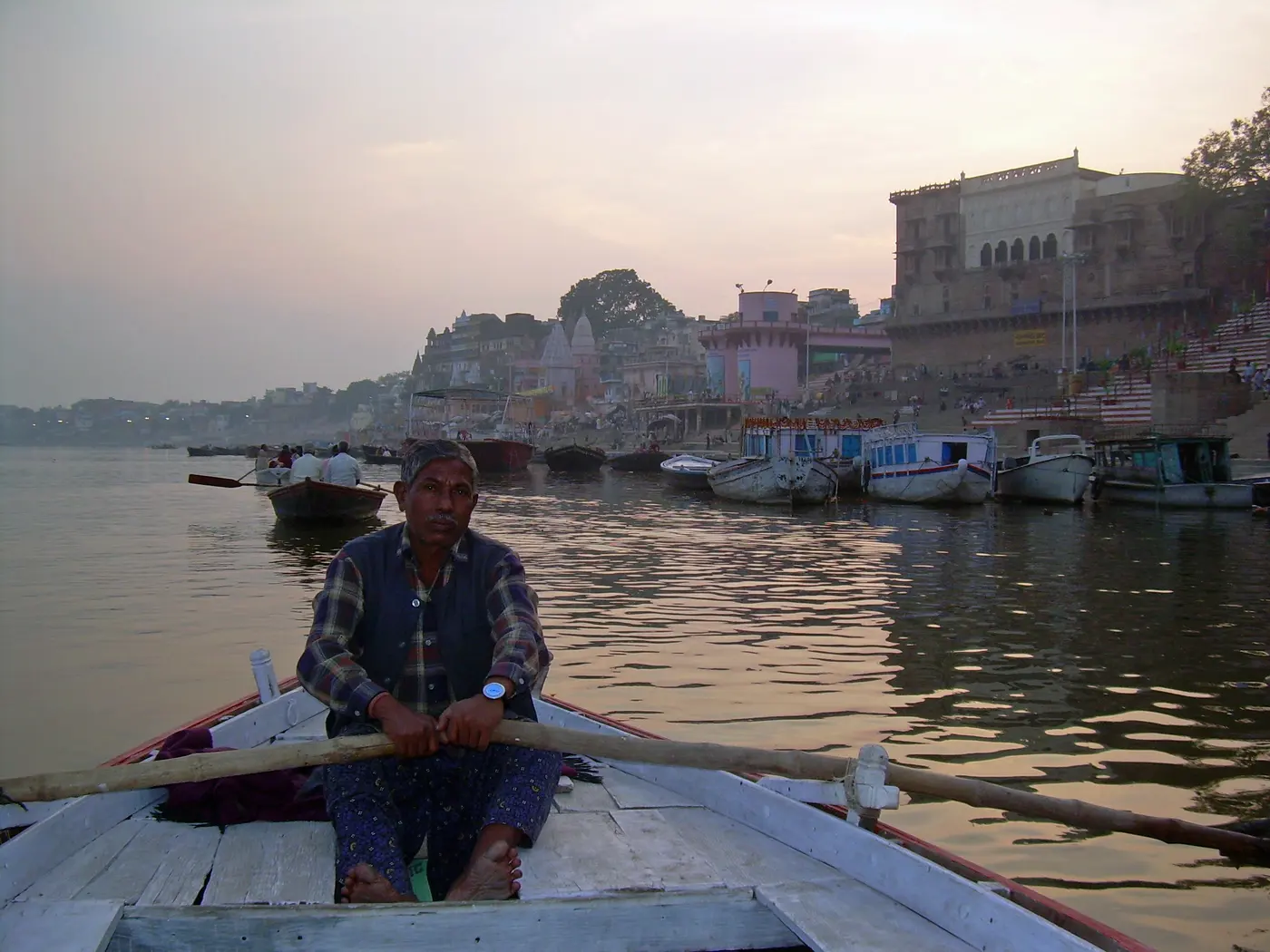
A rowboat ride along the ghats at first light, roughly 5:30-6:30 AM depending on the season, is arguably the single most worthwhile thing to do in Varanasi. The river is calm, the light is soft, and you pass the full sweep of ghats — bathers performing their morning rituals, priests under bamboo umbrellas, temple spires, and the smoke rising from Manikarnika — from a distance that feels appropriately respectful. Boats can be hired directly at most major ghats; agree on the route, duration, and price before setting off.
Kashi Vishwanath Temple
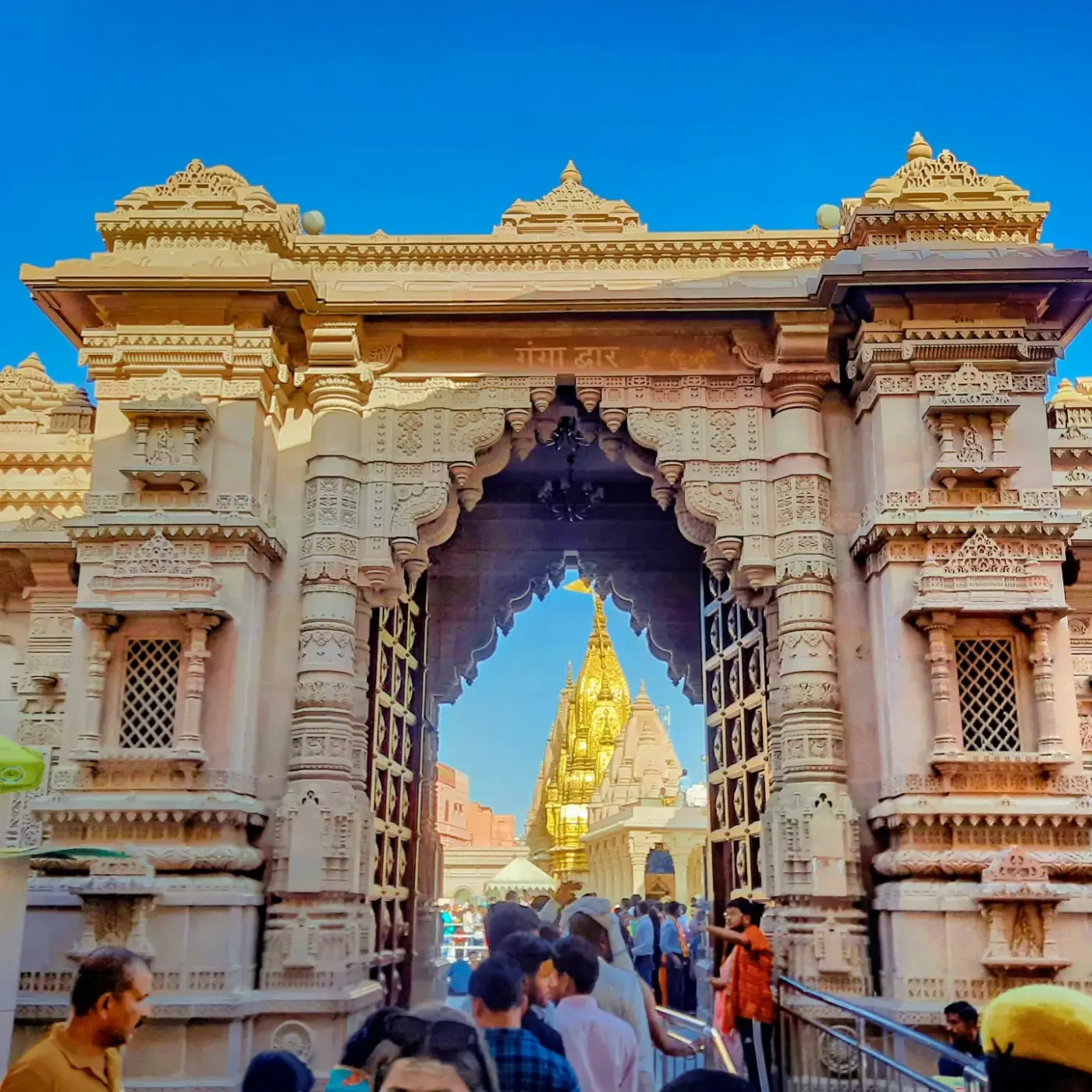
Kashi Vishwanath Temple, dedicated to Shiva in his form as Vishwanath ("Lord of the Universe"), is one of the twelve Jyotirlingas — shrines Hindu tradition holds as especially self-manifested seats of Shiva — and the spiritual centre of the entire city. The current structure dates largely to 1780, rebuilt by Maharani Ahilyabai Holkar of Indore after earlier temples on the site were destroyed; its main spire was later gilded with gold donated by Maharaja Ranjit Singh of Punjab.
In recent years, the temple's setting was transformed by the Kashi Vishwanath Corridor, a large redevelopment completed in 2021-22 that cleared the dense maze of buildings previously wedged between the temple and the river, replacing them with a wide, landscaped pedestrian corridor that runs directly from the temple complex down to Lalita Ghat on the Ganga. The project dramatically eased pilgrim access and crowd flow, though it also erased a layer of the old city's density in the process — a trade-off still debated locally.
Security is tight and mobile phones, cameras, leather items, and bags are generally not permitted inside; lockers are available near the entrance. Expect airport-style screening and, during peak pilgrim season or festivals like Shivaratri, queues that can run for hours.
Manikarnika Ghat
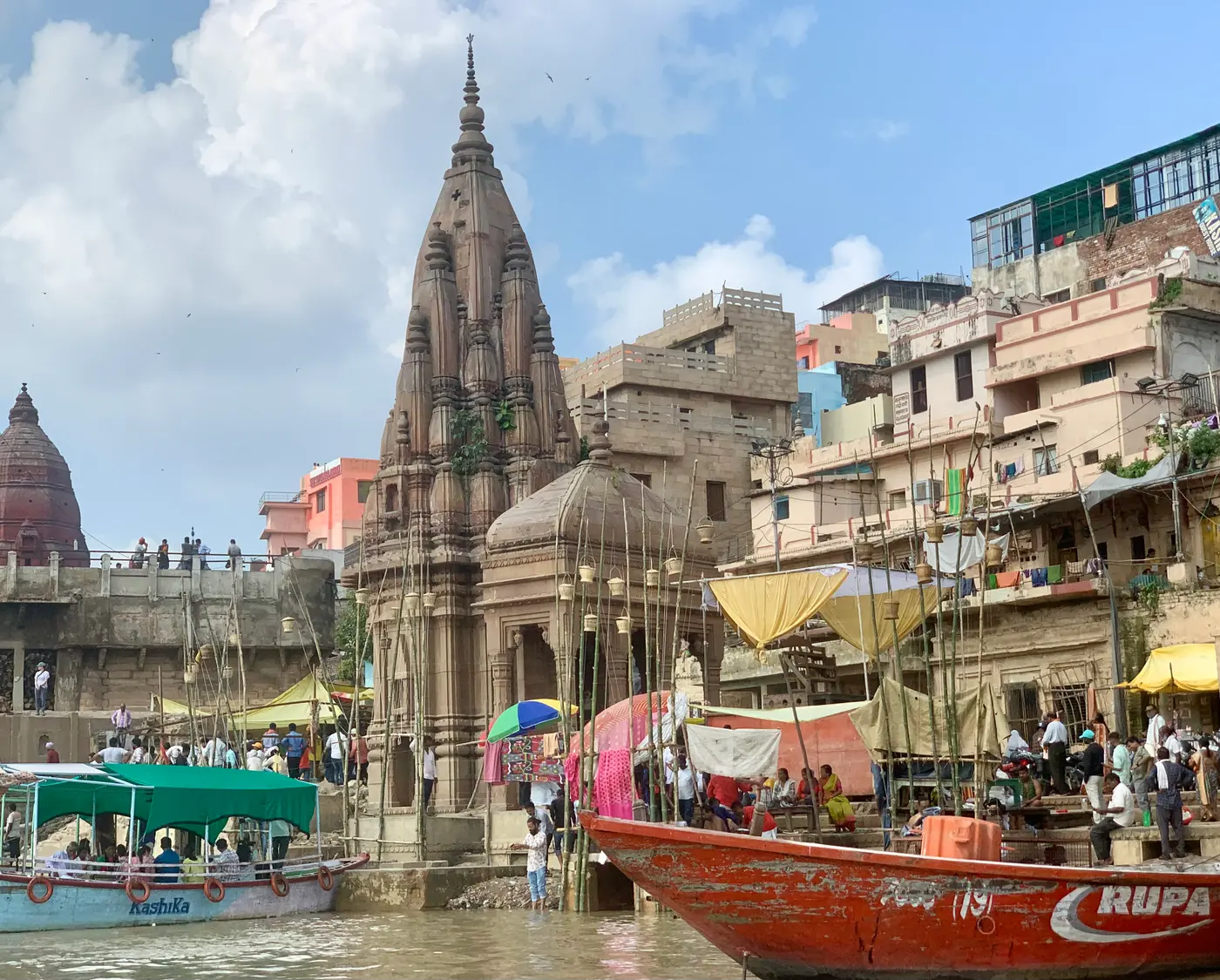
Manikarnika Ghat is one of Varanasi's two primary cremation ghats (the other being Harishchandra Ghat, further south), and among the most sacred cremation sites in Hinduism. Tradition holds that dying — or being cremated — in Kashi grants moksha, direct liberation from the cycle of rebirth, which is why bodies are brought here from across India, often after long journeys, and why cremations happen around the clock, every day of the year.
The rites are conducted by the Doms, a community that has held the hereditary right to tend the cremation fires here for generations, and the sacred flame used to light every pyre is said to have burned continuously for centuries. This is a working, public ritual space rather than a tourist site, and it is entirely normal for visitors to observe from the surrounding steps at a respectful distance — many Varanasi guesthouses and rooftop cafés along this stretch of the river offer views of the ghat for exactly this reason.
The Old City & Its Crafts
The Galis (Lanes) of Varanasi
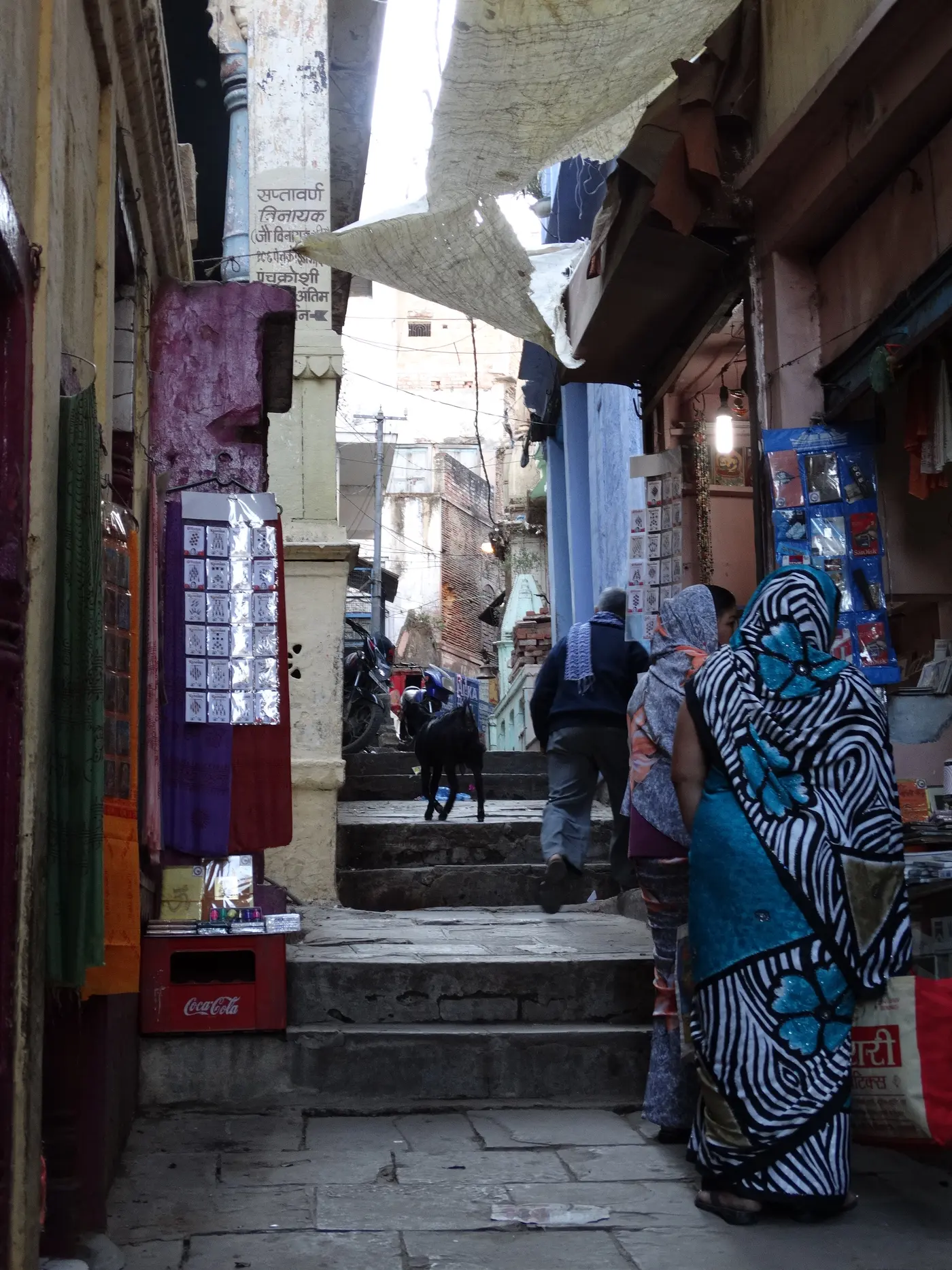
Behind the ghats lies a dense web of narrow lanes — locally called galis — barely wide enough for two people to pass, lined with centuries-old houses, small shrines, sweet shops, and silk looms. Getting genuinely lost here, without a fixed destination, is one of the better ways to spend an unstructured afternoon; the lanes eventually spit you back out somewhere along the river.
Banarasi Silk
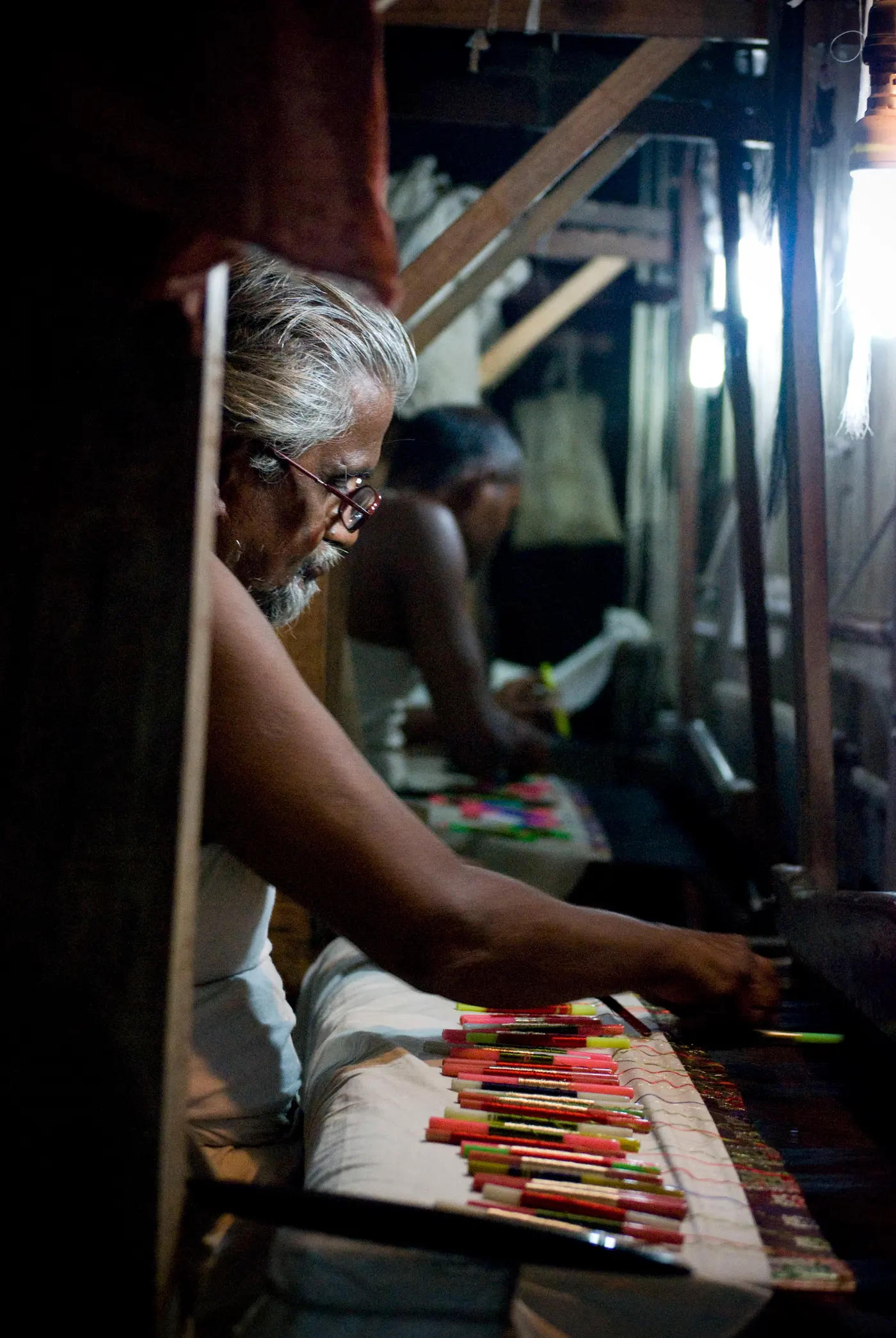
Varanasi has been synonymous with fine silk weaving for centuries. Banarasi sarees — known for intricate gold and silver zari brocade work — are still hand-woven on traditional looms in weaver neighbourhoods like Madanpura and Lallapura, largely by families practicing a craft passed down over generations. Some weaving workshops welcome visitors to watch the process; asking at your accommodation for a reputable one is generally more reliable than following a random tout.
Breakfast Culture: Kachori-Sabzi & Jalebi
Mornings in Varanasi have their own institution: hot kachori (deep-fried stuffed pastry) served with spiced sabzi, followed by fresh, syrup-soaked jalebi, sold at small stalls that have often been run by the same family for decades. It's a working-class breakfast eaten standing up, and one of the most authentic food experiences in the city.
Bharat Kala Bhavan
Housed within Banaras Hindu University's sprawling campus, Bharat Kala Bhavan is a well-regarded museum holding miniature paintings, sculpture, textiles, and archaeological finds spanning Indian art history — a useful, air-conditioned counterpoint to a few days of ghat-walking.
Day Trip to Sarnath
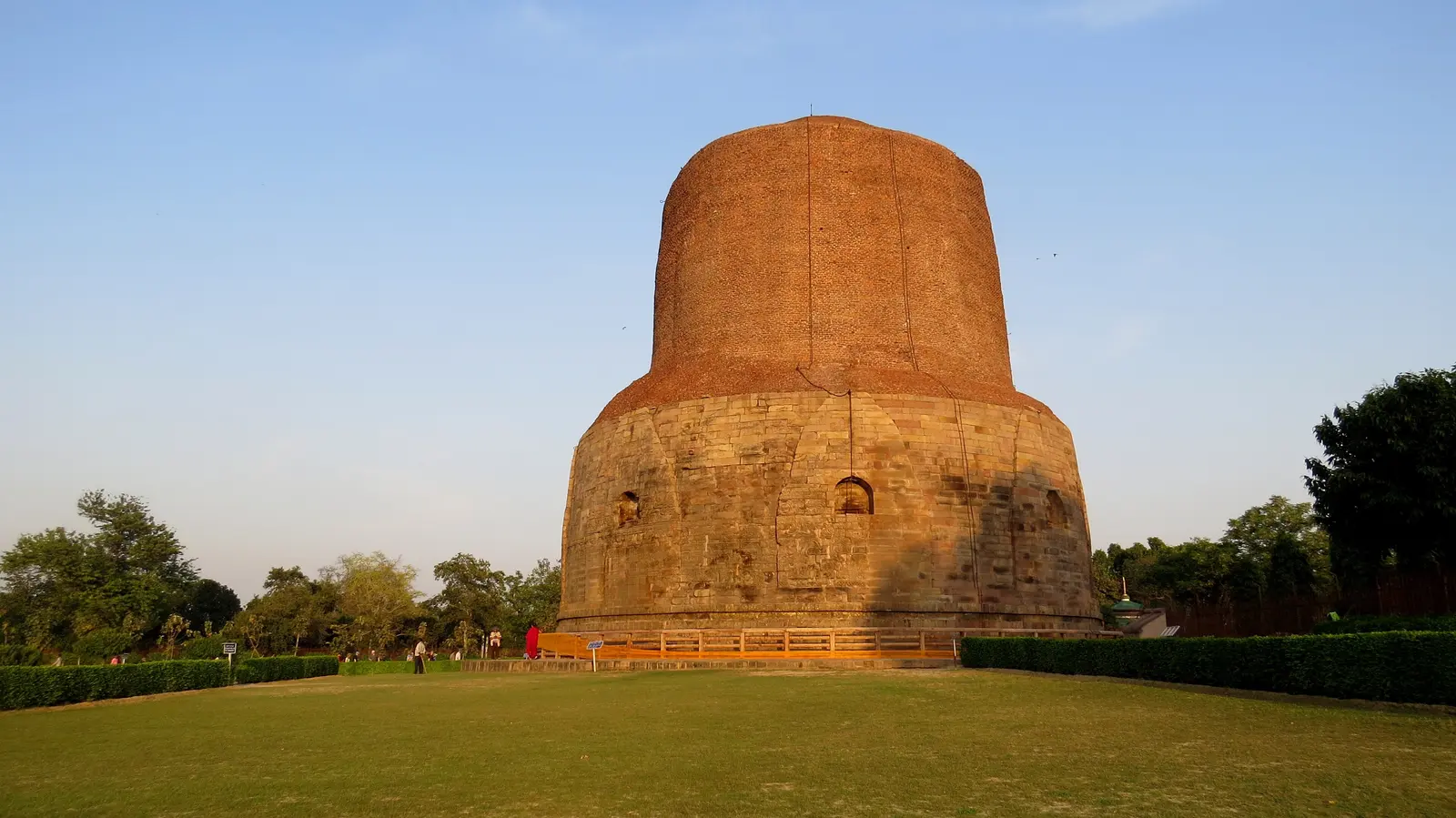
About 10 km from central Varanasi sits Sarnath, where the Buddha is traditionally held to have delivered his first sermon after attaining enlightenment. The Dhamek Stupa, the remains of Ashoka's pillar, the Deer Park, and the Archaeological Museum are all walkable within a compact site, making it an easy half-day addition to a Varanasi itinerary and a meaningful contrast to the city's dominant Hindu character. A round-trip auto-rickshaw or taxi takes roughly 30-40 minutes each way; see our full Sarnath guide for a complete plan.
Where to Stay in Varanasi
Most travellers base themselves near the ghats — either close to Dashashwamedh for proximity to the Aarti and old city, or around Assi Ghat for a quieter, more laid-back setting.
- → Guesthouses in the old city lanes
- → Backpacker hostels near Assi Ghat
- → Basic lodges near the railway station
- → Ghat-facing heritage havelis
- → Boutique hotels in the Cantt area
- → Riverside cottages near Assi Ghat
- → Riverfront heritage properties
- → Full-service 5-star hotels in Cantt
- → Restored palace-style stays
Suggested Visit Plan (3-4 Days)
Arrival & Evening Aarti
- ✓Check in, rest through the afternoon heat
- ✓Walk the ghats from Dashashwamedh toward Assi
- ✓Watch the evening Ganga Aarti at Dashashwamedh Ghat
Sunrise Boat Ride & Kashi Vishwanath
- ✓Pre-dawn rowboat ride along the ghats
- ✓Breakfast: kachori-sabzi and jalebi at a local stall
- ✓Visit Kashi Vishwanath Temple via the corridor
- ✓Afternoon walk through the old city galis
Sarnath & Old City Crafts
- ✓Half-day trip to Sarnath (Dhamek Stupa, museum)
- ✓Visit a Banarasi silk weaving workshop
- ✓Evening at Assi Ghat or Bharat Kala Bhavan
Slow Morning & Onward Travel
- ✓Optional visit to Manikarnika/Harishchandra Ghat
- ✓Last-minute silk shopping
- ✓Depart by rail or road toward Prayagraj or Chandauli
* Many travellers continue on to Prayagraj (about 2.5-3 hours by road or rail) or take a day trip out to Chandauli's waterfalls for a change of pace from the ghats.
Where to Eat in Varanasi
- Kachori-sabzi and jalebi stalls: Scattered through the old city, these are Varanasi's breakfast institution — cheap, filling, and usually busiest before 10 AM.
- Thandai shops: A cooling, spiced milk drink (sometimes with bhang, sold separately and legally in licensed government shops) closely associated with Varanasi's Shaivite culture.
- Rooftop cafés near the ghats: Casual, traveller-friendly menus with river views — a reliable option for a slow breakfast or evening meal while watching the ghats below.
- Lassi shops in the old city: Thick, often clay-cup-served lassi from small, long-running shops tucked into the lanes near the ghats.
- Chaat and street food near Vishwanath Gali: A dense stretch of snack vendors close to the temple corridor, good for an evening food walk.
Budget Breakdown
| Expense | Budget | Mid-Range | Luxury |
|---|---|---|---|
| Accommodation/night | ₹1,200 | ₹4,000 | ₹15,000 |
| Food/day | ₹500 | ₹1,500 | ₹3,500 |
| Boat ride (sunrise) | ₹300 | ₹500 | ₹1,200 |
| Local transport/day | ₹250 | ₹600 | ₹1,500 |
| Sarnath round trip | ₹400 | ₹700 | ₹1,500 |
* Figures are per person, per day (except Sarnath round trip, a one-time cost). Kashi Vishwanath Temple entry is free; some VIP/express darshan lines charge a fee.
Essential Tips for Visiting Varanasi
- Do the sunrise boat ride: It's the single best way to see the full sweep of the ghats without the daytime crowds and heat.
- Carry cash and a phone-free bag for temples: Kashi Vishwanath and several other temples don't allow phones, cameras, or leather items inside — lockers are available near the entrance.
- Dress modestly: Cover shoulders and knees, especially around temples and cremation ghats.
- Be firm with touts and boatmen: Agree on prices before starting any ride or tour, and expect frequent, persistent offers — a polite, firm decline is normal and expected.
- Respect Manikarnika Ghat: Observe from a distance, never photograph pyres or grieving families, and be sceptical of unofficial donation requests.
- Stay hydrated and pace yourself: Even in the cooler months, a full day of ghat-walking adds up — carry water and take shaded breaks.
✅ Do
- →Take the sunrise boat ride along the ghats
- →Arrive early for the Dashashwamedh Ganga Aarti
- →Dress modestly near temples and ghats
- →Ask permission before photographing people
- →Try kachori-sabzi and jalebi for breakfast
- →Combine Varanasi with a Sarnath day trip
❌ Don't
- →Photograph pyres or grieving families at Manikarnika
- →Carry phones or leather items into Kashi Vishwanath
- →Assume every 'guide' at the ghats is official
- →Visit the lower ghats without checking monsoon levels
- →Skip agreeing on boat/rickshaw prices upfront
- →Rush the old city — it rewards slow wandering
Frequently Asked Questions
What is the best time to visit Varanasi?
October to March is by far the best window — daytime temperatures stay comfortable (roughly 15-28°C) and the ghats are dry and easy to walk. April to June turns brutally hot, often crossing 42°C, and the July-September monsoon frequently floods the lower steps of the ghats, submerging Manikarnika and Dashashwamedh's lower platforms and disrupting the usual ghat-level routines.
How do I watch the Ganga Aarti at Dashashwamedh Ghat?
The Aarti happens every evening at sunset (roughly 6:00-7:15 PM depending on the season) at Dashashwamedh Ghat. You can watch from the ghat steps directly (arrive 45-60 minutes early to get a decent spot), from a rooftop café overlooking the ghat, or — for the best overall view of all seven priests performing in sync — from a rented rowboat anchored just offshore, which costs more but avoids the crowd crush entirely.
Is it respectful for tourists to visit Manikarnika Ghat?
Yes, observing from a respectful distance is generally accepted, since cremation at Manikarnika is a public, ongoing ritual rather than a private one. However, never photograph or film the pyres or grieving families without explicit permission, don't smile or treat it as a spectacle, dress modestly, and be wary of self-appointed 'guides' who solicit large donations for the Doms (the traditional keepers of the cremation fire) — donate directly and only if you choose to.
How many days should I spend in Varanasi?
3-4 days is comfortable for a first visit — enough time for a sunrise boat ride, the evening Aarti, Kashi Vishwanath Temple, wandering the old city lanes, and a half-day trip to Sarnath. Serious photographers or those wanting a slower pace often stay 5-7 days.
Can I do a day trip to Sarnath from Varanasi?
Yes, easily. Sarnath is about 10 km from central Varanasi, roughly a 30-40 minute auto-rickshaw or taxi ride, and a half-day is enough to see the Dhamek Stupa, the Ashoka Pillar remains, the Archaeological Museum, and Mulagandha Kuti Vihar. See our full Sarnath guide for details.
What should I wear and how should I behave at the ghats?
Modest, loose clothing that covers shoulders and knees is advisable, especially near temples and cremation ghats. Remove footwear before entering temple premises, avoid public displays of affection, ask before photographing people (especially at Manikarnika), and expect to be approached by boatmen, guides, and vendors — a firm, polite decline usually works.
Published by the Kudozz Club editorial team · Last updated · How we research our guides
Want us to plan this trip for you?
Tell Kudozz Club where you want to go and what kind of trip you’re looking for. We’ll build a Varanasi and Uttar Pradesh itinerary around your dates and budget.
Continue Exploring
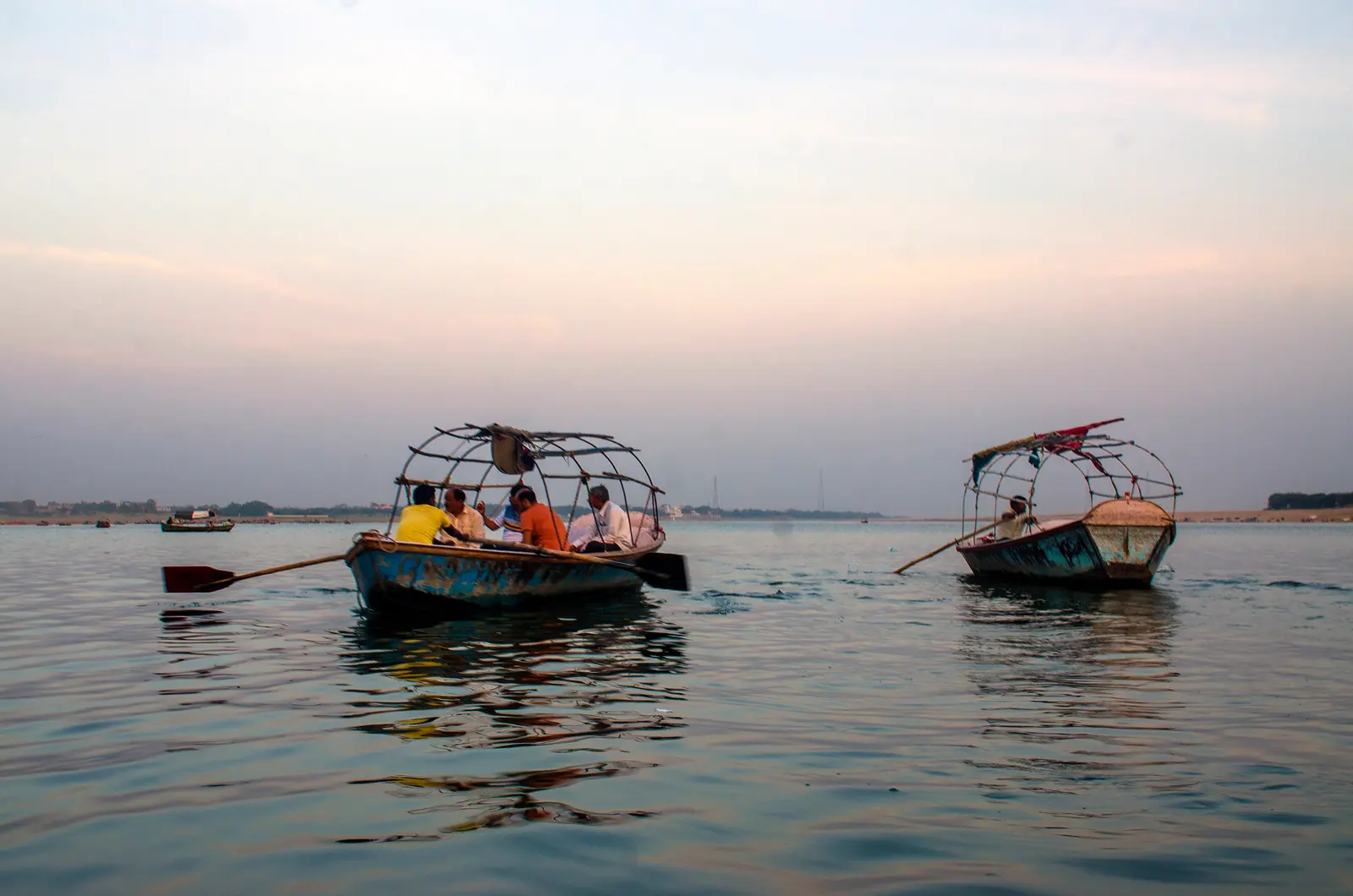
View all guidesThings to DoThings to Do in Varanasi: Ghats, Aarti, Boat Rides & Old City Experiences
The best things to do in Varanasi: a sunrise boat ride on the Ganga, the evening aarti at Dashashwamedh, Kashi Vishwanath, a walk along the ghats, old-city food, Banarasi silk, music and Sarnath.
 Heritage
Prayagraj Travel Guide: Triveni Sangam & Kumbh Mela
The sacred Ganga-Yamuna-Saraswati confluence, home to the Kumbh Mela — plus Allahabad Fort, Anand Bhavan, and Khusro Bagh.
 Heritage
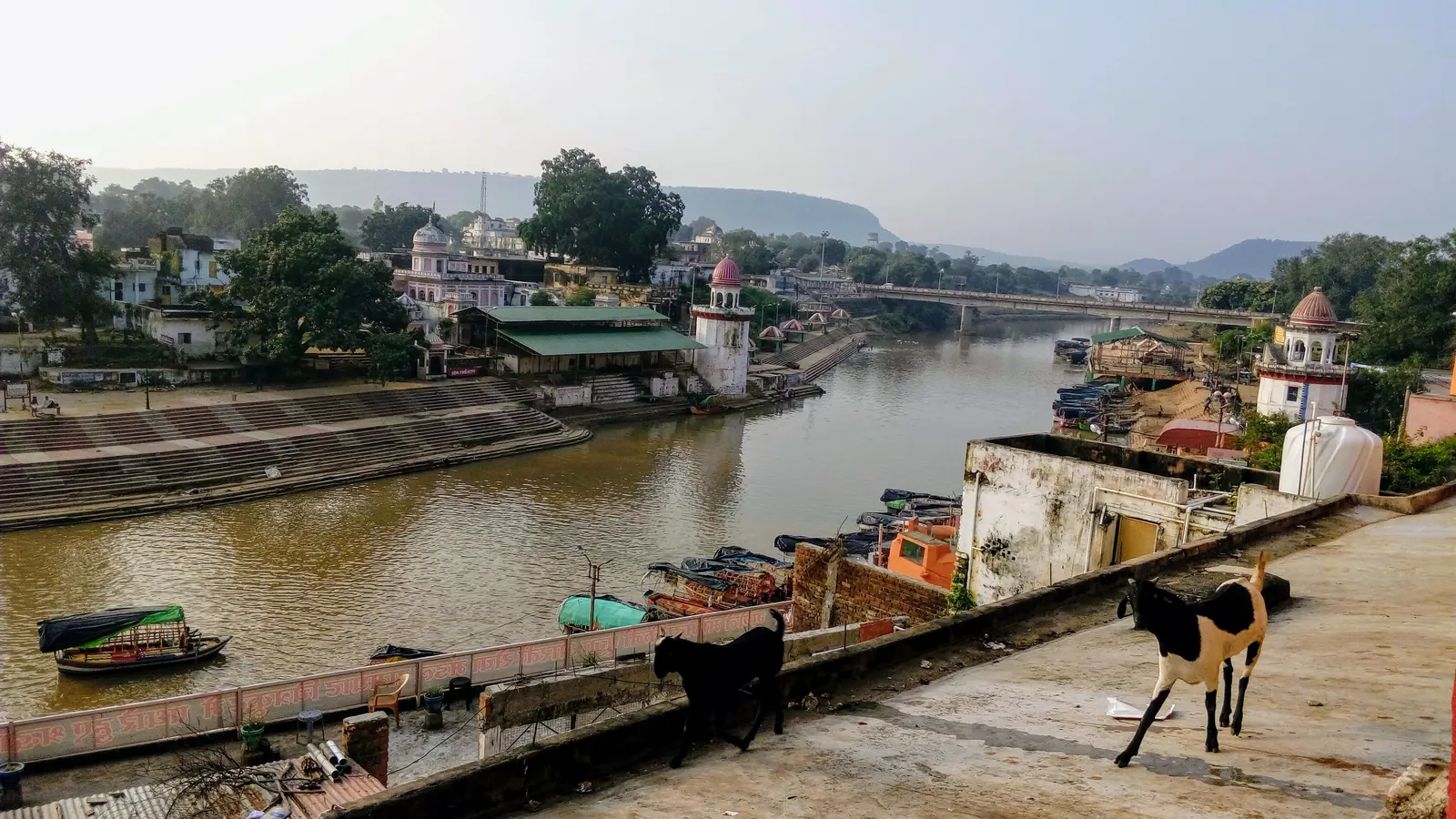
Chitrakoot Travel Guide: Ram's Forest Exile Site
Where Ram, Sita, and Lakshman spent part of their exile — Kamadgiri's parikrama, Ramghat's evening aarti, and a quieter Ramayana circuit.
 Heritage
Naimisharanya Travel Guide: Sacred Forest & Temples
An ancient sacred forest of the Puranas — Chakra Tirtha, the Lalita Devi Shakti Peeth, and a genuinely off-the-beaten-path pilgrimage near Lucknow.