The World's Largest Mangrove Forest
The Sundarbans is a vast tidal delta where the Ganges, Brahmaputra, and Meghna rivers meet the Bay of Bengal, spread across southern West Bengal and neighbouring Bangladesh. It is the largest contiguous mangrove forest on Earth, a UNESCO World Heritage Site, and the only mangrove ecosystem in the world known to support a resident population of tigers.
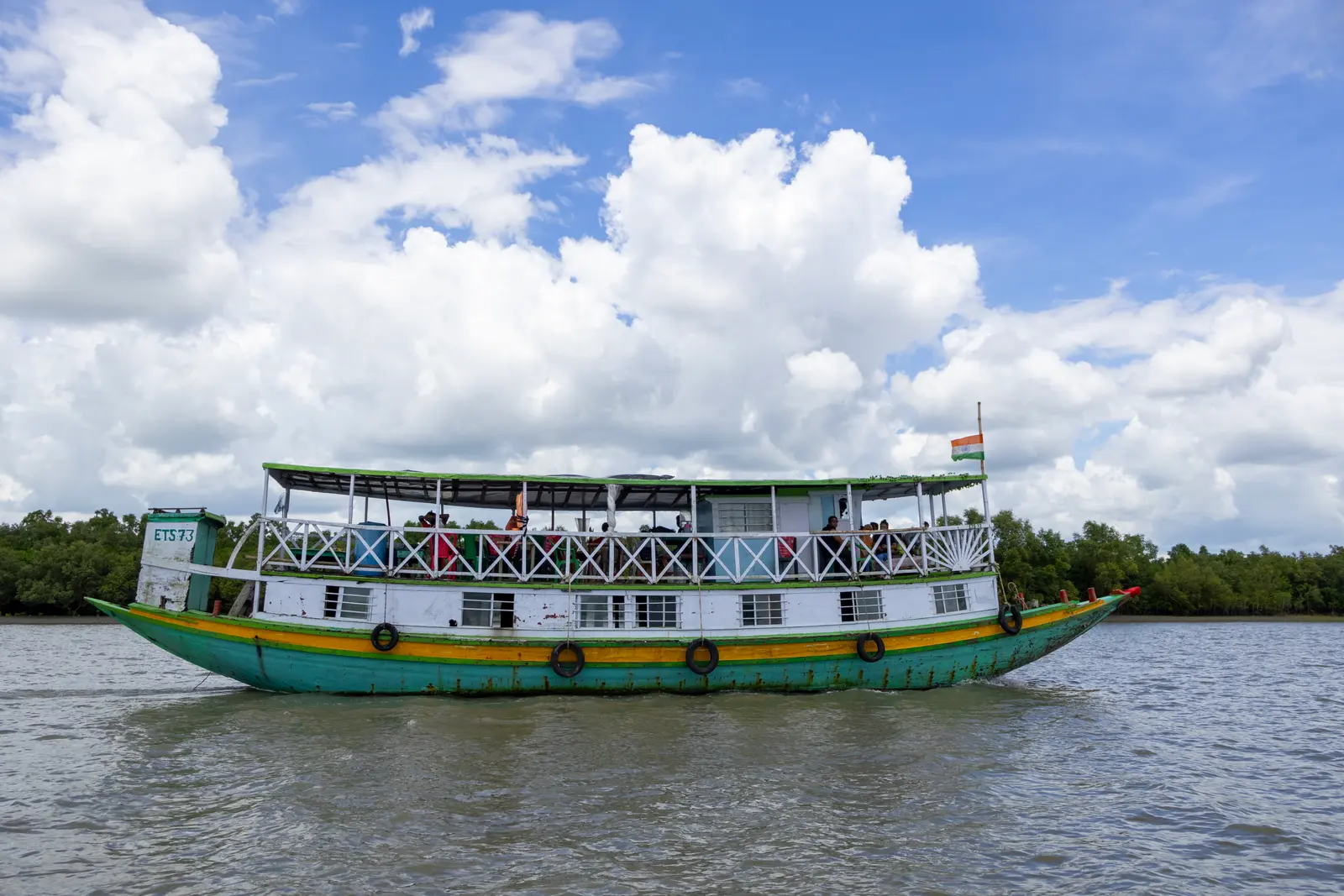
That population — the Royal Bengal Tiger — is the reason most visitors make the journey, but the Sundarbans is worth visiting even without a sighting. Boats thread through narrow tidal creeks lined with stilt-rooted mangrove trees, saltwater crocodiles bask on muddy banks, and watchtowers overlook waterholes where spotted deer and wild boar come to drink. It's a landscape unlike anywhere else in India, reachable in a day trip's distance from Kolkata yet feeling like a different world entirely.
Beyond wildlife, the Sundarbans has a distinct human culture built around living alongside tigers — fishing villages on the delta's inhabited fringe, traditions of Mouli (honey-collectors) who enter the forest each spring to harvest wild honey at real personal risk, and the shared worship of Bonbibi, the forest goddess believed to protect anyone who must enter tiger territory to make a living.
🐅 Sundarbans at a Glance
Looking for activities and experiences? See our guide to the best things to do in Sundarbans.
Love the outdoors? See our guide to forest destinations in India.
Planning a wildlife trip? See our guide to wildlife tourism in West Bengal.
Best Time to Visit the Sundarbans
The delta's tides and weather both shape when a visit is comfortable and when core zones are even open.
Cool, dry, and comfortable for long hours on an open boat deck. Calmer water makes creek navigation smoother, and this is the most reliable window for watchtower visits.
Increasingly hot and humid by April-May, but still workable — fewer crowds than winter, and mornings on the water remain pleasant.
Heavy rain, rough tidal water, and frequent closures of core zones make this the least practical window. Cyclone risk also rises in this stretch.
Peak season for migratory birds along the creeks and mudflats, alongside the best weather of the year — book boat packages well ahead.
Our pick: November to February — cool, dry weather, calmer creeks, and the best odds of a comfortable multi-day boat stay.
How to Reach the Sundarbans
The Sundarbans has no direct rail or air access — every visit combines a road journey out of Kolkata with a boat leg into the delta.
- By road to Godkhali or Sonakhali: Both are the main boarding points for Sundarbans boat packages, roughly 2 to 2.5 hours by car or bus from Kolkata.
- By boat/launch from the boarding point: From Godkhali or Sonakhali, a boat or launch carries visitors into the delta toward Gosaba and the reserve's watchtowers — almost always as part of a pre-booked package rather than an ad-hoc arrangement.
- Via Gosaba: A key transit and accommodation hub inside the delta, where many boat-stay operators are based and from which day excursions to the core zone depart.
Wildlife, Safaris & Culture
Boat Safaris Through the Creeks
The core Sundarbans experience is a slow boat safari through narrow tidal creeks, watching the mangrove wall for movement. Sudhanyakhali and Sajnekhali are the reserve's best-known watchtowers, each overlooking a waterhole where deer, wild boar, and — very occasionally — a tiger come into view. Sightings are rare enough that most operators are upfront about it: come for the ecosystem and the chance, not a guarantee.
Dobanki Canopy Walk
A raised metal walkway threading through the mangrove canopy at Dobanki, letting visitors look down into the forest and waterholes from above — a different, and often more comfortable, vantage point than a boat deck for watching wildlife move below.
Beyond Tigers: Crocodiles, Deer & Birdlife
Saltwater crocodiles are a far more reliable sighting than tigers, often seen basking on exposed mudbanks at low tide. Spotted deer graze in clearings near watchtowers, and the delta supports an exceptional range of resident and migratory birds — kingfishers, herons, and raptors among them — making the Sundarbans as much a birding destination as a tiger one.
Gosaba, Fishing Villages & the Bonbibi Legend
The inhabited fringe of the delta around Gosaba is worth slowing down for — stilt houses, fishing boats returning with the tide, and small roadside shrines to Bonbibi, the folk goddess whose legend is recounted across the Sundarbans by both Hindu and Muslim communities as protection for anyone entering the forest to fish, cut wood, or collect honey.
Where to Stay in the Sundarbans
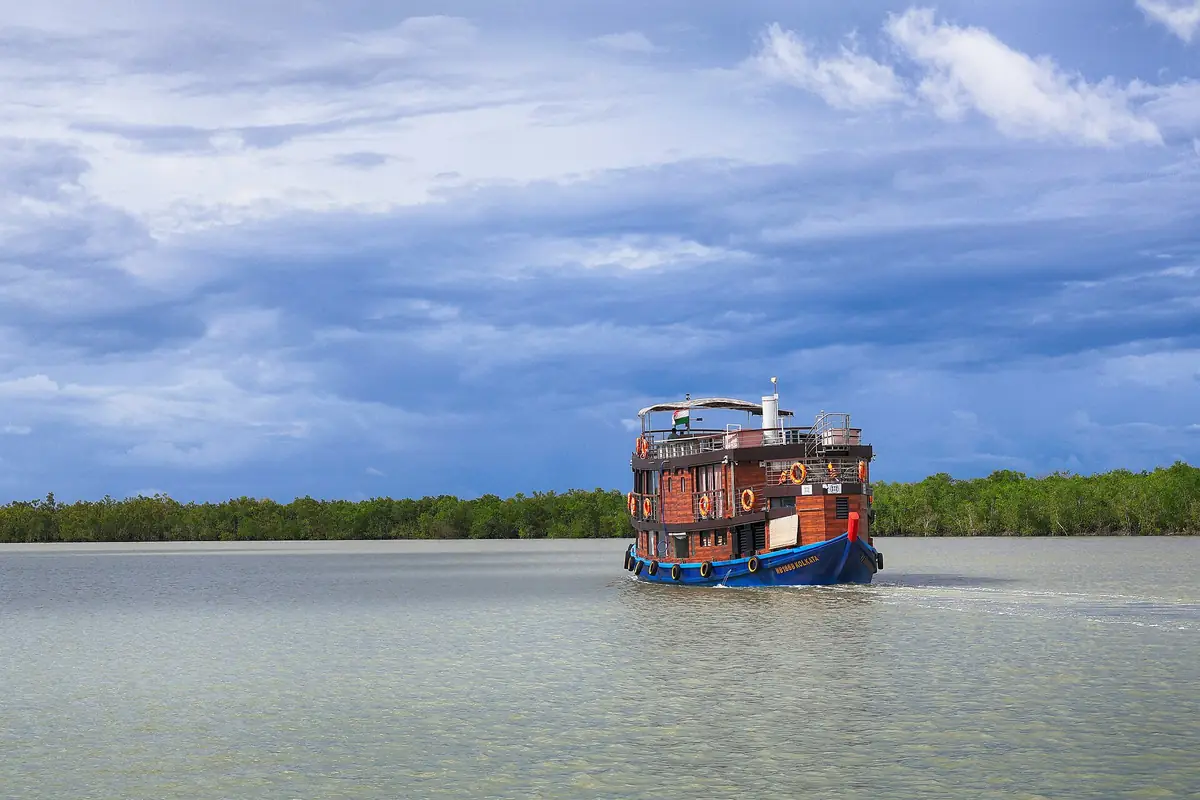
Almost all Sundarbans visits are structured as a multi-day package combining lodging (afloat or on the delta's inhabited islands) with the boat safaris themselves, mostly based around Gosaba and Sonakhali.
- → Simple guesthouses in Gosaba
- → Basic forest-fringe homestays
- → Shared-cabin boat packages
- → Eco-resorts near the reserve buffer
- → Private-room boat-stay packages
- → Riverside lodges with guided safaris
- → Multi-day cruise-boat packages
- → Premium eco-resorts with naturalist guides
- → Full-board private-launch itineraries
Suggested Visit Plan (2-3 Days)
Kolkata to Gosaba, First Safari
- ✓Morning road transfer to Godkhali/Sonakhali
- ✓Board the boat, transfer into the delta
- ✓Afternoon creek cruise, check in to boat/lodge
Core Zone Watchtowers
- ✓Early morning safari to Sudhanyakhali watchtower
- ✓Midday cruise toward Sajnekhali
- ✓Afternoon Dobanki canopy walk
Village Life & Return
- ✓Morning stop at a fishing village near Gosaba
- ✓Visit a roadside Bonbibi shrine
- ✓Return boat and road transfer to Kolkata
* Travellers with more time sometimes extend toward Gangasagar, at Sagar Island where the delta meets the Bay of Bengal, for a very different, pilgrimage-focused stop.
Where to Eat in the Sundarbans
- Boat-package meals: Most visitors eat as part of their boat-stay package — simple Bengali thalis with rice, dal, and freshwater or brackish-water fish curry, cooked on board or at the lodge.
- Local fish and prawns: The delta's fishing economy means fresh catch — including the region's prized prawns — features heavily on menus close to Gosaba and Sonakhali.
- Roadside stalls at Godkhali/Sonakhali: Basic tea stalls and snack counters near the boarding jetties, useful for a quick breakfast before boarding.
Budget Breakdown
| Expense | Budget | Mid-Range | Luxury |
|---|---|---|---|
| Boat-stay package/night | ₹2,000 | ₹4,500 | ₹10,000 |
| Road transfer (round trip) | ₹1,000 | ₹2,000 | ₹3,500 |
| Food/day (if separate) | ₹500 | ₹1,200 | ₹2,500 |
| Forest permit & entry fees | ₹300 | ₹300 | ₹300 |
| Local guide/naturalist | Included | Included | Included |
* Figures are per person, per day, and are estimates — most Sundarbans packages bundle stay, meals, permits, and boat safaris together rather than pricing them separately.
Essential Tips for Visiting the Sundarbans
- Book through a registered operator: Permits, core-zone access, and safe navigation of tidal creeks all depend on a licensed operator — this isn't an independent-travel destination.
- Lower your tiger-sighting expectations: Go in with the ecosystem, birdlife, and boat journey as the main draw — a tiger sighting is a bonus, not a guarantee, on almost every visit.
- Pack for sun and insects: Long hours on open boat decks call for sun protection, a hat, and mosquito repellent, especially near dawn and dusk.
- Carry cash: ATM access is very limited once inside the delta — withdraw what you need before leaving Kolkata.
- Respect the core zone rules: Loud noise and leaving the boat/watchtower in restricted areas are prohibited for safety as well as conservation reasons.
✅ Do
- →Book a registered tour operator's boat package
- →Carry binoculars for birding and distant sightings
- →Pack sun protection and mosquito repellent
- →Carry enough cash for the whole trip
- →Ask your guide about the Bonbibi legend
- →Visit multiple watchtowers, not just one
❌ Don't
- →Expect a guaranteed tiger sighting
- →Attempt independent core-zone entry without a permit
- →Leave the boat or watchtower in restricted areas
- →Travel during the monsoon months (Jun-Sep)
- →Make loud noise near watchtowers or waterholes
- →Skip sun protection on long open-deck days
Frequently Asked Questions
What are the chances of actually seeing a tiger in the Sundarbans?
Genuinely low — the Royal Bengal Tigers here are famously elusive, swim between islands, and are camouflaged perfectly in the mangrove undergrowth. Most visitors come away without a sighting. Go for the mangrove ecosystem, birdlife, crocodiles, and boat journey itself, and treat any tiger sighting as a rare bonus, not the guaranteed centrepiece.
Do I need a permit to visit the Sundarbans Tiger Reserve?
Yes. Entry into the core and buffer zones of the Sundarbans Tiger Reserve requires a Forest Department permit, which is almost always arranged for you by the registered tour operator running your boat package — independent, permit-free travel into the reserve isn't practical for most visitors.
How do I reach the Sundarbans from Kolkata?
Most trips start with a 2-2.5 hour road journey from Kolkata to Godkhali or Sonakhali, the main boarding points, followed by a boat or launch into the delta. Nearly all visits are run as multi-day boat-stay packages arranged through registered operators rather than independent day trips.
How many days should I spend in the Sundarbans?
2 nights / 3 days on a boat-stay package is the practical minimum to cover 2-3 watchtowers and creek routes without feeling rushed. Serious wildlife and bird watchers often extend to 3 nights for a better shot at sightings and calmer photography time.
What is the best time to visit the Sundarbans?
October to March, when the weather is cool and comfortable for long hours on open boats and the water is calmer. Avoid the monsoon months of June to September, when rough water and flooding often close core zones to visitors.
Who is Bonbibi and why does she matter to Sundarbans visitors?
Bonbibi is the forest goddess worshipped across Sundarbans villages by both Hindu and Muslim communities, believed to protect honey-collectors, fishermen, and woodcutters who enter tiger territory. Small shrines to her dot the delta's edge villages, and her legend is often recounted by local guides as part of the region's living culture.
Published by the Kudozz Club editorial team · Last updated · How we research our guides
Want us to plan this trip for you?
Tell Kudozz Club where you want to go and what kind of trip you’re looking for. We’ll build a Sundarbans and West Bengal itinerary around your dates and budget.
Continue Exploring
View all guides Wildlife Tourism
Wildlife Tourism in West Bengal: Sundarbans and the Dooars
A guide to wildlife tourism in West Bengal: boat safaris and watchtowers in the Sundarbans, the Dooars parks of Jaldapara, Gorumara, Chapramari and Buxa with rhinos, elephants and gaur, and the Himalayan forests of Singalila and Neora Valley with red pandas, plus permits, seasons and routes.
Things to DoThings to Do in the Sundarbans: Creek Safaris, Watchtowers & Village Life
Things to do in the Sundarbans: boat safaris through mangrove creeks, watchtowers at Sajnekhali, Sudhanyakhali, Dobanki and Netidhopani, the Dobanki canopy walk, crocodiles and birds, Bonbibi folk theatre, village walks in Gosaba and fresh Bengali fish.
 Heritage
Santiniketan Travel Guide: Tagore's University Town
Complete Santiniketan guide — Visva-Bharati University (UNESCO World Heritage), Uttarayan, Kala Bhavana, Sonajhuri haat, Poush Mela, how to reach from Kolkata, and a full visit plan.
 Adventure
Gorumara National Park: Safari, Timings & Tips
Complete Gorumara National Park guide — rhino and elephant jeep safaris, watchtowers, safari timings, Murti riverside stays, Chapramari sanctuary, and how to plan your visit.