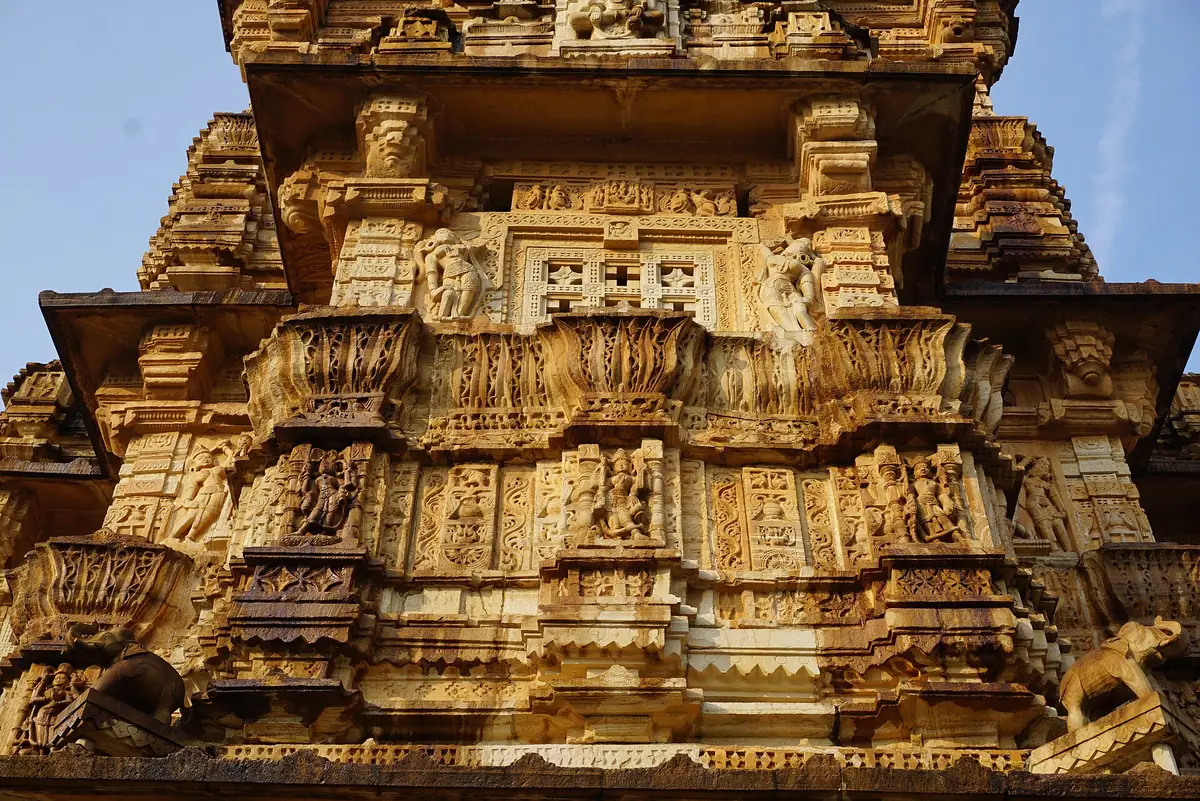
Chittorgarh Fort, capital of Mewar for around 800 years, is one of the largest forts in India, spread over roughly 700 acres on a plateau about 180 metres above the surrounding plains. It was besieged three times, by Alauddin Khalji in 1303, Bahadur Shah of Gujarat in 1535 and Akbar in 1568, and each defeat is remembered in stories of jauhar and saka. It is part of the UNESCO Hill Forts of Rajasthan.
Almost everything worth doing in Chittorgarh is inside the fort. A circuit road links its gates, towers, palaces and temples, and a full day with a car or auto-rickshaw lets you see it properly. The town below is a practical base; Udaipur is about two hours away.
For how to get there, when to go and where to stay, see our Chittorgarh travel guide.
Quick answer: best things to do in Chittorgarh
- Drive through the seven gates up to the fort
- Climb the Vijay Stambh, the Tower of Victory
- See the older Kirti Stambh, the Tower of Fame
- Visit Rani Padmini's Palace by its lotus pool
- See the Meera Temple and Kumbha Shyam Temple
- Explore the ruins of Rana Kumbha's Palace
- Watch the evening sound and light show
Want a day-by-day plan? Follow our 10 to 14 day Rajasthan heritage itinerary.
Going by road? See our guide to the Rajasthan road trip.
Interested in the history? See our guide to the forts of Rajasthan.
Inside Chittorgarh Fort
Allow at least half a day, ideally a full day, for the fort. Hiring a local guide at the gate makes the stories and ruins much easier to follow.
Climb the Vijay Stambh
The nine-storey Tower of Victory was built by Rana Kumbha in the 15th century to mark a victory over the Sultan of Malwa. Every surface is carved with Hindu deities. A narrow internal stair climbs to the top, with views across the fort. It is the fort's defining landmark and the symbol of Mewar.
- Time needed
- 45 minutes
- Good to know
- The stairway is narrow and steep
See the Kirti Stambh
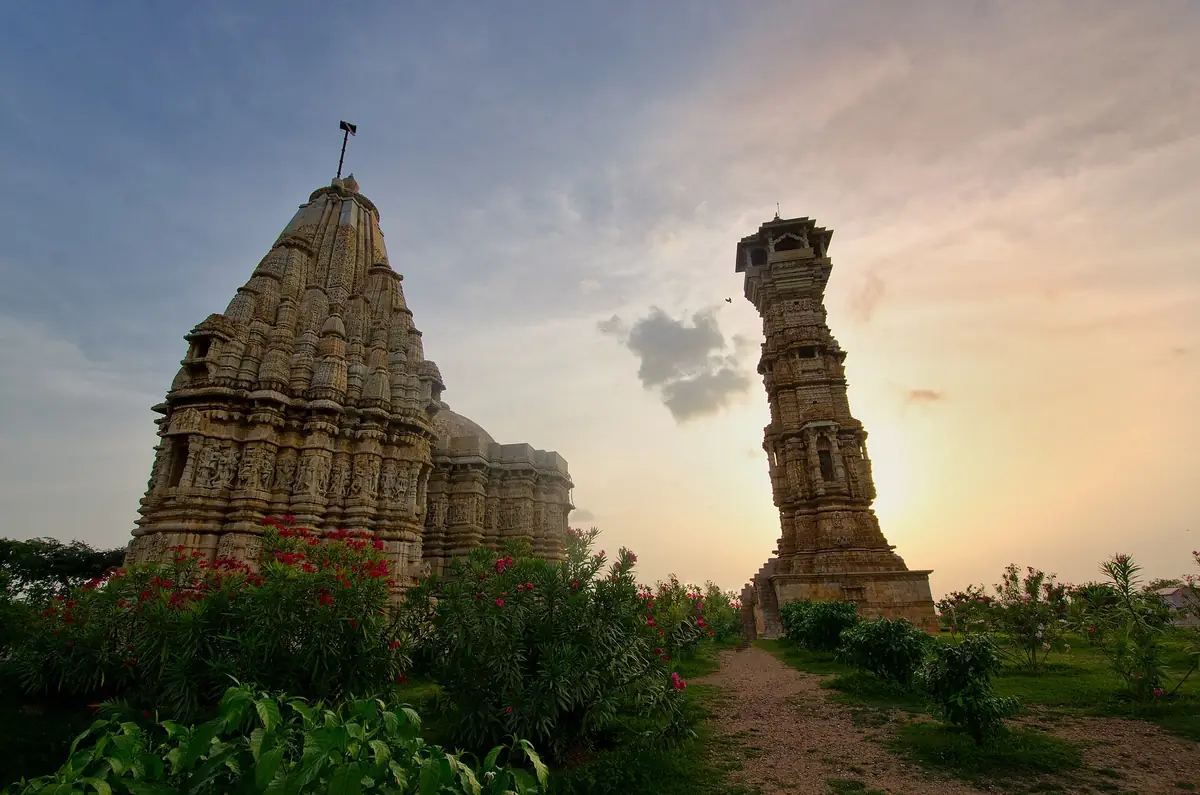
Older and smaller than the Vijay Stambh, the 12th-century Kirti Stambh (Tower of Fame) was built by a Jain merchant and is dedicated to Adinatha, the first Jain tirthankara. It is decorated with Jain figures and stands beside a temple.
- Time needed
- 30 minutes
Visit Rani Padmini's Palace
Padmini's Palace is a white building beside a lotus pool, with a small pavilion in the water. According to legend, Alauddin Khalji was allowed to see Rani Padmini's reflection here, which led to the siege of 1303. Historians debate the legend, but the palace and its setting are central to Chittorgarh's story.
- Time needed
- 30 minutes
See the Meera and Kumbha Shyam temples
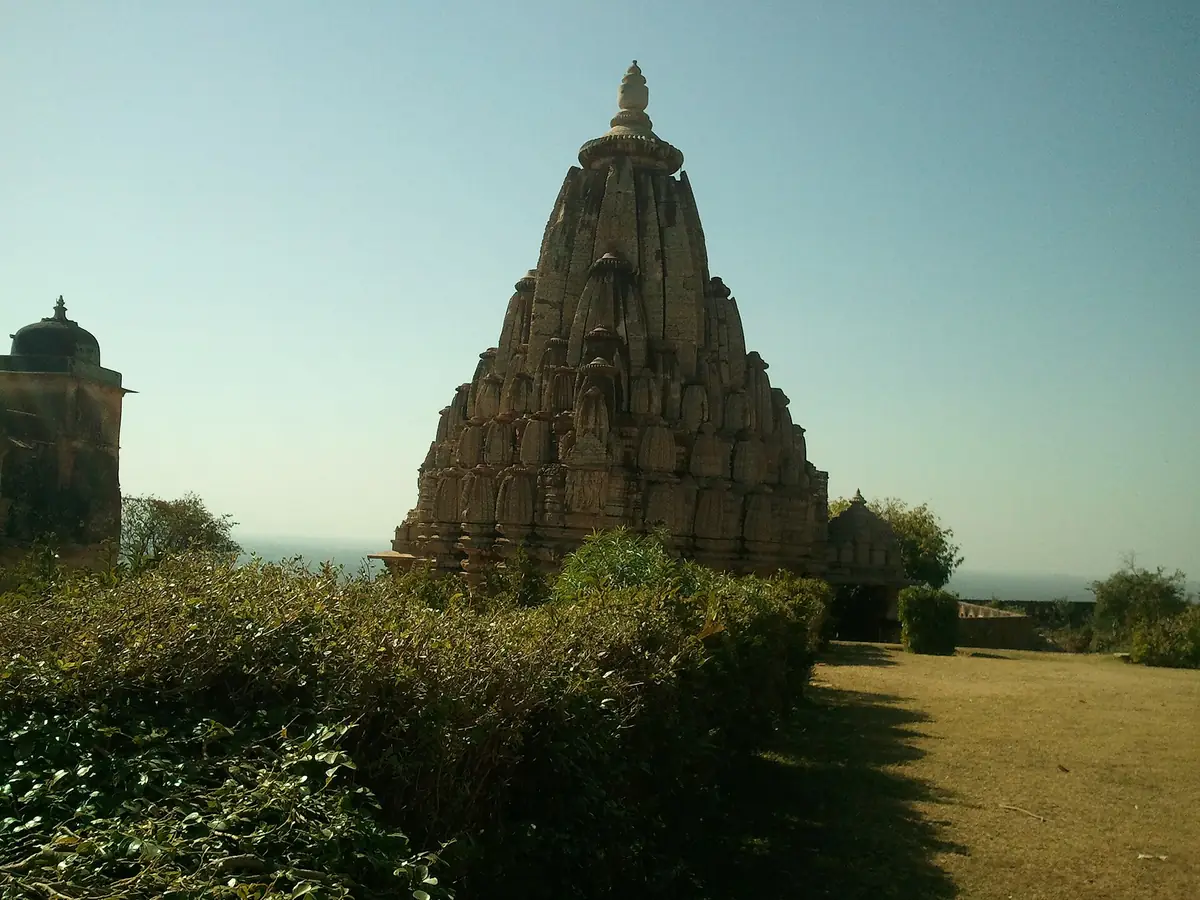
Meera Bai, the 16th-century poet-saint devoted to Krishna, lived at Chittorgarh as a Mewar princess. The Meera Temple stands in the same compound as the larger Kumbha Shyam Temple, built in the Indo-Aryan style with a tall spire.
- Time needed
- 30 minutes
Explore Rana Kumbha's Palace
The ruins of Rana Kumbha's 15th-century palace are the oldest monument in the fort. This is where Udai Singh, the founder of Udaipur, is said to have been born, and where the loyal nurse Panna Dai saved him as an infant by sacrificing her own son. The ruins of the zenana and the jauhar site are nearby.
- Time needed
- 45 minutes
See Gaumukh Kund
Gaumukh Kund is a reservoir fed by a spring that flows from a rock carved as a cow's mouth. It was an important water source during sieges, and its cliffside setting is peaceful.
See the fort's gates
The road up to the fort passes through seven gates (pols), including Padan Pol, Bhairon Pol, Hanuman Pol, Ganesh Pol and Ram Pol. Memorials near some of them honour warriors who fell in the sieges, such as Jaimal and Patta during Akbar's attack. Stopping at a couple of them on the way up sets the scene.
Visit Fateh Prakash Palace Museum
Built in the late 19th and early 20th centuries by Maharana Fateh Singh, this palace inside the fort houses a museum of sculpture, weapons and local crafts. It is a useful stop for context before exploring the older ruins.
- Time needed
- 45 minutes
Evening and nearby
Watch the sound and light show
An evening sound and light show at the fort narrates the history of the sieges and the rulers of Mewar. Check the language schedule, as shows alternate between Hindi and English on different days.
- Best time
- After sunset
- Good for
- Families
Bassi and Menal
Bassi Wildlife Sanctuary and the Bassi Fort palace (now a hotel) lie about 25 km east. Further towards Bundi, Menal has a gorge, a seasonal waterfall and a cluster of 11th-century Shiva temples, a good stop if you are driving on to Bundi.
Sanwariya Seth Temple
About 40 km from Chittorgarh on the Udaipur road, the Sanwariya Seth (Krishna) temple is one of the most visited in the region, with an elaborately decorated modern complex. Many travellers stop here in transit.
Things to do in Chittorgarh by type of traveller
History lovers: Hire a local guide at the gate, visit the museum first for context, then follow the circuit through the ruins, gates and towers.
Families: The Vijay Stambh climb, the lotus pool at Padmini's Palace and the evening show make the fort engaging for older children.
What to do in Chittorgarh with one day
Enter the fort in the morning and follow the circuit road: Rana Kumbha's Palace, the Meera and Kumbha Shyam temples, the Vijay Stambh, Gaumukh Kund, Padmini's Palace and the Kirti Stambh. After a late lunch in town, return for the sound and light show.
Practical tips for Chittorgarh
- The fort is large; hire an auto-rickshaw or bring a car for the circuit road rather than trying to walk it all.
- There is little shade on the plateau, so carry water and a hat, especially outside winter.
- The Vijay Stambh's interior stair is dark and narrow; skip it if you are claustrophobic.
- Chittorgarh has a railway junction with connections to Udaipur, Jaipur and Delhi, and sits on the main highway between Udaipur and Jaipur.
Plan the rest of your Chittorgarh trip
Chittorgarh things to do: FAQs
What are the best things to do in Chittorgarh?
Explore Chittorgarh Fort: climb the Vijay Stambh, see the Kirti Stambh, Padmini's Palace, the Meera Temple and Rana Kumbha's Palace, and watch the evening sound and light show.
How much time do you need at Chittorgarh Fort?
At least half a day, ideally a full day. The fort covers about 700 acres, and a car or auto-rickshaw is needed to get between sights.
Can Chittorgarh be done as a day trip from Udaipur?
Yes. It is about two hours by road, and many travellers visit on a day trip or stop on the way between Udaipur and Jaipur or Bundi.
What is Chittorgarh famous for?
Its vast fort, the Vijay Stambh, the legend of Rani Padmini, the poet-saint Meera Bai and the three great sieges of 1303, 1535 and 1568.
Things to do near Chittorgarh
- Things to do in Udaipur: about two hours to the west
- Things to do in Bundi: stepwells and palace murals, about three hours north-east
- Kumbhalgarh: another of Mewar's great hill forts
More things to do in Rajasthan
Published by the Kudozz Club editorial team · Last updated · How we research our guides
Want us to plan this trip for you?
Tell Kudozz Club where you want to go and what kind of trip you’re looking for. We’ll build a Chittorgarh Fort and Rajasthan itinerary around your dates and budget.
Continue Exploring
View all guides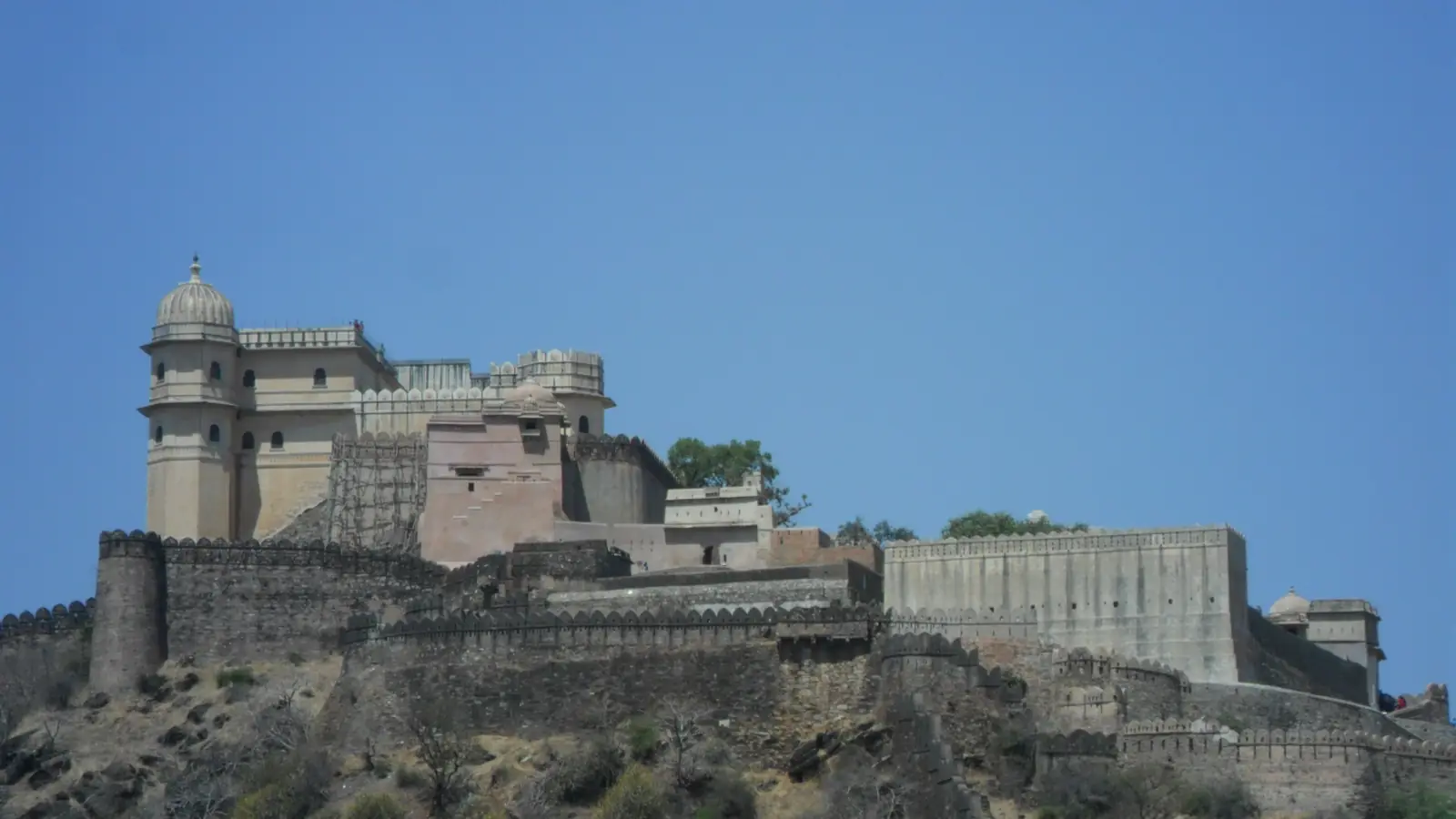 Heritage
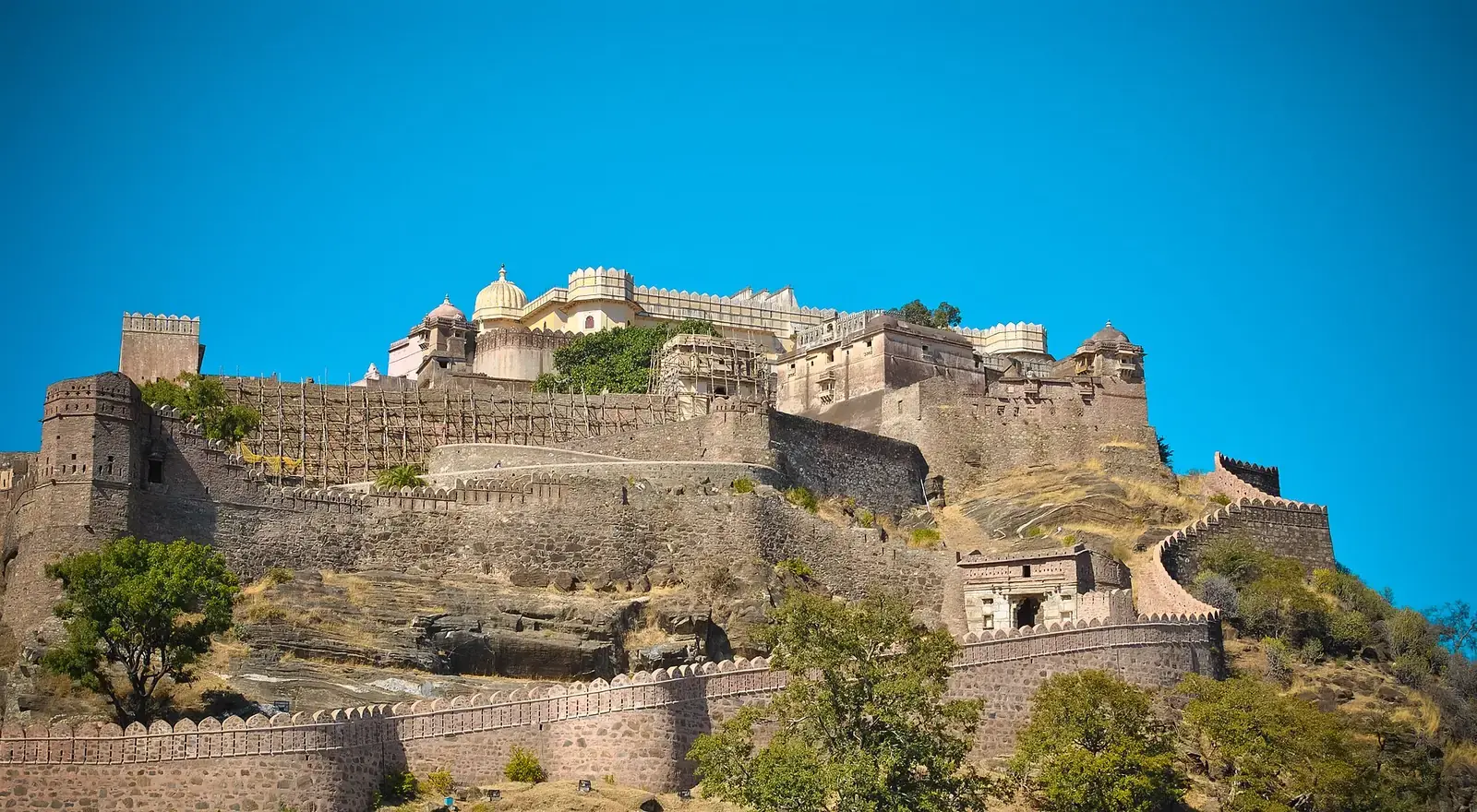
Kumbhalgarh Fort Guide: The Great Wall of India
A 36-km fortified wall across the Aravalli hills, the birthplace of Maharana Pratap, and a wildlife sanctuary at its feet — the complete Kumbhalgarh guide.
 Heritage & Culture
Forts of Rajasthan: The UNESCO Hill Forts and Beyond
A guide to the forts of Rajasthan: the six Hill Forts of Rajasthan inscribed by UNESCO in 2013 (Amber, Chittorgarh, Kumbhalgarh, Ranthambore, Gagron and Jaisalmer), other great forts including Mehrangarh, Junagarh, Taragarh, Nahargarh, Jaigarh and Lohagarh, what makes each distinct, and a route to see several in one trip.
 Heritage
Pushkar Travel Guide: Lake, Temple & Camel Fair
A sacred lake ringed by 52 ghats, one of the world's only Brahma temples, and a camel fair that turns the desert into a festival — the complete Pushkar guide.
 Heritage
Konark Sun Temple Guide: History & Tips
A 13th-century temple carved as a colossal stone chariot for the Sun God, with 24 wheels and seven horses — the complete guide to Konark.