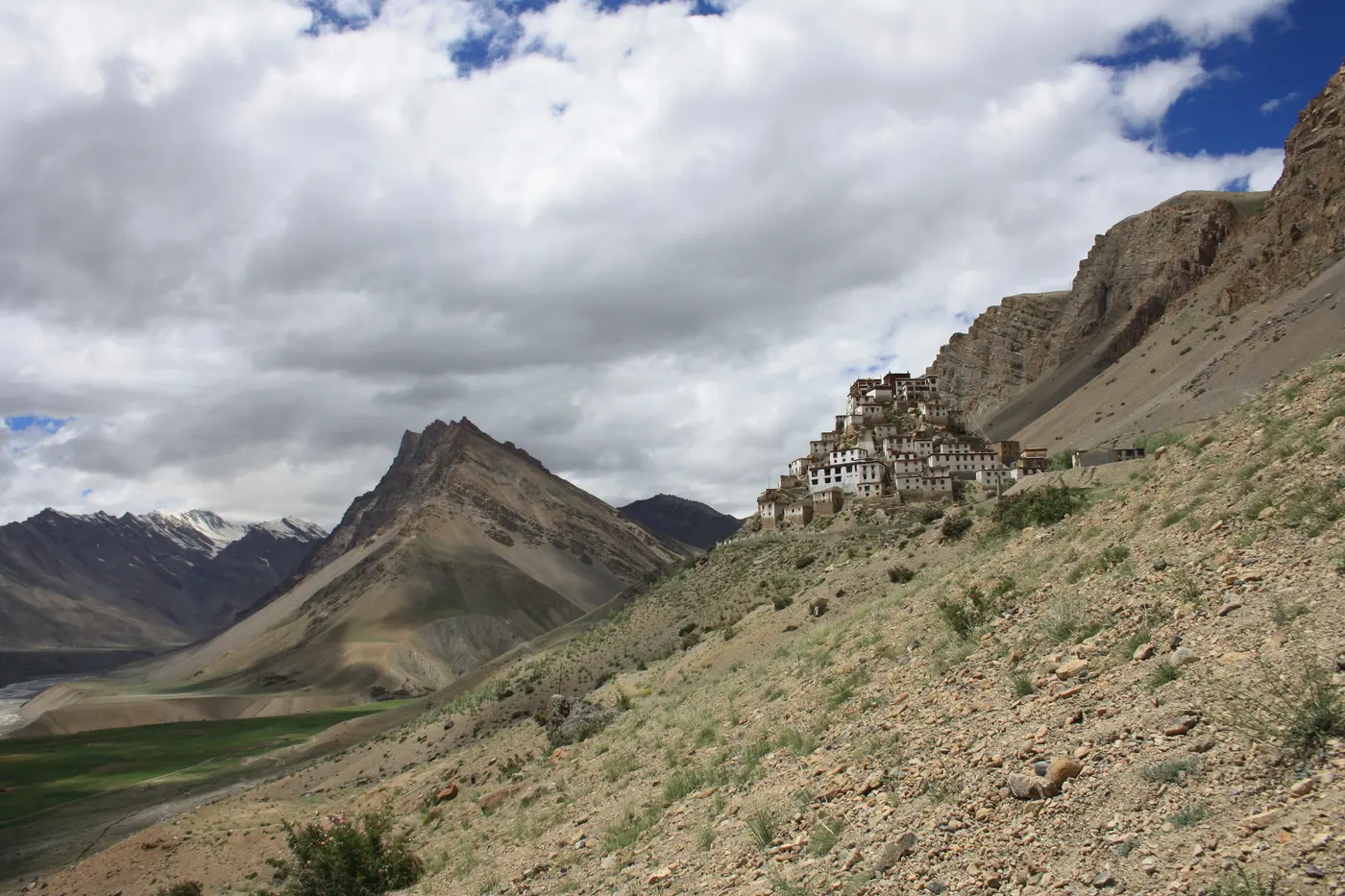
Spiti is a high-altitude valley in the Lahaul and Spiti district of Himachal Pradesh, bordering Tibet. The name is often translated as the middle land, between Tibet and India. It is a cold desert of bare mountains, river terraces and whitewashed villages, and most of it lies between about 3,000 and 4,500 metres.
Things to do in Spiti revolve around its Buddhist monasteries, some over a thousand years old, its high villages, and the journey itself. Kaza is the main town and base. The valley is reached either from Shimla through Kinnaur, a route that climbs gradually and helps acclimatisation, or from Manali over Kunzum Pass, which is open only in summer.
Plan at least seven to ten days for a full circuit with acclimatisation. Roads are rough in places, services are basic, and altitude sickness is a real risk if you rush.
For how to get there, when to go and where to stay, see our Spiti Valley travel guide.
Quick answer: best things to do in Spiti Valley
- Visit Key Monastery above Kibber
- See Tabo Monastery, founded in 996
- Walk to Dhankar Monastery and Dhankar Lake
- Camp or walk by Chandratal Lake (summer)
- Visit the high villages of Kibber, Langza, Hikkim and Komic
- Send a postcard from Hikkim's high-altitude post office
- Look for marine fossils around Langza
- Cross the Chicham bridge over a deep gorge
- Explore Pin Valley National Park and Mud village
- Stay in a village homestay
Going by road? See our guide to the Spiti Valley road trip.
Love the outdoors? See our guide to Himalayan nature travel.
Comparing hill stations? See our guide to India's mountain destinations.
Planning something active? Read our guide to Spiti Valley bike trip.
Monasteries
Visit Key Monastery
Key (or Kye) Gompa, near Kaza, is the largest monastery in Spiti and one of its most photographed sights: a jumble of white buildings stacked on a conical hill above the river. It belongs to the Gelug school and houses murals, old scriptures and a community of monks. Visitors can often join morning prayers and share butter tea.
- Time needed
- 1.5 hours
- Best time
- Morning prayers
- Good for
- Everyone
See Tabo Monastery
Tabo Monastery, founded in 996, is one of the oldest continuously functioning Buddhist monasteries in the Himalaya. From outside it looks like a set of plain mud buildings; inside, its dim halls hold remarkable murals and clay sculptures. Photography is not allowed in the old temples, and a torch helps. Caves on the hillside above were once used for meditation.
- Time needed
- 1.5–2 hours
- Good for
- History and art lovers
Walk to Dhankar Monastery and lake
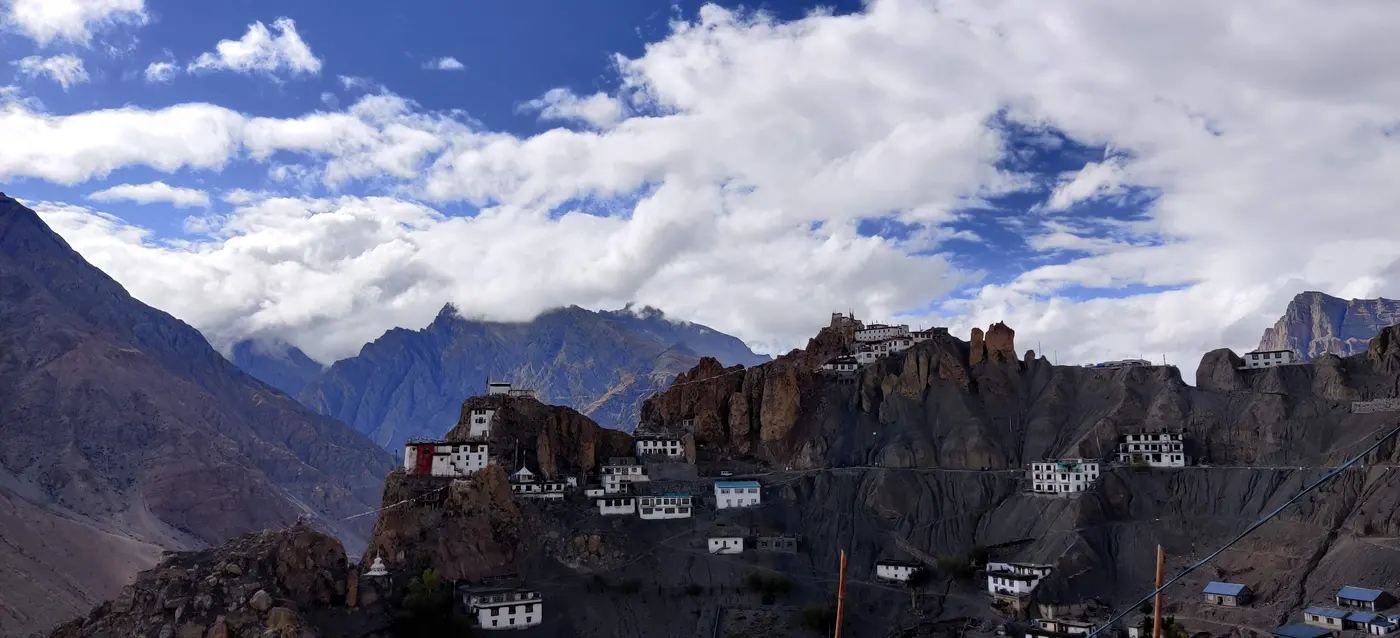
Dhankar, the old capital of Spiti, has a monastery perched on a crumbling spur above the meeting of the Spiti and Pin rivers. A newer monastery sits below. A steep walk of about an hour from the village leads to Dhankar Lake, a small lake with views of the Manirang peaks.
- Time needed
- Half a day
- Good for
- Walkers, photographers
See the Kaza monasteries
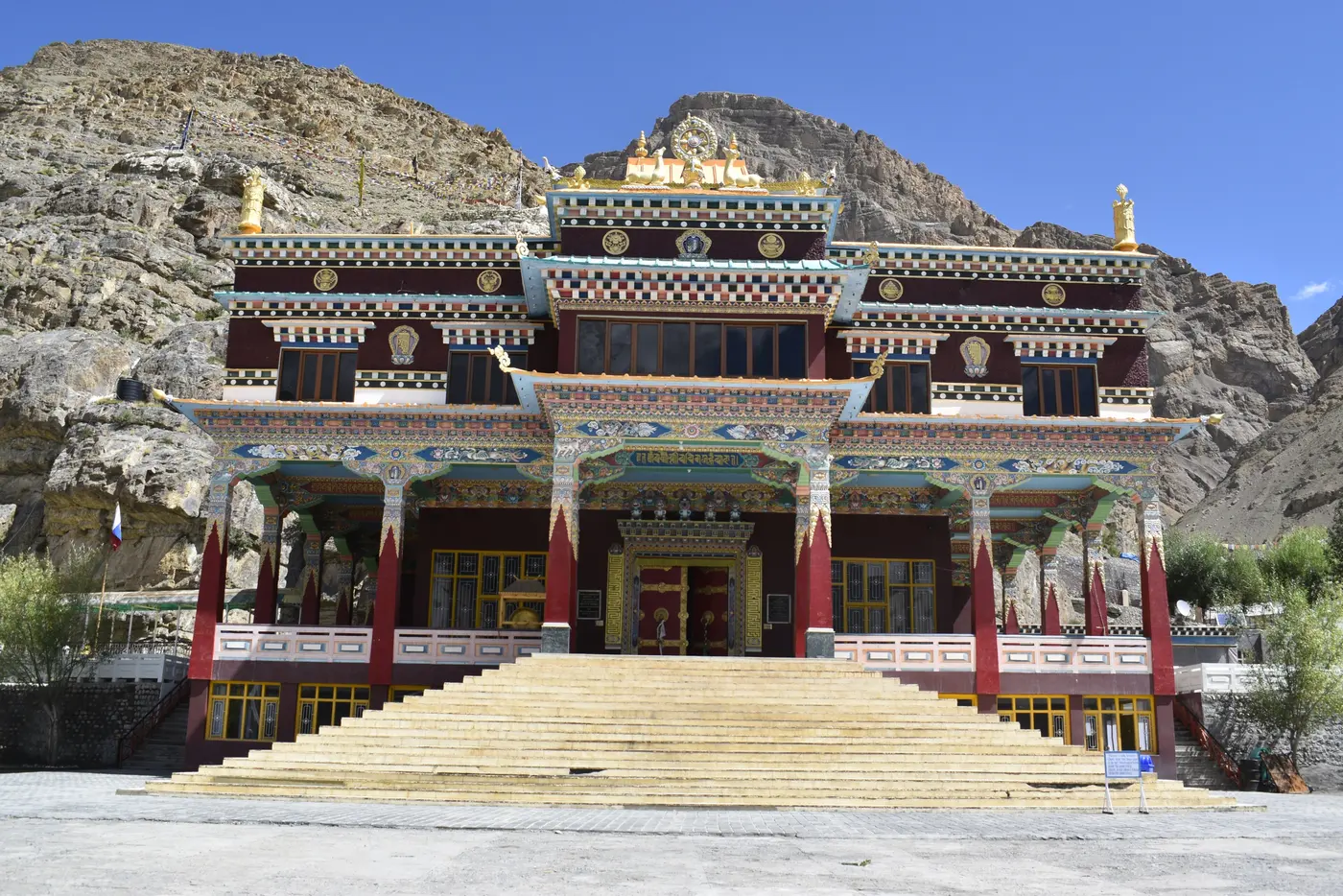
Kaza has the colourful Sakya Tangyud Monastery and a small market with cafés, a few shops and a petrol pump, one of the few in the valley. It is the natural base for day trips to the high villages.
High villages
Visit Kibber
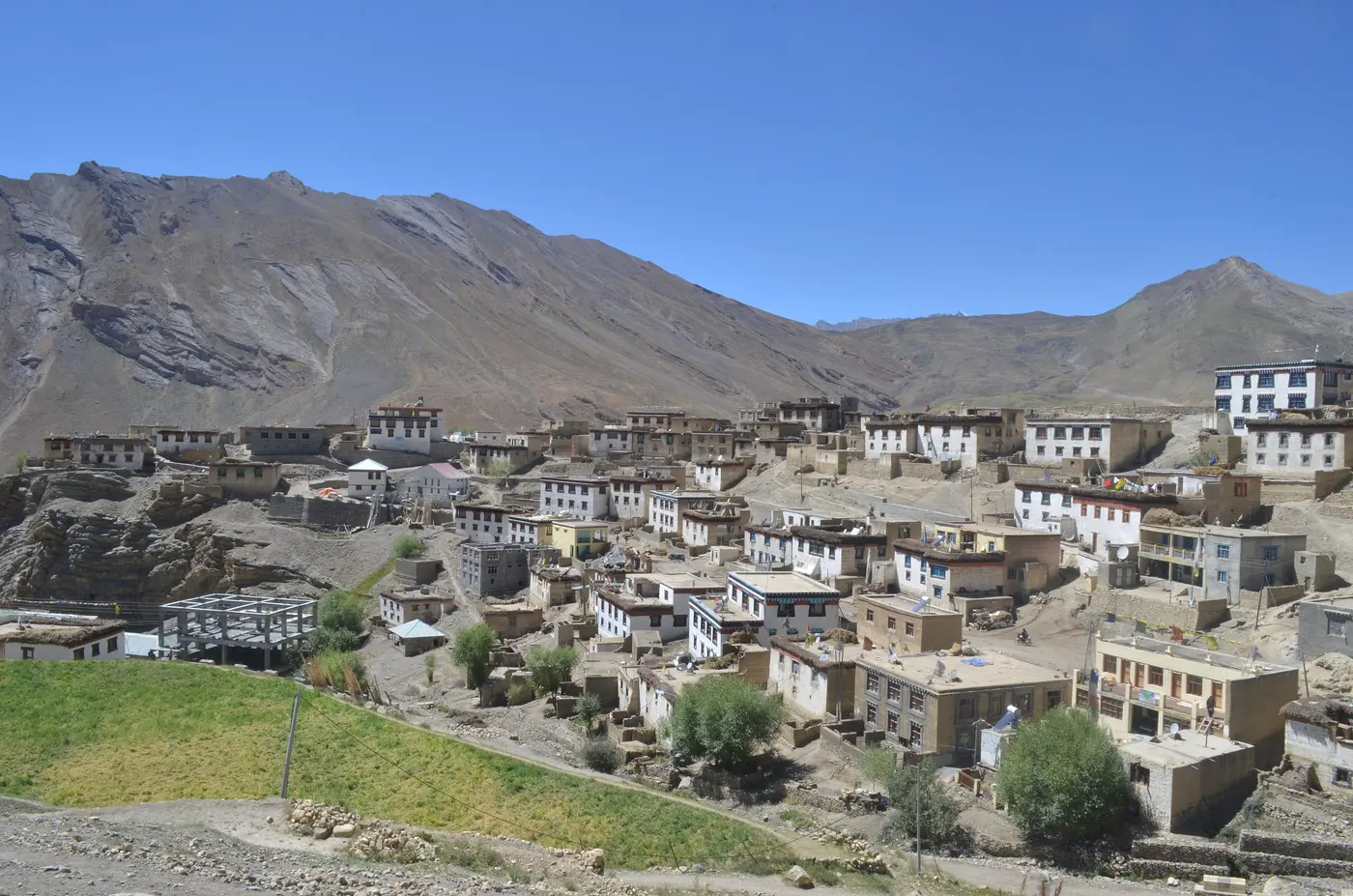
Kibber, at about 4,200 metres, is one of the highest villages in the region connected by road. It lies next to the Kibber Wildlife Sanctuary, and in winter, local guides run snow leopard tracking trips from here. The Chicham bridge, spanning a deep gorge, is a short drive away and connects Kibber with Chicham village.
- Best time
- June to September; January to March for snow leopard trips
- Good for
- Wildlife lovers, road-trippers
See Langza and its fossils
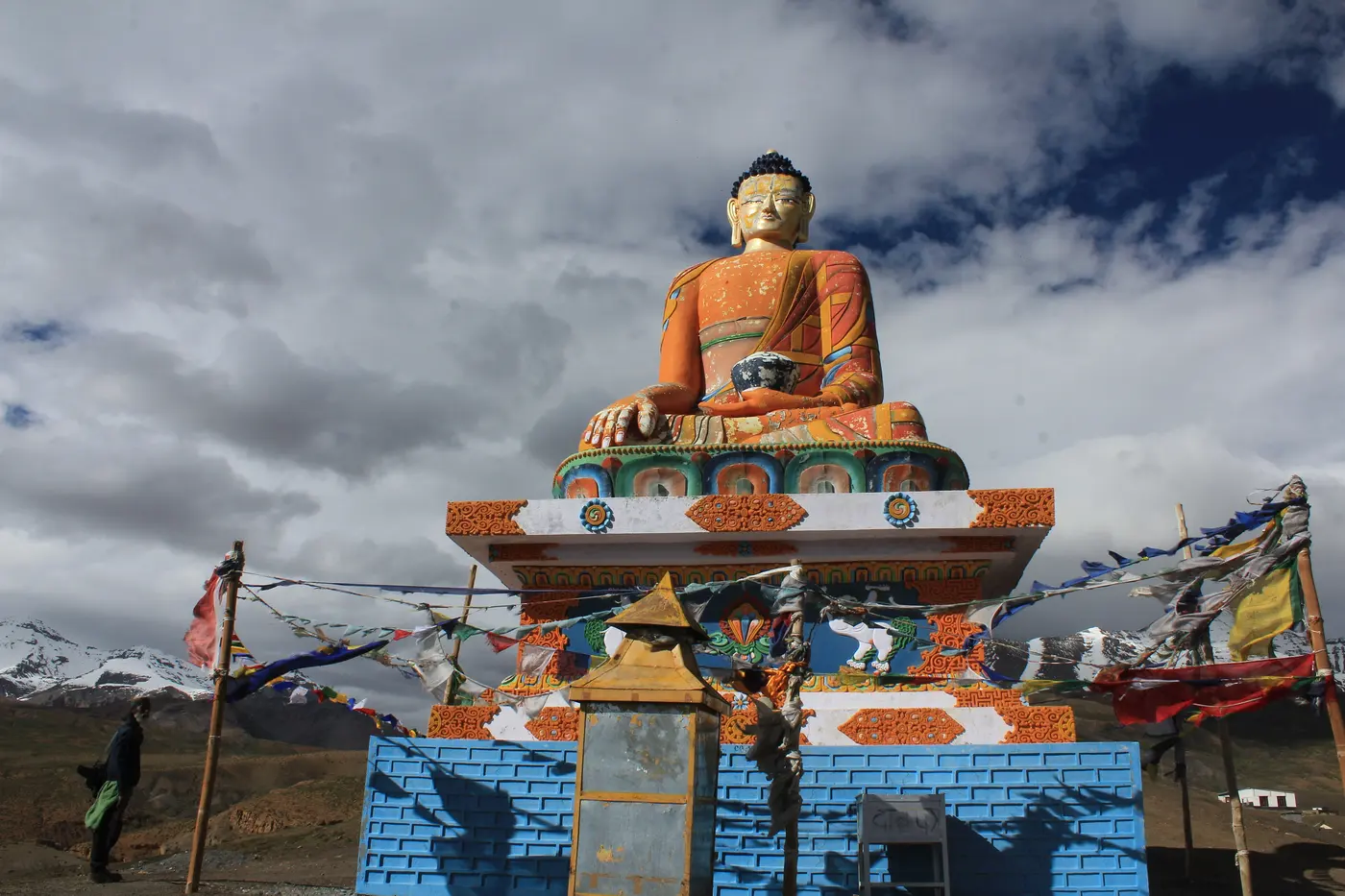
Langza is known for a large Buddha statue overlooking the valley and for the marine fossils found in its soil, a reminder that this land lay under the Tethys Sea before the Himalaya rose. Fossils should be looked at and photographed, not taken away; selling or removing them harms the site.
- Time needed
- 1–2 hours
- Good to know
- Do not buy or remove fossils
Post a card from Hikkim
Hikkim, at over 4,400 metres, has a post office often described as the highest in the world. Sending a postcard home from here is a favourite ritual. Komic, nearby, is one of the highest villages with a motorable road and has an old monastery.
- Good to know
- Post office hours vary; go in the late morning
Stay in a homestay
Staying with a family in Langza, Kibber, Demul or another village is one of the best things to do in Spiti. You eat home-cooked thukpa and tsampa, see how people live through the harsh year, and support local incomes directly. Many village homestays are organised through local cooperatives.
- Good for
- Slow travellers, solo travellers
Lakes, valleys and wildlife
See Chandratal Lake
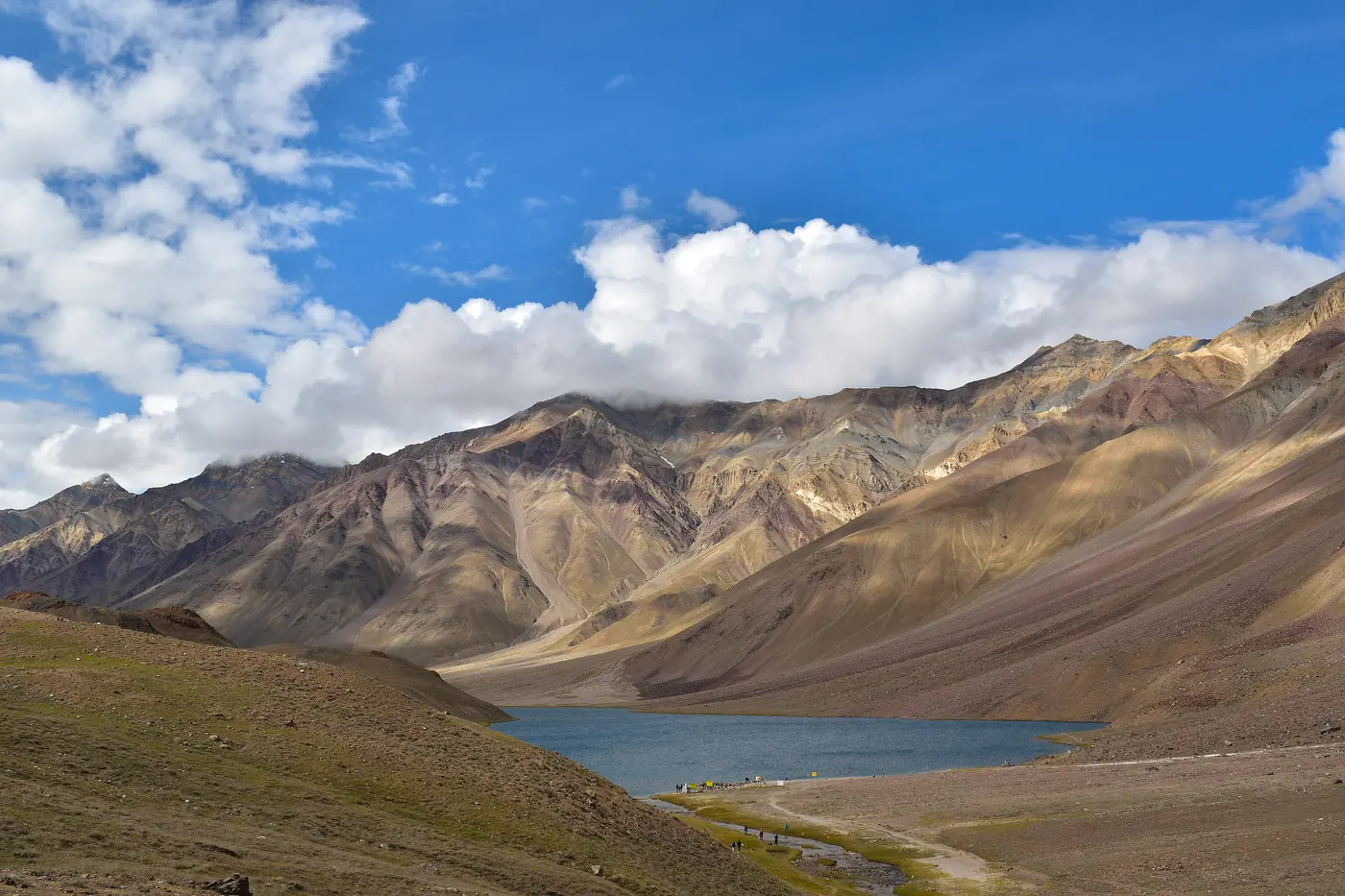
Chandratal, the moon lake, lies at about 4,300 metres near Kunzum Pass on the Lahaul side of Spiti. Its colour shifts from blue to green through the day. Camps are set up a few kilometres away, and you walk the last stretch to the lake. It is reachable only from about June to October, when the roads are open.
- Best time
- June to September
- Good for
- Everyone
- Good to know
- Very cold at night even in summer
Explore Pin Valley
Pin Valley National Park, south of the Spiti river, protects a greener side valley that is home to the Siberian ibex and snow leopard. Mud village, at the road's end, is the start of treks to Bhaba Pass and Pin Parvati Pass, and has simple homestays. Kungri monastery lies on the way.
- Good for
- Trekkers, wildlife lovers
Look for snow leopards in winter
From January to March, local guides in Kibber and nearby villages run snow leopard expeditions. Conditions are extreme, with temperatures well below freezing, but sightings are possible. Only go with experienced local operators and prepare properly for the cold.
- Best time
- January to March
- Good for
- Experienced wildlife travellers
Stargaze
With dry air, high altitude and almost no light pollution, Spiti has some of the darkest night skies in India. Moonless nights in summer and autumn are best, and several homestays and camps offer telescope sessions.
Along the Kinnaur route
Stop at Nako Lake
Nako, a village on the Kinnaur side at about 3,600 metres, has a small lake ringed by willows and poplars, old monastery buildings and a good choice of homestays. It is a natural acclimatisation stop before Tabo.
- Good for
- Road-trippers, photographers
See the Gue mummy
Gue, a village near Sumdo, holds a naturally mummified monk in a small shrine, believed to be around 500 years old. It is a short detour on the way to Tabo and is treated with reverence by locals.
- Time needed
- 45 minutes including detour
Drive the Kaza–Losar road and Kunzum Pass
From Kaza the road west passes Losar, the last village before Kunzum Pass at about 4,550 metres, where travellers circle the small Kunzum Mata shrine before crossing into Lahaul. The views of the Bara Shigri glacier area are among the best on the route.
- Best time
- June to October
- Good to know
- Road opens only when snow is cleared
Catch a monastery festival
Several Spiti monasteries hold festivals with masked cham dances, including Key in summer and Tabo in autumn, and the Ladarcha fair in Kaza has long been a meeting point for traders and villagers. Dates follow the lunar calendar; ask locally.
Things to do in Spiti Valley by type of traveller
Road-trippers and bikers: Enter from Shimla via Kinnaur for gradual acclimatisation and exit over Kunzum to Manali, with nights at Kalpa, Tabo, Kaza and Chandratal.
First-time high-altitude travellers: Go slowly, drink water, avoid alcohol for the first days and do not go straight from Manali to Kaza in one day.
Culture seekers: Spend time in Tabo and Key, stay in village homestays and ask your hosts about local festivals.
What to do in Spiti Valley with one day
From Kaza, drive to Key Monastery for morning prayers, then continue to Kibber and the Chicham bridge. After lunch, drive to Langza for the Buddha statue and fossil fields, Hikkim for a postcard, and Komic before returning to Kaza by evening.
Practical tips for Spiti Valley
- Acclimatise: the Shimla–Kinnaur route helps; plan rest days, and learn the signs of altitude sickness.
- Fuel is available at a few points only, including Kaza; fill up whenever you can.
- Network coverage is limited; BSNL and Jio work in some places. Carry cash.
- Foreign nationals may need an Inner Line Permit for parts of the route near the border; check current rules.
Plan the rest of your Spiti Valley trip
Spiti Valley things to do: FAQs
What are the best things to do in Spiti Valley?
Visit Key, Tabo and Dhankar monasteries, see Chandratal Lake, explore the high villages of Kibber, Langza, Hikkim and Komic, stay in a homestay, cross the Chicham bridge and explore Pin Valley.
How many days do I need for Spiti Valley?
Seven to ten days for a full circuit with acclimatisation stops.
When is the best time to visit Spiti?
June to September, when both the Kinnaur and Kunzum routes are usually open and Chandratal is accessible. Winter trips via Kinnaur are possible but only for well-prepared travellers.
Is Chandratal Lake open all year?
No. It is usually accessible from about June to October, when the roads over Kunzum are open.
Things to do near Spiti Valley
- Kinnaur: the approach from Shimla, with Kalpa and Nako
- Chitkul: the last village on the Baspa river
- Things to do in Manali: the exit over Kunzum and Atal Tunnel
- Things to do in Ladakh: another high desert further north
More things to do in Himachal Pradesh
Published by the Kudozz Club editorial team · Last updated · How we research our guides
Want us to plan this trip for you?
Tell Kudozz Club where you want to go and what kind of trip you’re looking for. We’ll build a Spiti Valley and Himachal itinerary around your dates and budget.
Continue Exploring
View all guides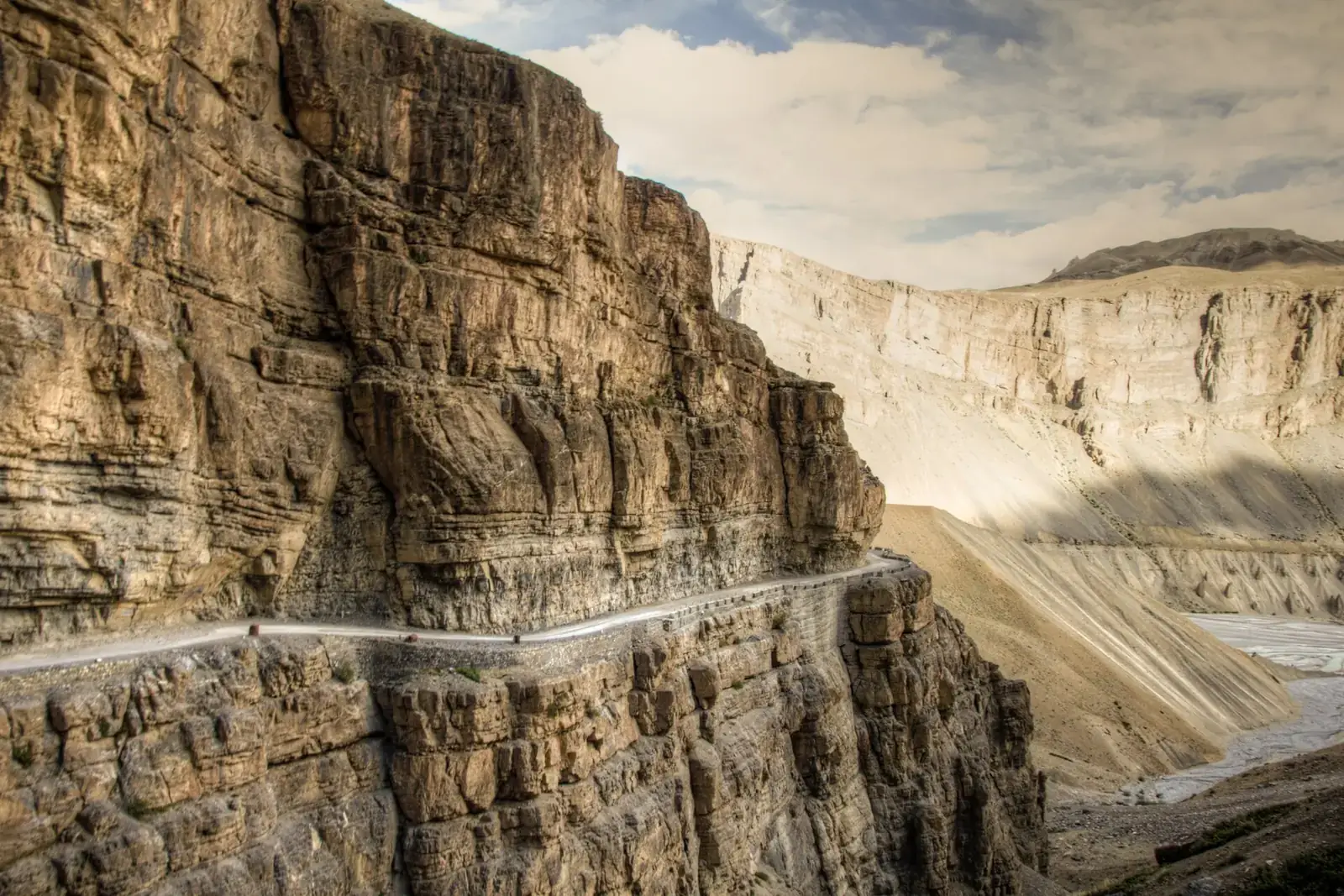 Adventure Travel
Spiti Valley Bike Trip: Route, Season and Riding Tips
A route guide to riding the Spiti Valley circuit by motorcycle: in from Shimla through Kinnaur, out over Kunzum Pass and the Atal Tunnel to Manali, with a day-by-day plan, the riding season, road conditions, fuel stops, permits for foreigners and altitude advice.
 Off-beat
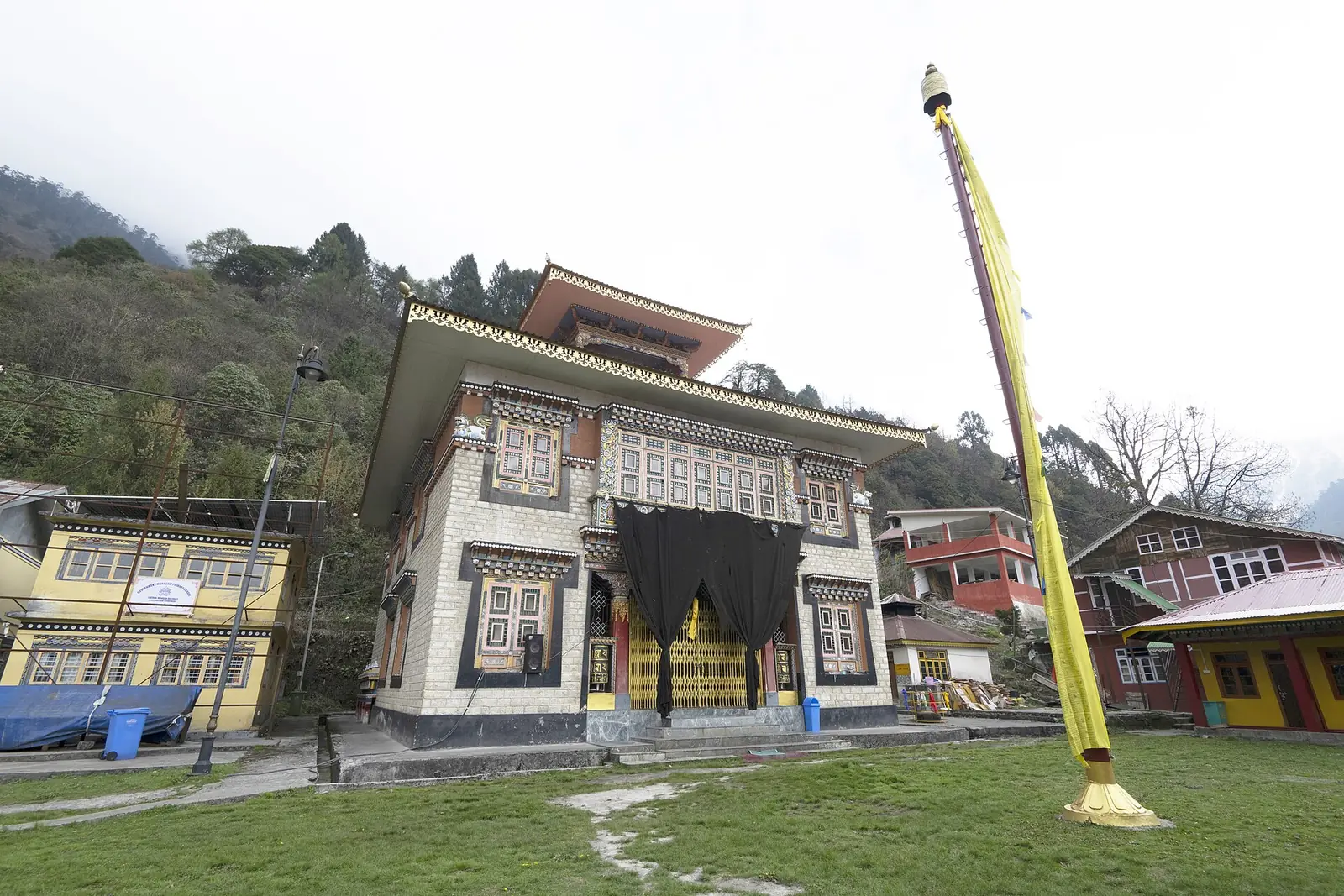
Lachen Travel Guide: Gateway to Gurudongmar
A high-altitude North Sikkim village where you acclimatize before the dramatic ascent to one of the world's highest accessible lakes.
 Off-beat
Dooars Travel Guide: Wildlife, Tea Gardens & Rivers
Complete Dooars guide — the foothill forests of Gorumara, Jaldapara, Chapramari and Buxa, tea gardens, jeep safaris for rhinos and elephants, base towns, and a full visit plan.
 Off-beat
Laknavaram Lake Guide: Bridge, Boating & Tips
A horseshoe-shaped lake scattered with forested islands and a cantilever bridge that walks you out over the water — Mulugu district's most photographed stop.