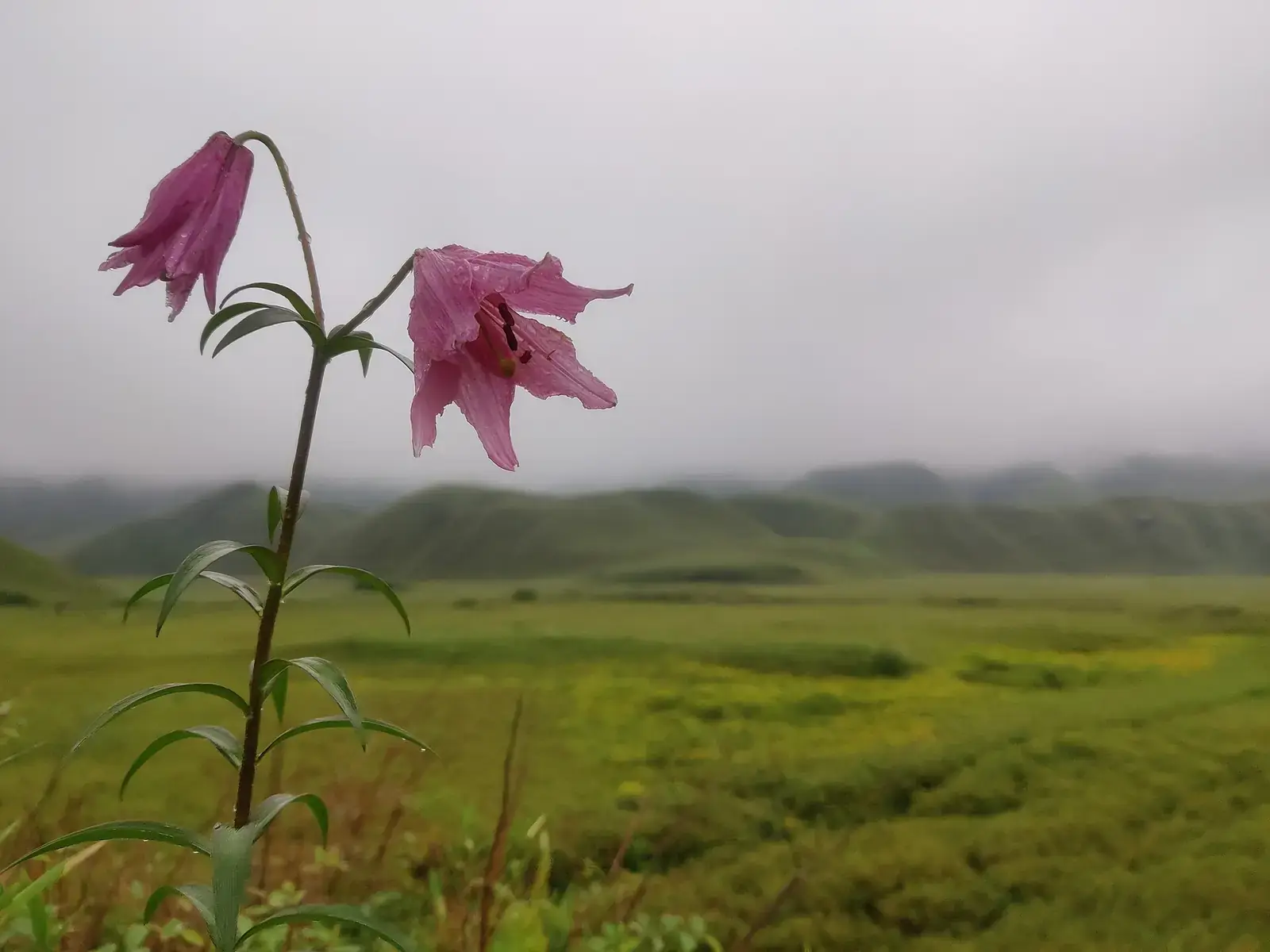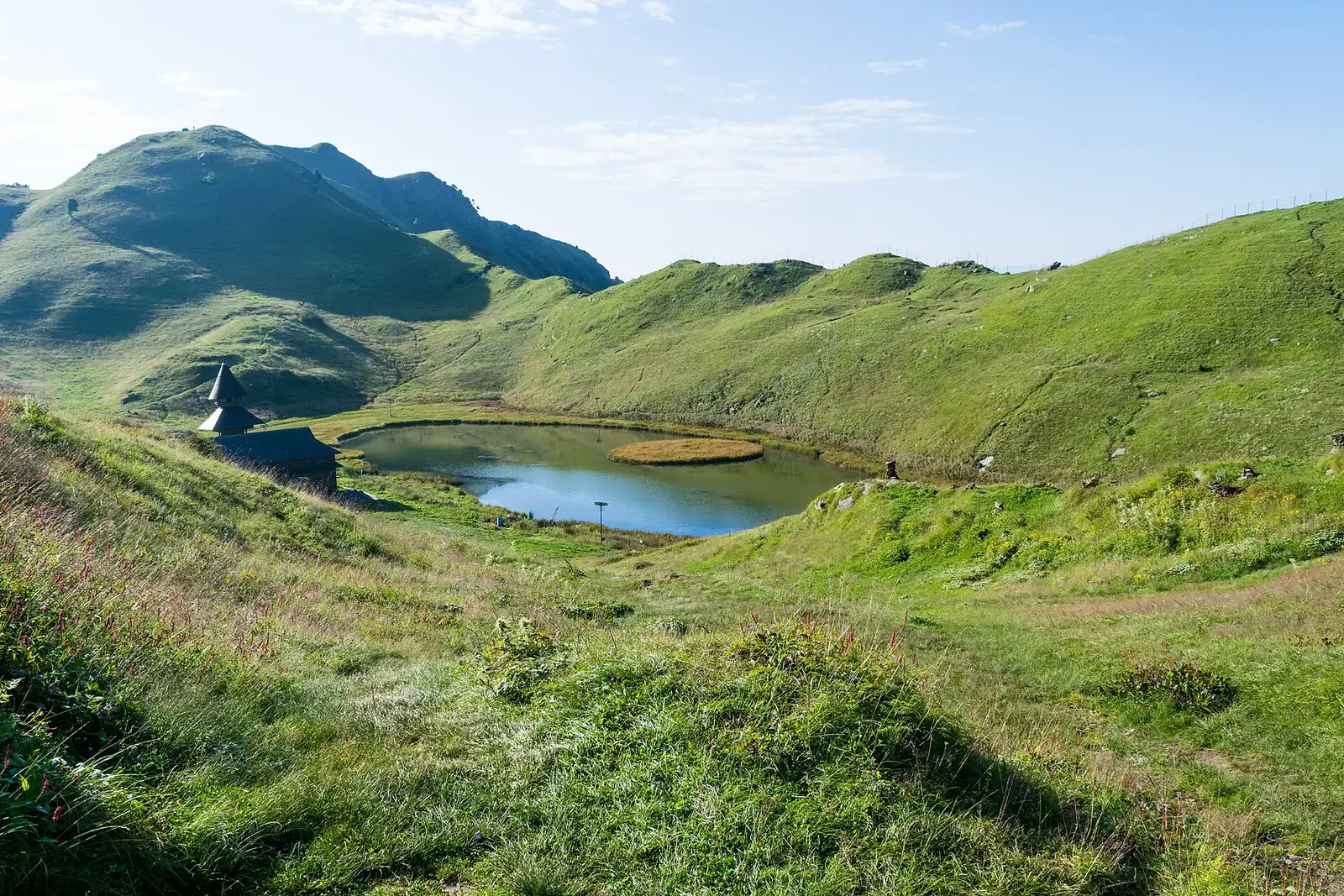
Himachal Pradesh is a state of valleys. The Beas, Sutlej, Ravi, Chenab and Spiti rivers each carve their own, and each has a different character: the forested Kullu and Tirthan valleys, the apple orchards of Kinnaur, and the bare, high-altitude desert of Spiti and Lahaul beyond the Great Himalayan range.
The Great Himalayan National Park, in Kullu district, is a UNESCO World Heritage Site for its biodiversity. Away from the busy towns of Shimla and Manali, much of Himachal's best nature is found in small villages reached by narrow roads and short walks.
Quick answer
The best places for nature travel in Himachal Pradesh are the Tirthan and Jibhi valleys at the edge of the Great Himalayan National Park, Prashar Lake near Mandi, Chandratal and Pin Valley in Spiti, the Sangla valley and Chitkul in Kinnaur, the Parvati valley, the Dhauladhar above Dharamshala, and the meadows of Khajjiar. March to June and September to November suit most areas; Spiti and Chandratal are summer-only.
Key takeaways
- The Great Himalayan National Park is a UNESCO World Heritage Site (2014); Tirthan valley is its main gateway.
- Chandratal and the high Spiti roads are usually open only from about June to October.
- The monsoon brings frequent landslides; recent years have seen severe damage, so keep plans flexible.
- Autumn is the best time for clear views and apple season in Kinnaur.
- Many of the best spots are small villages; homestays are the usual stay.
Himachal's nature highlights at a glance
| Place | Landscape | Best time |
|---|---|---|
| Tirthan and Jibhi | Forested river valleys, GHNP | March to June, September to November |
| Prashar Lake | Lake in a high grassy bowl | March to June, September to November |
| Chandratal | High glacial lake | June to September |
| Spiti and Pin Valley | Cold desert, fossils, high villages | June to October |
| Sangla and Chitkul | Baspa valley, orchards, peaks | April to June, September to October |
| Parvati valley | Forest, river, hot springs | March to June, September to November |
| Dhauladhar, Dharamshala | Ridges and Triund | March to June, October to November |
The Great Himalayan National Park
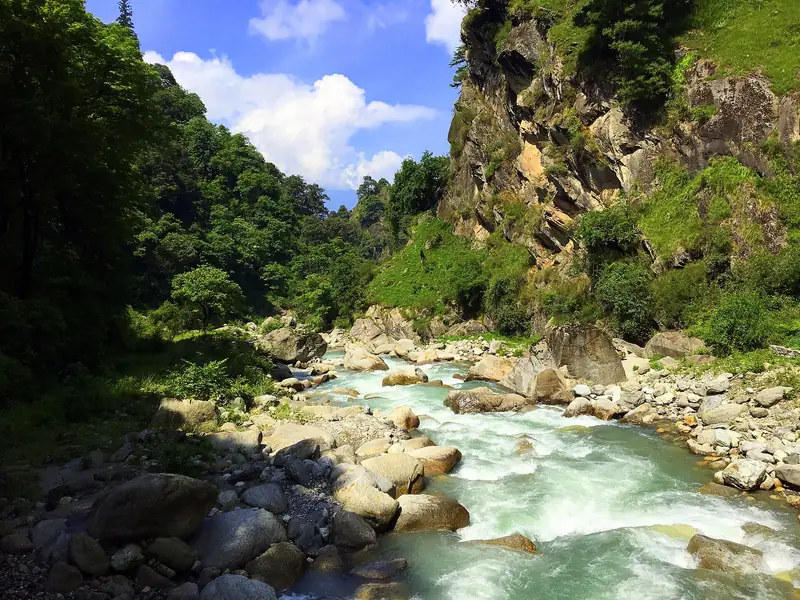
The park protects a high, rugged stretch of the Kullu district with forests, alpine meadows and glaciers. Most visitors see it from its edges: the Tirthan valley around Gushaini, Jibhi and the Jalori Pass, and the Sainj valley. Treks inside the park need forest department permits and a registered guide; day walks in the eco-zone need no permit.
High lakes
Prashar Lake
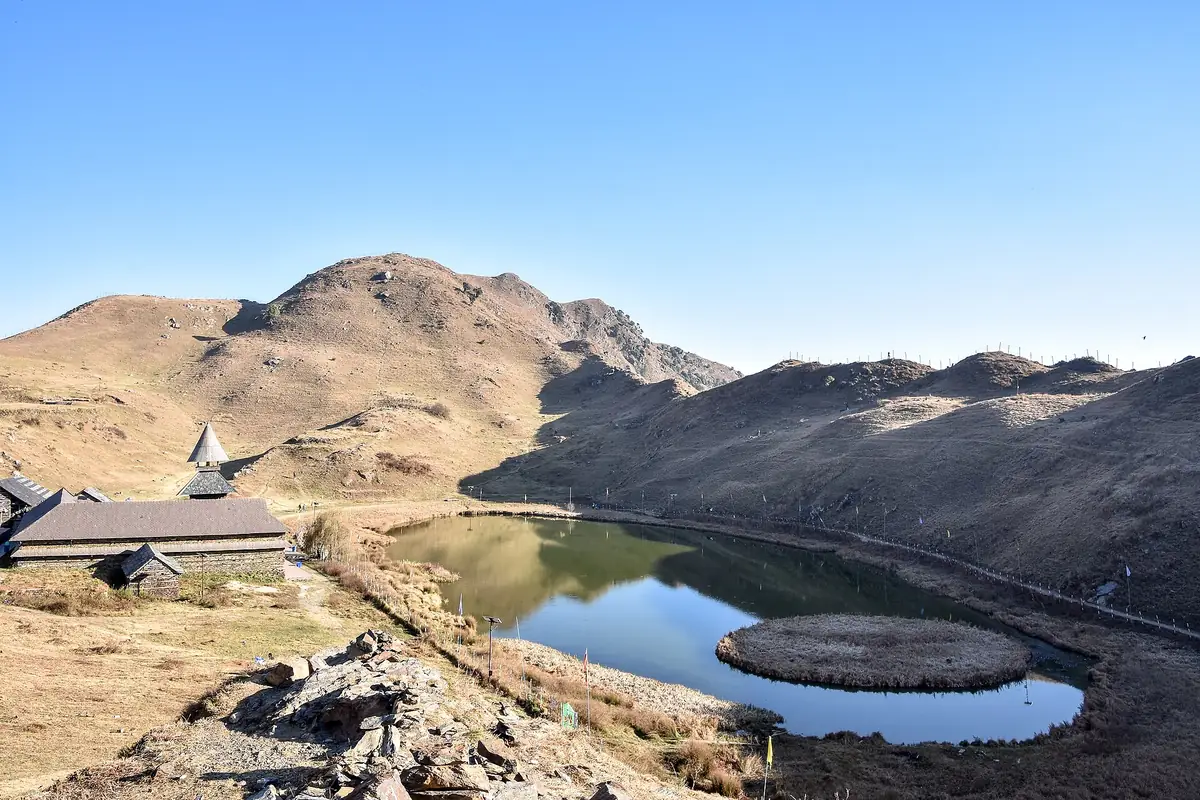
A small lake with a floating island and a pagoda-style temple, in a grassy bowl at about 2,700 m above Mandi. A road and a short walk reach it.
Chandratal
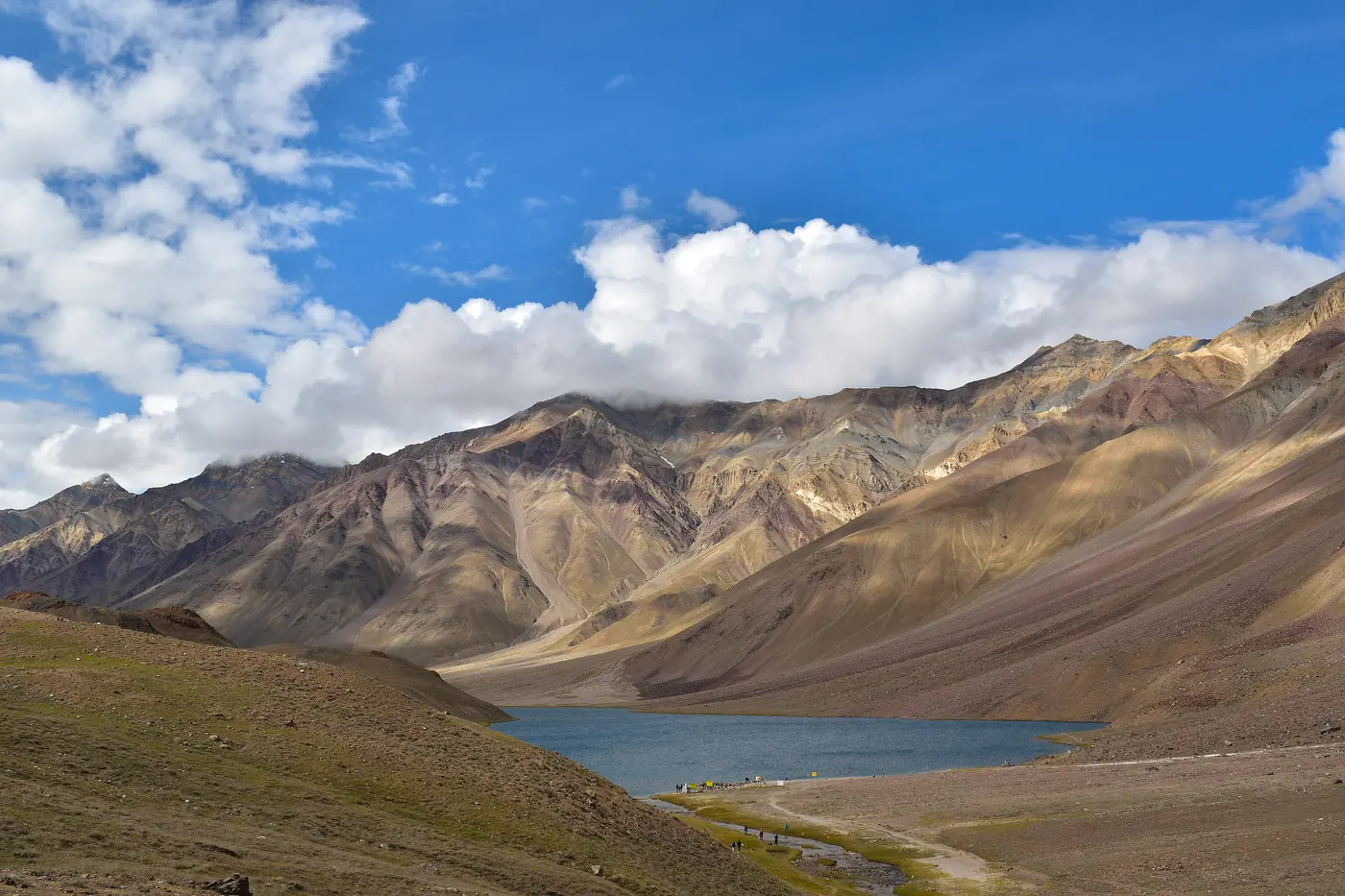
A crescent-shaped glacial lake at about 4,300 m in Lahaul, reached from the Batal side on the Kunzum road. Camping is set back from the lake to protect it.
Spiti and Pin Valley
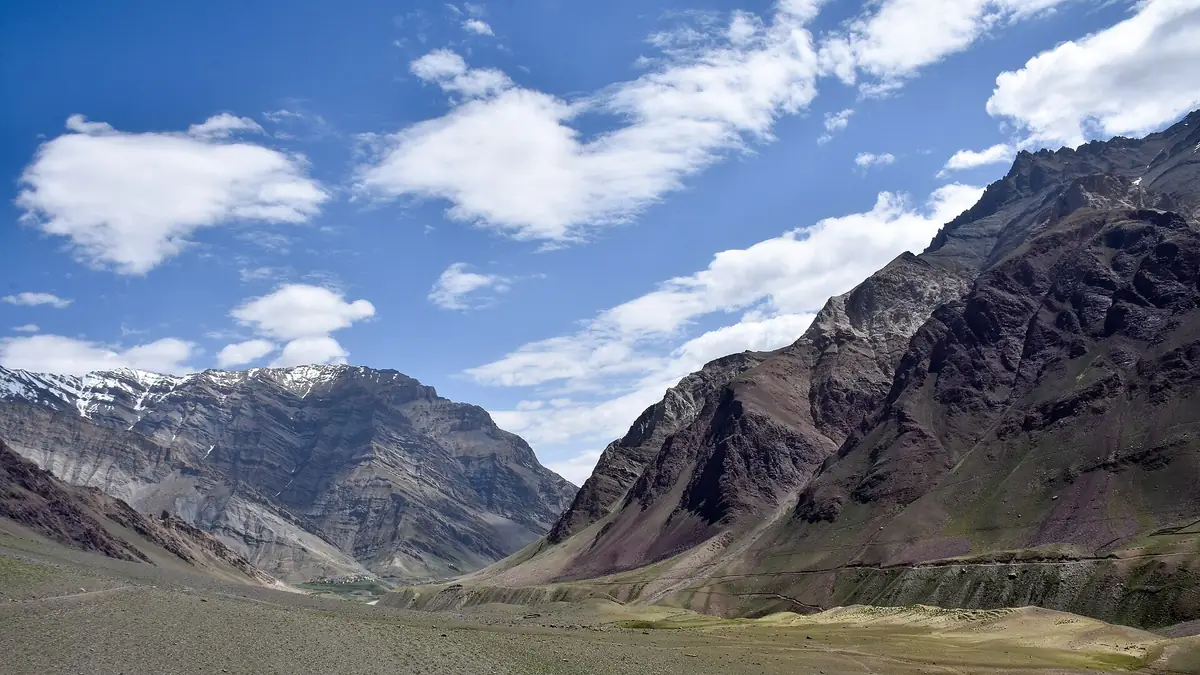
Spiti is a high cold desert of eroded cliffs, braided rivers and small villages. Pin Valley National Park, off the main valley, protects habitat of the snow leopard and ibex, and villages such as Langza are known for marine fossils in the rocks, left from the ancient Tethys sea. Nights are cold even in summer, and altitude needs care.
Kinnaur's valleys
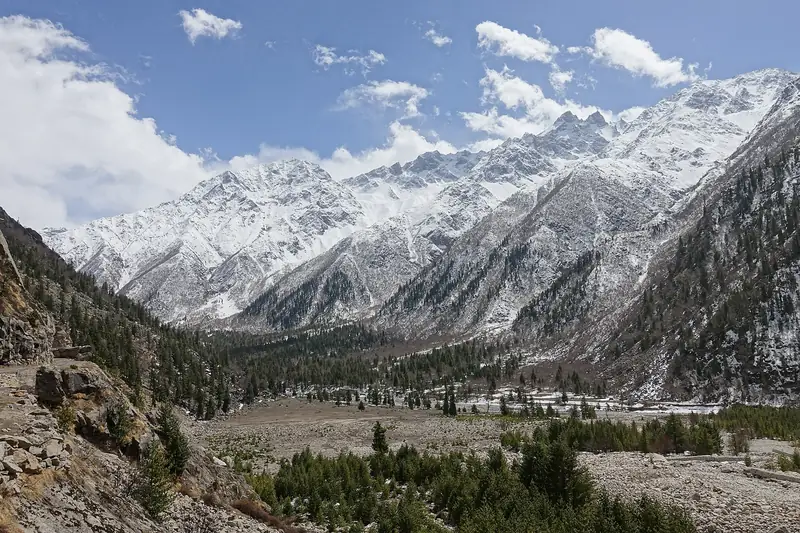
The Sutlej and Baspa valleys of Kinnaur are known for apple and apricot orchards, deodar forest and views of the Kinner Kailash range. Sangla and Chitkul in the Baspa valley are the most scenic; Kalpa faces the Kinner Kailash peaks.
Parvati valley, the Dhauladhar and Khajjiar
Parvati valley
Pine forest, river and hot springs around Kasol, Tosh and Kheerganga.
The Dhauladhar
The ridge above Dharamshala and McLeod Ganj; Triund is the classic day walk.
When to go
March to June and September to November are best for most of Himachal. The high passes to Spiti and Lahaul open roughly between May and June and close with the first heavy snow, usually in October or November. The monsoon (July to mid-September) brings landslides and flash floods; Himachal saw severe monsoon damage in 2023 and 2025, so check road status daily. Winter brings snow to the middle hills and closes many high roads.
Safety
- Check road status with the district administration or HRTC before driving, especially in the monsoon.
- Above 3,000 m, ascend gradually and watch for signs of altitude sickness; consult a doctor before travel if you have health conditions.
- Stay on marked trails and viewpoints, and heed local closures after heavy rain.
- Permits, entry rules, seasonal closures and timings change; check official sources before you go.
- Carry your waste back, avoid loud music and never feed wildlife.
What to pack
- Warm layers and a windproof jacket
- Sunscreen and sunglasses for Spiti
- Sturdy shoes
- Cash; ATMs are scarce in the high valleys
Want the forests, waterfalls and viewpoints woven into one trip?
FAQs
What are the best nature places in Himachal Pradesh?
Tirthan and Jibhi, Prashar Lake, Chandratal, Spiti and Pin Valley, Sangla and Chitkul, the Parvati valley and the Dhauladhar.
When can I visit Chandratal?
Usually from about June to September or early October, when the road is open. Check before you go.
Do I need a permit for the Great Himalayan National Park?
Treks inside the park need forest department permits and a guide. Walks in the eco-zone villages do not.
Is Himachal safe in the monsoon?
Landslides and flash floods are frequent. Travel only with flexible plans and close attention to warnings.
Which Himachal valley is least crowded?
Tirthan, Sainj, Pin Valley and parts of Kinnaur are quieter than Kullu-Manali or Kasol.
How many days do I need for Spiti?
At least seven to eight days by road from Shimla or Manali, to allow for acclimatisation.